50 sen 1948
Market Prices
1 saleAbout This Note
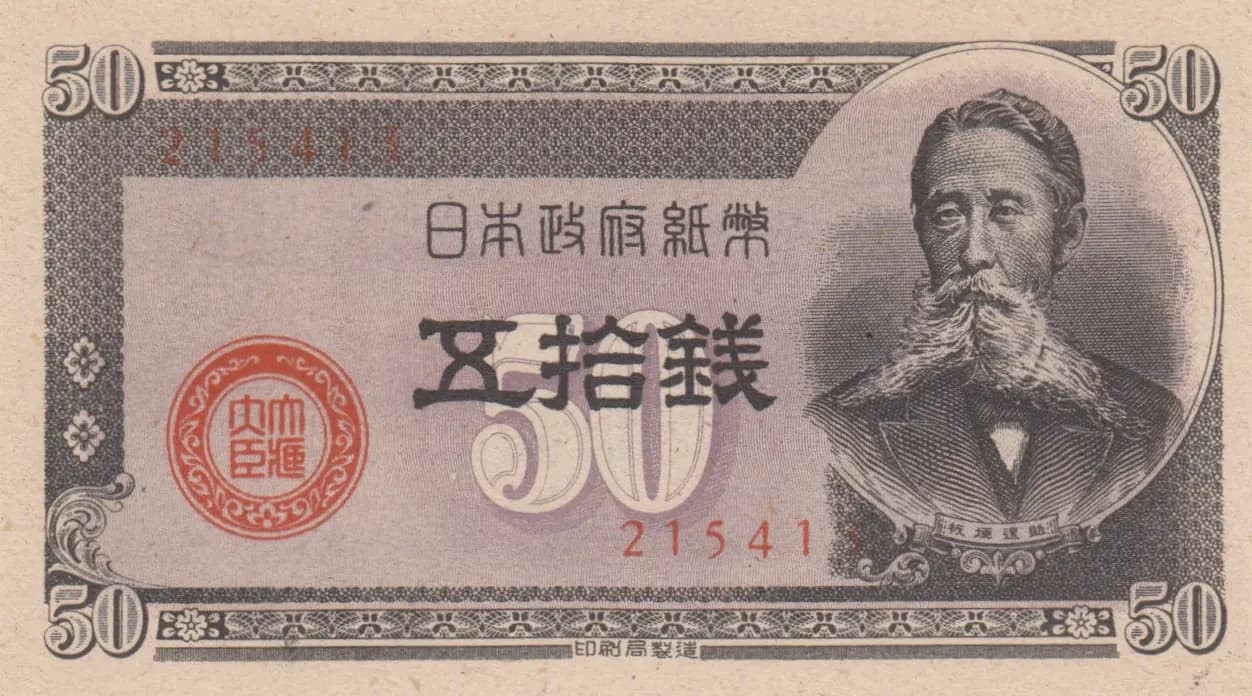
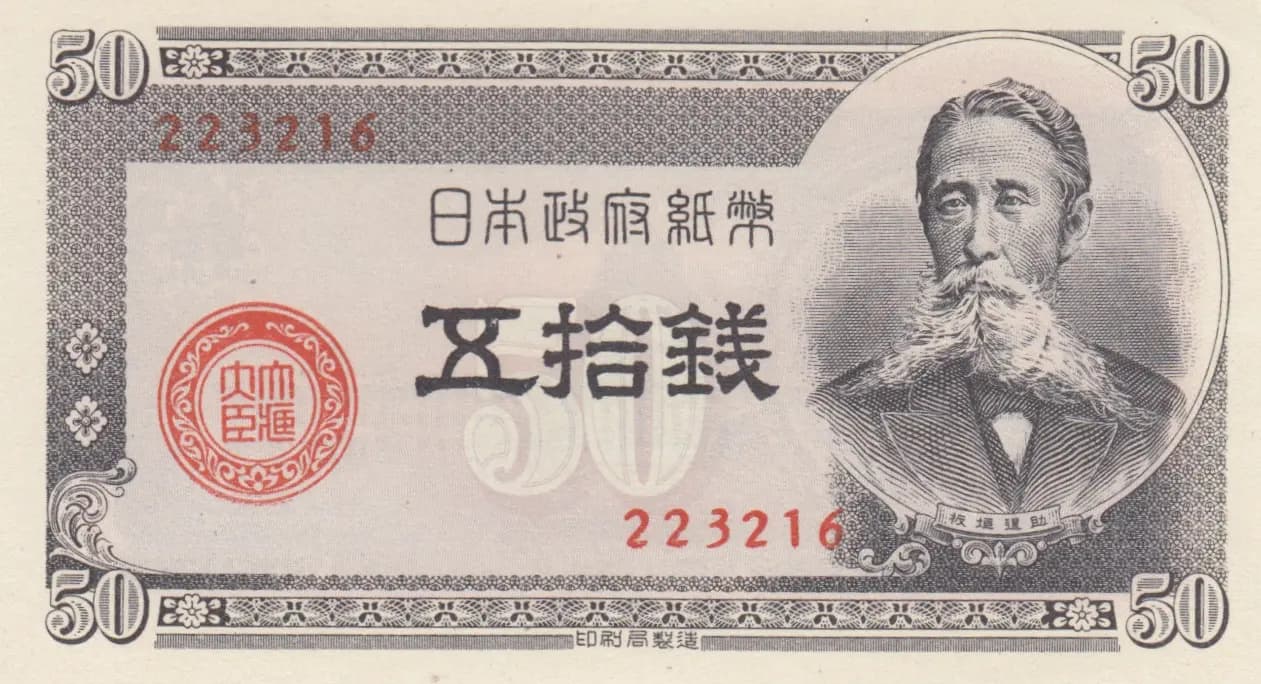
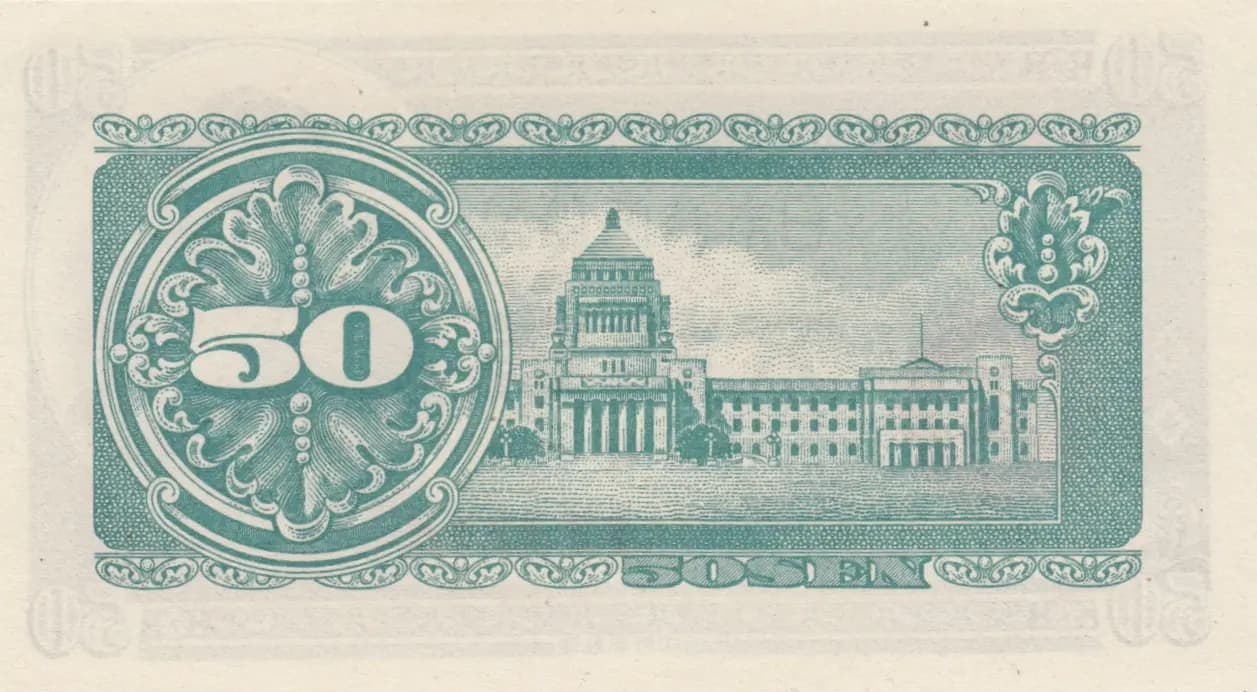
This 1948 Japanese Government 50 sen note (Pick P-61b) is presented in uncirculated condition with exceptional preservation. The obverse features a striking portrait of Taisuke Itagaki in formal 19th-century attire within an oval frame, rendered in black on a lilac underprint with a prominent red circular seal. The reverse displays the Diet building (Japanese Parliament) in detailed classical architectural engraving on a green background. The crisp printing, clean surfaces, and absence of wear indicate this specimen has never entered circulation despite its 75+ years of age.
Common. This is a regular issue 50 sen note from 1948 with substantial print runs typical of occupation-period Japanese currency. The catalog reference data shows 2016 UNC values of only $2, and eBay historical pricing indicates even lower-grade specimens (F condition) selling for under $5. The abundant survival of uncirculated examples in the market confirms wide circulation potential and large original mintage. No historical evidence indicates this Pick number was a short print or recalled issue.
This note was issued during Japan's post-World War II Allied Occupation period (1945-1952), when the government maintained currency production under the Nippon Seifu Shihei (Japanese Government Notes) authority. The commemorative portrait of Itagaki Taisuke, a prominent 19th-century samurai and political reformer, reflects Japan's effort to connect its post-war identity with pre-Meiji historical figures. The depiction of the Diet building on the reverse symbolized Japan's restoration of constitutional governance during this crucial reconstruction phase.
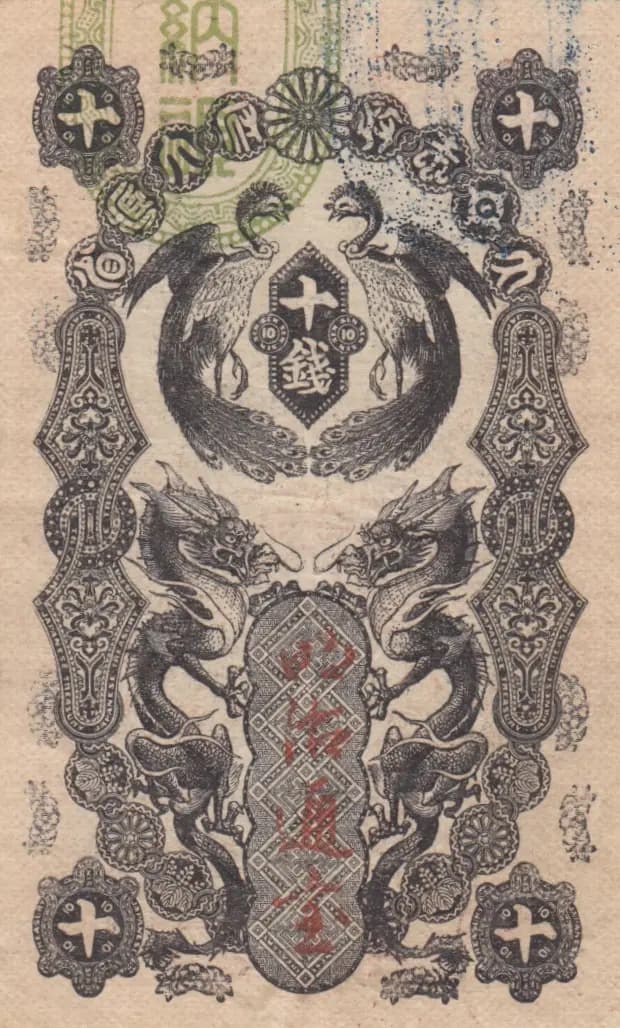
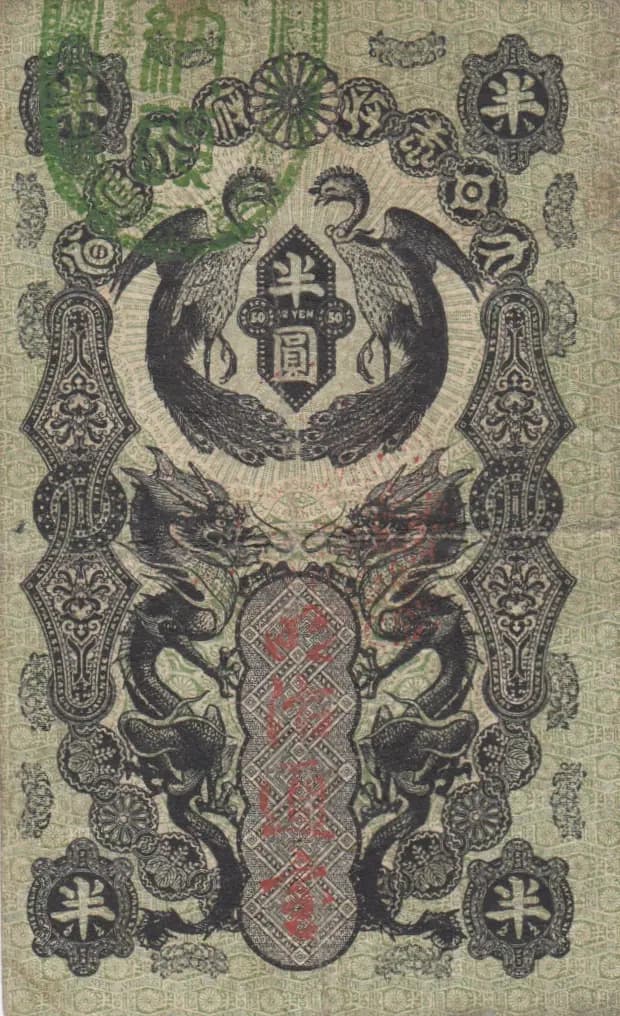
The obverse presents Taisuke Itagaki (1837-1919), a samurai statesman and founder of Japan's popular rights movement, depicted in left-facing profile within an ornate oval frame. His formal 19th-century attire and dignified bearing reflect his historical stature. The denomination '50' appears in top corners in both Arabic and Japanese kanji forms. A red ceremonial seal with ornamental border occupies the left side, characteristic of official Japanese government documents. Fine decorative scrollwork and geometric patterns frame the entire note. The reverse showcases the Meiji-era Parliament building (Diet) in Tokyo with its distinctive domed roof, multiple stories, classical columns, and architectural ornamentation rendered in intricate line work. An ornate circular medallion on the left contains the denomination numeral. The entire design employs fine-lined backgrounds and corner shell/fan motifs in teal-green on white paper.
Front side: '日本銀行紙幣' (Bank of Japan Banknote), '五十銭' (Fifty Sen), serial numbers '222116' and '223116' (red). Back side: '50' (denomination numeral in ornate circular medallion). All primary inscriptions are in Japanese with standard numerical denomination markers.
This note was produced using intaglio (engraved) printing, evidenced by the fine line work, detailed background patterns, and high-quality impression visible throughout both sides. The precision of the architectural rendering and portrait work, along with the crisp registration of multiple color plates (black on lilac for obverse; green on white for reverse), indicates professional government security printing typical of Japanese Government Note production. The red seal and serial numbers appear to be applied via separate passes, consistent with 1948-era Japanese printing technology.
Pick P-61b designates the second variety of this 1948 50 sen issue. Varieties within this series are typically distinguished by signature variations, serial number prefix changes, or subtle design modifications. The observed serial numbers '222116' and '223116' suggest mid-range numbering from the production run. No overprints, security printing variations, or unusual printing characteristics are evident in this specimen that would indicate a scarce sub-variety.