50 sen 1943
Market Prices
59 salesAbout This Note
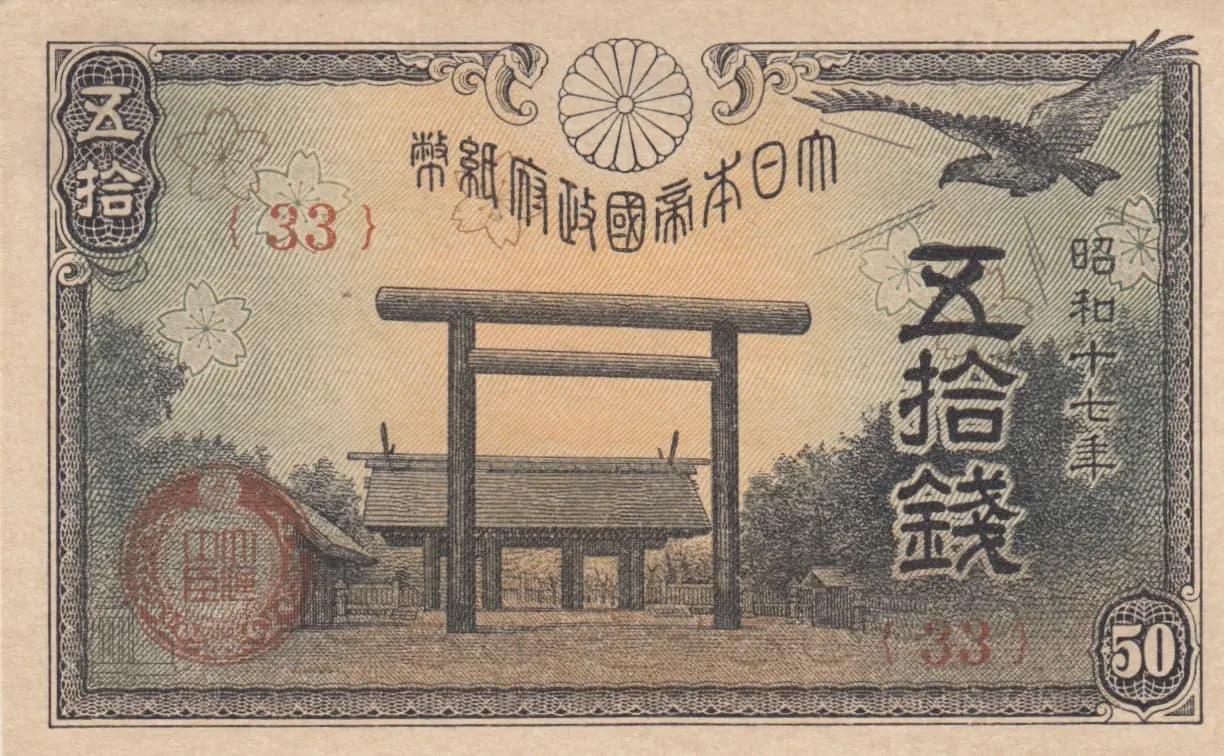
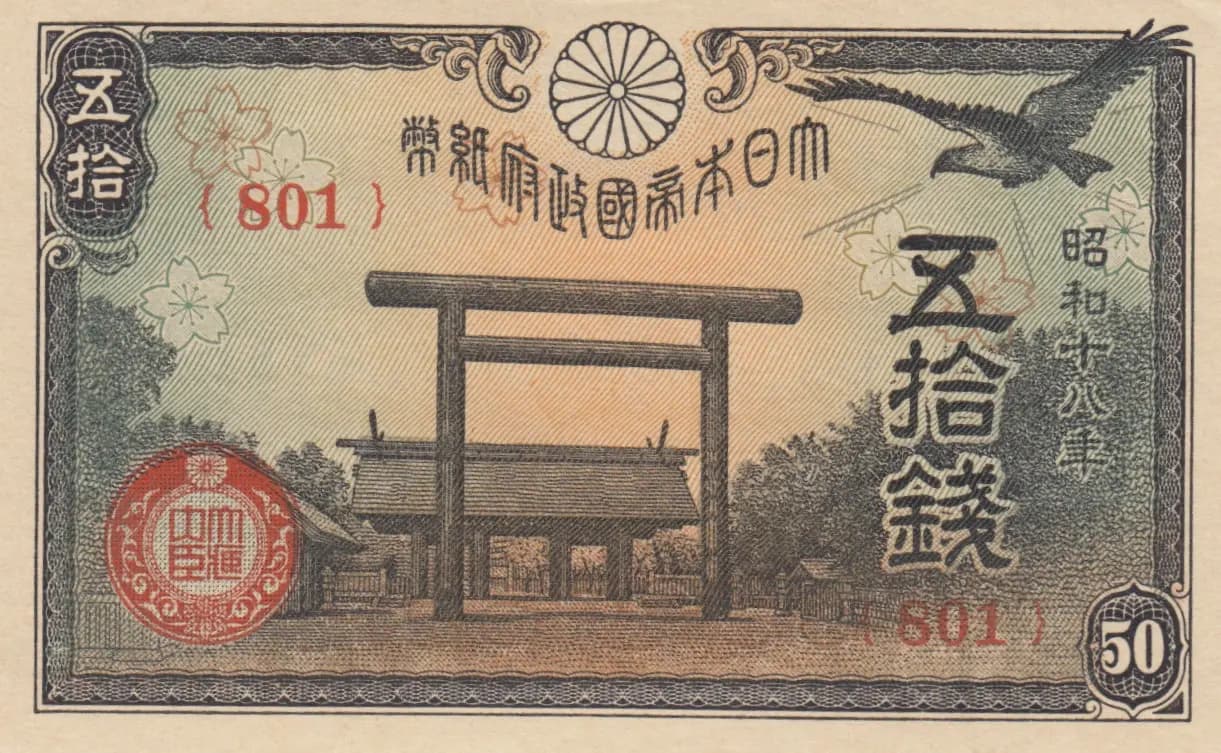
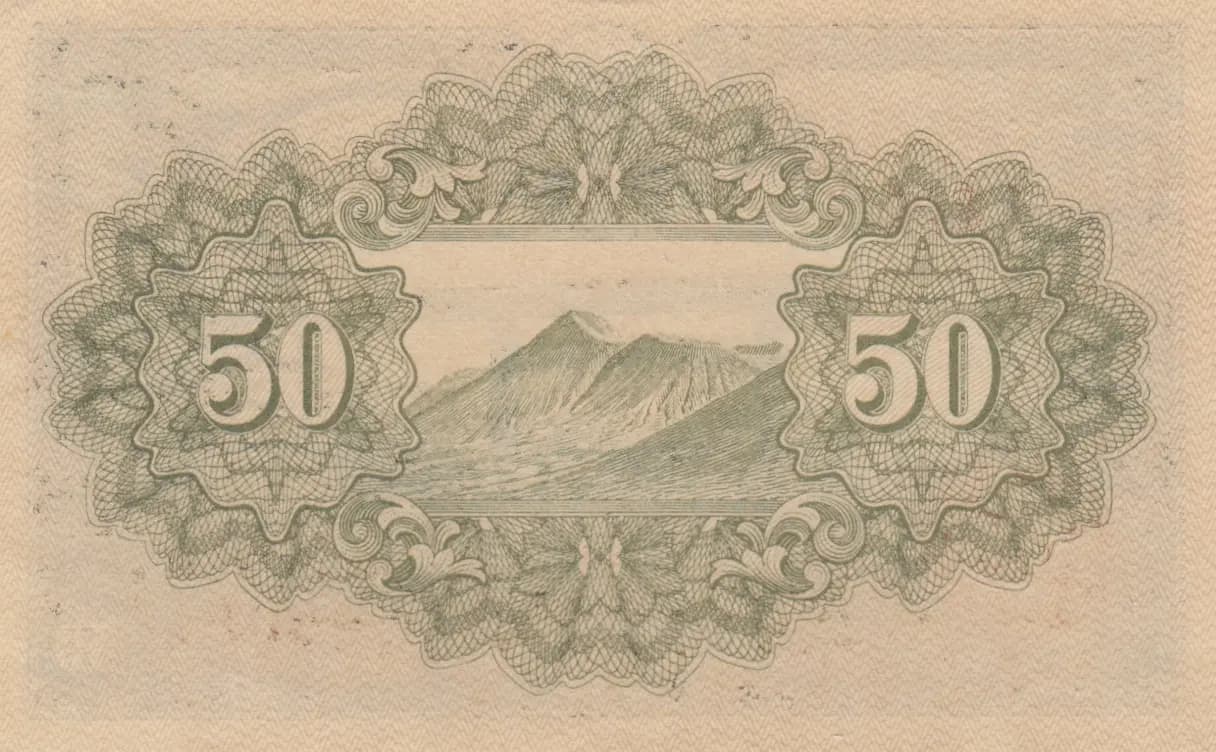
This 50 sen note from 1943 (Showa 18) is a classic example of Imperial Japanese wartime currency featuring the iconic Yasukuni Shrine torii gate on the obverse and a sacred mountain landscape on the reverse. The UNC-graded specimen displays the characteristic beige-tan patina and fine engraved detail typical of this issue, with visible red governmental seals and ornamental borders that showcase the quality intaglio work of the period. Despite its age and the wear visible in the imagery, this note represents an important artifact of Japanese monetary history during the Pacific War era.
Common. Despite being wartime currency now over 80 years old, this denomination and issue remain widely available in the collector market. eBay price history provided shows consistent sales across multiple condition grades (F through PMG 66) ranging from under $1 to $36, with UNC examples regularly appearing at $3-$10. The catalog value (2016) of $2.50 for UNC and the frequent auction appearances indicate this is a standard, frequently encountered issue with no significant scarcity.
Issued during the final years of Imperial Japan's wartime governance (Showa 17-19, spanning 1942-1944), this 50 sen note served as everyday currency during the Pacific War period. The prominence of Yasukuni Shrine—Japan's most sacred Shinto shrine dedicated to fallen soldiers—reflects the militaristic nationalism of the era, while the mountain landscape (likely Mount Fuji) reinforces imperial iconography. The issuer designation 'Dai Nippon Teikoku Seifu Shihei' (Great Imperial Japanese Government Banknote) underscores the note's official wartime status.
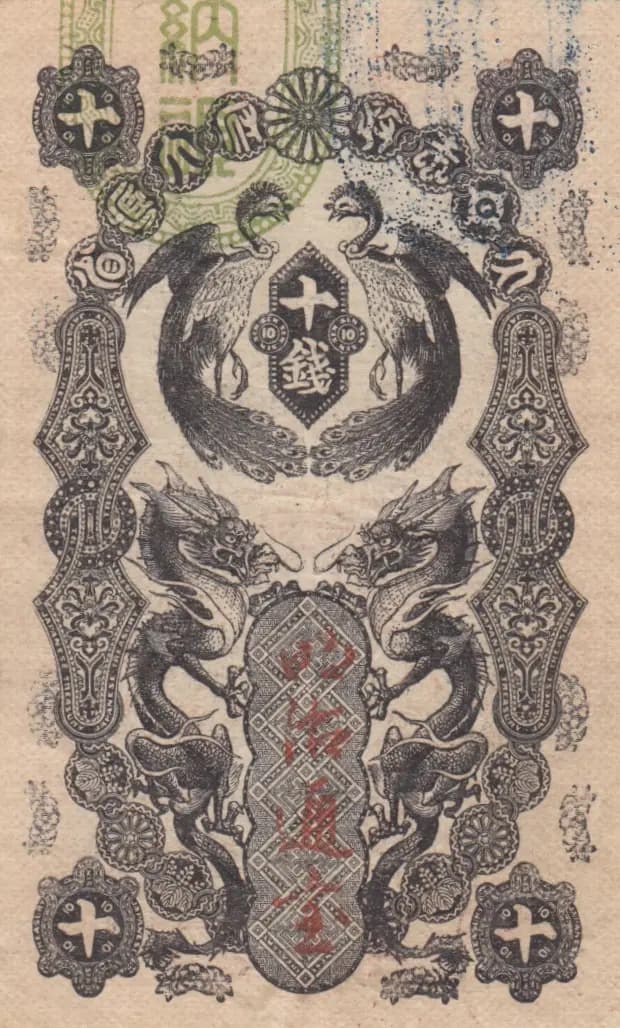
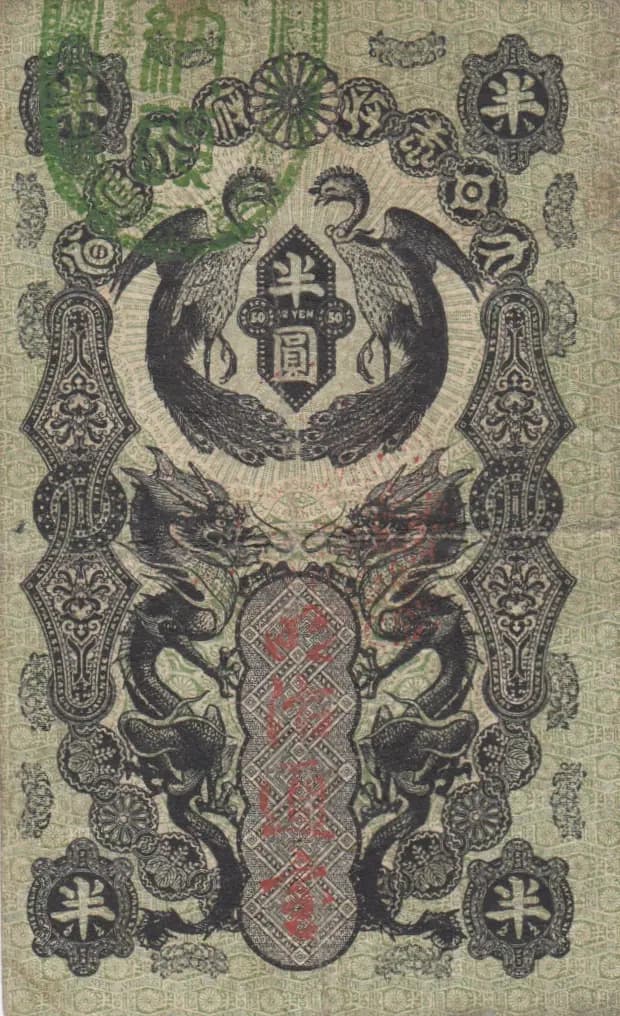
The obverse features Yasukuni Shrine's distinctive torii (shrine gate) as the central architectural focus, rendered in fine intaglio detail with the shrine building visible behind it. Flanking the gate are flowering cherry blossom trees set within a naturalistic landscape, creating a balanced composition that celebrates Japanese cultural heritage. The upper right displays an eagle in flight, a symbol of imperial power. The reverse presents a panoramic mountain landscape dominated by what appears to be Mount Fuji, rendered in subtle tonework against the pale background. Both sides employ elaborate ornamental borders featuring scrollwork, rosette medallions, and geometric patterns. The imperial chrysanthemum seal anchors the top center of the obverse, with red government seals and circular stamp impressions adding authenticity markers.
Front side: '五十銭' (Fifty sen) — the denomination in Japanese characters; '大日本帝國政府紙幣' (Great Imperial Japanese Government Banknote) — the official issuer identification; '昭和十六年' (Showa 16th year / 1941) — dating inscription (note: visual analysis indicates year 16, though catalog sources reference Showa 17-19 range); '〔801〕' (801) — likely a serial or plate number. Back side: '50' — Arabic numeral denomination appearing twice within decorative medallions. Additional Japanese government seals and ornamental text frames complete the inscriptions.
Intaglio engraving (line engraving and steel plate printing), the standard security printing method for high-denomination Japanese currency of this era. The fine cross-hatching, intricate line work, security borders, and detailed ornamental patterns visible throughout are characteristic of Japanese government security printing from the Imperial period. This method was employed by Japan's official printing authority and represents the highest quality banknote production of the 1940s.
This specimen is cataloged as Pick P-59b, characterized by wavy line watermark. Per PMG population records, three variants exist for the base Pick number: P-59b, P-59c, and P-59s1 (specimen note), all sharing the wavy lines watermark. The visual analysis suggests this is Showa 18 (middle and second from bottom characters reading 十八 per RealBanknotes reference), which falls within the documented 1942-1944 issue range. Serial number and specific plate markings visible in the image (〔801〕) would further identify this individual specimen's production run, though complete series identification would require verification of the full serial number sequence not fully legible in the provided visual analysis.