50 sen 1920
Market Prices
6 salesAbout This Note
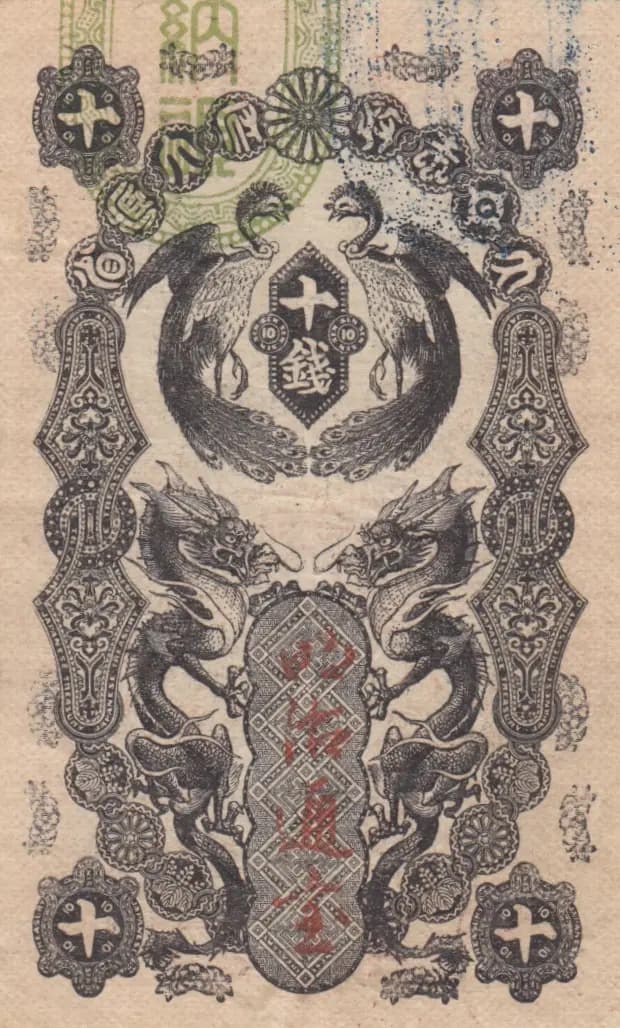
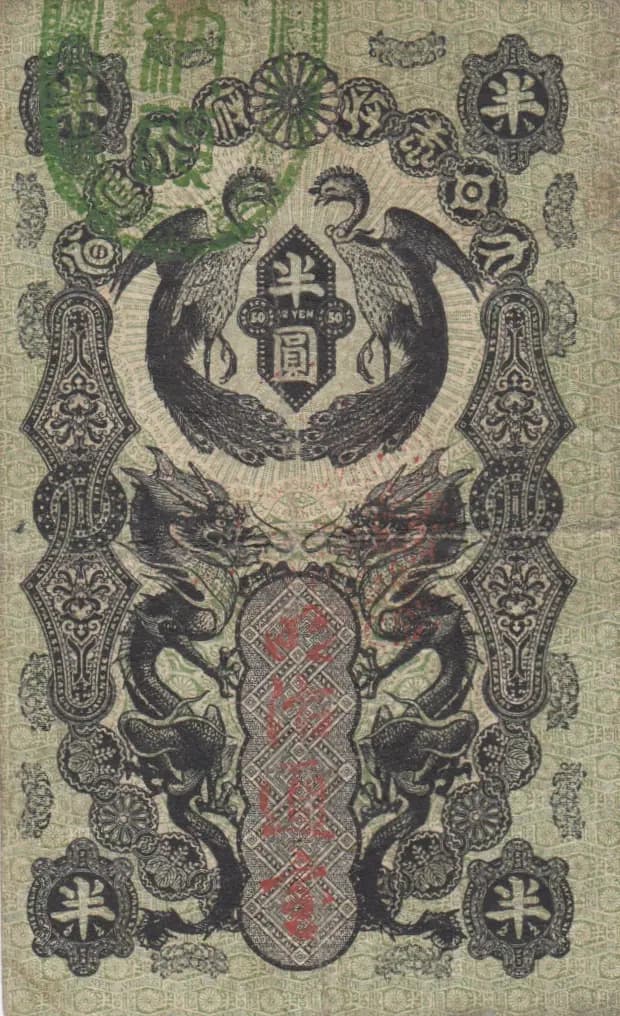
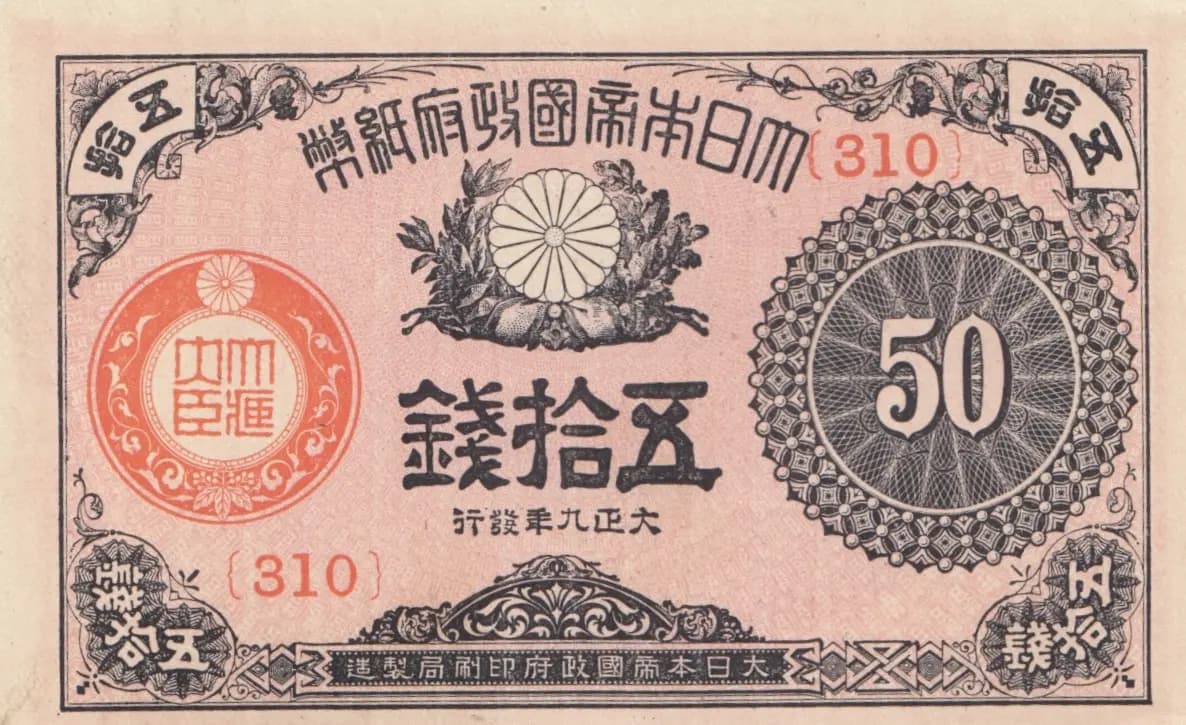
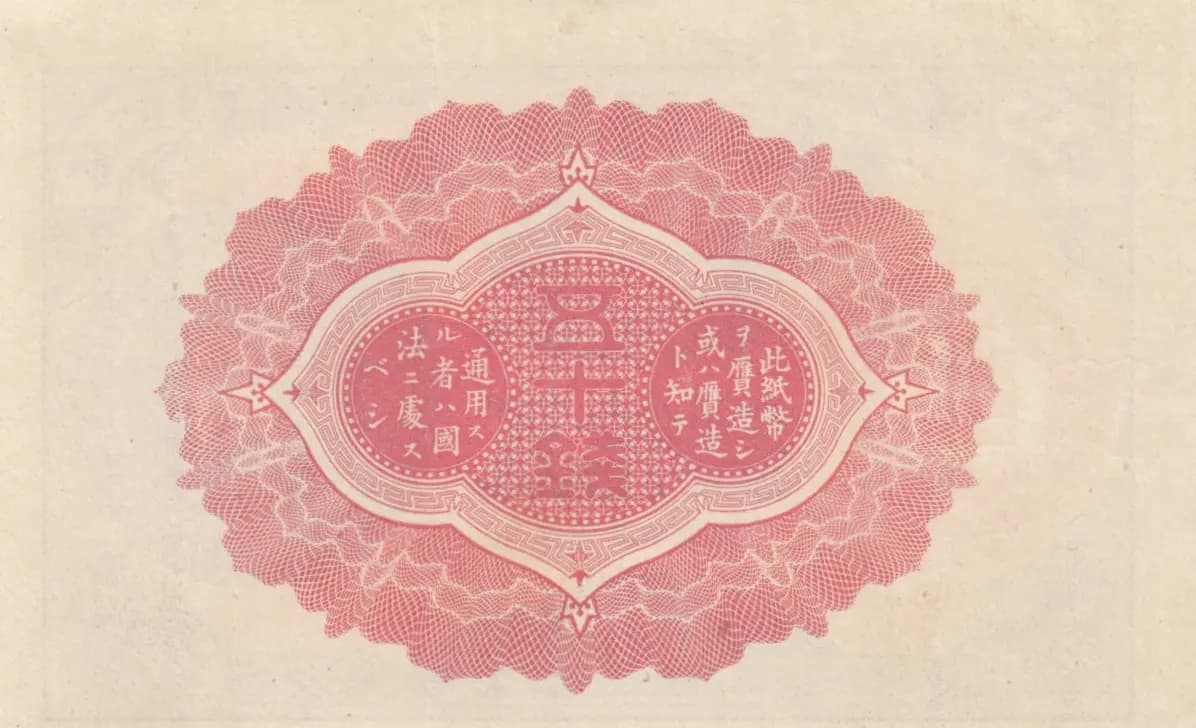
This is an outstanding example of the Japanese 50 Sen note from Taisho Year 9 (1920), graded AU and displaying pristine uncirculated condition throughout. The note features an elegant pink/salmon background with intricate ornamental designs, a prominent Imperial chrysanthemum flower at center, and a distinctive red circular medallion containing a Japanese character on the obverse. Both sides exhibit sharp detail, bright coloration, and the complete absence of wear, creases, or foxing that would be expected from a note circulating for over a century.
Common. While the eBay market data shows examples in PMG 64-66 grades selling for $46-$86.50 in 2020, and the 2016 catalog value lists UNC at $40, the consistent availability of sales data and the relatively modest price points indicate this is a commonly encountered note among collectors. The print run for this denomination during 1917-1922 was substantial, and uncirculated examples remain readily available in the market. The AU grade of this particular specimen places it in the upper range of desirability but does not elevate it beyond common status for the Pick number.
This banknote was issued during the Taisho period (1912-1926), specifically in 1920, when Japan was transitioning into a more modern monetary system under the Great Imperial Japanese Government (Dai Nippon Teikoku Seifu Shihei). The Imperial chrysanthemum flower depicted at the center symbolizes the Japanese imperial authority and national sovereignty, a design element deeply rooted in Japanese heraldic tradition. The note's ornate, classical aesthetic reflects the government's effort to combine traditional Japanese artistic heritage with modern security printing techniques during this transformative era in Japanese numismatic history.
The obverse features a symmetrical design centered on the Imperial chrysanthemum (Kiku), Japan's most revered floral symbol and emblem of the imperial household, rendered with elaborate decorative foliage and flourishes in black ink on a pink/salmon background. To the left is a circular medallion with a red border containing a Japanese character (likely representing authority or value), while the denomination '50' is prominently displayed in a large ornamental circular frame on the right side featuring fine crosshatching and intricate line patterns. The reverse presents a highly ornate geometric composition with a central double-lobed cartouche containing a cross symbol surrounded by repeating geometric patterns, all rendered in pink/red tones with cream/white accent lines. The entire design is framed by scalloped, lotus-like borders with corner star motifs, creating a complex, symmetrical aesthetic typical of high-quality Japanese government currency of this period.
Front side: '日本銀行券南部出造紙幣帯' (Bank of Japan Note - Southern Part Note Printing), '五十銭' (Fifty Sen), '大正九年許諾' (Approved Taisho Year 9), '銀行' (Bank), '日本' (Japan), and serial number '310'. Back side: '此紙幣造成ス願知テ' (Please know this banknote has been created), '通用法ル従フ用ハシ二者度シ' (In accordance with applicable currency laws), '国円通用也ス有' (Valid currency of the nation). The reverse contains radially-arranged Japanese characters around a central cross symbol within the decorative cartouche.
This note was produced using traditional intaglio (engraved) printing, evidenced by the fine line work, intricate crosshatching, and precise geometric patterns visible throughout both sides of the note. The crisp detail in the ornamental borders, the consistency of the pink/salmon background color, and the sharp definition of the decorative elements indicate steel plate engraving and multi-pass printing. Based on the Pick catalog designation and the inscription reference to 'Southern Part Note Printing,' this note was likely produced by the government's official security printing facility during the Taisho period, employing the most advanced security printing techniques available in 1920s Japan.
This note is identified as Pick 48c, indicating it is the third cataloged variety of the 50 Sen 1920 issue. The visual analysis confirms this is from the Taisho Year 9 (1920) authorization, as stated in the inscription '大正九年許諾.' The serial number prefix '310' and the specific ornamental style with the Imperial chrysanthemum design are consistent with this variety. No overprints, signature variations, or other distinguishing marks that would indicate additional sub-varieties are apparent in the visual examination.