5 yen 1946
Market Prices
31 salesAbout This Note
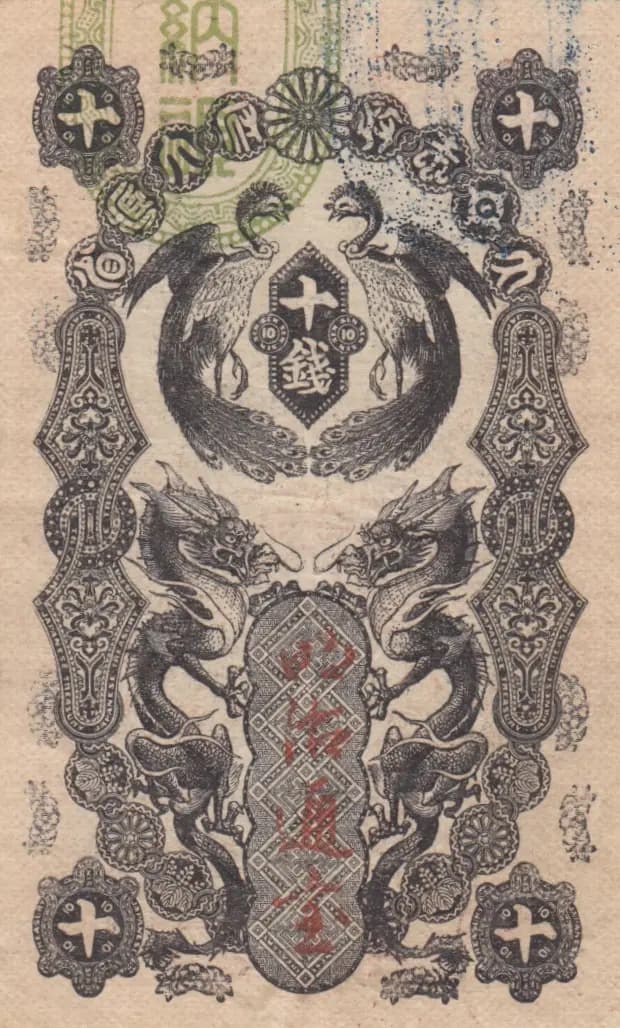
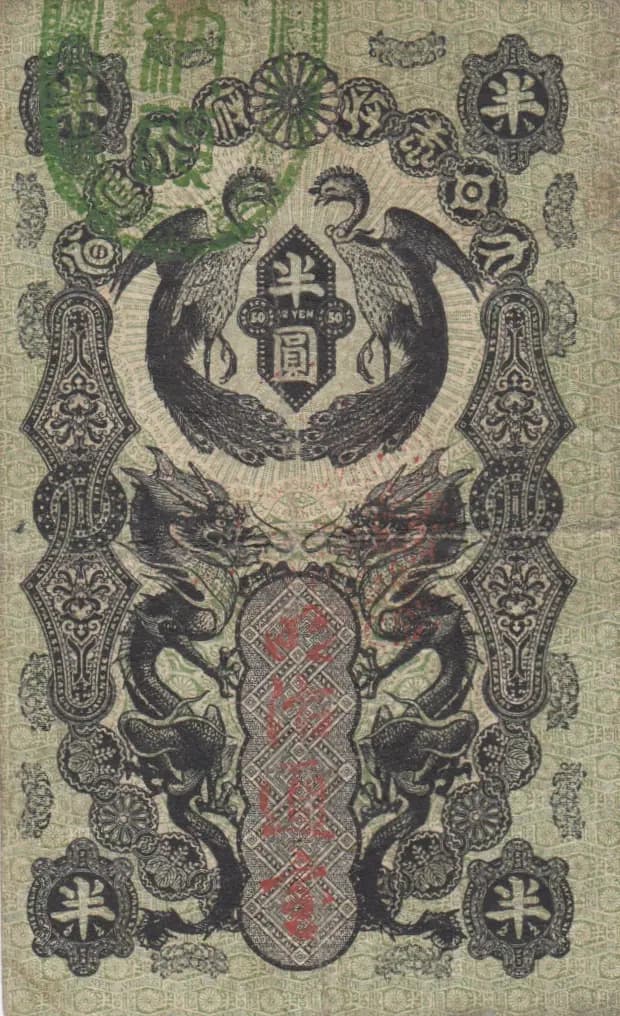
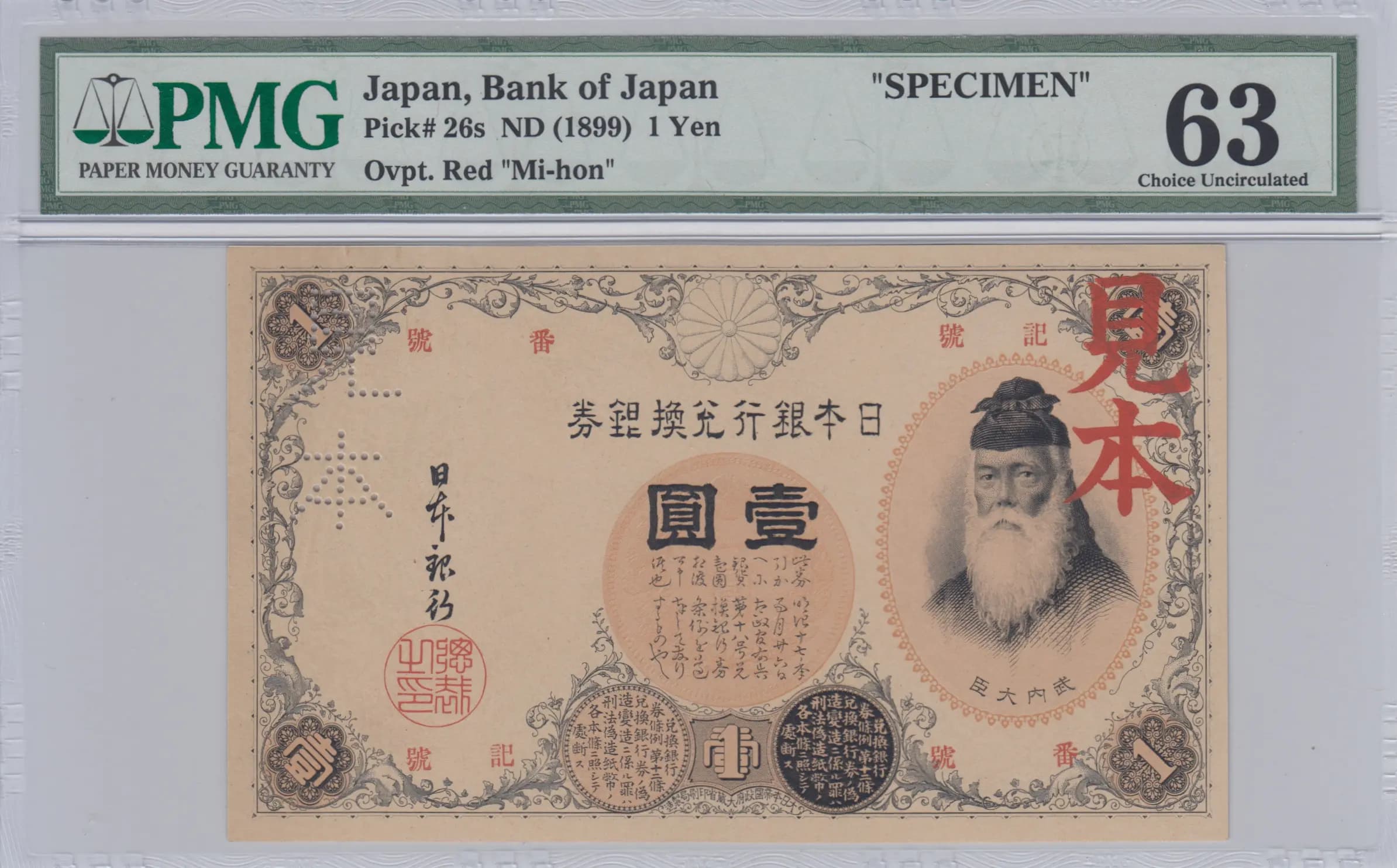
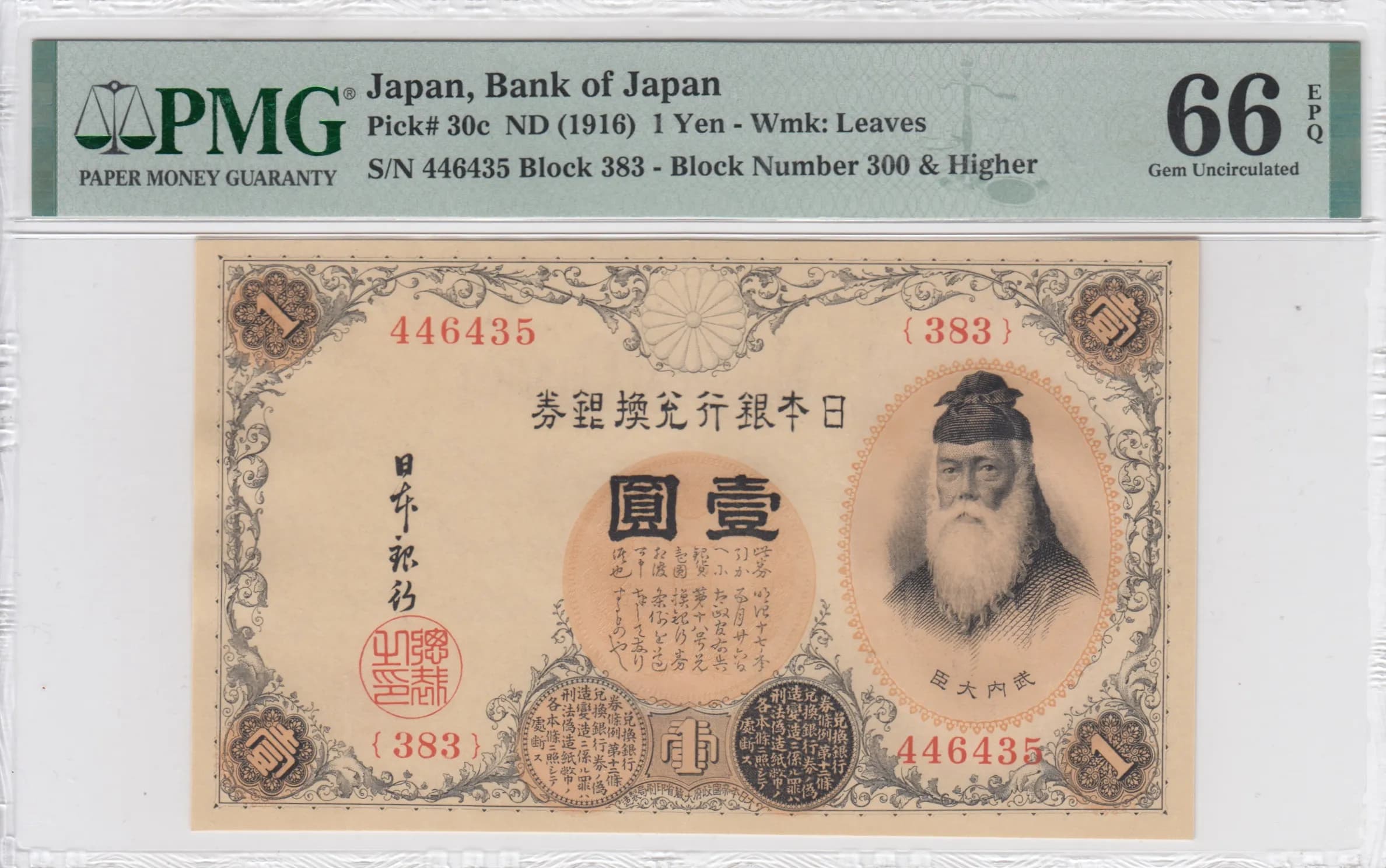
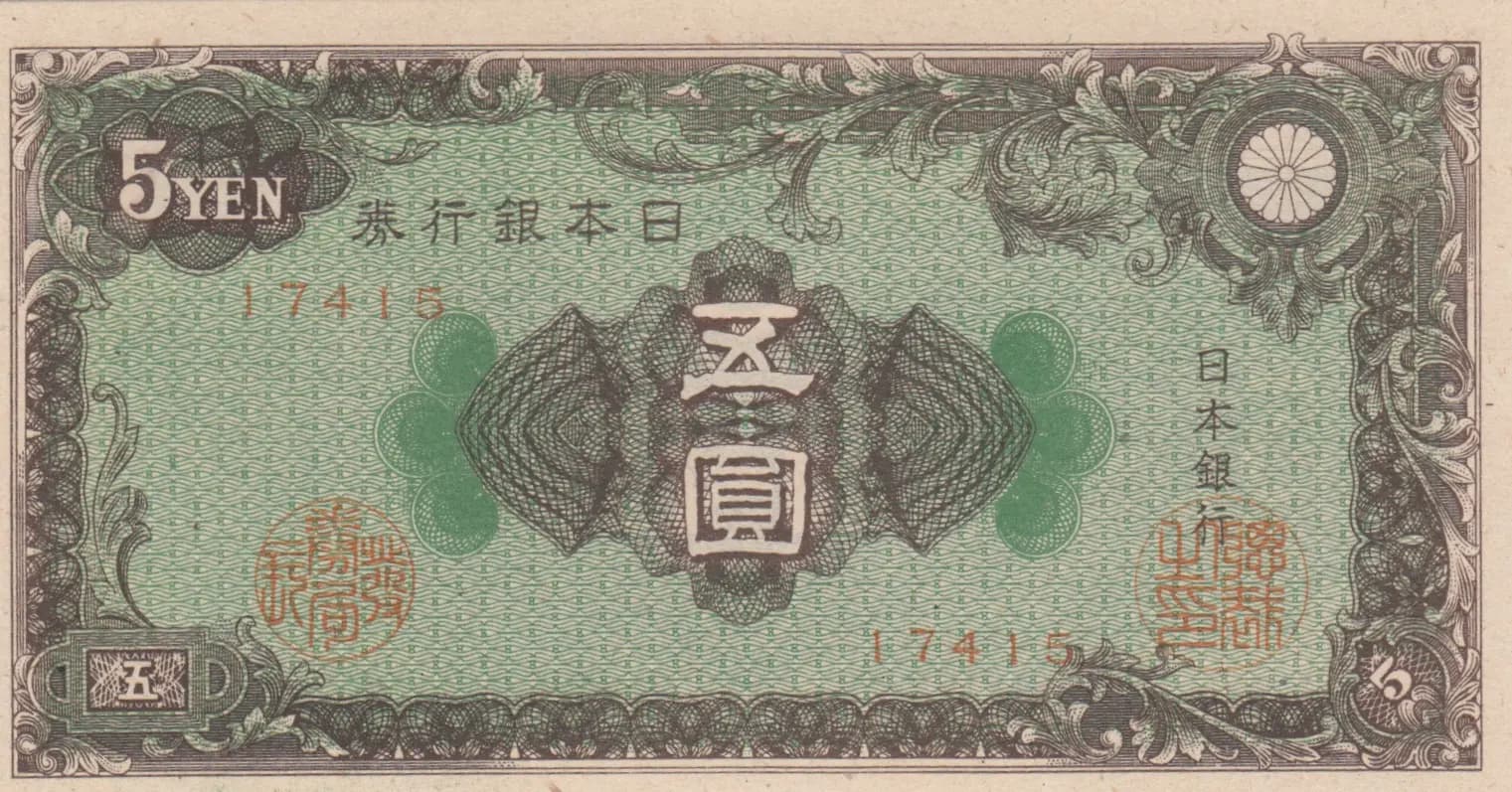
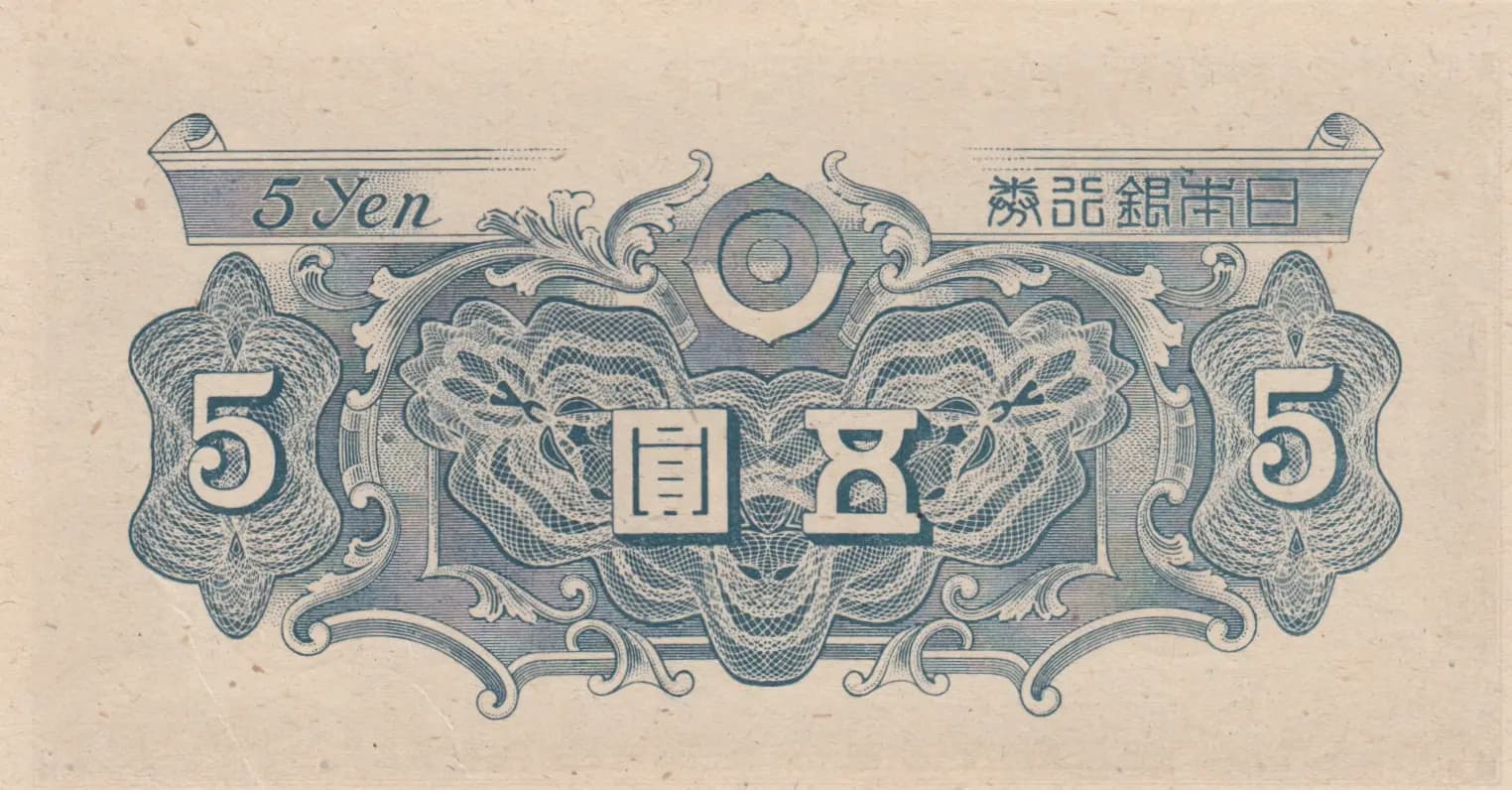
This 1946 Japanese 5 Yen note (Pick-86) presents a stunning example of immediate post-WWII Japanese currency design, featuring a prominent eagle or mythical bird figure with spread wings dominating the obverse in brown and green tones. The reverse displays elegant blue symmetrical ornamentation with decorative floral motifs and a central cartouche. While graded UNC per catalog data, the visual analysis reveals light foxing, minor creasing, and typical aging patina consistent with a 79-year-old banknote, making this a solid collector specimen of an important historical issue.
Common. eBay market data shows consistent sales across multiple condition grades (VG through EF) with prices ranging from $0.99 to $480, with most examples in VF-EF condition selling for $2-12. The 2016 catalog value of $5 for UNC is modest, and the large number of price samples over a 14-year period indicates this note was produced in substantial quantities and remains readily available to collectors. No print run restrictions or recall notices apply to this Pick number.
The 1946 5 Yen note was issued during Japan's immediate post-surrender period, reflecting the monetary reconstruction efforts under Allied occupation. The imperial chrysanthemum symbol (16-petal flower) visible in the upper right corner of the obverse represents continuity with pre-war Japanese imperial symbolism, while the design maintains classical engraving techniques despite the turbulent historical circumstances of the note's production.
The obverse features a large stylized eagle or mythical bird figure (possibly representing the imperial eagle or a phoenix-like creature) displayed frontally with spread wings as the central vignette, rendered in brown and sepia tones. This is framed by an ornate decorative border with baroque scrollwork and floral patterns, set against an intricate green crosshatch security background. The imperial chrysanthemum (kiku) symbol in the upper right corner reinforces imperial authority. The reverse presents a balanced, symmetrical design with two ornamental floral or plant motifs flanking a central decorative cartouche, executed in blue and teal with fine engraving detail throughout. Both sides demonstrate the classical intaglio engraving style characteristic of early Bank of Japan currency.
Front: '5YEN' (English denomination), '日本銀行' (Nihon Ginko / Bank of Japan), Serial number '1741-5'. Back: '5Yen' (English denomination), '國會銀行' (Kokkai Ginko / National Bank, or variant reading), '圓' (En / Yen currency indicator), '5' (large denomination numerals on left and right sides).
Intaglio (engraved) printing, which is evident from the complex crosshatch background patterns, fine border details, and intricate decorative elements observed on both obverse and reverse. The multi-layered color application and precise registration visible in the image suggest professional security printing, likely by Japan's government printing bureau (Nihon Soseiki Insatsu or similar authority) responsible for post-war currency production.
PMG has catalogued two variants for this base Pick number (P-86a and P-86s), with the 's' designation likely indicating specimens with overprints or special markings. The observed note shows serial number '1741-5' on the obverse. Without additional identifying features such as signature varieties, date variations, or overprint types visible in this particular example, the specific variety cannot be definitively determined from the images alone, though the standard design characteristics are consistent with the primary P-86 issue.