200 yen 1945
Market Prices
24 salesAbout This Note
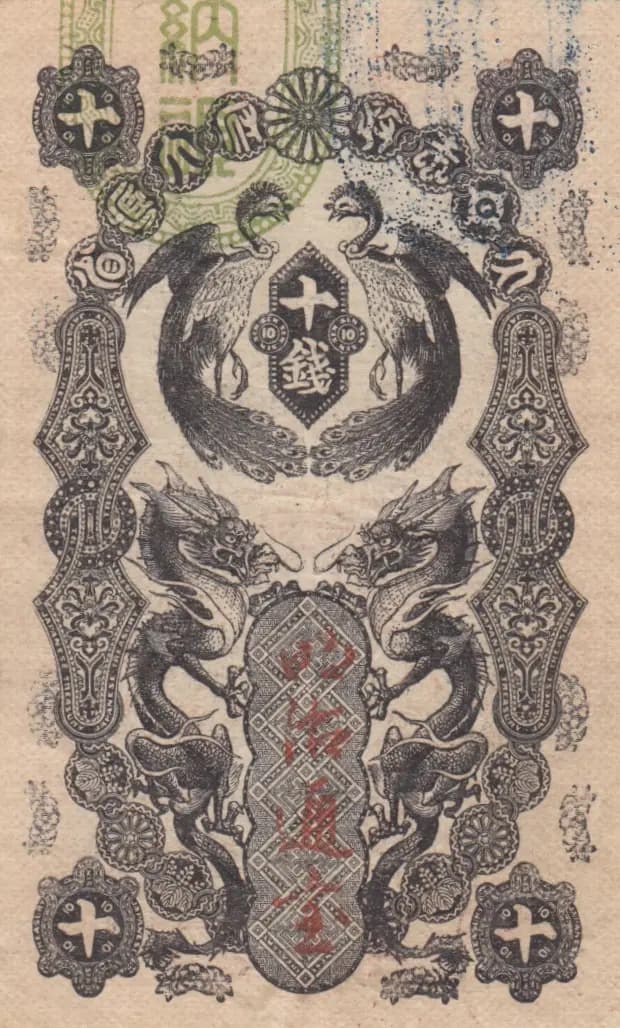
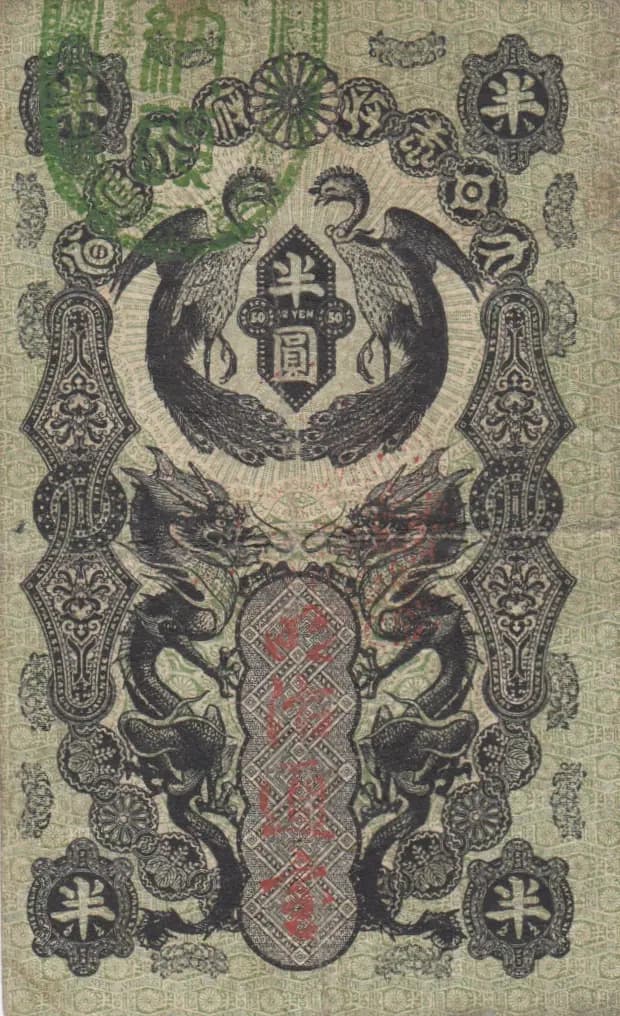
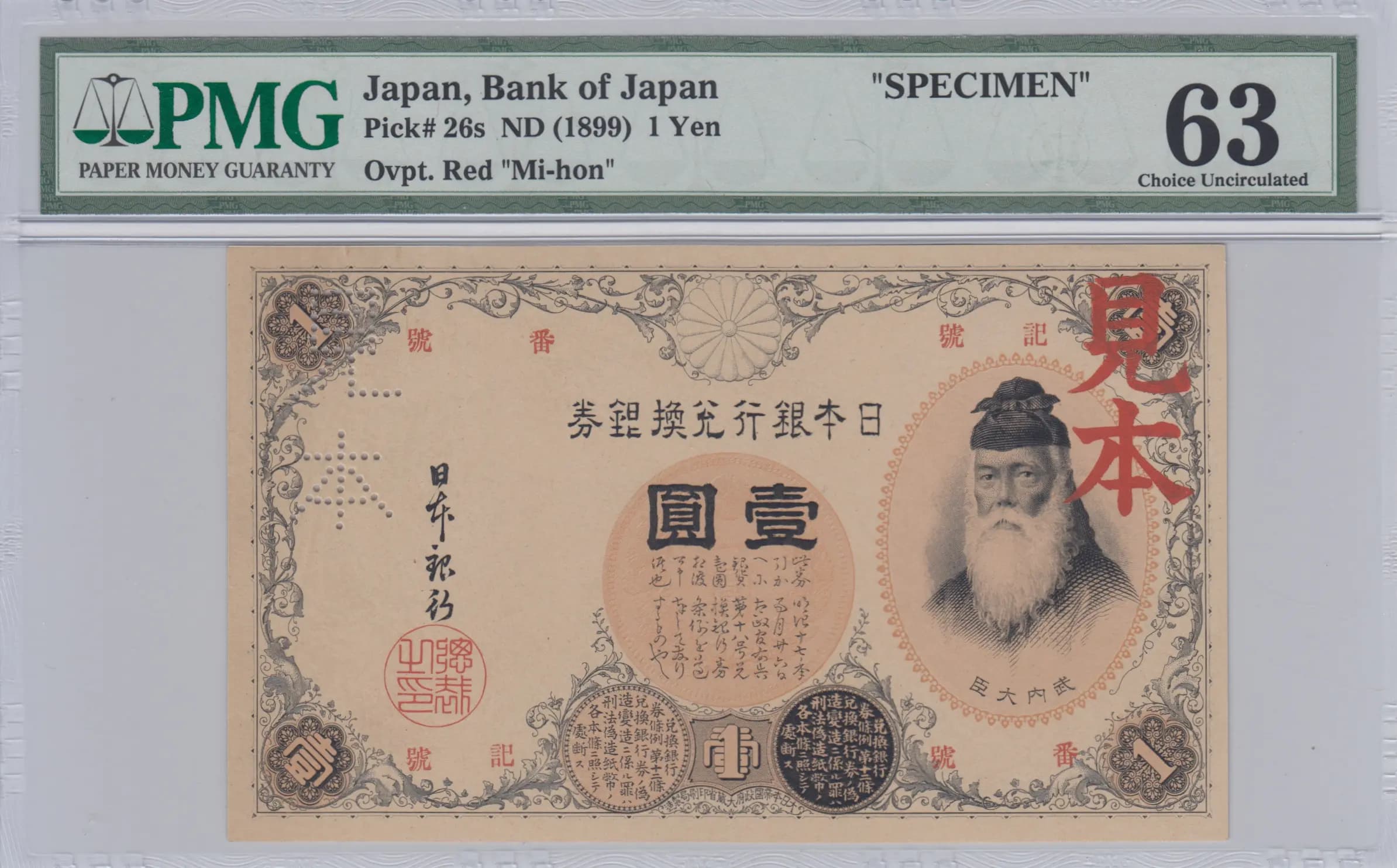
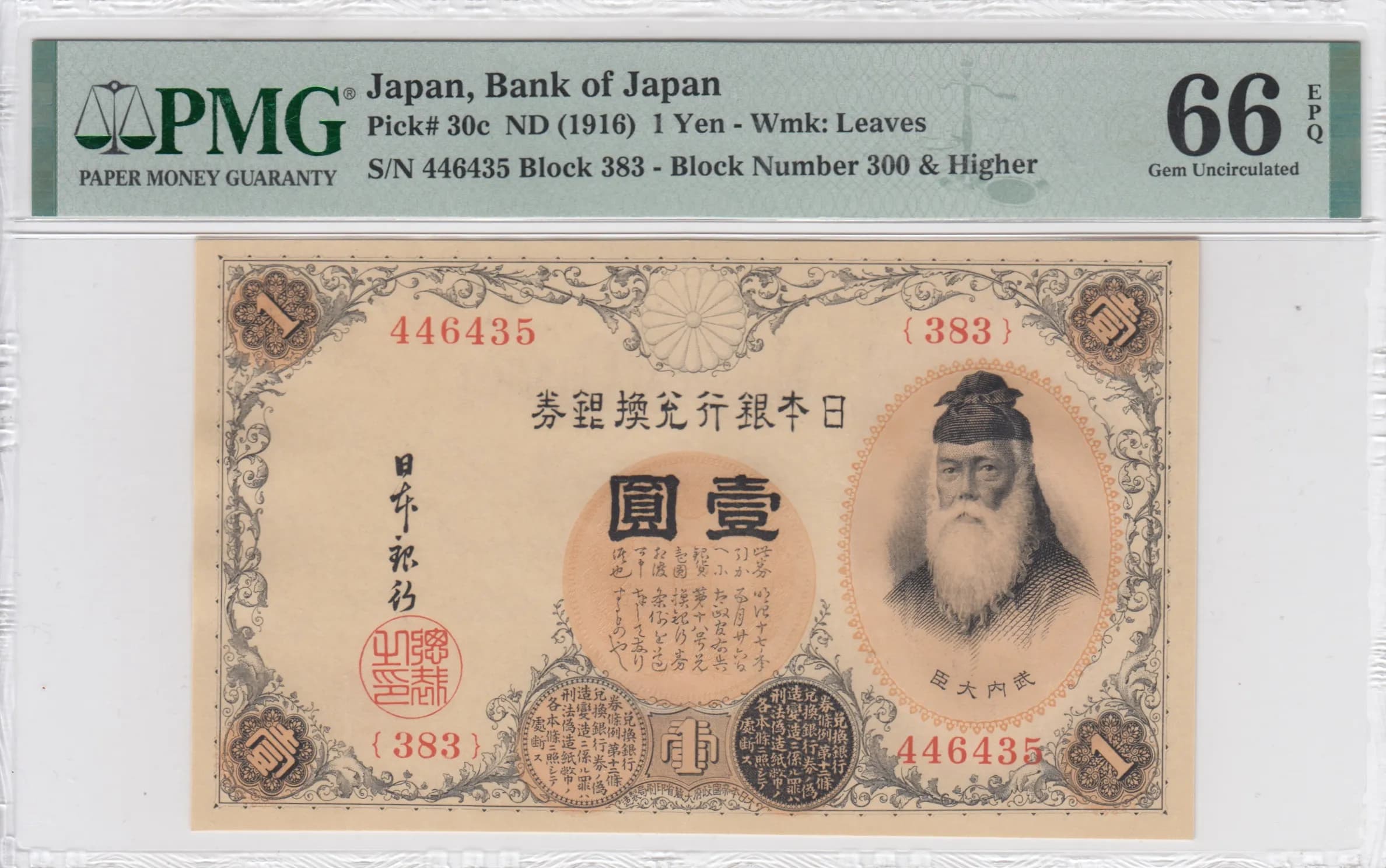
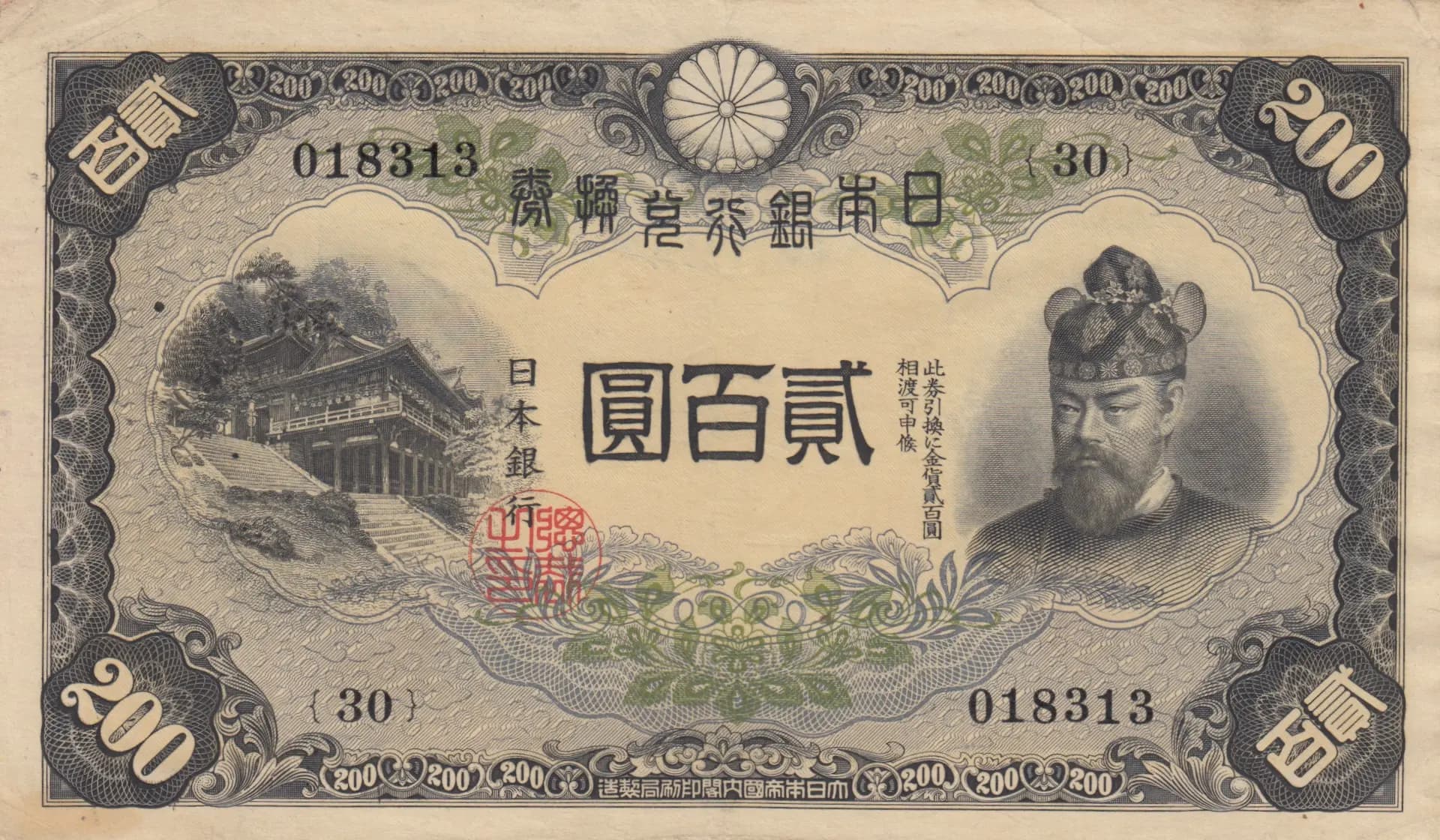
A well-preserved example of Japan's 1945 200 yen banknote (Pick P-44), featuring the classic design with Danzon Shrine and a portrait of Fujiwara Kamatari on the front. The note displays the characteristic black and green underprint on the obverse and blue reverse typical of this issue, with visible aging patina and light foxing consistent with its 80-year age. In VF condition, this note represents a solid collector example of late Imperial Japanese currency from the final year of World War II.
Common. The eBay sales data provided shows consistent trading activity with VF-graded examples selling between $21.50 and $78.55 in recent years, and catalog values from 2016 listing VF at $300. While not trivially common, the regular appearance of this note in the secondary market, the steady mid-range pricing for VF specimens, and the absence of any documented scarcity issues (short print run, recall, or withdrawal) indicate this is a standard circulation issue from Japan's 1945 output. The denomination and design were part of the regular series and remain available to collectors without premium rarity pricing.
This banknote was issued by the Bank of Japan (Nippon Ginko) in 1945, during Japan's final year of World War II, and represents an important piece of wartime Japanese monetary history. The Danzon Shrine depicted on both sides of the note is a significant religious and cultural landmark, while the portrait honors Fujiwara Kamatari, an influential 7th-century statesman and supporter of Buddhism in Japan. The 'convertible note' (兌換券) designation printed on the note reflects the gold standard system Japan maintained at that time, though the practical value of such conversion guarantees became meaningless in the post-war economic collapse.
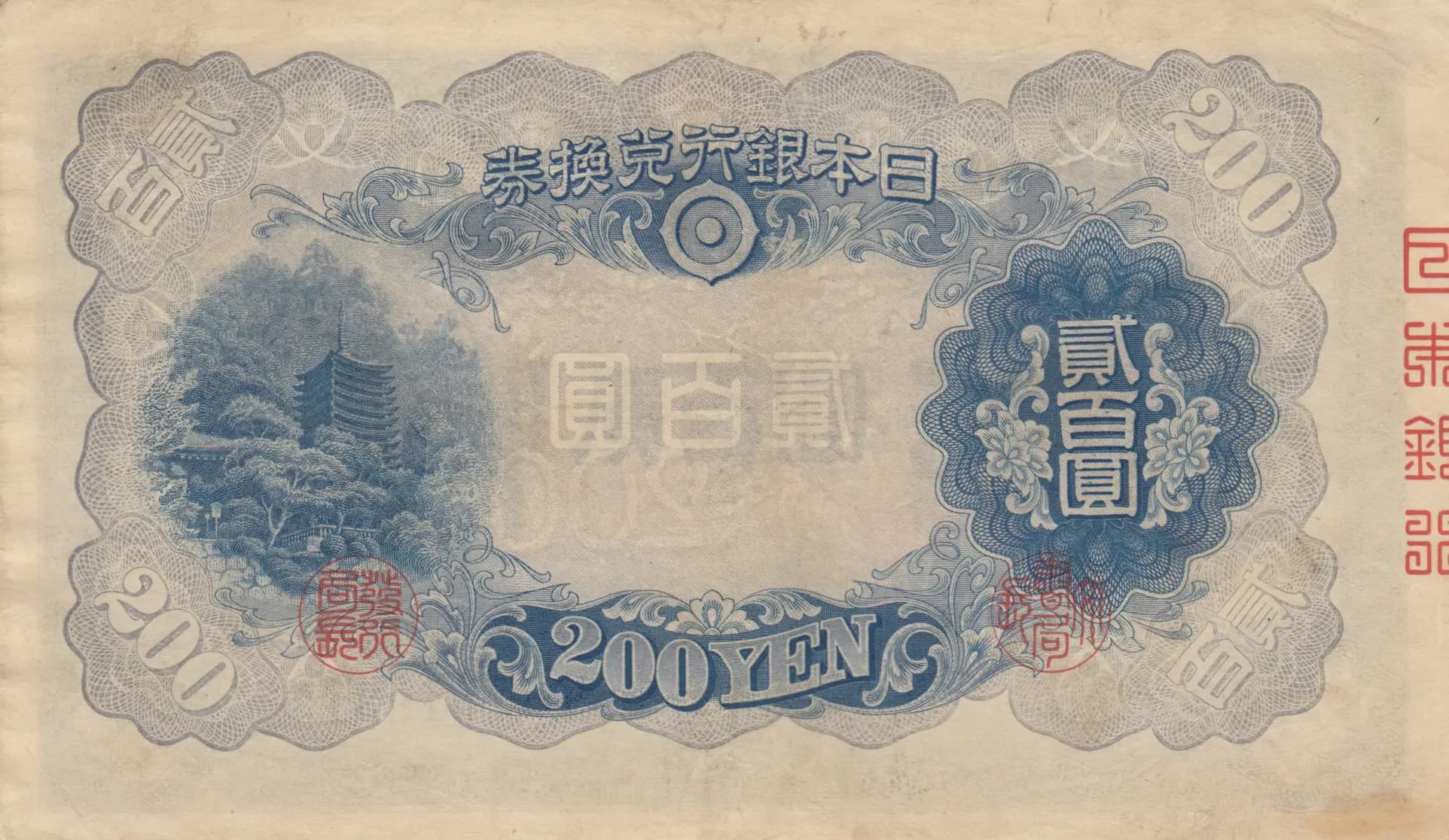
The front features an ornately engraved vignette of the Danzon Shrine at left, rendered with fine architectural detail and surrounding landscaping, establishing the note's cultural significance. To the right is a formal portrait of Fujiwara Kamatari (614-669), a legendary statesman and promoter of Buddhist culture, depicted in traditional formal Japanese court dress (kugutsu) with characteristic ornate headdress, shown in three-quarter profile view. The obverse is dominated by black intaglio work on a gray and green underprint, with a large decorative chrysanthemum motif at the top center—a traditional imperial symbol. The reverse shifts to a blue color scheme and presents an alternative view of the Danzon pagoda tower surrounded by trees in a mountainous garden setting, accompanied by a large ornamental circular seal containing the denomination. Both sides feature intricate decorative borders with repeating floral and botanical elements, repeating '200' numerals in all corners, and fine cross-hatching typical of high-security banknote engraving.
FRONT: '日本銀行券' (Bank of Japan Note); '貳百圓' (200 Yen); '此券ハ日本銀行兌換券ニシテ何時ニテモ兌換セラルル事ヲ確約ス' (This note is a Bank of Japan convertible note and is guaranteed to be converted at any time); Serial number '018313'; Series/denomination marker '30'. BACK: '日本銀行兌換券' (Bank of Japan Convertible Note); '貳百圓' (200 Yen); '200YEN' (English denomination marking); '圓百貳' (200 Yen, written vertically right-to-left in traditional format); Decorative '200' numerals repeating in corners.
This note was produced using traditional intaglio engraving (also called steel engraving or copperplate printing), the standard security printing method for Japanese banknotes of this era. The fine-line engraved patterns, detailed cross-hatching visible in the portrait and architectural vignettes, precise tonal gradations, and the characteristic tactile quality of intaglio printing are evident throughout the design. The note incorporates multiple security features including integrated serial numbers, red official chop marks (seals) for authentication, and complex decorative backgrounds designed to prevent counterfeiting. Japanese government security printers, likely the Imperial Printing Bureau (Teikoku Insatsu Kaisha) or contracted security printers, produced this issue.
Serial number observed: 018313 with series marker '30'. Potential varieties for this Pick number include variations in serial number prefixes and series designations, though without comparative catalogs specifically documenting these, such distinctions cannot be confirmed. The 1945 date is consistent across all observed examples. Collectors should note that Japanese banknotes of this period may exhibit minor variations in registration, color saturation, and paper tone due to wartime printing conditions, though these do not constitute formally recognized varieties in standard catalogs.