1000 yen 1950
Market Prices
17 salesAbout This Note
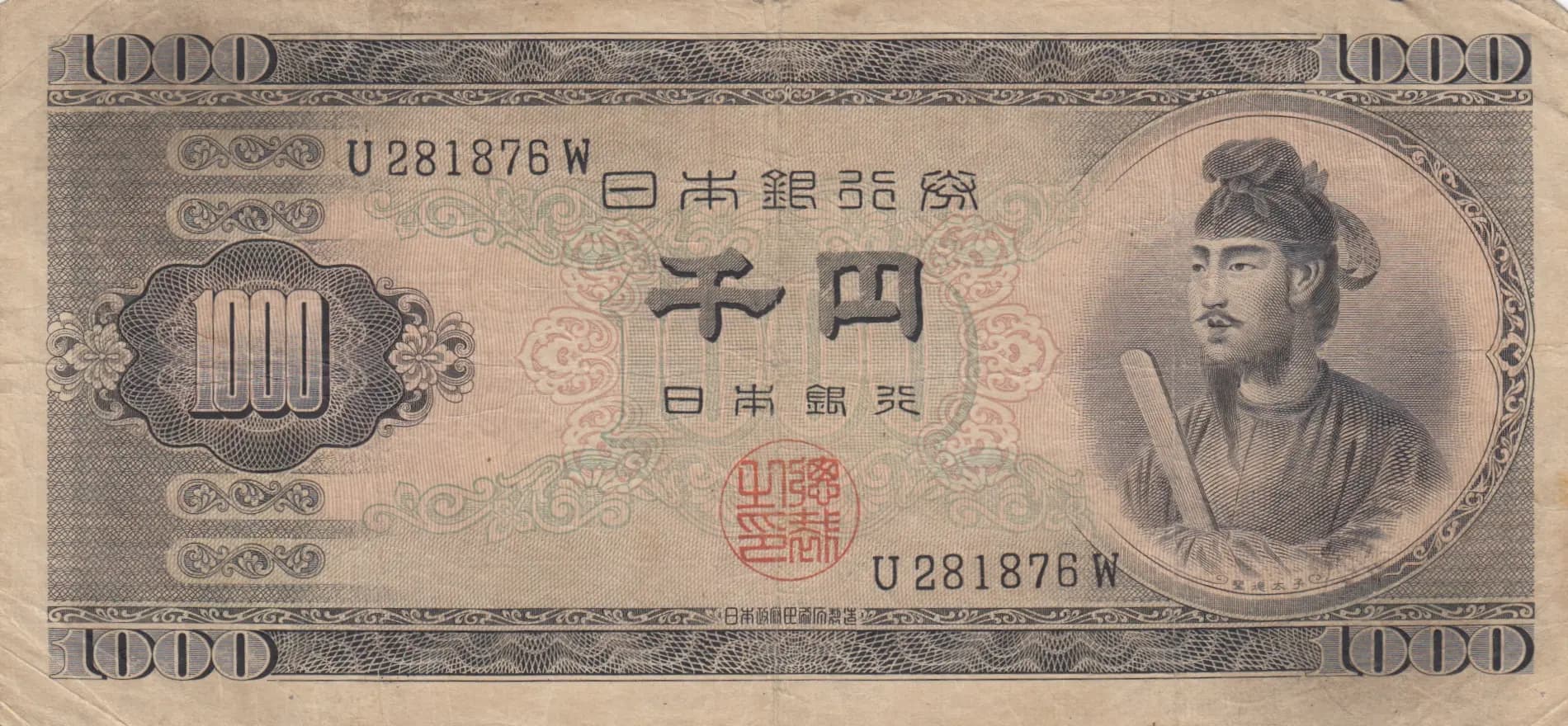
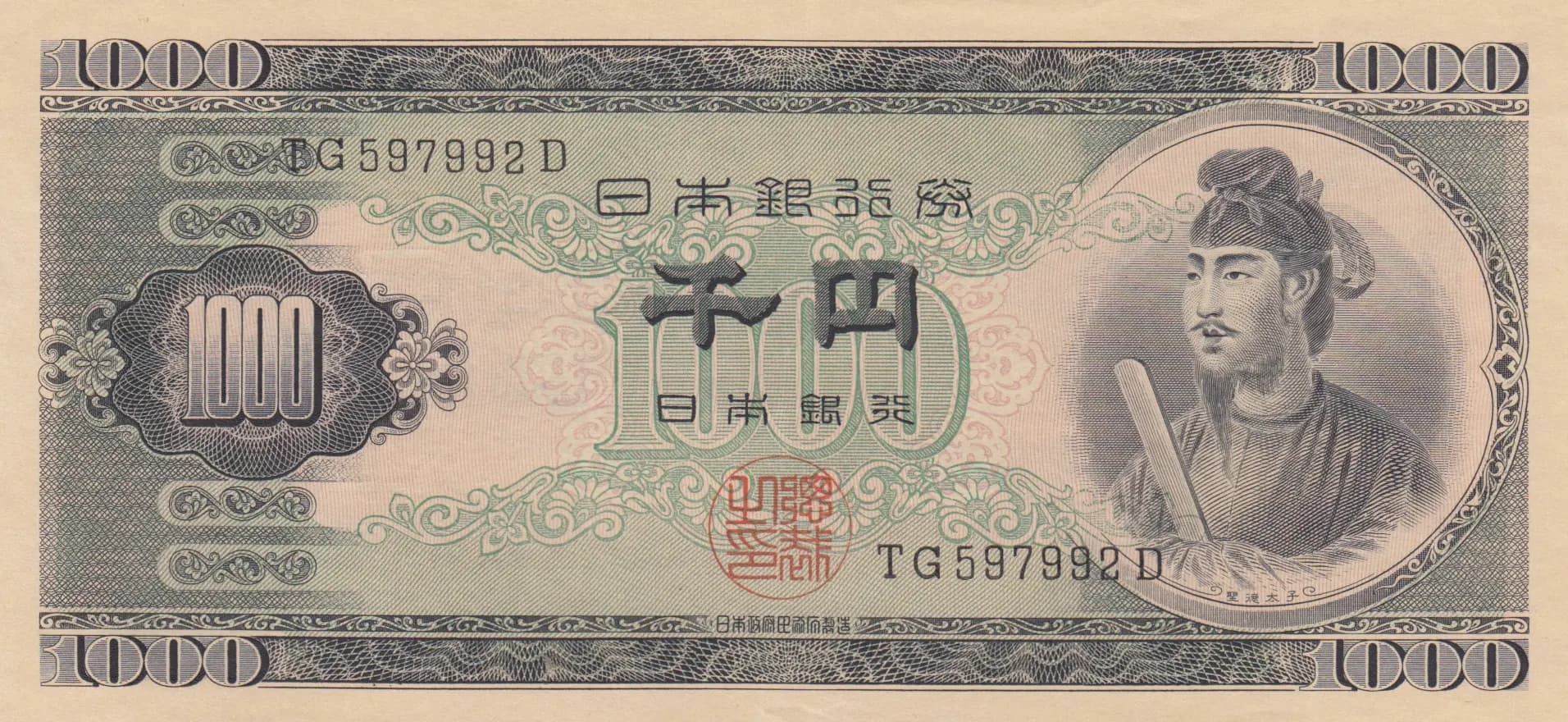
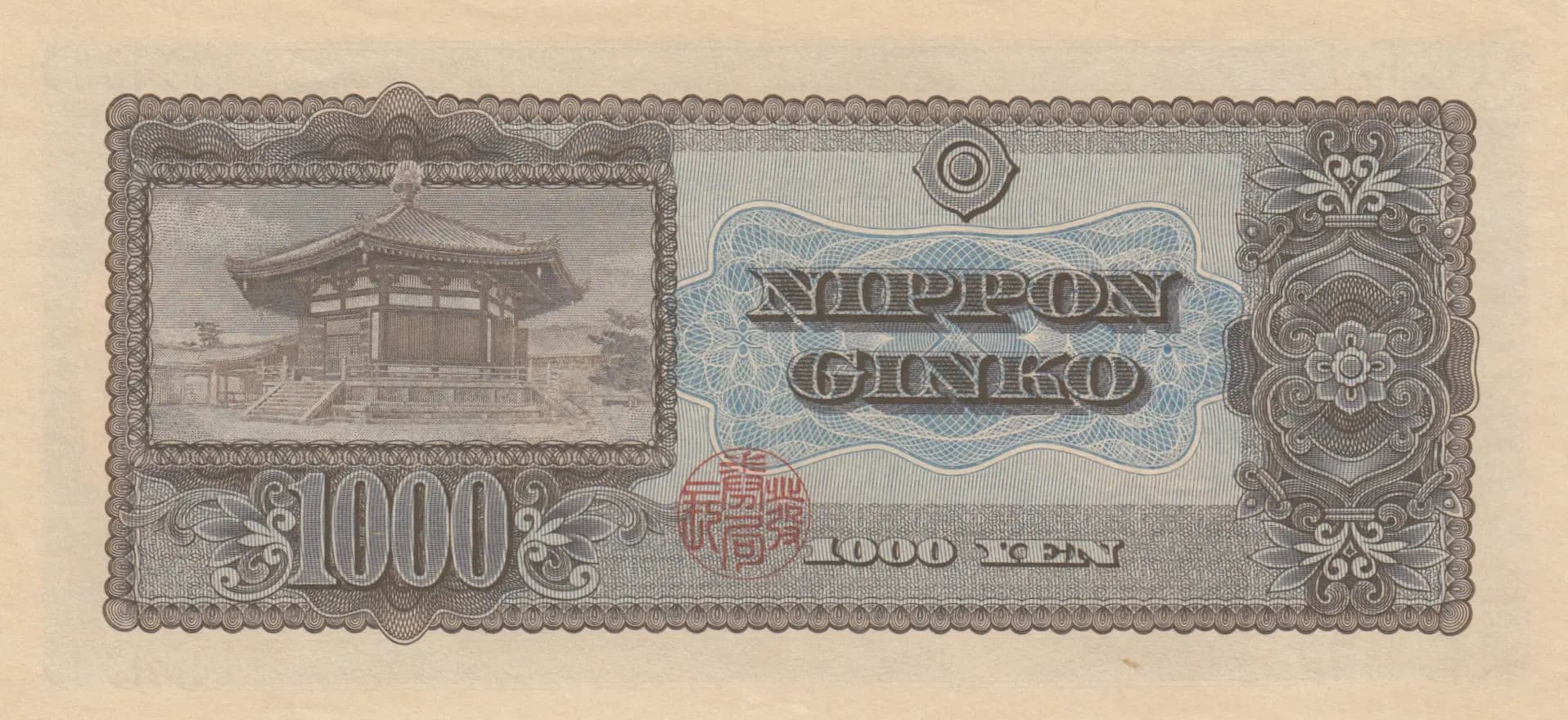
This is a Japanese 1000 Yen note from 1950 (Pick P-92b) in AU condition, featuring a portrait of Shotoku-taishi on the obverse and the iconic Yumedono Pavilion on the reverse. The note exhibits exceptional preservation with crisp, sharp details throughout, no visible wear, tears, or creasing, and displays the intricate engraved security work characteristic of early post-war Japanese currency. This denomination represents an important transitional period in Japanese monetary design during the Allied Occupation era.
Common. The 1000 Yen 1950 note (P-92b) was issued in substantial quantities and remains readily available in the collector market. eBay sales data demonstrates consistent trading at modest prices ($8-$35 for lower grades, $60-$158 for PMG 66 examples), with 2016 catalog values of $15 (VF) and $30 (UNC). These price points and transaction volumes indicate a note with steady collector demand but no scarcity premium. Notes in AU condition like this example are relatively common within the survivor population.
Issued in 1950 by the Bank of Japan (Nippon Ginko), this note commemorates Prince Shotoku-taishi (574-622 CE), a seminal figure in Japanese cultural and administrative history who promoted Buddhism and Confucian governance. The reverse features the Yumedono (Hall of Dreams) Pavilion at Horyu-ji Temple in Nara, one of Japan's most significant historical Buddhist structures, reflecting the nation's cultural recovery and emphasis on traditional heritage during the post-World War II reconstruction period. This design choice symbolized Japan's reconnection with its classical past following the upheaval of occupation and military defeat.
The obverse features a finely engraved portrait of Prince Shotoku-taishi depicted as a bearded man in traditional Asuka-period Japanese court dress with distinctive topknot hairstyle, positioned in profile facing left at the right side of the note. The reverse showcases an elegant architectural rendering of the Yumedono Pavilion, an octagonal Buddhist temple structure with characteristic curved Japanese roof lines, ornamental pillars, and detailed perspective work, positioned on the left side. Both sides are framed by ornate decorative borders incorporating floral and geometric scrollwork patterns, with red circular seals/stamps visible in the lower center portions. The color scheme employs green and pink/salmon tones on the obverse with gray and blue accents on the reverse, typical of 1950s Japanese currency design.
FRONT: '千円' (Sen-en / One thousand yen), '日本銀行券' (Nippon Ginko-ken / Bank of Japan Note), '1000' (Arabic numerals, upper left and right corners), Serial numbers 'TG597992D' and 'BG597992D' (double letter prefix format). BACK: 'NIPPON GINKO' (Bank of Japan in Romanized text), '1000' (Arabic numerals), '1000 YEN' (English denomination).
Intaglio engraving (line engraving), the standard security printing method for Japanese banknotes of this era. The visual analysis confirms the presence of intricate engraved line work, complex geometric patterns, fine crosshatching, and detailed portrait engraving characteristic of intaglio production. The note was produced by the Bank of Japan's printing facilities, which employed traditional engraving techniques combined with multi-color lithographic underprinting.
This note displays the characteristic features of Pick P-92b: double letter serial number prefix (TG and BG in this example), obverse color scheme of black on green and multicolor underprint with portrait position at right, and reverse design with Yumedono Pavilion in brown and blue. The visual analysis confirms the standard variety without overprints, special markings, or signature variations that would indicate a distinct sub-variety. Serial number prefixes TG and BG represent normal circulation series from the 1950 issue.