100 yen 1946
Market Prices
1 saleAbout This Note
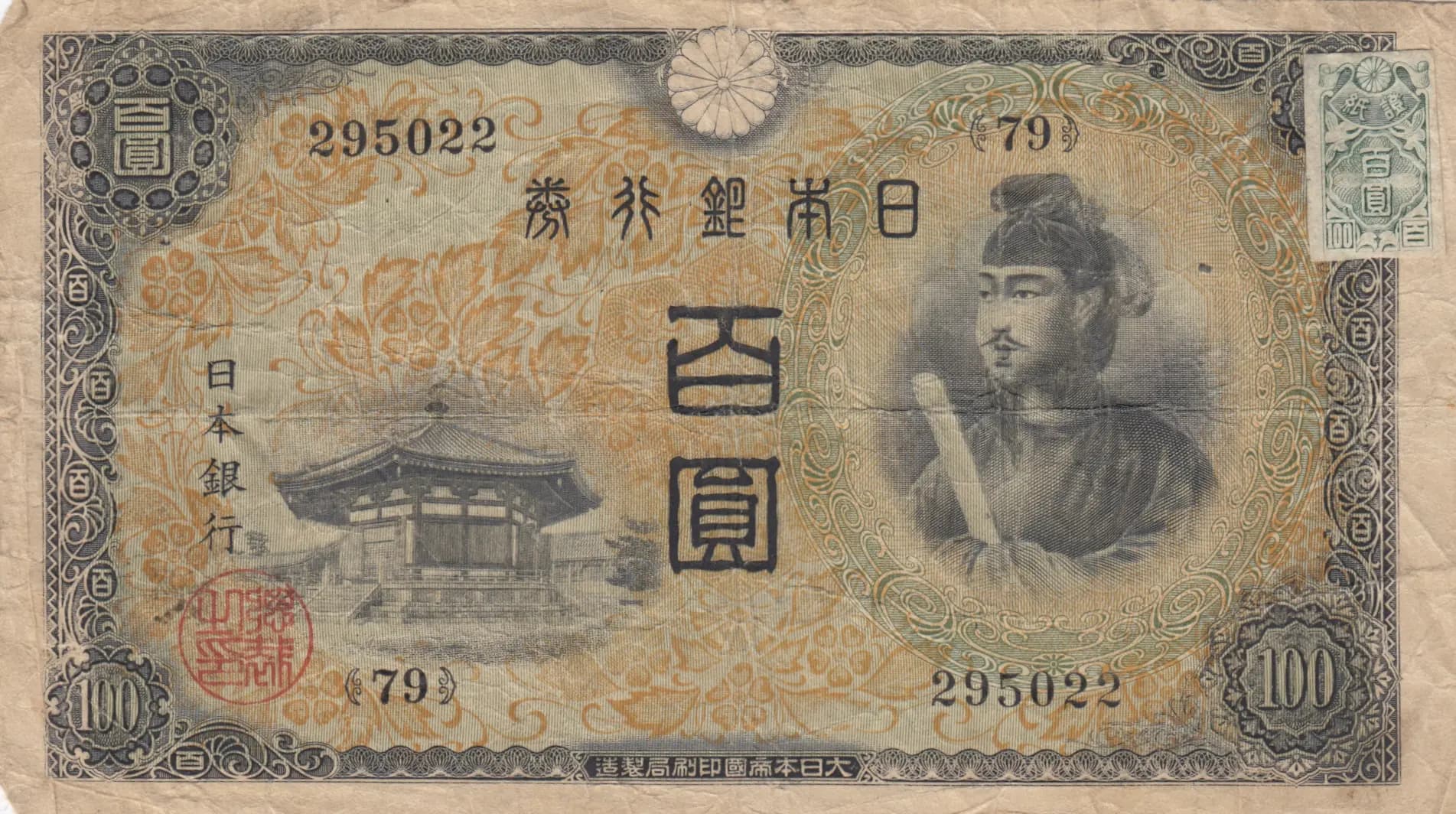
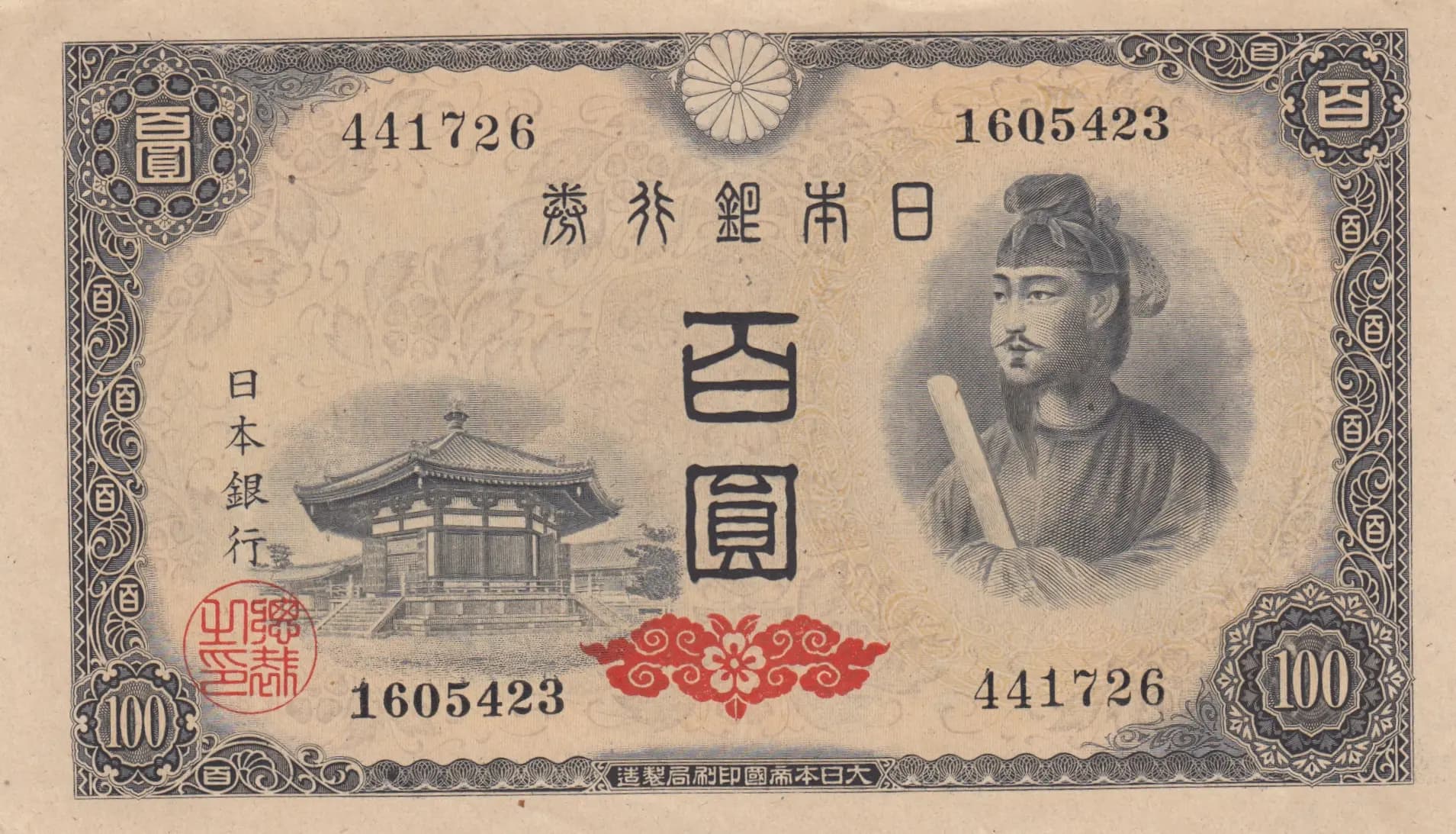
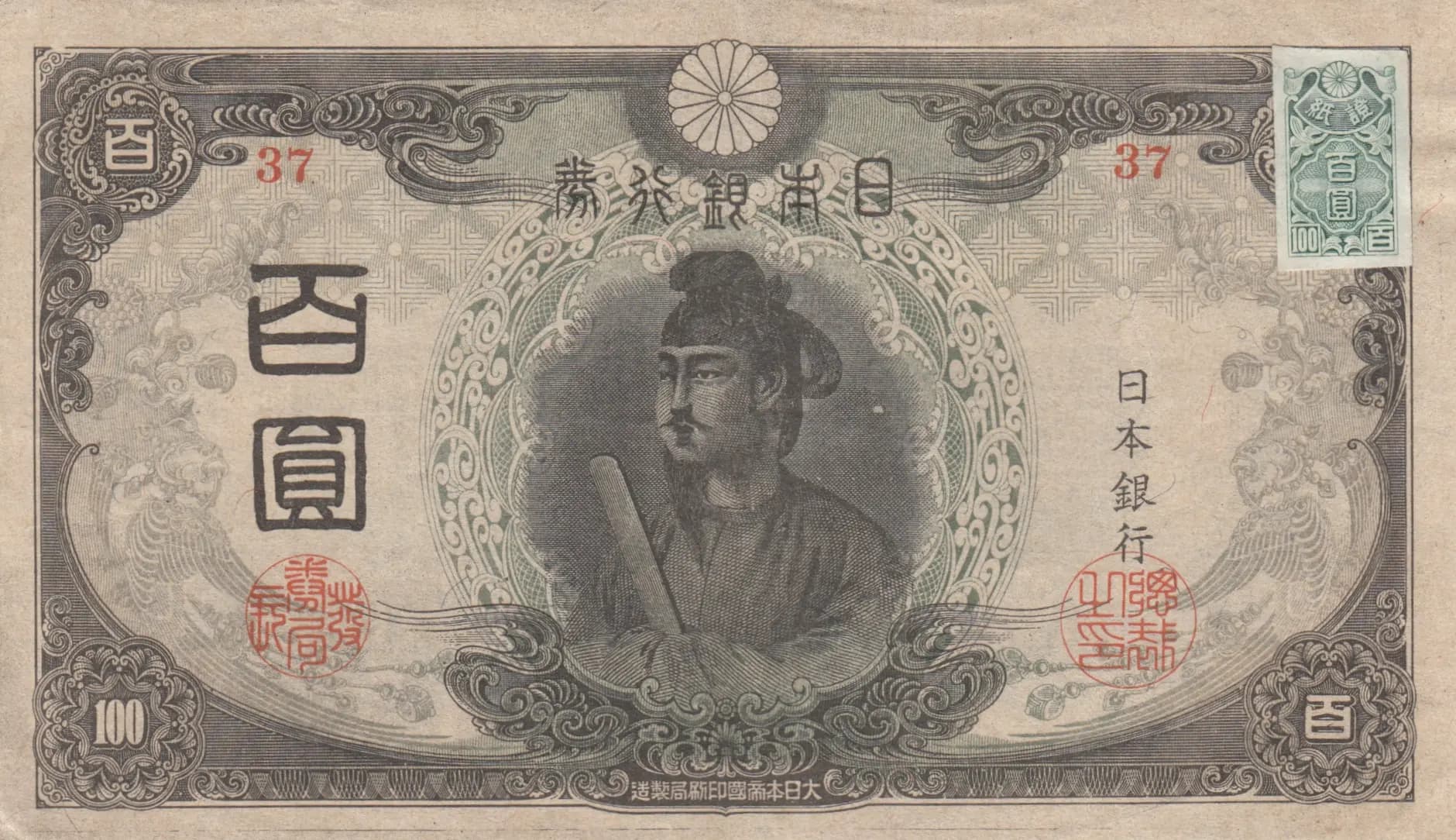
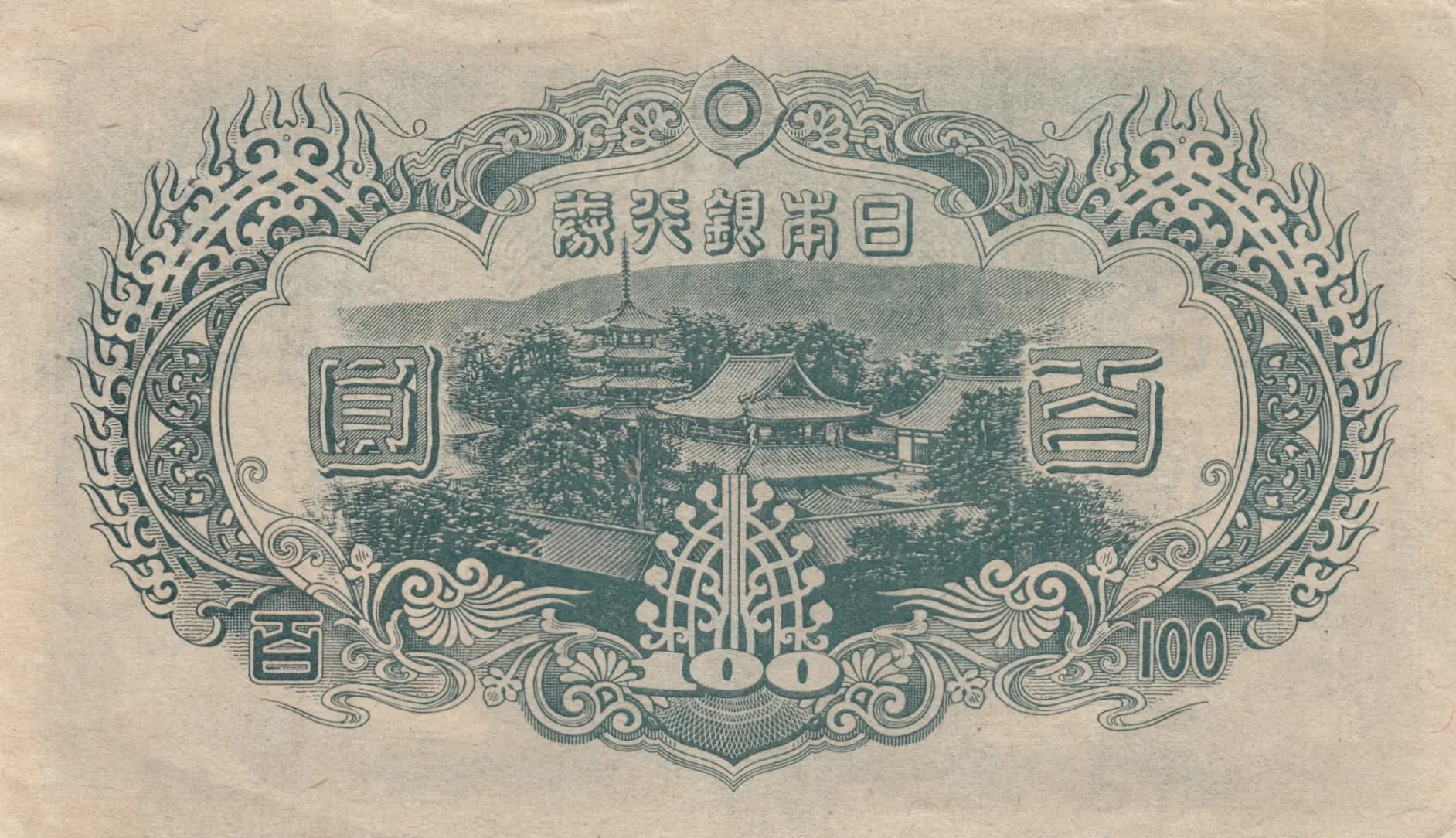
This is a VF-grade Japanese 100 Yen note from 1946 (Pick P-80c), featuring a striking portrait of Shotoku Taishi in traditional dress on the obverse and the Horyuji Temple on the reverse. The note displays excellent printing clarity with fine line engraving throughout, ornate decorative borders, and red seal impressions characteristic of early postwar Japanese currency. Despite the visual analysis suggesting uncirculated appearance, the VF grade reflects light handling consistent with this transitional period note.
Common. The 1946 100 Yen notes (Pick P-80c) were issued in substantial quantities and remain readily available to collectors. eBay pricing data confirms accessibility: a Fine example sold for $17.20 in 2021, while catalog values indicate VF specimens trade around $90, consistent with common postwar issues. The print run was substantial, and survival rates are good, making this a standard rather than scarce note.
This note was issued during Japan's immediate postwar period under Allied occupation, when the Bank of Japan (Nippon Ginko) resumed currency production following wartime disruptions. The reverse depicts the Horyuji Temple, one of Japan's most historically significant Buddhist temples dating to the 7th century, while the obverse features Prince Shotoku Taishi (574-622 CE), a revered historical figure credited with establishing Buddhism in Japan—choices reflecting cultural renewal and continuity themes important to postwar Japanese identity.
The obverse features a formal portrait of Prince Shotoku Taishi (574-622), a towering historical figure in Japanese civilization, rendered in three-quarter profile within an ornate circular cartouche. He is depicted wearing traditional formal court dress with his hair arranged in the classical style. The reverse showcases an engraved landscape scene of Horyuji Temple (founded 607 CE in Nara Prefecture), depicting the temple's characteristic curved-roof pagoda and main buildings nestled within a forested setting. Both sides are framed with elaborate ornamental borders featuring scrollwork, floral patterns, and flame-like decorative elements typical of 1940s Japanese banknote design. The imperial chrysanthemum appears prominently at the top center of the obverse.
Front: '百円' (100 Yen); '日本銀行' (Bank of Japan); '日本銀行券' (Bank of Japan Note); '37' (likely series or block indicator); '百' (100). Back: '日本銀行' (Bank of Japan); '百' (100); '100' (Arabic numeral denomination). The numeral '37' on the front may indicate the Showa 21st year (1946) in Japanese calendar notation.
This note was produced using intaglio engraving (recess printing), evidenced by the fine line work visible throughout the background patterns, the detailed landscape scene on the reverse, and the crisp definition of decorative elements. The multiple red seal impressions were likely applied by separate stamp process. This was standard for the Bank of Japan's currency production during the 1946 period, with printing likely executed by Japan's government printing facilities under Allied supervision.
The '37' marking on the front likely indicates Showa 21 (1946) in the Japanese calendar system (Showa era began 1926, so year 21 = 1946). Varieties of this Pick number may exist based on different red seal positions or block designations, but the visual analysis does not reveal distinguishing serial number prefixes or overprints that would identify a specific recognized variety. Further examination of the actual serial numbers would be needed to determine if this is a documented variety.