100 yen 1946
Market Prices
About This Note
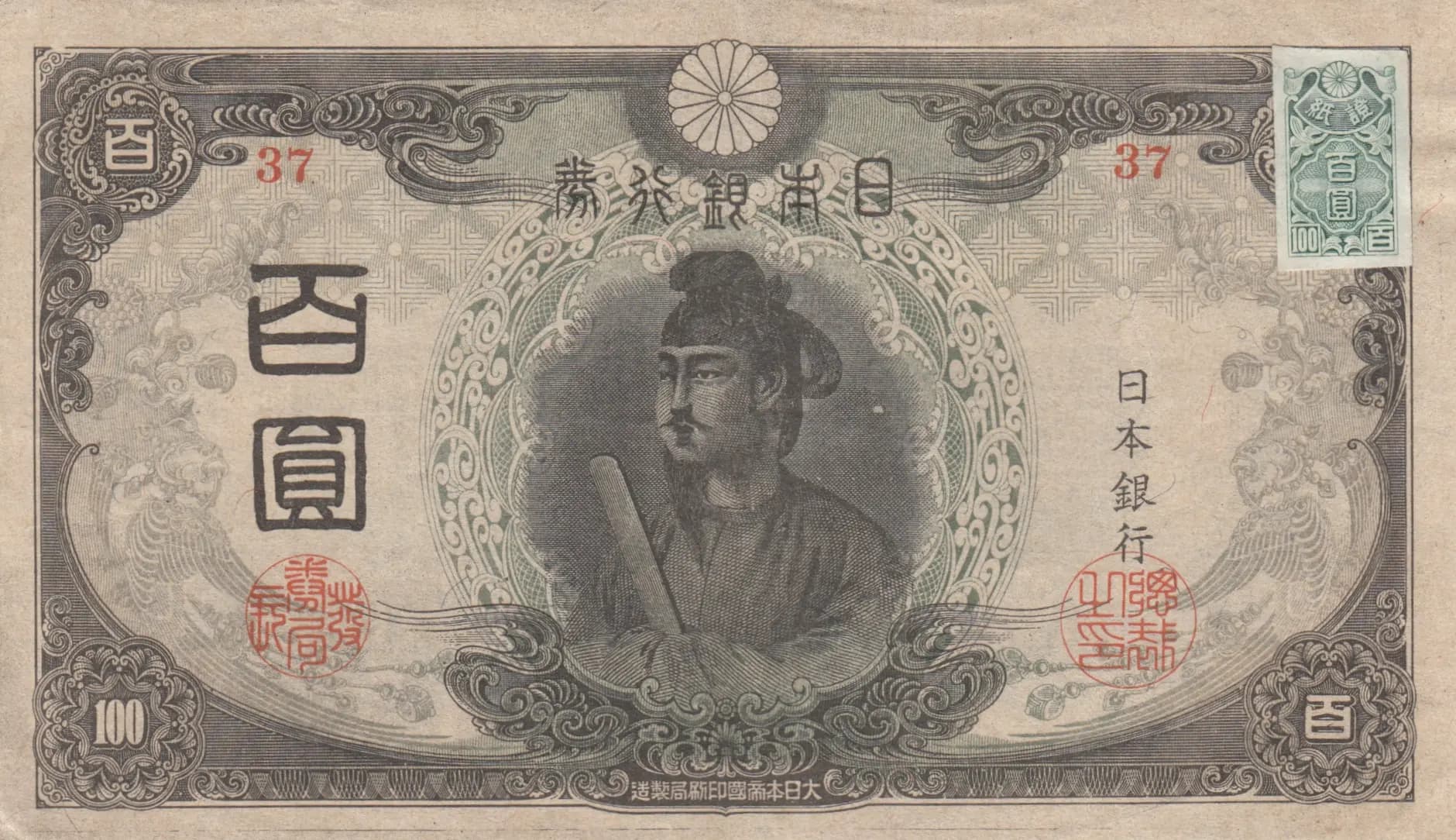
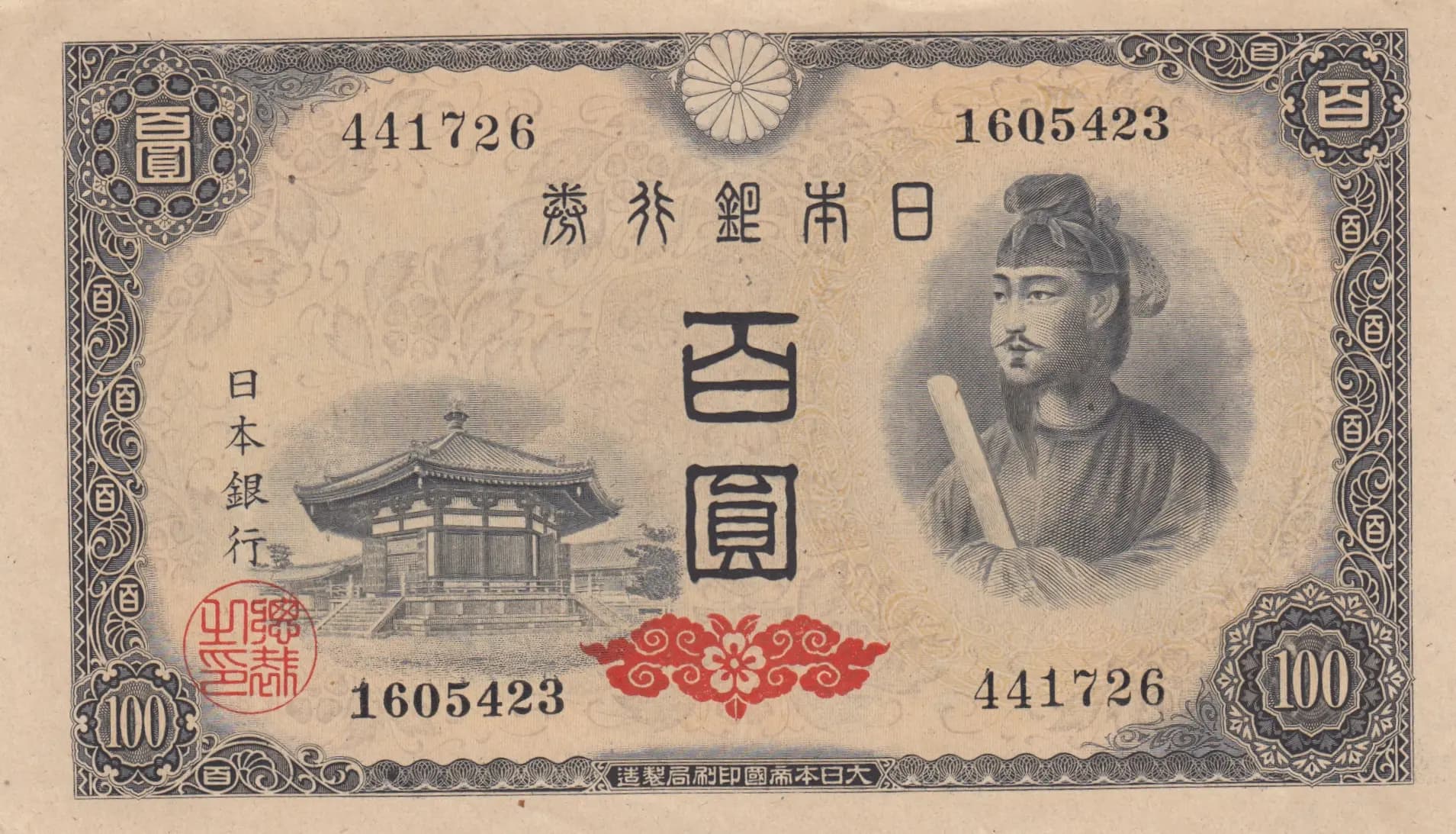
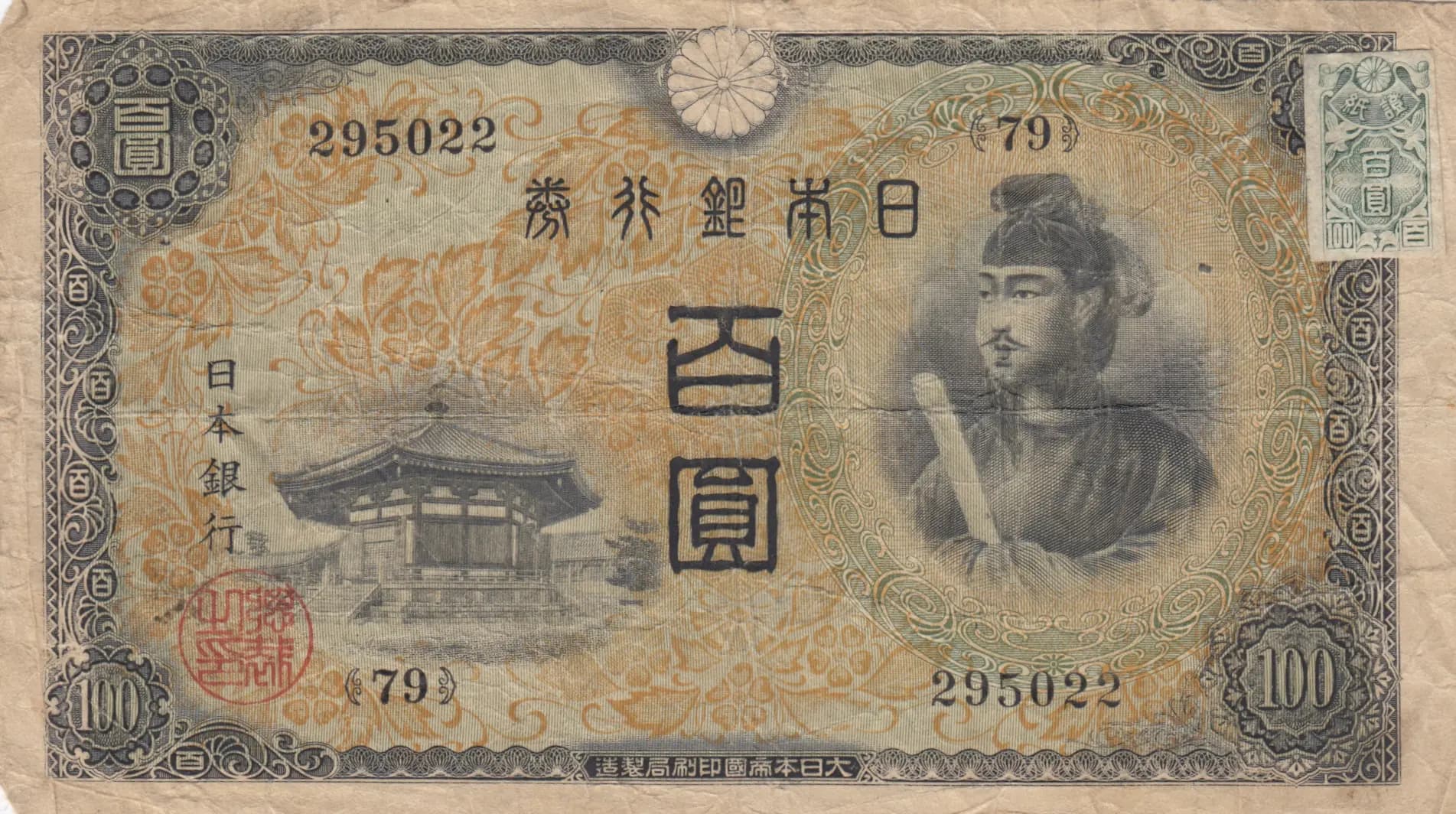
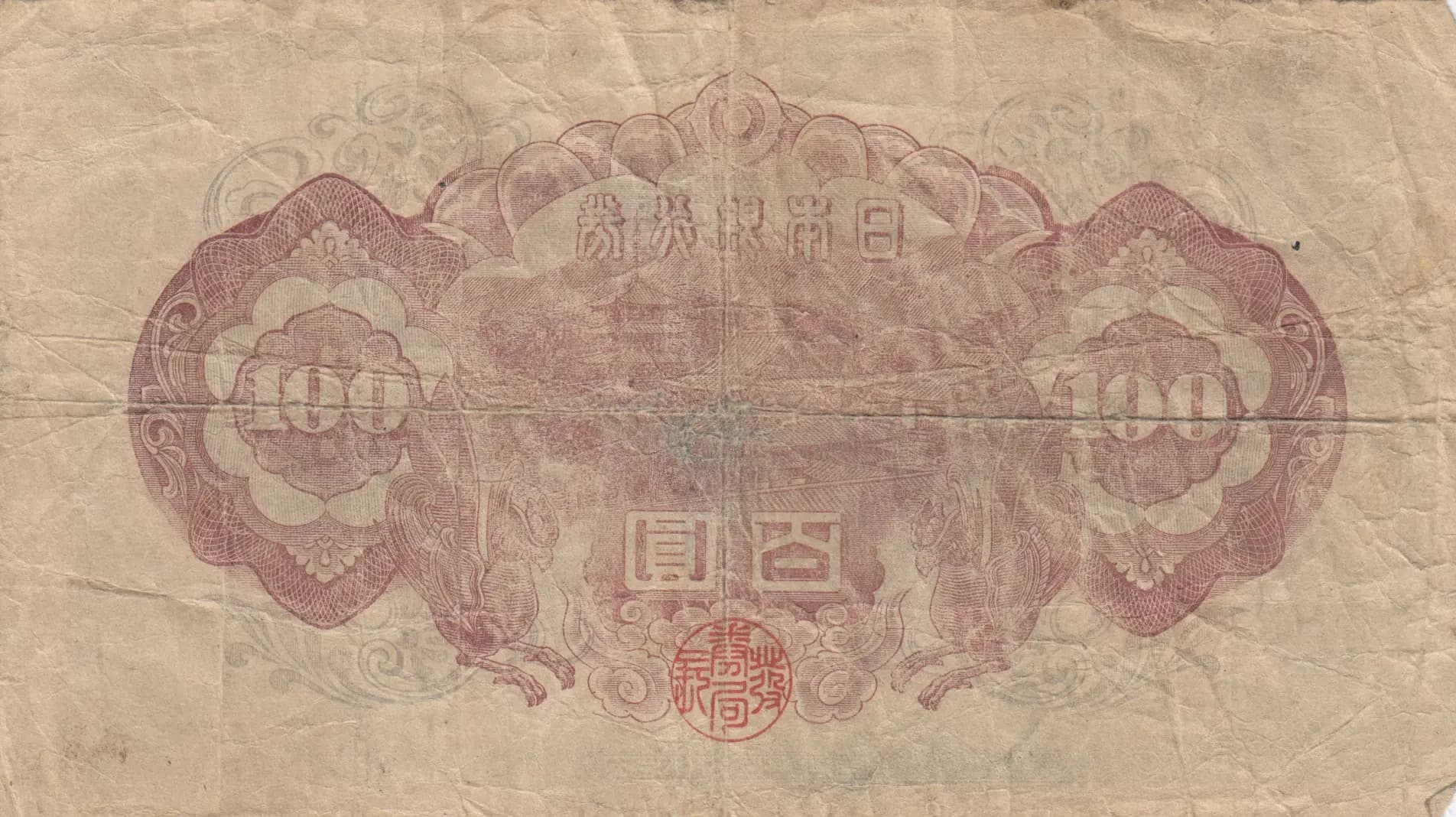
This 1946 Japanese 100 Yen note (Pick P-80b) presents a historically significant example of early post-war Bank of Japan currency in VG condition. The note features the iconic Yumedono pavilion and portrait of Prince Shotoku on the front, with the Horyu-ji temple depicted on the reverse, rendered in characteristic intaglio printing with gold and reddish-purple tones. The specimen shows expected wear from circulation and age, including creasing, foxing, and browning consistent with a note now nearly 80 years old, yet retains good definition of the fine engraving work and design elements.
Common. The 1946 100 Yen note (P-80b) was a regular circulation issue with substantial print runs during Japan's post-war currency reconstruction. eBay market data confirms this assessment, with circulated examples consistently trading in the $4.50–$7.50 range, XF examples at $7.99–$29.95, and catalog valuations for VG condition at approximately $15 USD. These notes are readily available in the numismatic market and present no scarcity premium.
Issued in 1946, this note represents Japan's immediate post-war currency reconstruction period under Allied occupation, when the Bank of Japan resumed note production following wartime disruptions. The imagery—featuring Prince Shotoku (574-622 CE), the Yumedono pavilion, and the Horyu-ji temple—reflects Japan's deliberate choice to honor classical Buddhist and cultural heritage figures and landmarks, emphasizing cultural continuity and national identity during a period of significant political and economic upheaval. This denomination and design series became foundational to Japan's modern currency system as the nation rebuilt its economy in the post-war era.
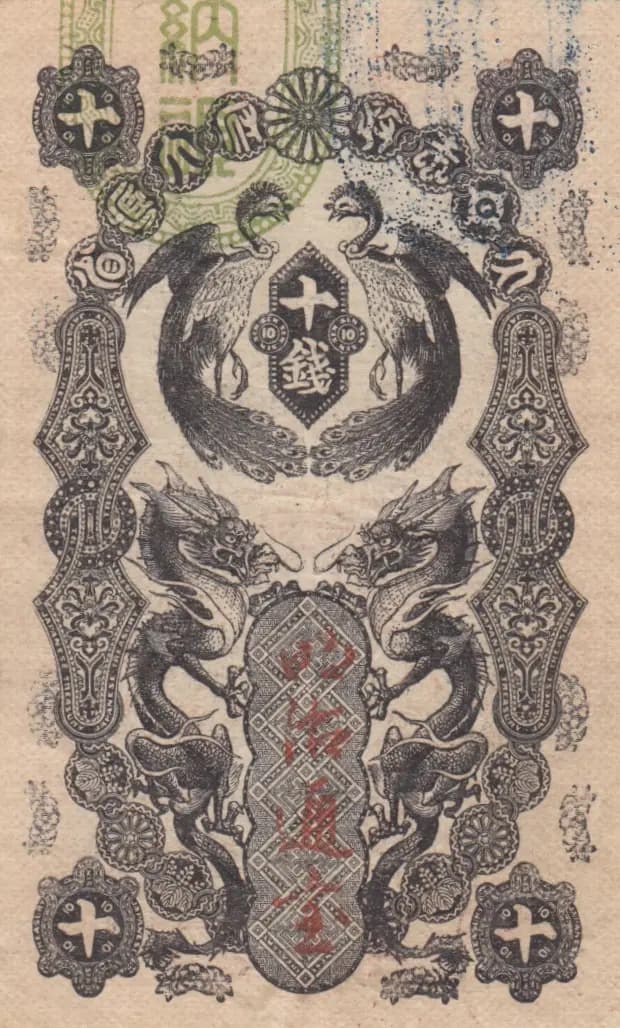
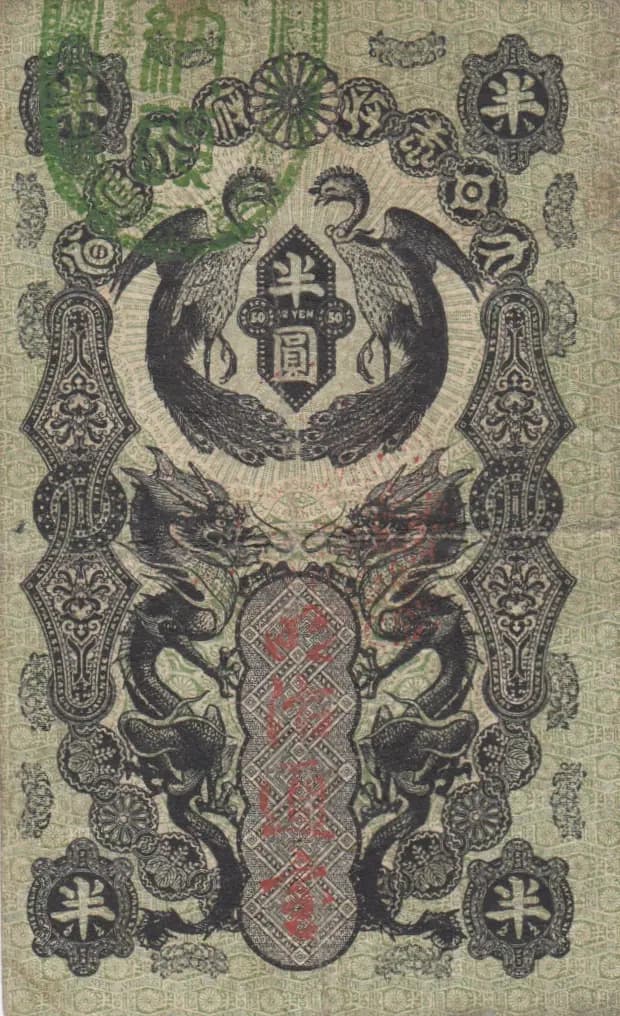
The front features a right-facing profile portrait of Prince Shotoku (Shotoku-taishi), identifiable by his traditional Japanese topknot hairstyle and formal court attire, positioned on the right side. To the left is the Yumedono (Hall of Dreams) pavilion, a significant Buddhist architectural structure associated with Prince Shotoku at Horyu-ji temple, rendered in detailed grayscale engraving. The design is framed by ornate borders incorporating the Imperial chrysanthemum flower at the top center, decorative coat-of-arms style emblems in the corners, and red governmental seals. The reverse displays a highly symmetrical design featuring stylized dragon or mythical creature figures flanking the lower center, with large ornamental cloud or flower medallion shapes rendered in reddish-purple tones. The elaborate scrollwork and geometric patterns throughout reflect classical Japanese artistic traditions and serve dual purposes of aesthetics and security.
Front: 百円 (Hyaku-en / 100 Yen); 日本銀行券 (Nippon Ginko Ken / Bank of Japan Note); 日本銀行 (Nippon Ginko / Bank of Japan); Serial numbers: 295022, 79. Back: 百円 (Hyaku-en / 100 Yen); 日本銀行券 (Nippon Ginko Ken / Bank of Japan Note). All inscriptions are rendered in traditional Japanese characters with supporting Arabic numerals for the denomination.
Intaglio (engraved) printing on wove paper, characteristic of high-security banknote production of the era. The fine line engraving patterns, intricate scrollwork, and geometric designs visible throughout both sides are consistent with steel plate intaglio engraving. The detailed portrait work, temple architecture rendering, and decorative elements show the hallmarks of professional security printing. For this Pick P-80b series, the Bank of Japan employed domestic and international security printers to produce these notes during the 1946 reconstruction period.
The visible serial number format (295022 with secondary identifier 79) is consistent with the standard serial number layout for this 1946 issue. The Pick P-80b designation represents the standard varieties of this denomination from the 1946 series. No overprints, date variations, or signature varieties are apparent from the examined specimen. Collectors may encounter minor variations in serial number prefixes and printing house marks, but these do not constitute major varieties affecting value significantly.