100 yen 1944
Market Prices
4 salesAbout This Note
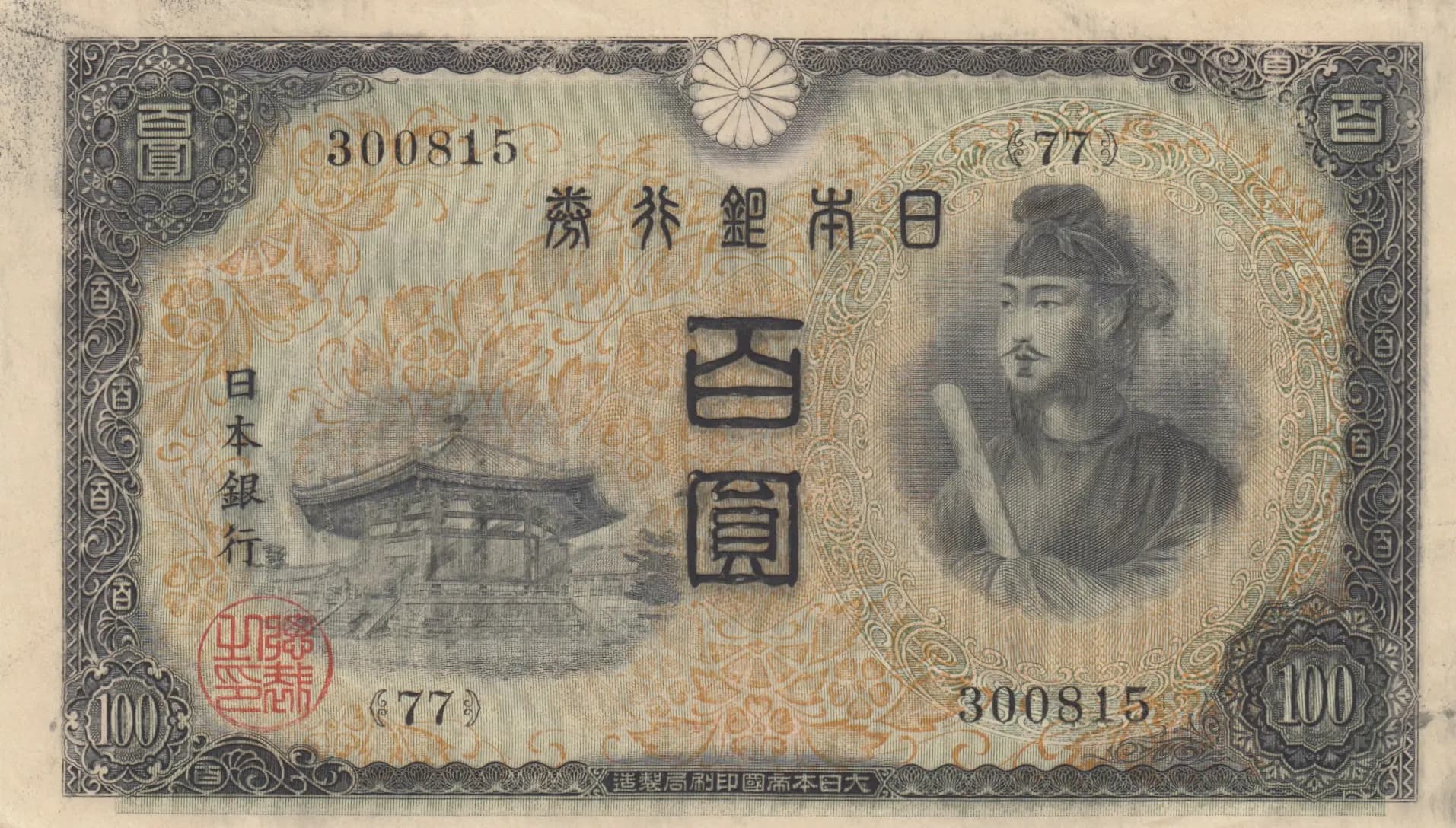
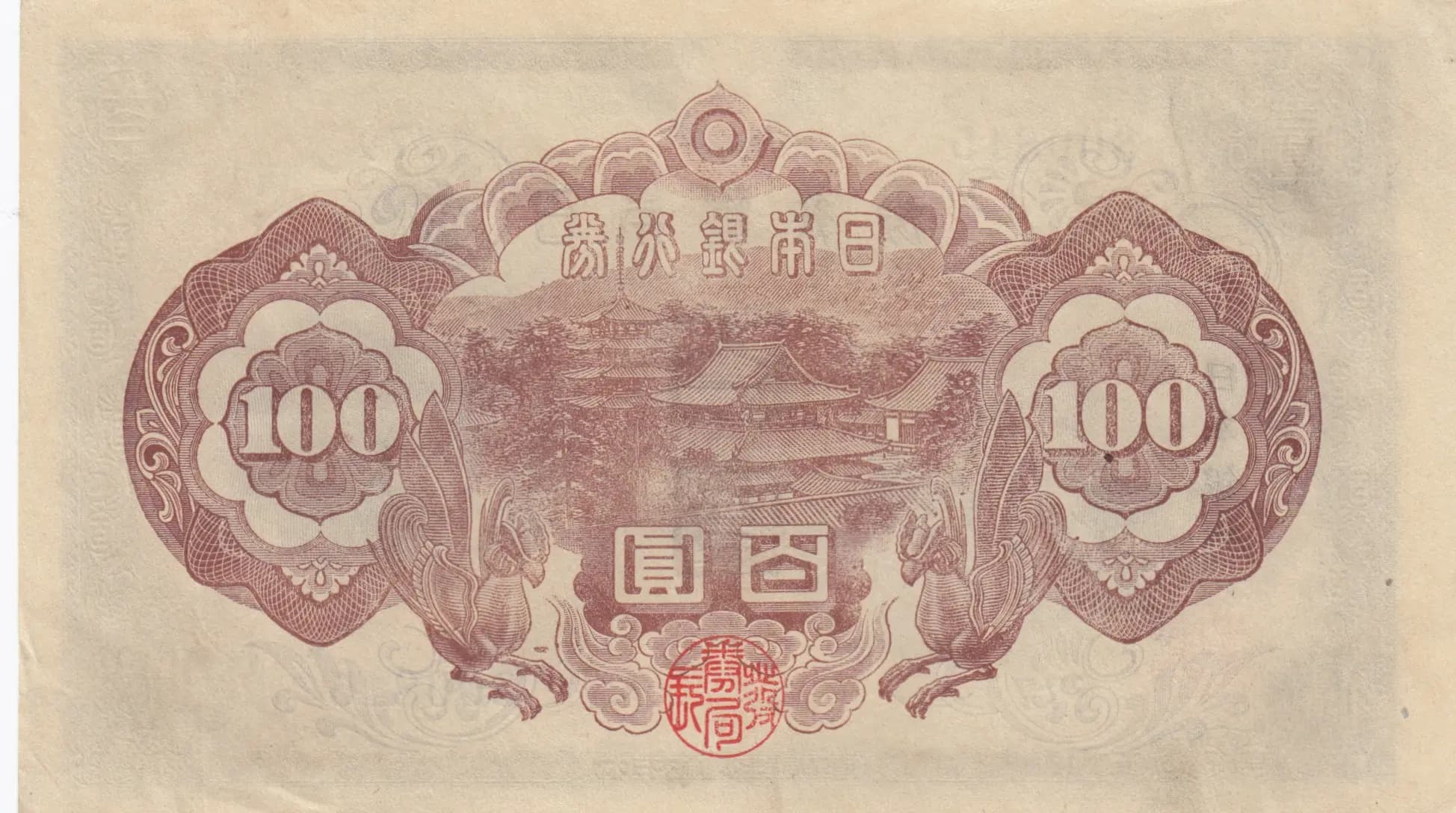
This is a well-preserved example of Japan's 1944 100 Yen note (Pick P-57), featuring the iconic Yumedono Pavilion on the obverse and Horyuji Temple on the reverse. The note displays the characteristic fine engraving and ornate border work typical of wartime Japanese currency, with black and tan tones on the front and red/maroon on the back. In EF condition with visible but minor age-related patina and foxing, this circulated note represents an important piece of late-Imperial Japanese monetary history.
Common. eBay market data shows consistent sales in the $4.25–$20.50 range for circulated and VF examples, with 2016 catalog values listing VF at $20 and UNC at $60. The 1944 100 Yen note had substantial print runs and examples remain readily available in the collector market. EF-graded examples such as this are neither scarce nor particularly premium, indicating normal circulation frequency for the issue.
Issued in 1944 during the final year of World War II, this banknote represents Japan's domestic currency during the latter stages of the war. The choice of the Yumedono Pavilion—a 7th-century structure associated with Prince Shotoku—and the Horyuji Temple reflects Japan's cultural nationalism and promotion of classical heritage during wartime. This note predates the post-war monetary reform and Allied occupation-era reissues, making it a direct artifact of the Imperial period's monetary system.
The obverse features a portrait of Prince Shotoku (Shotoku-taishi, 574-622 CE) in left-facing profile on the right side, depicted with traditional topknot hairstyle and formal attire. The Yumedono Pavilion—an octagonal structure within the Horyuji Temple complex—is illustrated at left-center. The reverse depicts a landscape view of the Horyuji Temple complex set among rolling hills. Both sides employ intricate ornamental borders with chrysanthemum motifs, cloud cartouches, and geometric patterns characteristic of Japanese artistic tradition. The watermark features an arabesque phoenix design positioned at the left.
Front: 日本銀行 (Nippon Ginko / Bank of Japan), 百円 (Hyakuen / 100 Yen), serial number 300815, note identifier 77. Back: 日本銀行券 (Nippon Ginko Ken / Bank of Japan Note), 百円 (Hyakuen / 100 Yen), denomination numeral 100. All inscriptions are in traditional Japanese characters (kanji and numerals).
This note was produced using fine line engraving and intaglio printing methods, evidenced by the detailed border work, portrait rendering, and fine line patterns visible throughout. The multiple color separations (black/tan on obverse, red/maroon on reverse with cream underprint) indicate skilled color registration. The note was likely printed by Japan's government printing bureau (Nippon Ginko). The security features include fine engraving complexity, red seal impressions, and serial numbering.
The observed serial number 300815 and note identifier 77 are consistent with standard production numbering of the 1944 issue. No significant overprints or date variations are evident. This note represents the standard regular issue variety of Pick P-57 with no documented major varieties affecting its classification.