100 yen 1930
Market Prices
4 salesAbout This Note
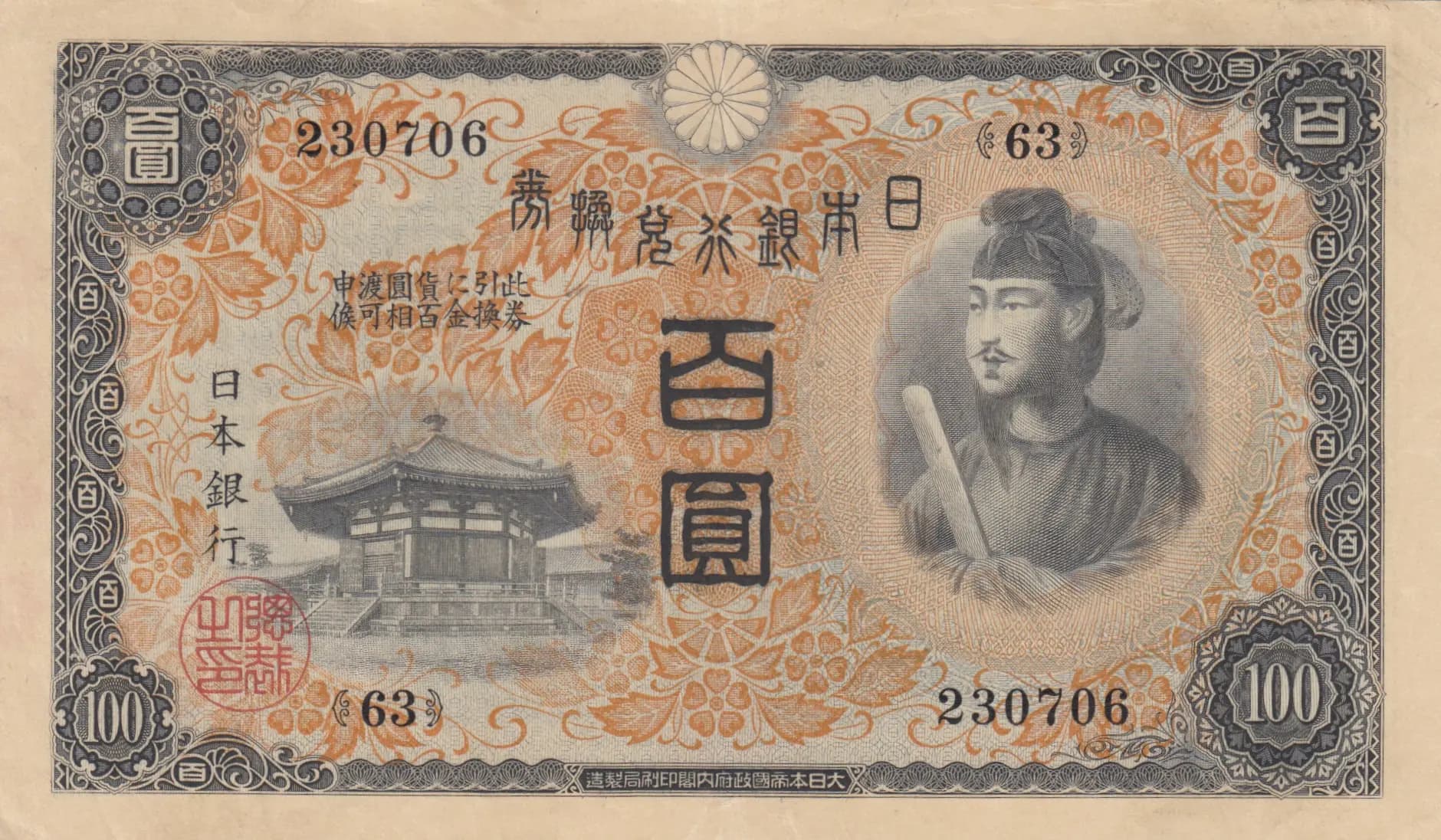
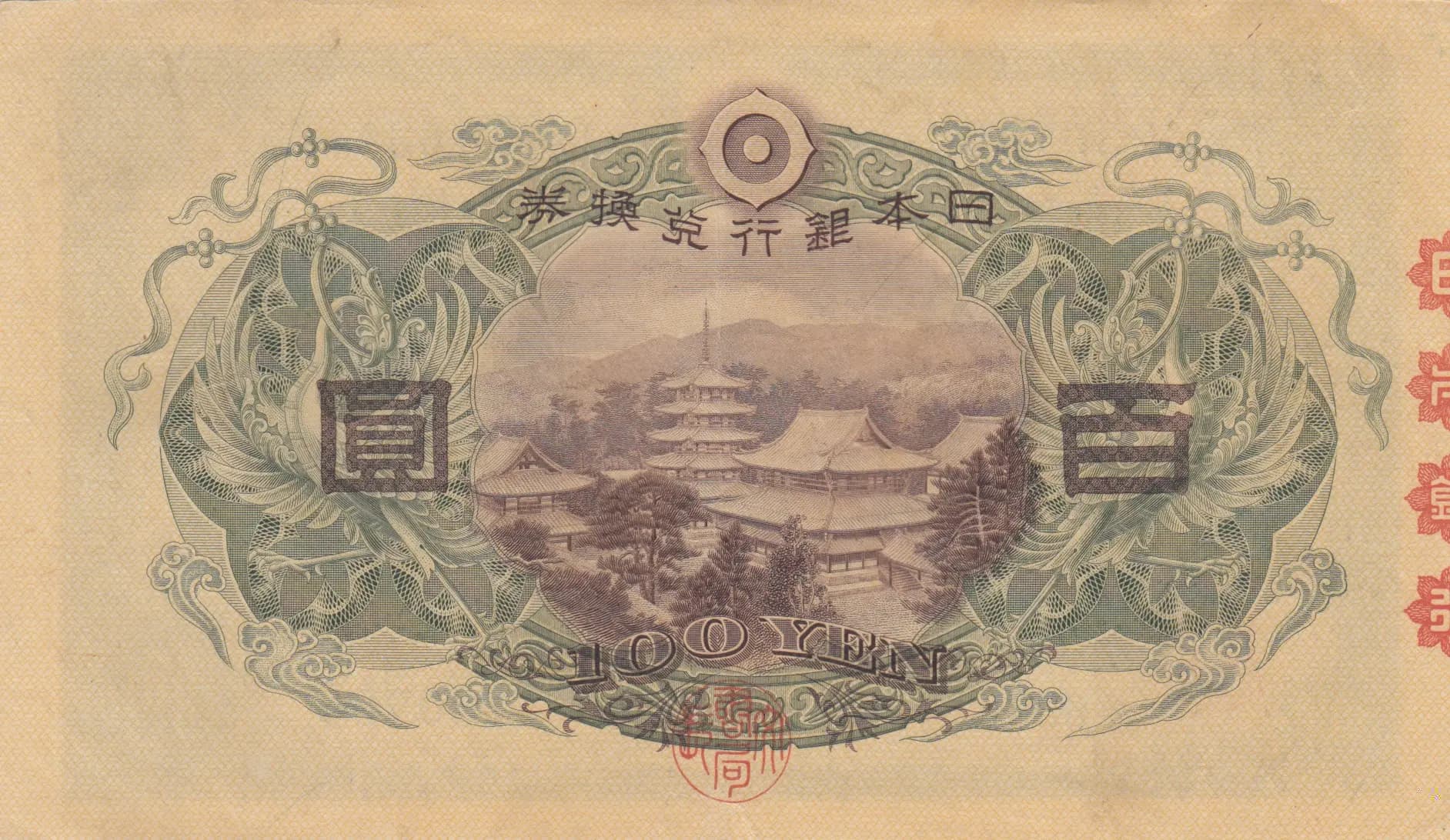
This 1930 Bank of Japan 100 Yen note (Pick P-42) presents the iconic imagery of Shotoku-taishi and the Yumedono Pavilion on the obverse, with the celebrated Horyu-ji Temple landscape on the reverse. In VF condition, the note displays moderate circulation wear with visible creasing and age-related discoloration, yet retains the fine engraved details and ornate decorative borders that characterize this important early 20th-century Japanese currency. The dual-language denomination (Japanese and English on reverse) and intricate security engraving reflect the sophisticated printing standards of the Taisho-era Bank of Japan.
Common. Multiple eBay sales records from 2010-2021 show consistent circulation at modest prices: Fine specimens around $3-5, VF around $26, and EF around $35. The 2016 catalog valuation of $50 in VF aligns with observed market activity. This Pick P-42 represents a regular issue from 1930 with substantial print run by the Bank of Japan, and while numismatically significant as an important historical Japanese note, it remains readily available to collectors. The observed condition (VF) with visible circulation wear is typical and common for surviving examples of this denomination.
Issued in 1930 during Japan's imperial period, this note commemorates two of Japan's most sacred Buddhist sites and revered historical figures. The obverse depicts Shotoku-taishi (574-622 CE), the legendary prince-regent credited with establishing Buddhism in Japan and founding the Horyu-ji Temple complex—the structures visible in the reverse landscape design. This iconography reinforced cultural pride and historical continuity during the pre-war imperial era, while the English denomination reflects Japan's growing international trade presence in the late 1920s-1930s.
The obverse features an ornate rectangular composition with the Yumedono Pavilion (Hall of Dreams), the elegant 8th-century octagonal structure from Horyu-ji Temple complex, depicted in fine grayscale on the left. To the right is a left-facing profile portrait of Shotoku-taishi rendered in detailed cross-hatching, showing the prince-regent in period dress. The design employs elaborate floral and geometric border patterns with circular medallion emblems in all four corners and a chrysanthemum flower motif at top center, with red seal impressions. The reverse depicts the expansive Horyu-ji Temple complex landscape within an ornate rectangular frame flanked by stylized dragon motifs—showing multiple curved-roof pavilions, pagoda tower, formal gardens, and trees in a sophisticated multi-level perspective rendered in green, gray, and brown tones. Fine decorative scrollwork and floral patterns complete the borders with additional red seal marks.
FRONT: 日本銀行 (Nippon Ginko / Bank of Japan) at top; 百圓 (Hyaku En / 100 Yen) as primary denomination; 日本銀行券 (Nippon Ginko-ken / Bank of Japan Note); 中渡圓貨に引比候可相合金換券 (Certificate exchangeable for currency / redemption clause). Serial number 230706 with reference marking 63. BACK: 日本銀行券 (Bank of Japan Note) at top; 100 YEN in English and 圓 (En / Yen) in Japanese; reference or official marking present.
Intaglio engraving (copperplate/steel plate), the standard security printing method for Japanese banknotes of this era. The complex line work, fine detail rendering of portraiture and architectural elements, and intricate ornamental borders are characteristic of intaglio production. The note exhibits the sophisticated multi-color printing typical of Bank of Japan notes produced by the government printing works during this period, with careful layering of tan/beige, orange, green, and brown underprints beneath the primary black engraved designs.
Serial number 230706 with reference marking 63 visible on this specimen. This note belongs to the standard 1930 issue without overprints. Known varieties of Pick P-42 include differences in serial number prefixes and occasional specimen markings, though the primary design remained consistent throughout the 1930 production run. No significant rarity varieties are documented for this Pick number that would materially affect value or collector interest.