10 yen 1945
Market Prices
22 salesAbout This Note
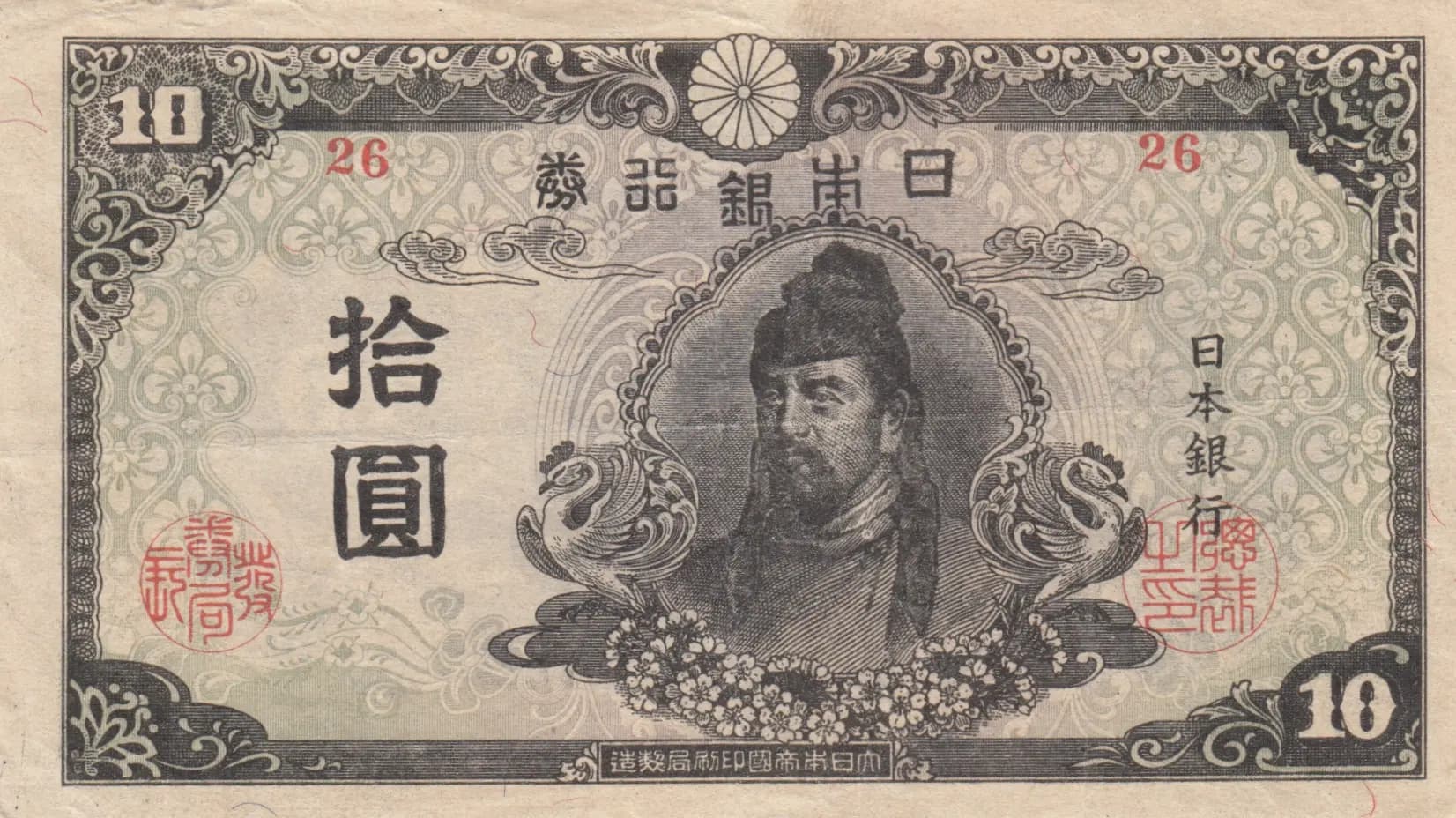
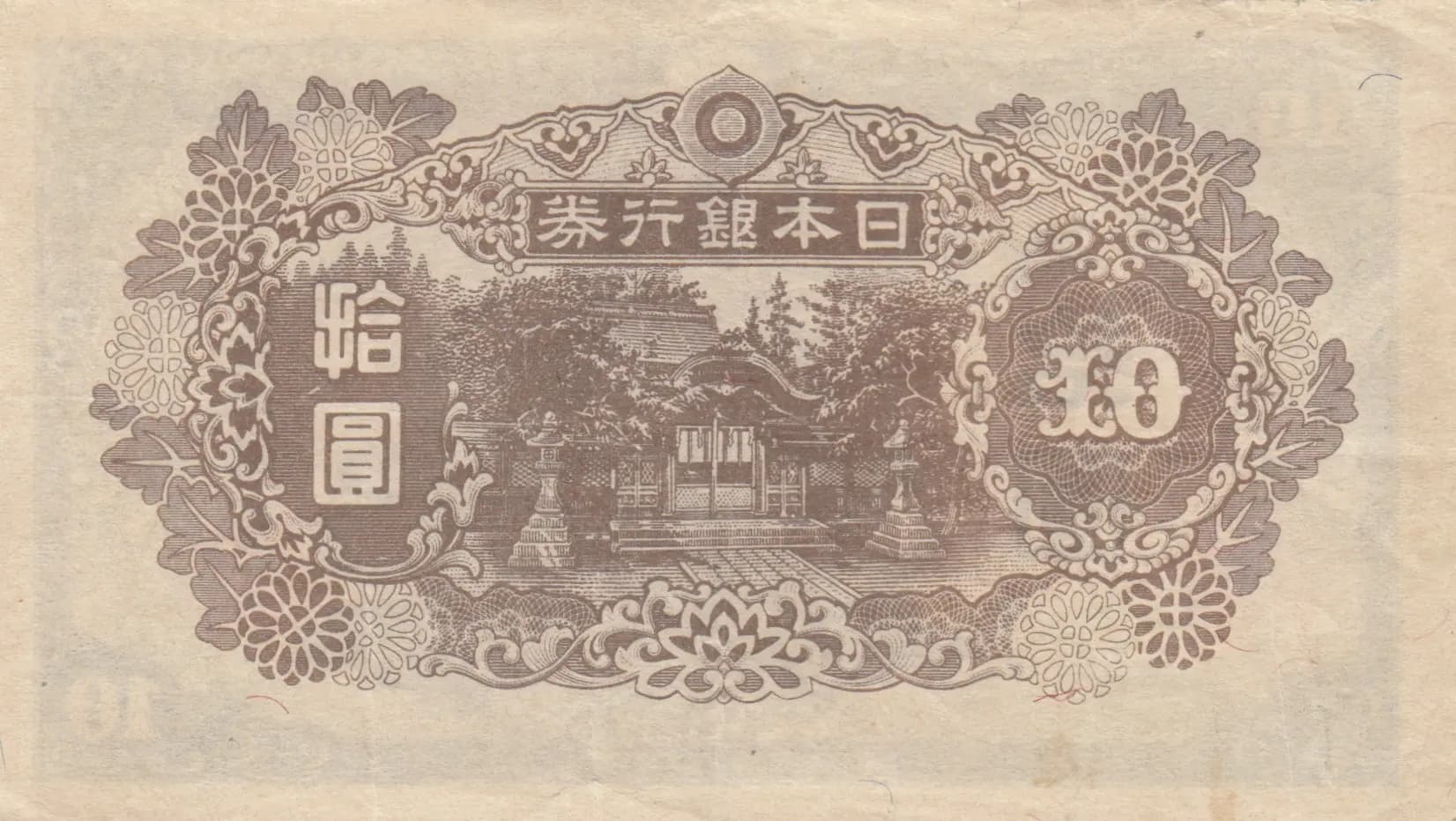
A VF example of Japan's 1945 10 Yen note (Pick P-77a), featuring a striking portrait of Wakeno Kiyomaro in traditional dress with intricate chrysanthemum and floral border designs on the obverse, and a detailed landscape featuring Goo shrine on the reverse. The note displays the characteristic black and gray printing of the period with cream/beige base stock, showing light aging and foxing consistent with its wartime origin, yet remaining well-preserved with no major damage or tears.
Common. This is a regular-issue note from the final year of Japanese wartime production with substantial print runs across multiple block numbers (1-69 documented). Secondary market data confirms common circulation and availability: eBay historical sales consistently show VF specimens selling in the $4-$20 range from 2009-2021, with catalog values in the moderate range ($75 for VF in 2016). The abundance of transaction records and consistent pricing indicate no scarcity premium.
Issued by Nippon Ginko (Bank of Japan) in 1945, during the final year of World War II, this note represents the last regular-issue Japanese banknotes produced before major postwar reforms. The selection of Wakeno Kiyomaro, an 8th-century scholar-statesman, and the depiction of a sacred shrine reflects traditional Japanese cultural imagery maintained even during the nation's most turbulent period. The note's relatively modest denomination and careful design aesthetic demonstrate Japan's efforts to maintain economic and cultural continuity amid wartime pressures.
The obverse features a formal three-quarter profile portrait of Wakeno Kiyomaro (734-799), a prominent scholar and government official of Japan's Nara period, rendered in black ink with fine detail work. He is depicted wearing traditional courtier robes with a topknot hairstyle characteristic of the Heian period. The portrait is surrounded by elaborate decorative borders incorporating chrysanthemum flowers (the imperial mon), flowering cherry or plum branches at the portrait's base, ornamental scrollwork, and fine geometric patterns in all four corners. Red circular government seals appear on both sides of the portrait. The reverse showcases the Goo Shrine (Gū), a major Shinto shrine, depicted in detailed landscape engraving with traditional architecture featuring curved tiled roofs, surrounding vegetation, and mountainous terrain. The shrine building is rendered with fine architectural detail characteristic of high-quality period engraving. Decorative borders on the reverse mirror the obverse with chrysanthemum motifs and elaborate ornamental scrollwork.
Front: '日本銀行' (Bank of Japan), '拾円' (10 Yen), '日本銀行券' (Japanese Bank Note), '26' (block/series number). Back: '日本銀行券' (Japanese Bank Note), '拾円' (10 Yen), '10' (denomination in Arabic numerals).
Intaglio (steel engraving) printing, the standard security printing method used by Japanese banknote printers of the 1940s. The fine line work, intricate geometric patterns, and detailed portraiture and landscape elements are characteristic of engraved banknote production. The note was produced by the Bank of Japan's designated security printer, utilizing multiple color plates (black for primary design, gray for background patterns, with red applied for seals and accent elements).
Block numbers 1-69 have been documented for this issue, with the note exhibiting 'Portrait number 3' as referenced in secondary sources. The Pick catalog designates this as P-77a, the 'a' variety designation suggesting there are related varieties (likely P-77, P-77b, etc.) distinguished by subtle design or printing variations. Serial number configuration and block numbering on the observed example should be documented for precise variety identification, though the visual analysis confirms the standard design type without unusual overprints or alterations.