10 yen 1930
Market Prices
79 salesAbout This Note
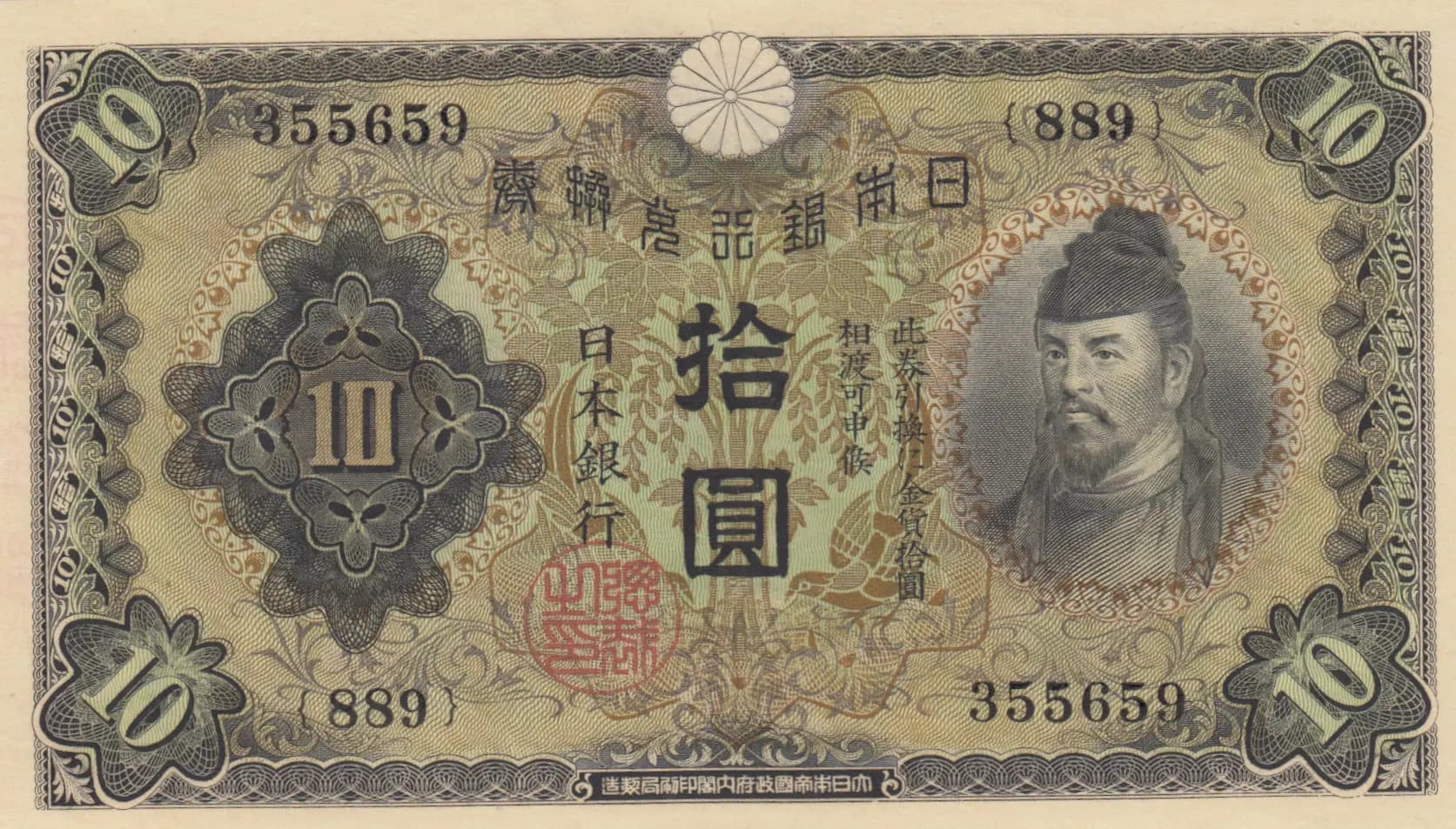
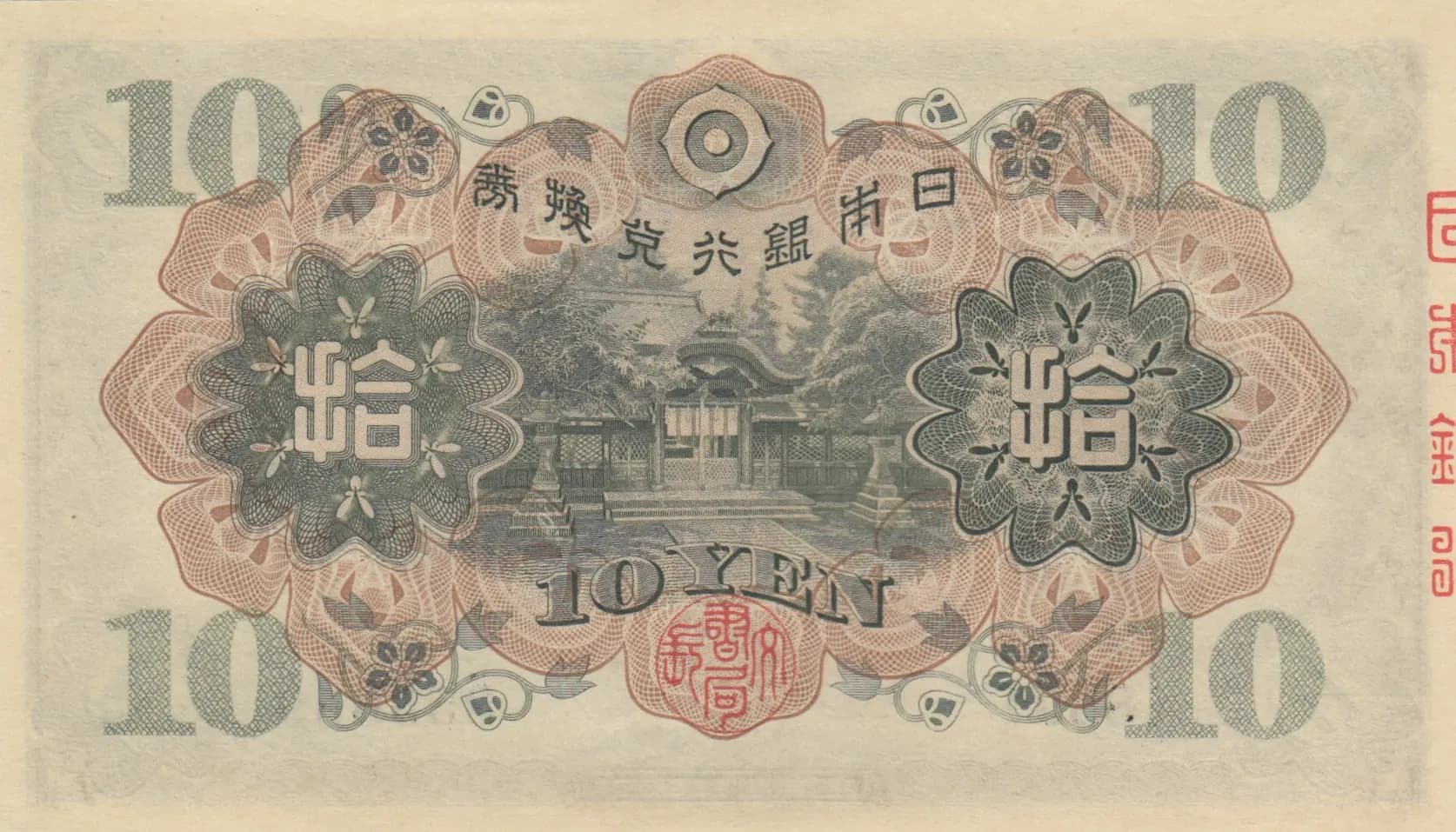
This is an exceptional example of a Japan 10 Yen note from 1930 (Pick-40a), graded UNC, displaying crisp, well-preserved printing with no visible wear or damage. The obverse features an ornate portrait of Wakeno Kiyomaro rendered in black and gold tones with elaborate decorative borders, while the reverse showcases a serene temple landscape identified as Goo Shrine surrounded by natural scenery. The sharp engraving quality, intact chrysanthemum watermark at the top center, and pristine condition make this an excellent example of pre-war Japanese currency design.
Common. The eBay market data shows consistent sales across multiple decades at modest prices, with UNC examples selling for $5–$20 historically and recent PMG-graded examples (63–66) reaching $16–$105. The catalog value for UNC condition is listed as $20, and the frequency of sales across various conditions and time periods indicates a healthy supply in the collector market. This note had a standard circulation issue and was produced in significant quantity, making it readily available to collectors.
Issued during the Showa period in 1930 by the Bank of Japan (Nippon Ginko), this note reflects the imperial aesthetics of early 20th-century Japan through its prominent chrysanthemum emblem (the imperial seal) and classical portraiture of Wakeno Kiyomaro, an influential Nara-period statesman and scholar. The reverse's depiction of Goo Shrine anchors the note in Japan's spiritual and cultural heritage, representing the nation's reverence for its historical landmarks during an era of modernization.
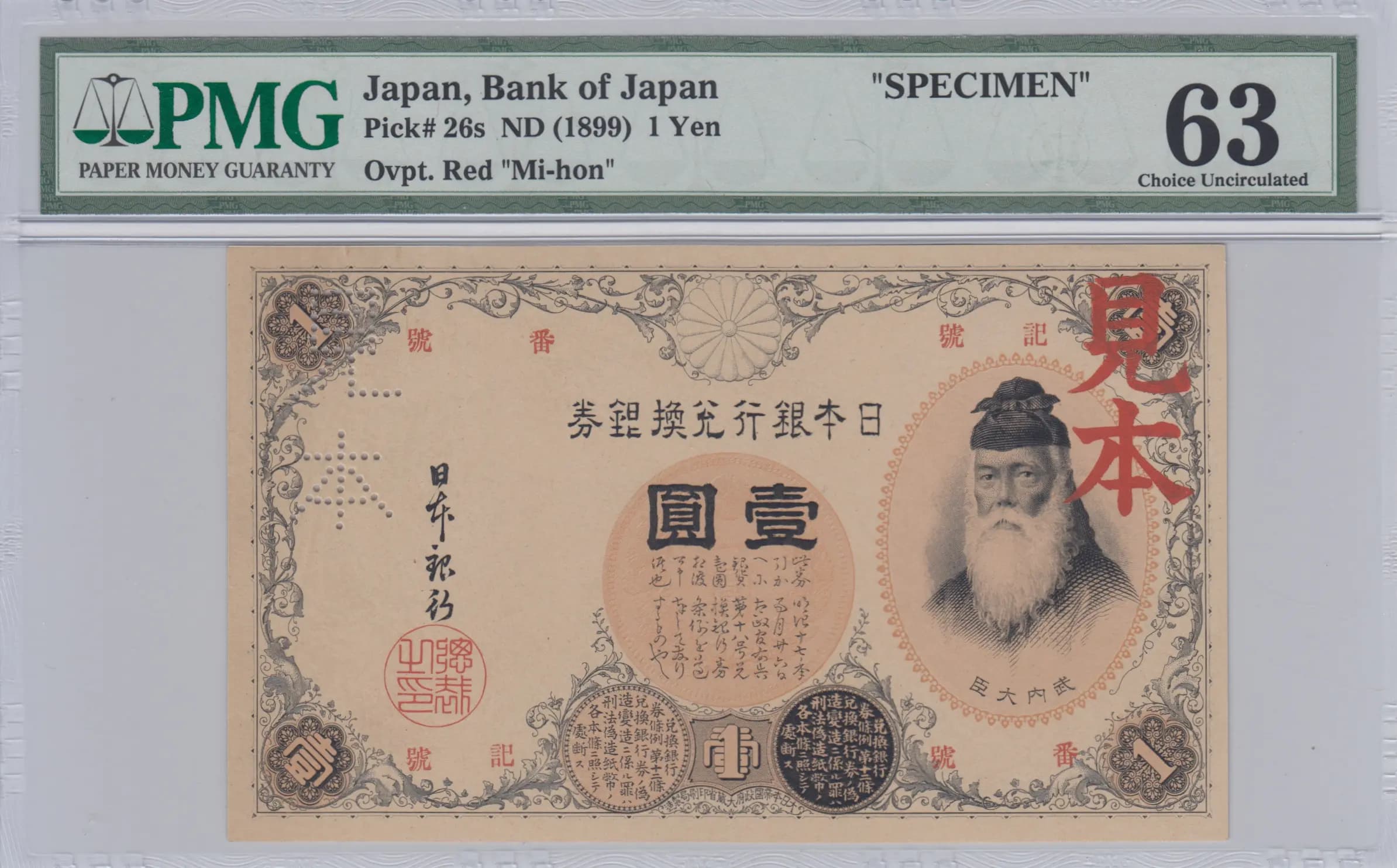
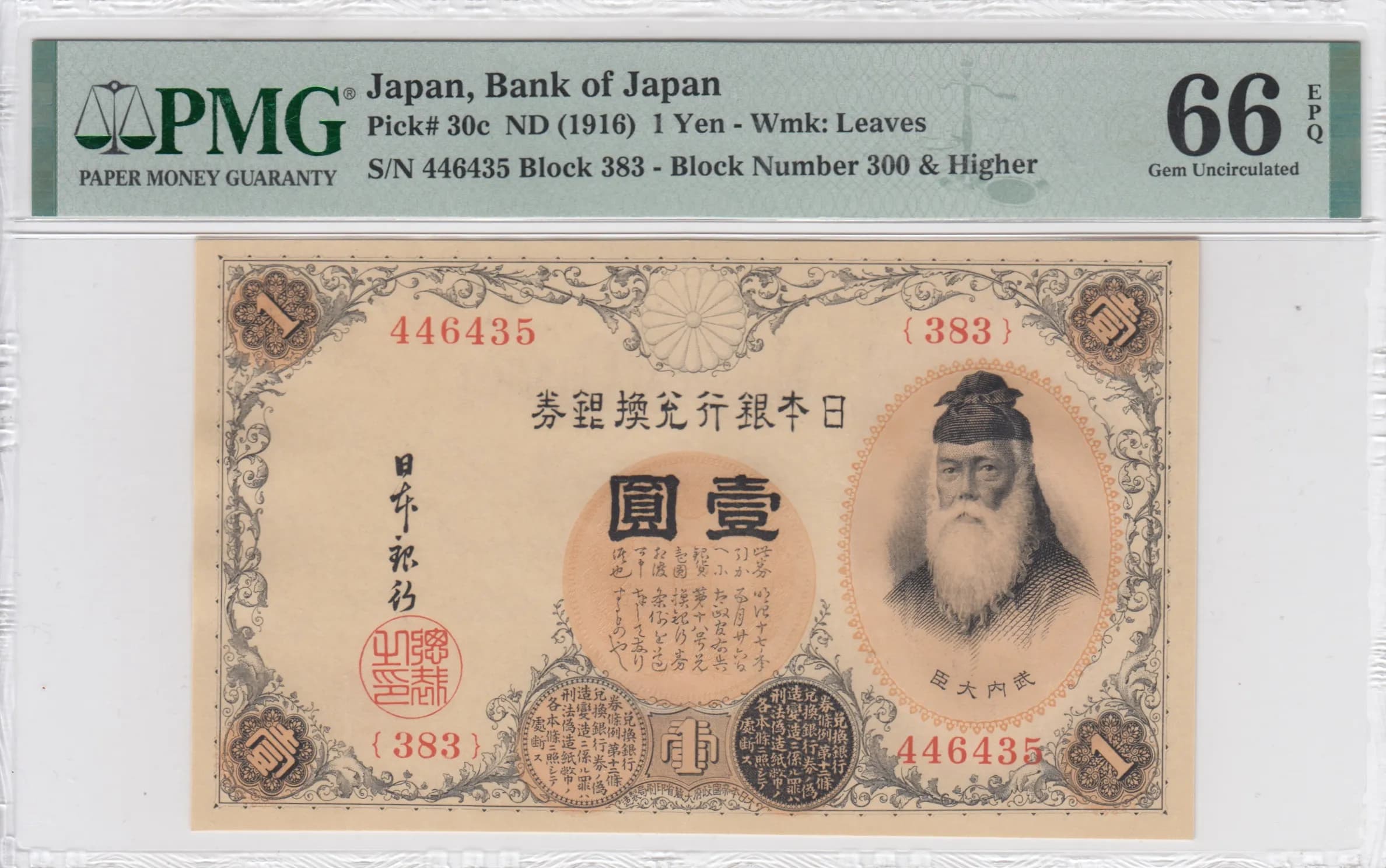
The obverse features a classical portrait of Wakeno Kiyomaro (734–799), a respected scholar and government official of the Nara period, positioned on the right side in profile facing left. His dignified bearded visage is rendered in fine detail against a tan and gold background with intricate black line engraving forming elaborate decorative cartouches with floral and geometric patterns in all four corners. A chrysanthemum flower—Japan's imperial emblem—appears prominently at the top center as both a security feature and nationalist symbol. The reverse depicts Goo Shrine (Goo Jinja), one of Japan's important Shinto shrines, shown in traditional architectural style with characteristic curved roof and ornamental details, set within a forested mountain landscape with evergreen trees and distant hills. Large decorative '10' numerals frame the composition on left and right, with ornate floral cartouches and an official red seal completing the design. The color palette shifts from warm tans and blacks on the obverse to creams, greens, reds, and browns on the reverse.
Front: '日本銀行券' (Bank of Japan Note), '十圓' (Ten Yen), '日本銀行' (Bank of Japan), with serial numbers '355659' and '889'. Back: '日本銀行券' (Bank of Japan Note), '十圓' (Ten Yen), large denomination numerals '10' on left and right edges, and an official red seal with characters in the center-bottom area. The note includes both Japanese text and English numerals on the back as noted in catalog references.
The note employs fine line engraving and intaglio printing methods, evidenced by the crisp, sharp detail visible throughout the design—particularly in the intricate border patterns, portrait modeling, and landscape details on the reverse. The complex overlapping lines creating texture in the decorative elements and the precision of the chrysanthemum watermark are characteristic of high-quality engraved banknote production. This note was produced by Japanese imperial printing works; during this period, the Bank of Japan commissioned engraving from skilled security printers capable of producing multi-color intaglio work.
This specimen is identified as Pick-40a, the standard 1930 issue with Japanese text and English denomination on the back (differentiating it from later variants P-51 and P-56 which feature Japanese text only on the back). Serial numbers visible are 355659 and 889, though without examining multiple examples, specific variety determination by serial number prefix or signature combinations cannot be conclusively established from the visual data alone. The note lacks overprints or other modifications indicating it is a regular issue from the main production run.