10 sen 1944
Market Prices
27 salesAbout This Note
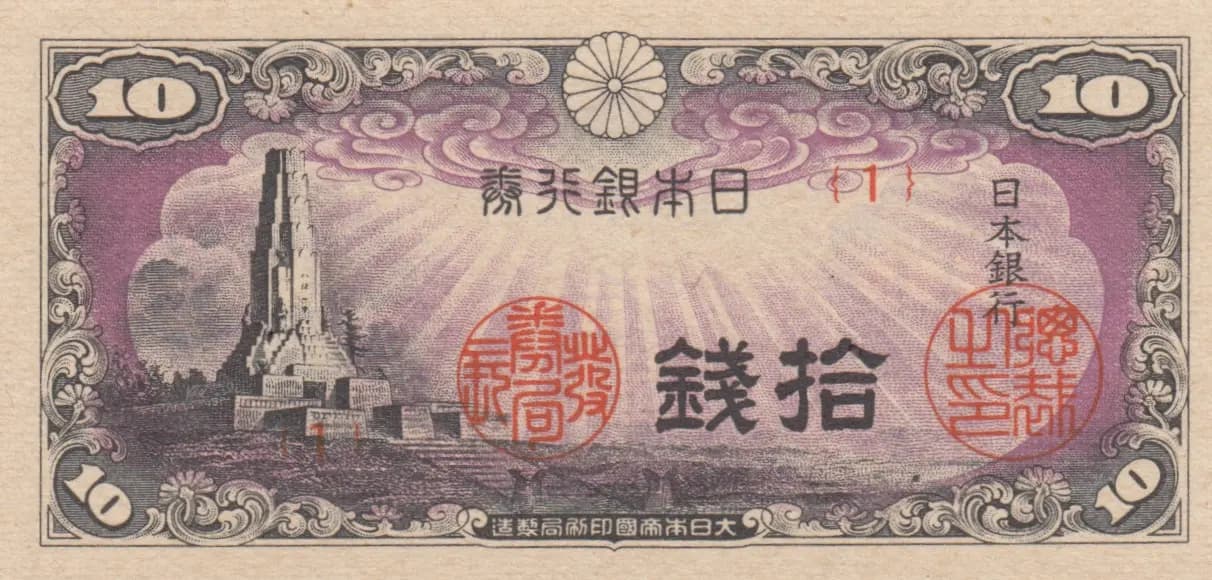
This is a 1944 Japanese 10 sen banknote (Pick P-53) in uncirculated condition, featuring the iconic Heiwadainoto (Peace Tower) monument in Miyazaki on its obverse. The note displays exceptional preservation with crisp impressions, sharp borders, and the characteristic purple/mauve color scheme intact throughout both sides. The intricate engraving work and dual red seals are clearly rendered, making this an attractive example of late-Imperial Japanese currency during World War II.
Common. eBay market data shows this note trading regularly across a wide range of grades from Fair to PMG 66, with UNC examples selling for $2-5.75 USD historically. The 2016 catalogue value for UNC is listed at $2, and the consistent availability across multiple sales over the past 15+ years indicates a readily available issue with a substantial print run. No evidence of scarcity or recall status exists for this Pick number.
Issued by the Bank of Japan (Nippon Ginko Ken) in 1944, this banknote reflects Japan's monetary system during the final year of World War II. The featured Heiwadainoto monument in Miyazaki, depicted with stylized clouds and radiating light rays, represents Japanese nationalism and cultural pride during this period. The imperial printing bureau attribution visible on the obverse underscores the government's centralized control over currency production during wartime.
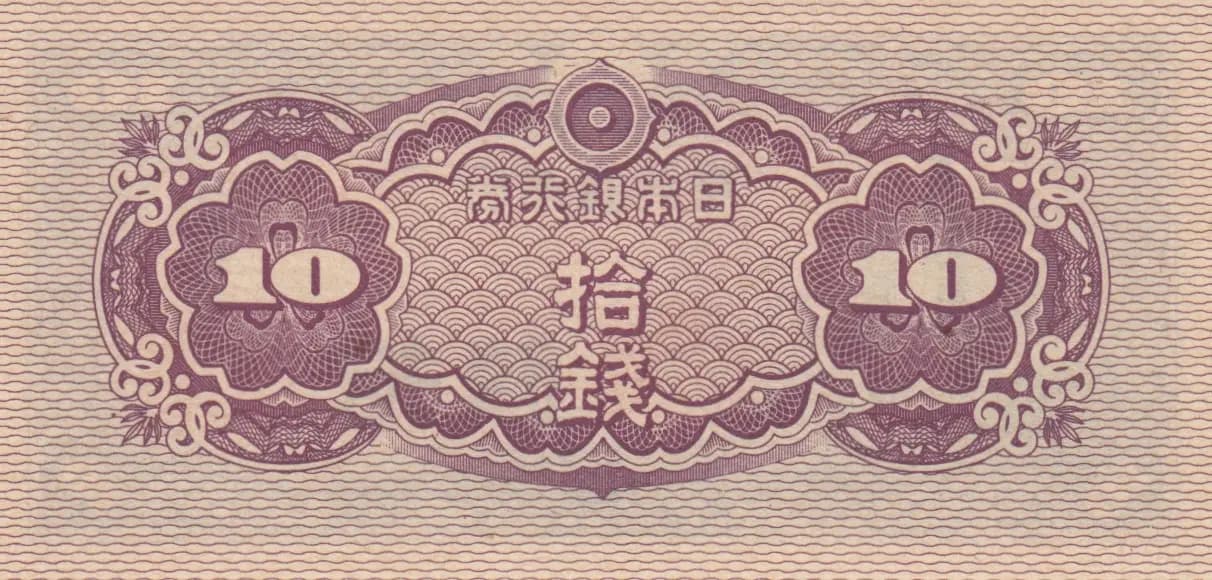
The obverse features a vertical landscape vignette of the Heiwadainoto memorial tower located in Miyazaki Prefecture, positioned at the left-center with foreground elements including water and vegetation. The composition is framed by ornate decorative borders with floral scrollwork and geometric patterns typical of early-to-mid 20th century Japanese currency design. Two prominent red circular seals bearing kanji characters are centrally positioned, with the denomination '10' presented in oval cartouches at upper left and right corners. The reverse displays a purely decorative design, eschewing portraiture in favor of symmetrical floral cartouches containing the denomination on both sides, with a wave or scale pattern forming the background. The color palette of purple/mauve with cream elements dominates both sides.
Front side: '日本銀行券' (Bank of Japan Note), '拾銭' (10 sen), '10' (Arabic numeral denomination), '大日本帝国印刷局製造' (Made by the Imperial Japanese Government Printing Bureau). Back side: '日本銀行券' (Bank of Japan Note), '拾銭' (10 sen), '10' (Arabic numeral denomination).
Intaglio engraving (line engraving) produced by the Dainippon Insatsu Kabushiki Kaisha (Imperial Japanese Government Printing Bureau). The intricate line work visible in the decorative borders, security patterns, and fine detail within the central vignette are characteristic of high-quality intaglio production. The consistent impression depth and crisp definition of fine lines throughout indicate professional security printing standards of the era.
Standard issue without noted varieties for Pick P-53. No signature varieties, date variants, or overprint types are documented for this 1944 emission. Serial number prefixes may vary, but no recognized major varieties have been catalogued in standard references.