1 yen 1916
Market Prices
156 salesAbout This Note
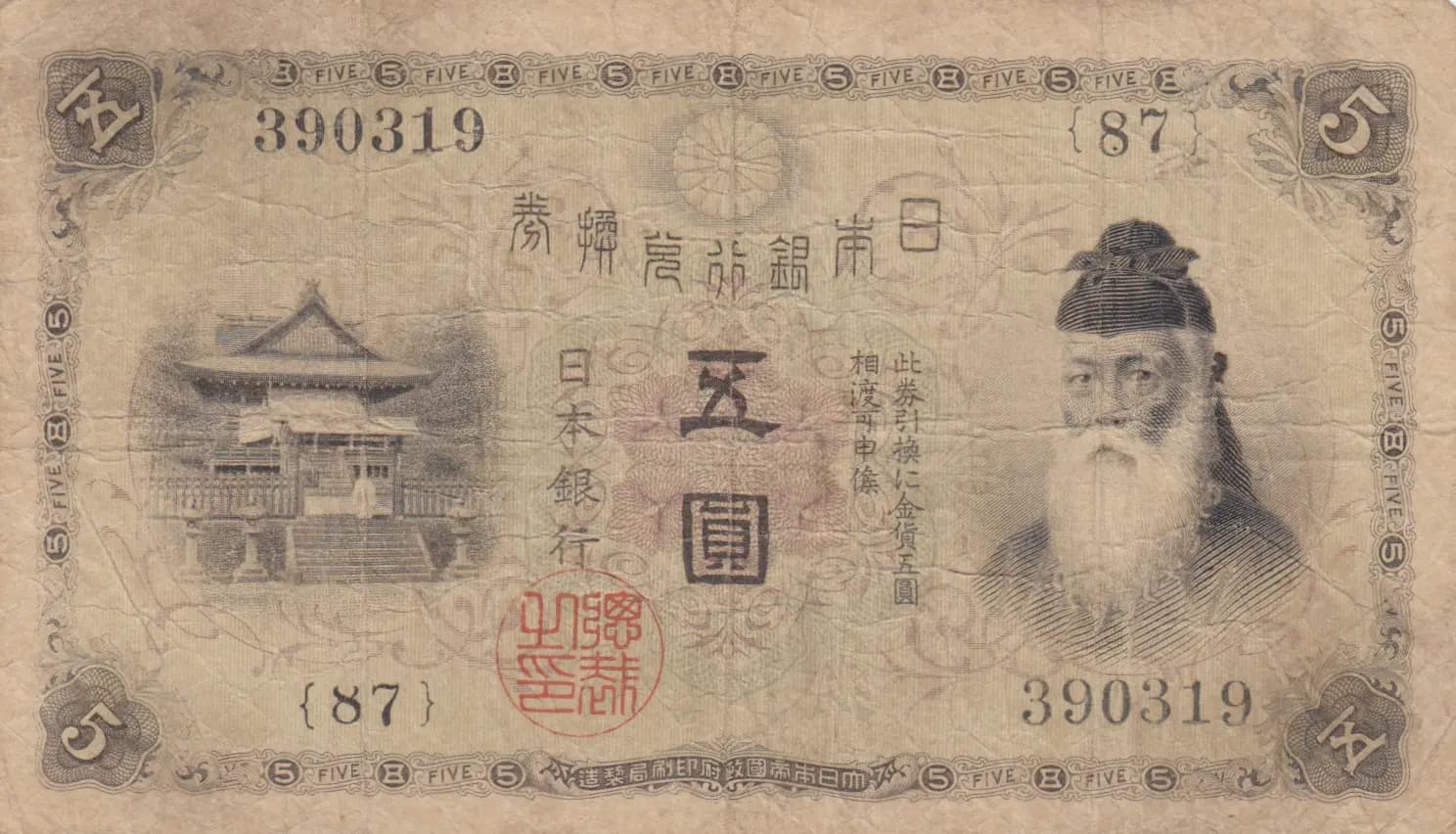
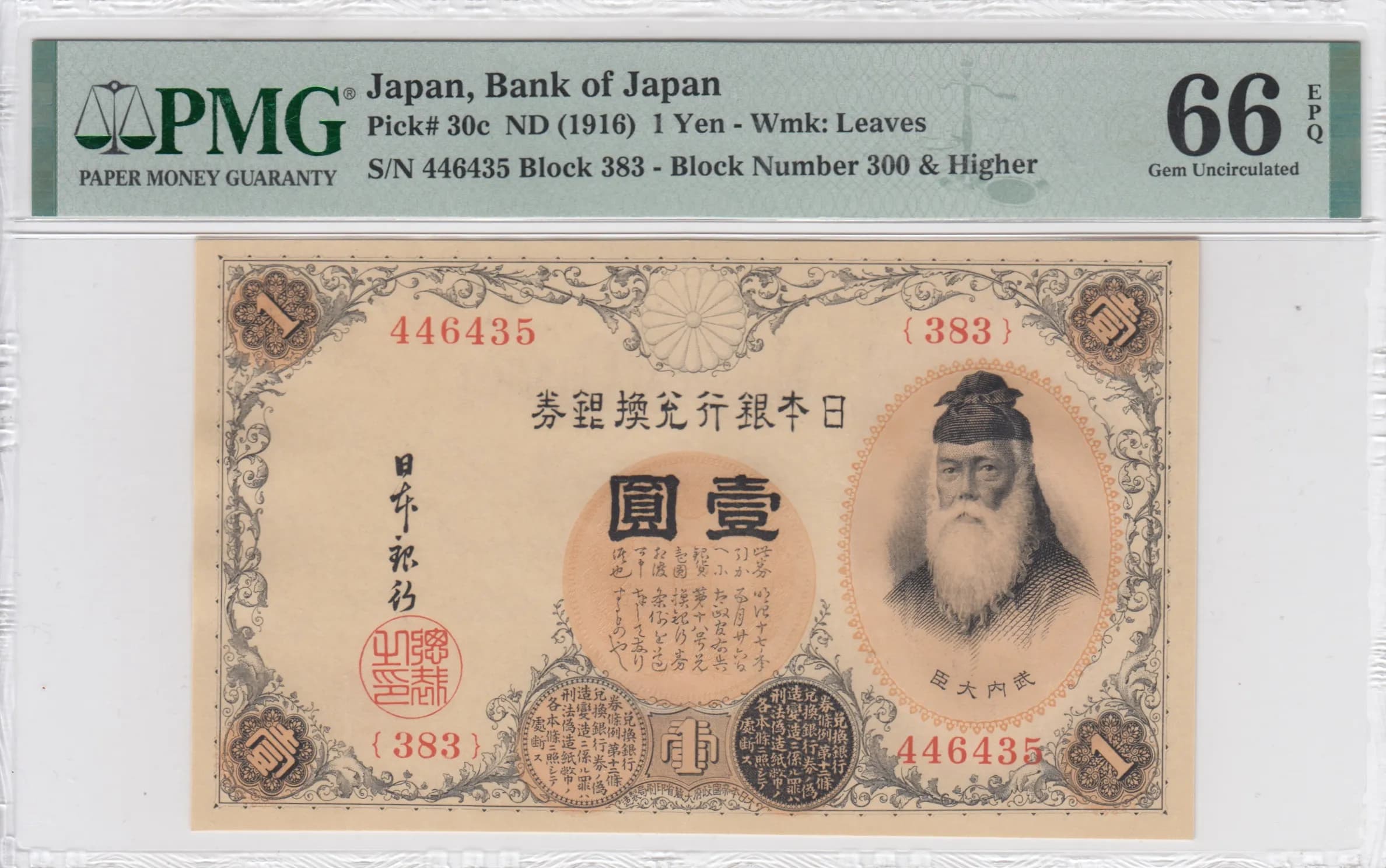
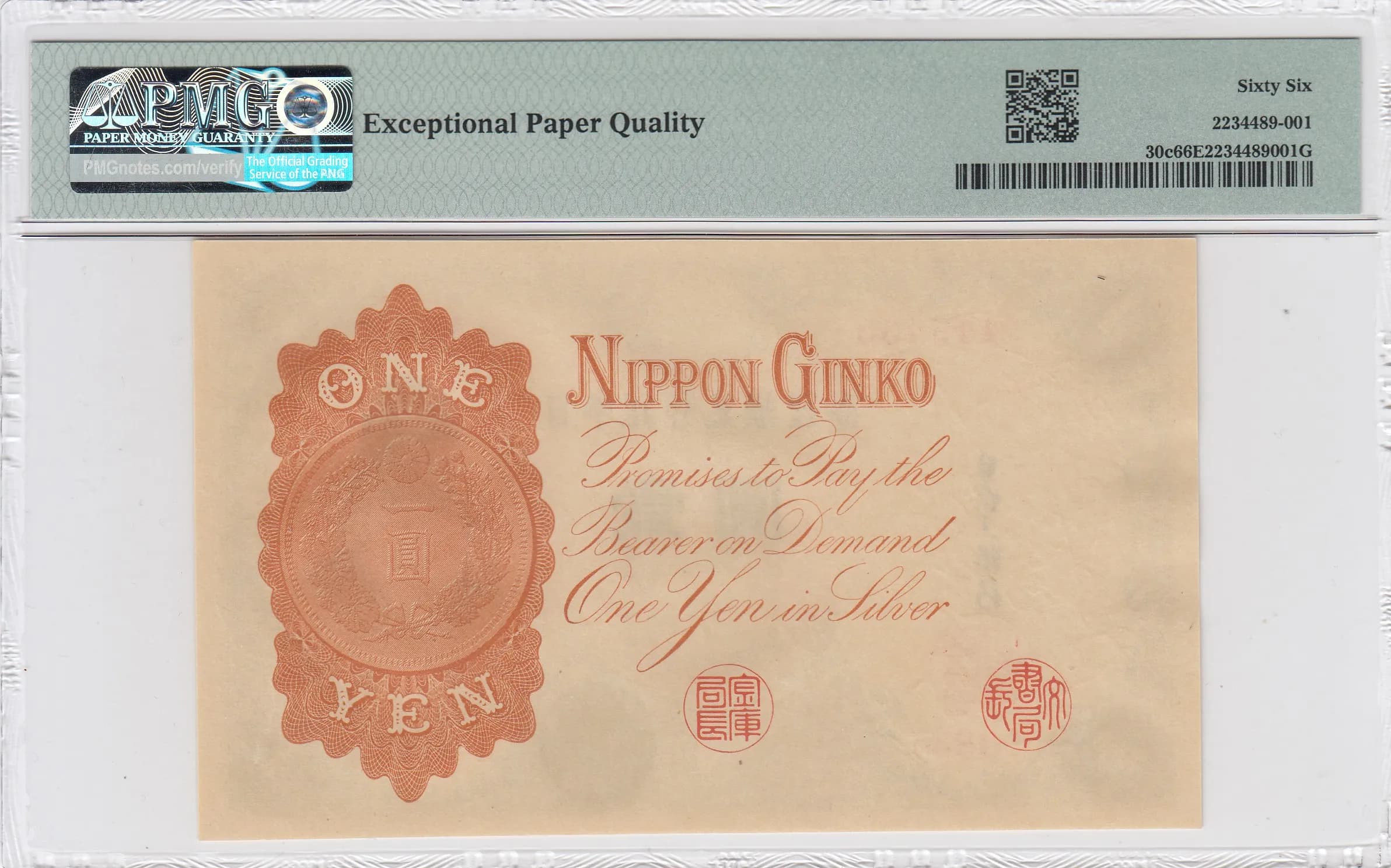
This is a superb example of Japan's iconic 1916 Nippon Ginko 1 Yen note (Pick-30c), graded PMG 66 EPQ. The note displays exceptional eye appeal with pristine cream-beige paper, crisp red and black printing, and no signs of handling or wear. The obverse features an elegant portrait of an elderly bearded gentleman in classical engraved style, while the reverse presents bilingual English-Japanese text with an ornate circular yen character medallion—a hallmark of early Japanese currency design.
Common. The 1916 1 Yen Nippon Ginko issue (Pick-30c) had a substantial print run to serve Japan's economy during this period. While individual notes in this condition grade (PMG 66 EPQ) are certainly desirable to collectors, the underlying note type remains common in numismatic markets. Notes from this series and denomination appear regularly in auctions and dealer inventories at modest prices, typically in the $15-40 range for similar grades, indicating healthy supply.
Issued in 1916 during Japan's Taisho period, this banknote represents a transitional era in Japanese monetary design when both Japanese and English text coexisted on currency, reflecting Japan's modernization and international trade prominence. The promise to pay "One Yen in Silver" on demand reflects the gold/silver standard system still in use at that time. The formal portraiture and classical decorative elements demonstrate Japan's adoption of Western engraving techniques while maintaining traditional Japanese artistic sensibilities.
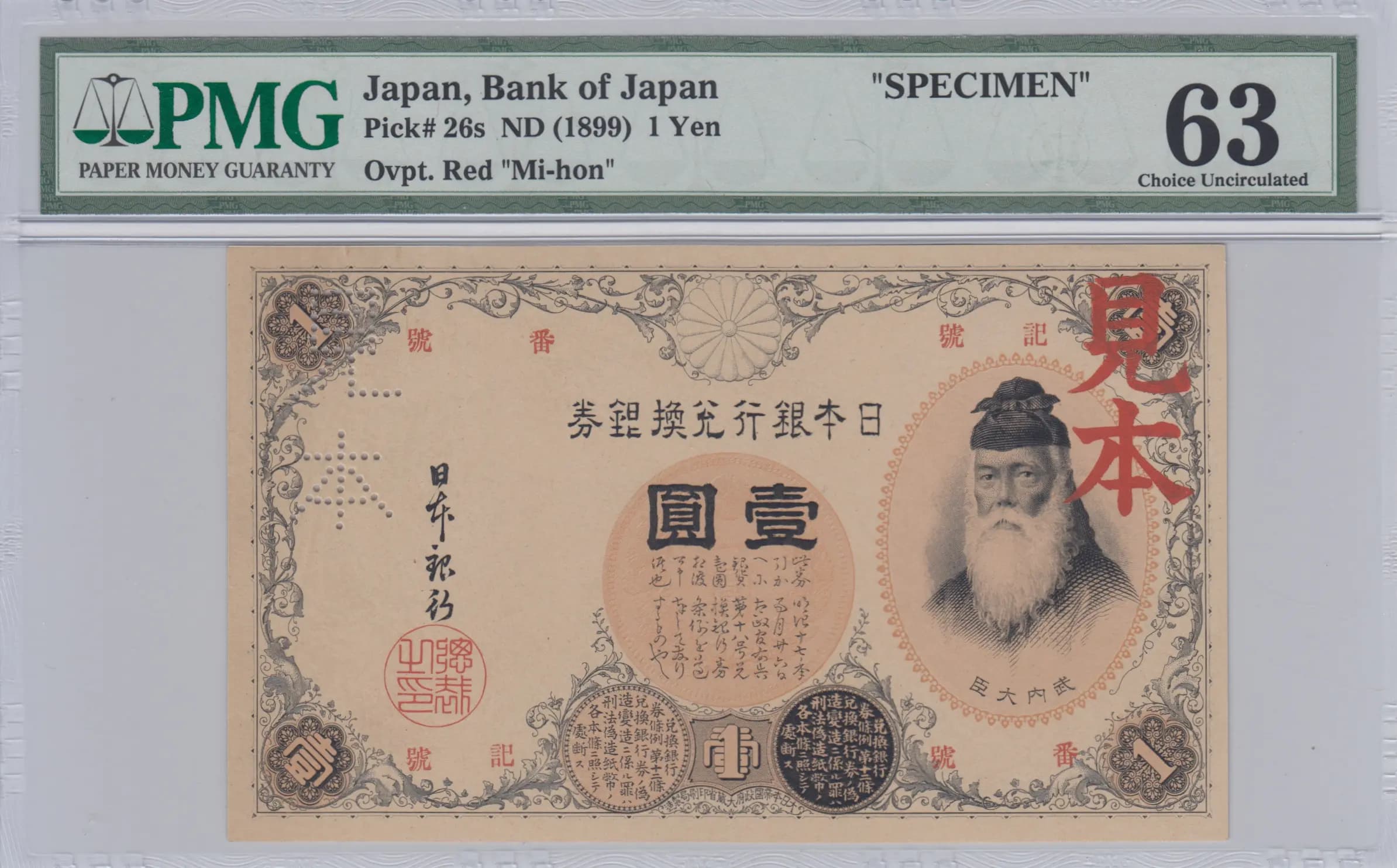
The obverse features a right-facing portrait of an elderly Japanese gentleman with a flowing white beard, rendered in meticulous engraving style within an oval frame with orange-red tinting. The portrait is framed by ornate scrollwork and floral corner ornaments in a symmetrical classical layout. Circular medallions containing Japanese characters and decorative patterns flank the central composition. The reverse is dominated by a large ornate circular medallion featuring the '圓' (yen) character at its center, surrounded by an elaborate scalloped border in red and black. The bilingual text arrangement—with Japanese characters alongside English translations—was standard for Japanese banknotes of this era to facilitate international commerce. The red serial number and block number were printed in distinct positions for tracking.
FRONT: '日本銀行券' (Nippon Ginko Ken / Bank of Japan Note); '壹圓' (Ichi En / One Yen); '民部大内武' (attribution/official designation); Serial number '444435'; Block number '{383}'. BACK: 'NIPPON GINKO' (Japan Bank in romanized form); 'Promises to Pay the Bearer on Demand'; 'One Yen in Silver'; '圓' (En / Yen); '銀' (Gin / Silver); Two official seals with Japanese characters.
Intaglio (engraved) printing, the dominant security printing method for Japanese banknotes of this period. The fine detail line work, intricate border patterns, ornate character rendering, and the visible depth of impression characteristic of engraving are evident throughout. The note was produced by the Nippon Ginko (Bank of Japan), which used established Japanese and international security printing expertise. The multilayered registration of red and black inks indicates a multi-pass printing process typical of high-security banknote production.
This specific example carries serial number 444435 with block number {383}, printed in red. While Japanese banknotes of this era exhibit typical variations in serial numbers and block numbers across the print run, no major cataloged varieties (such as color variants, signature varieties, or overprint states) are documented for Pick-30c that would distinguish this note beyond standard production variance. The bilingual design remained consistent throughout the 1916 issue.