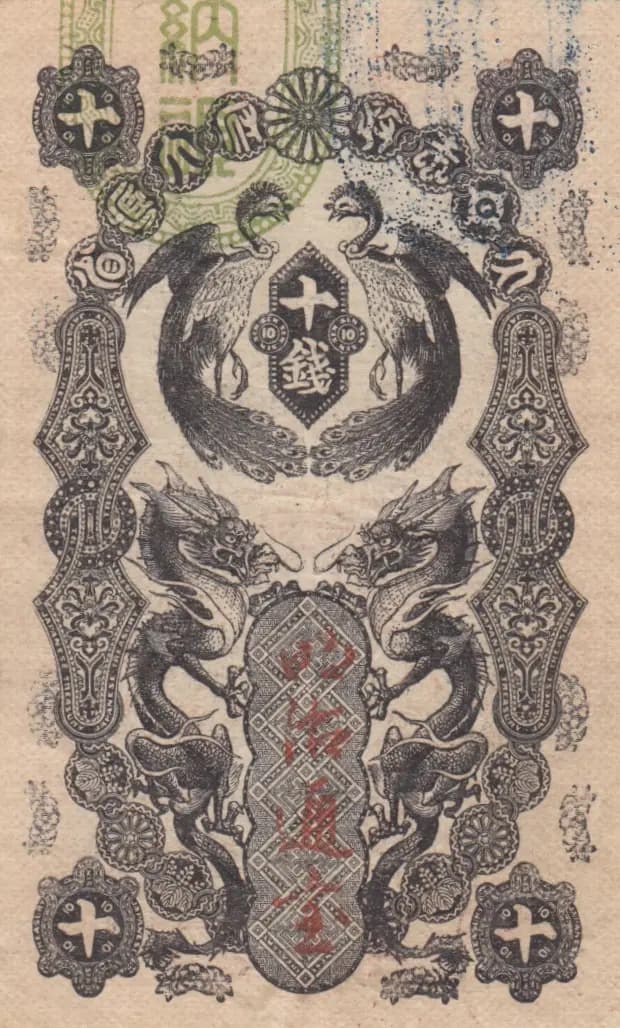
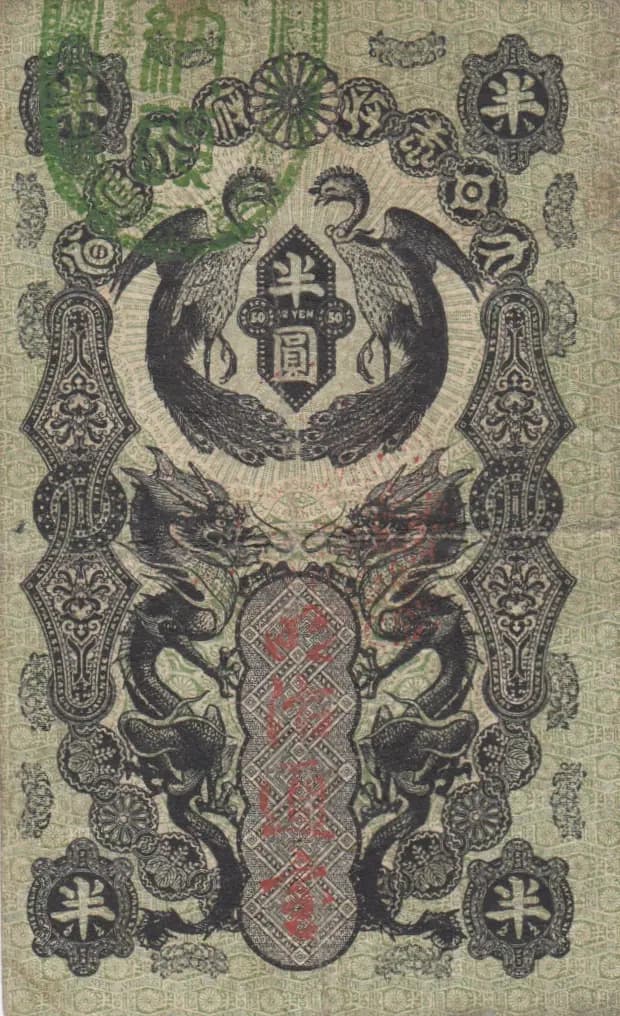
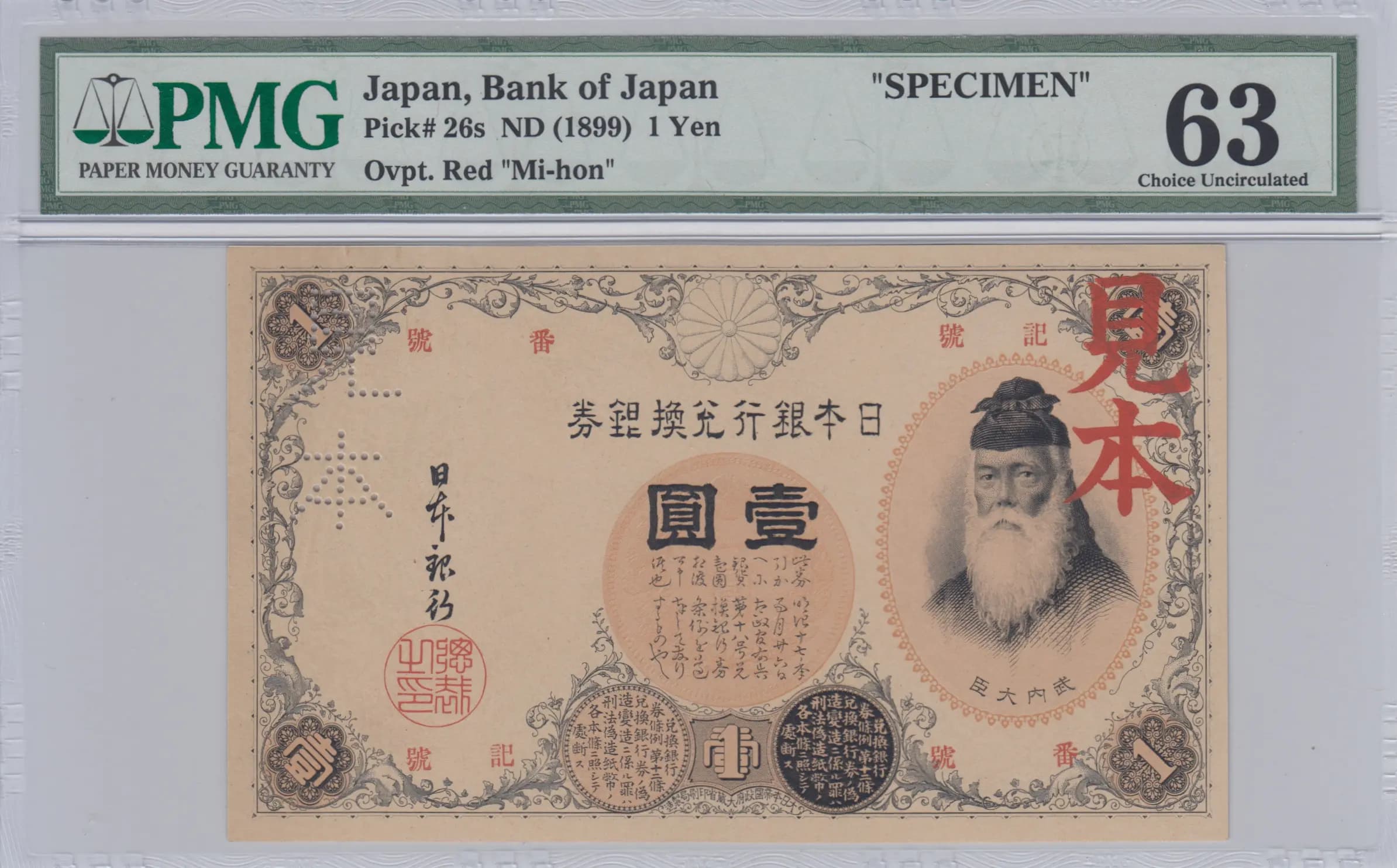
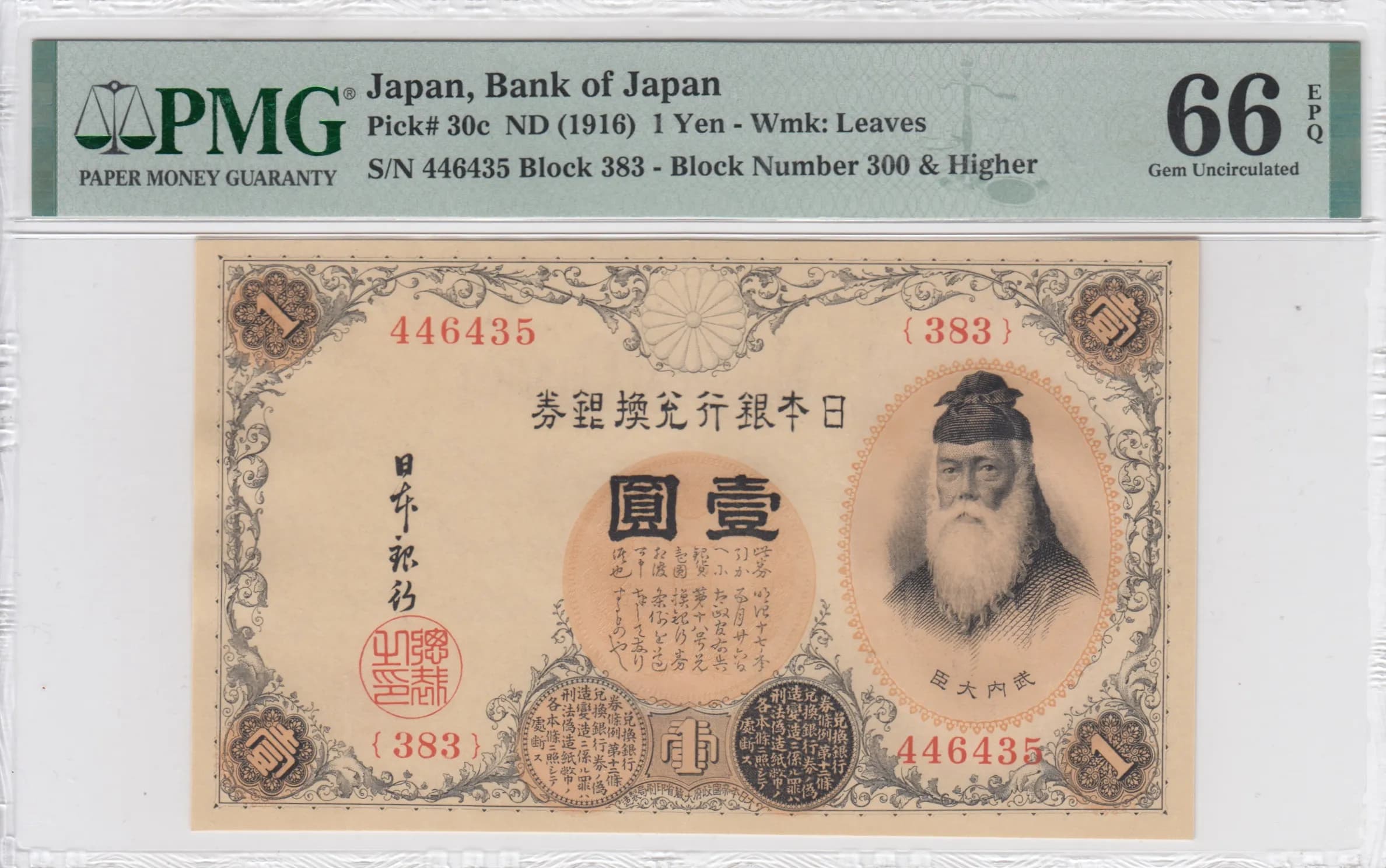
10 sen 1920
Market Prices
10 salesAbout This Note
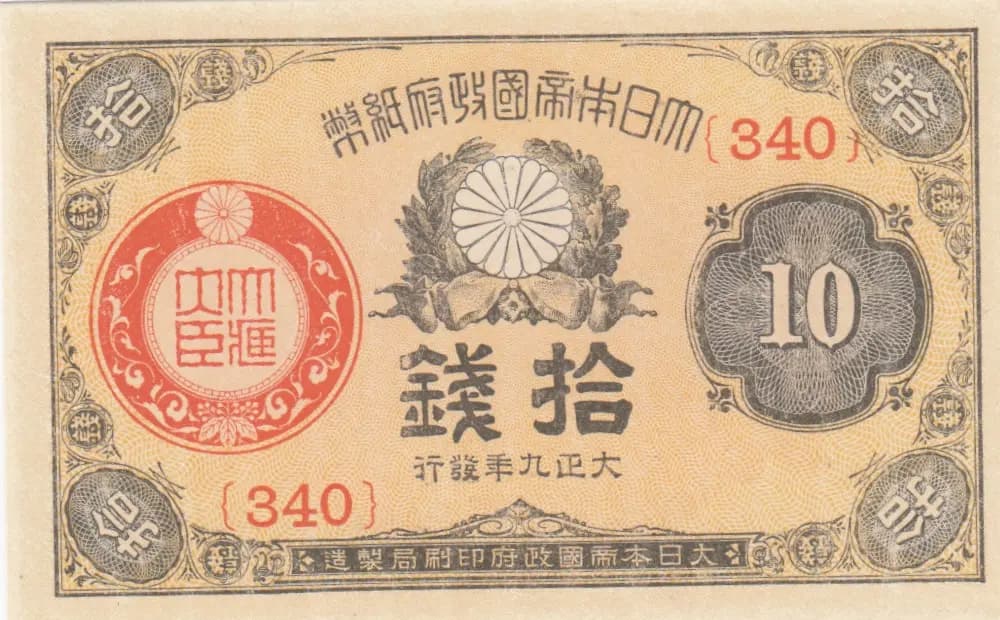
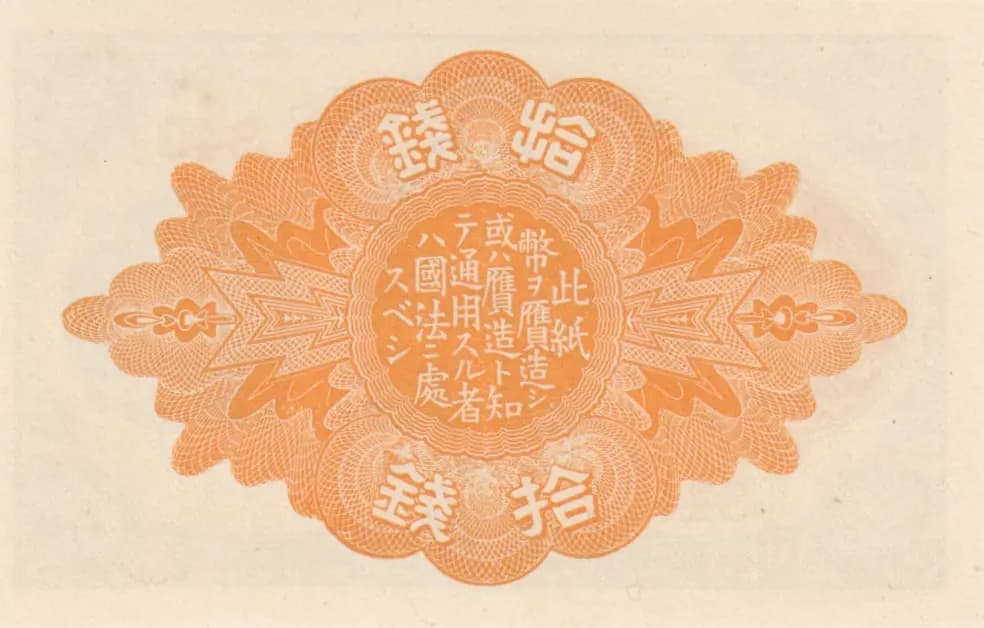
A superb uncirculated example of the 1920 Japanese 10 sen note (Pick P-46c), featuring an ornate Imperial chrysanthemum design with red seal and denomination cartouches on a cream-colored obverse, and an elaborate orange reverse with decorative medallion. This Taisho-era note exhibits pristine preservation with bright, uniform coloring, sharp engraving details, and no visible wear—exactly the condition collectors seek for early 20th-century Japanese currency.
Common. This note appears frequently in the market, with eBay sales data showing consistent modest pricing across various condition grades (VF examples routinely selling for $3-$11, with the 2016 catalogue listing UNC at $8). The print runs for this denomination during the 1917-1921 period were substantial, and specimens survive in quantity today. While uncirculated examples command a premium over circulated grades, the denomination itself and the issue are not scarce.
Issued in the 9th year of Taisho (1920), during Japan's post-WWI economic expansion, this note represents the Imperial Japanese Government's regular sen currency under the Great Japanese Empire framework. The Imperial chrysanthemum, red governmental seal, and formal mint certification on the reverse reflect the authority and legitimacy the Meiji and Taisho governments sought to project through their currency designs during an era of significant modernization and imperial prestige.
The obverse features a central Imperial chrysanthemum flower with ornate wreath, a quintessential symbol of Japanese imperial authority. To the left is a red circular seal containing stylized Japanese characters representing governmental legitimacy. To the right is a gray shield-shaped cartouche prominently displaying the numeral '10'. The design is rendered on a beige/cream background with elaborate decorative borders incorporating coin-like corner ornaments and fine scrollwork. The reverse displays an even more ornate composition: a large decorative flower or medallion shape in orange/peach tones with a central circular medallion containing intricate Japanese characters arranged symmetrically, surrounded by engraved floral and leaf patterns. The denomination '10 sen' appears in white areas at the top and bottom of the reverse.
FRONT: 明治四十三年印刷国庫債権証券 (Printed in the 43rd year of Meiji, National Treasury Bond Certificate); 銭 拾 (10 sen); 大正九年発行 (Issued in the 9th year of Taisho); 340 (series or plate number). BACK: 銭 拾 (10 sen, repeated in corners); 此券ハ日本帝国政府ニ於テ法律ニ依リ造幣局ニ於テ造成セシ紙幣ナルコトヲ証明ス (This certificate certifies that this is currency produced by the Imperial Japanese Government through the Mint Bureau according to law).
Intaglio engraving with fine line work and cross-hatching throughout. The visual analysis reveals elaborate engraved border patterns, detailed security elements, and the characteristic sharp impression of intaglio printing. The precision of the line work, particularly visible in the decorative flourishes and the central chrysanthemum design, indicates professional security printing typical of Japanese government currency production by the Mint Bureau (造幣局) during this period.
This example is identified as the 1920 issue (Taisho 9) variant within the P-46c Pick number. The visual inscription '大正九年発行' (Issued in the 9th year of Taisho) confirms this is the 1920 printing rather than earlier Taisho issues (years 6-8) or the later Taisho 10 variant. The series/plate number '340' visible in the corners may assist in distinguishing printing batches, though systematic variety studies of this note type are not extensively documented in major English-language catalogues. No overprints or signature variations are apparent in this specimen.