1 yen 1944
Market Prices
19 salesAbout This Note
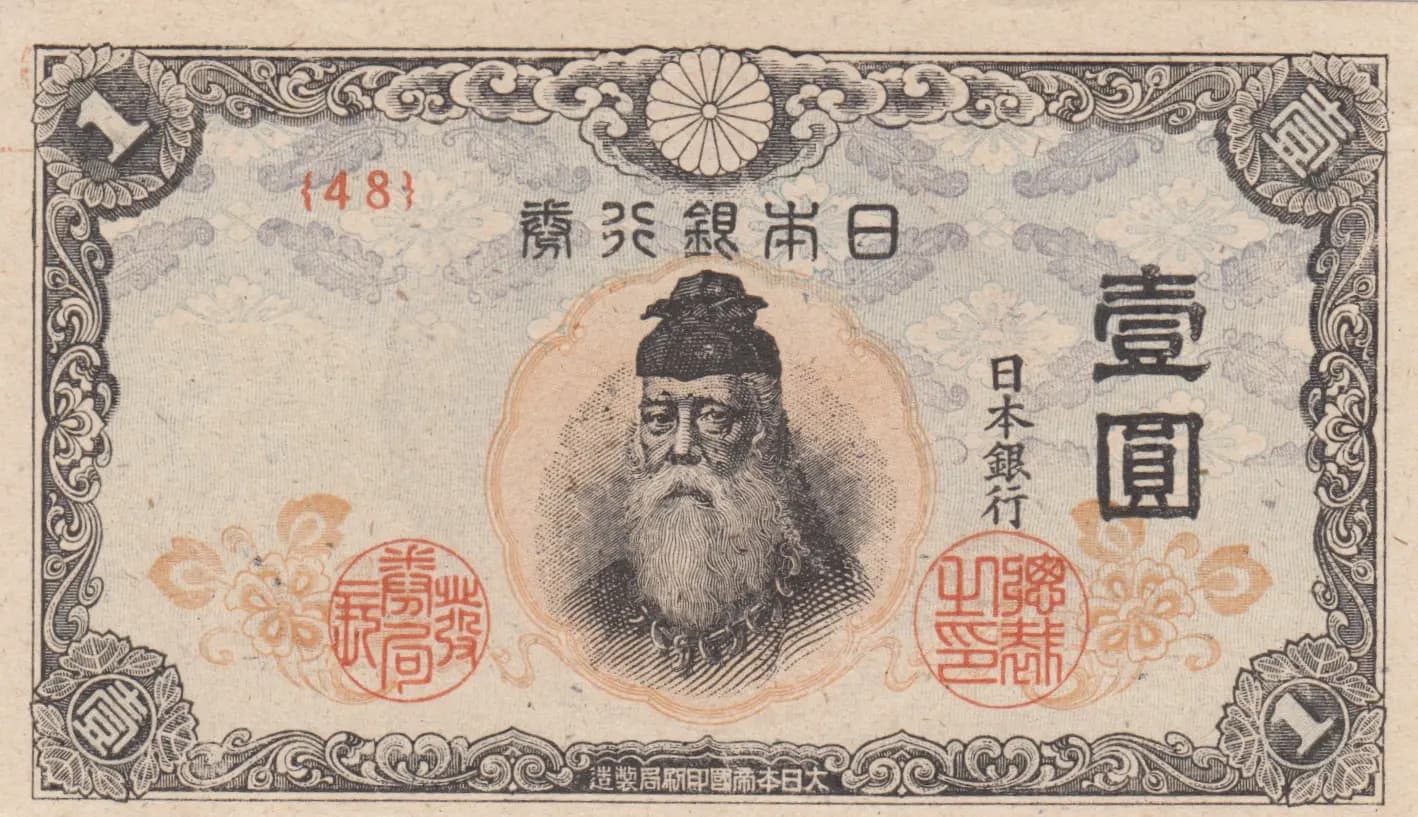
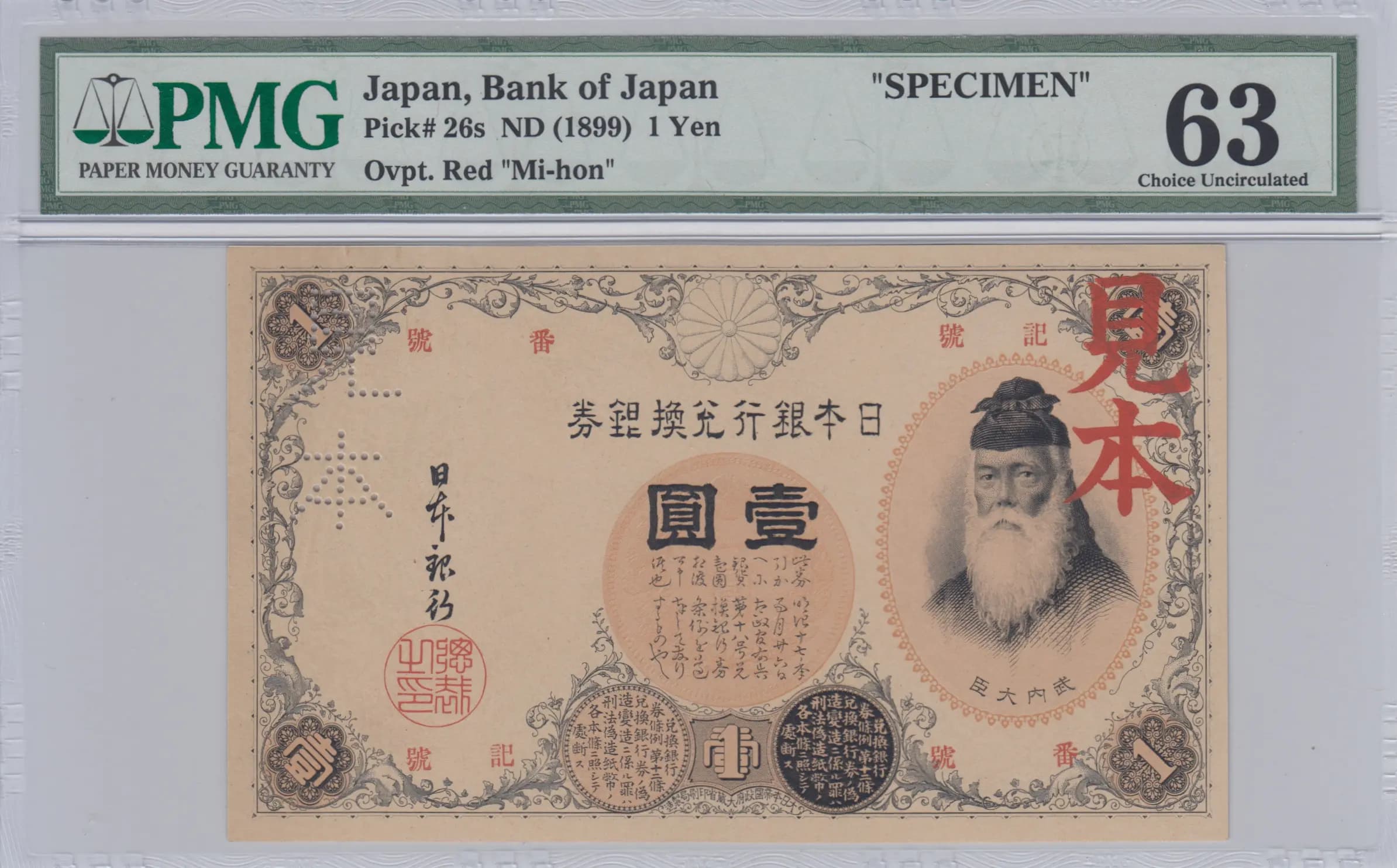
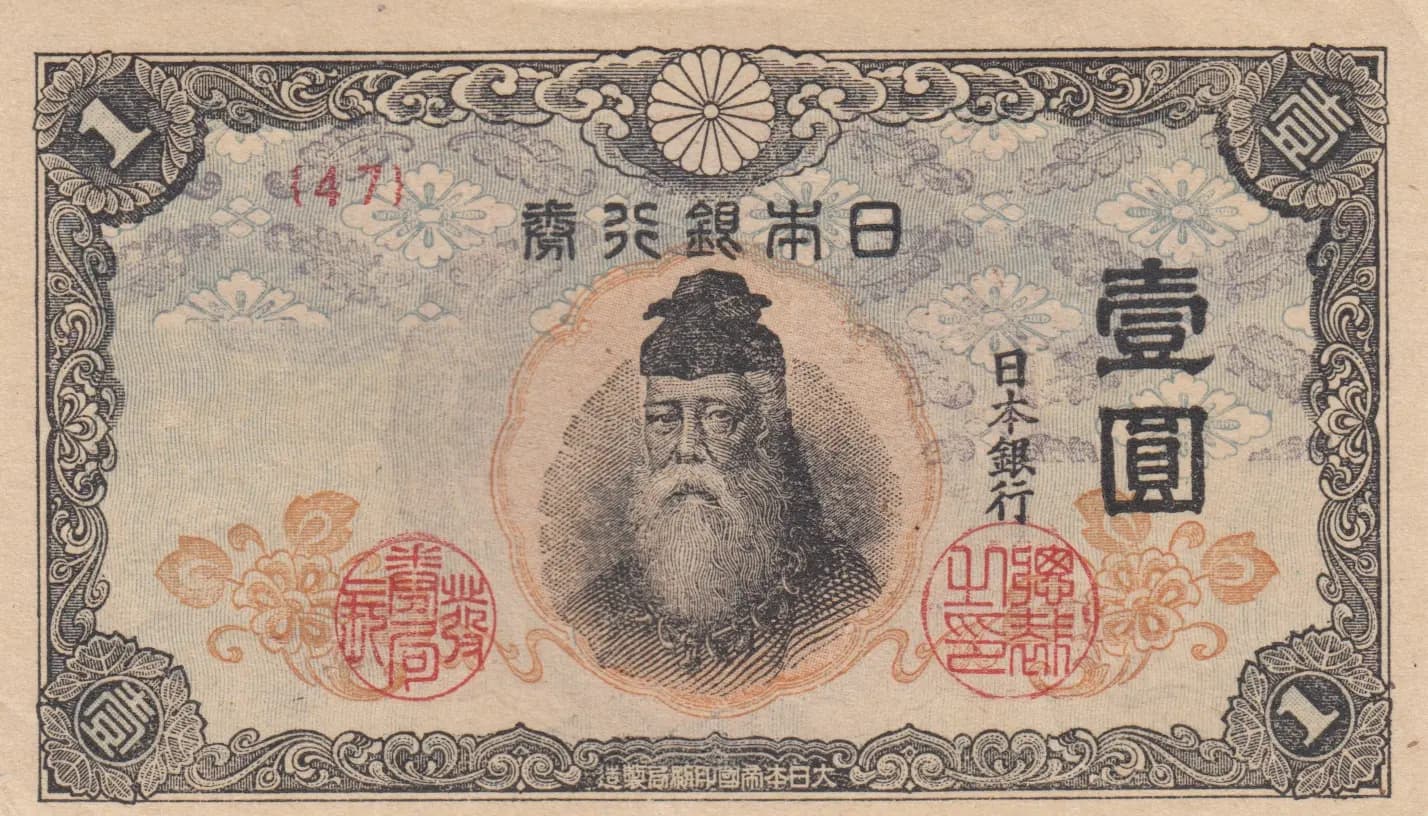
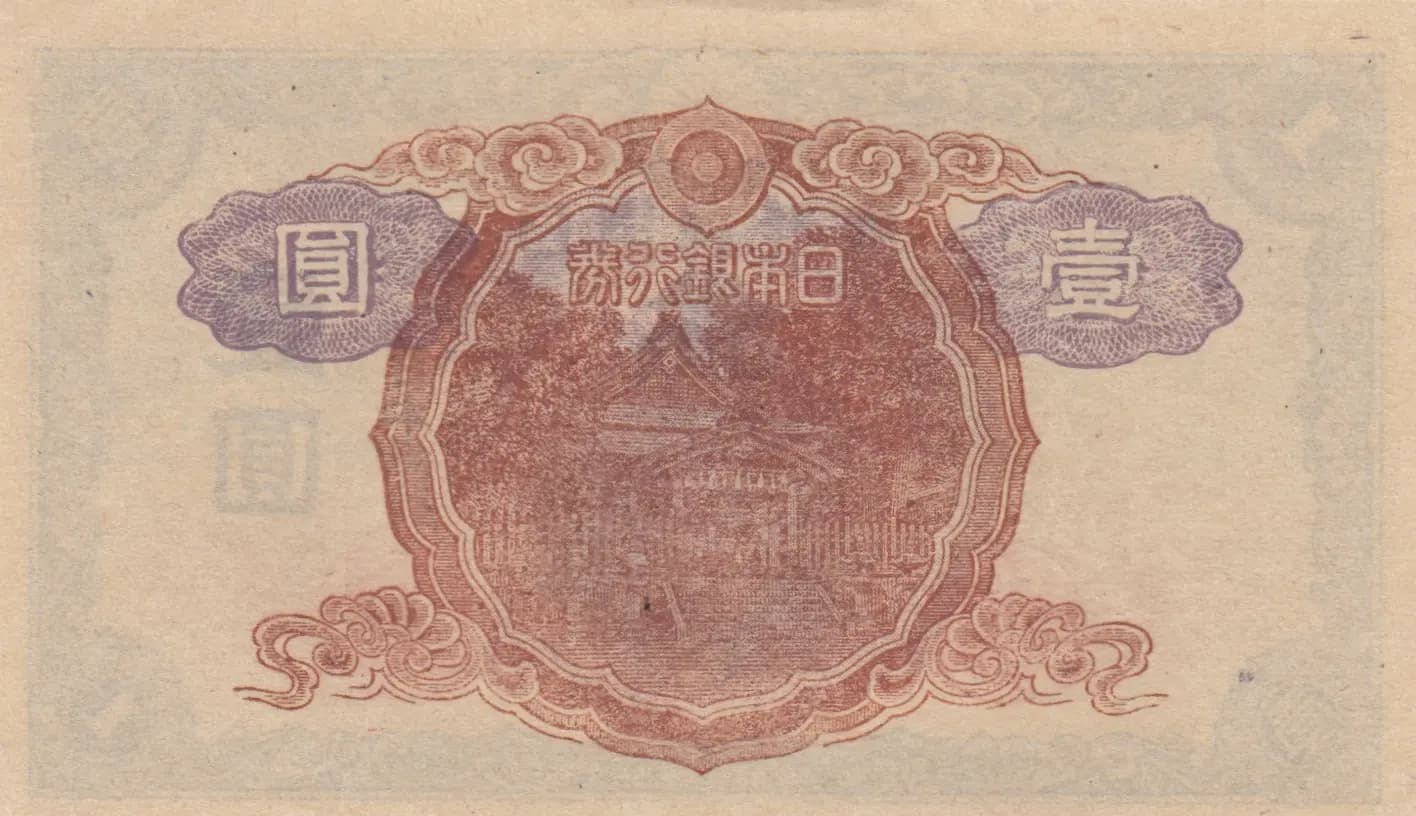
This is a 1944 Japanese 1 Yen note (Pick P-54a) in AU condition, featuring a portrait of Takeuchi Sukune on the obverse and the Ube Shrine on the reverse. The note exhibits classic wartime Japanese currency design with fine line engraving, ornate decorative borders, and red circular seals characteristic of the period. Despite visible aging with creasing and foxing consistent with an 80-year-old banknote, the note retains excellent detail and clarity, making it a desirable example for Japanese currency collectors focused on Imperial period issues.
Common. The eBay price history provided demonstrates consistent availability at modest prices, with recent sales ranging from $12.99 to $36.81 depending on grade, and catalog values in 2016 ranging from $0.50 (VG) to $15 (UNC). Regular sales activity across multiple grades and dealers indicates this is a readily available note in the collector market. The AU condition grade specified here would place it at the higher end of typical pricing, but the denomination and design were clearly produced in substantial quantities during 1944-1945, making this a common wartime Japanese issue rather than a scarce variety.
Issued during the final year of World War II under the Empire of Japan (大日本帝國), this 1 Yen note represents Japanese monetary policy in the waning months of the Pacific War. The portrait of Takeuchi Sukune, a legendary 5th-century courtier and scholar, reflects imperial Japan's use of historical and cultural figures to reinforce state identity and continuity. The inclusion of the Ube Shrine on the reverse demonstrates the integration of Shinto religious imagery into state currency, a practice central to imperial Japanese propaganda and cultural nationalism.
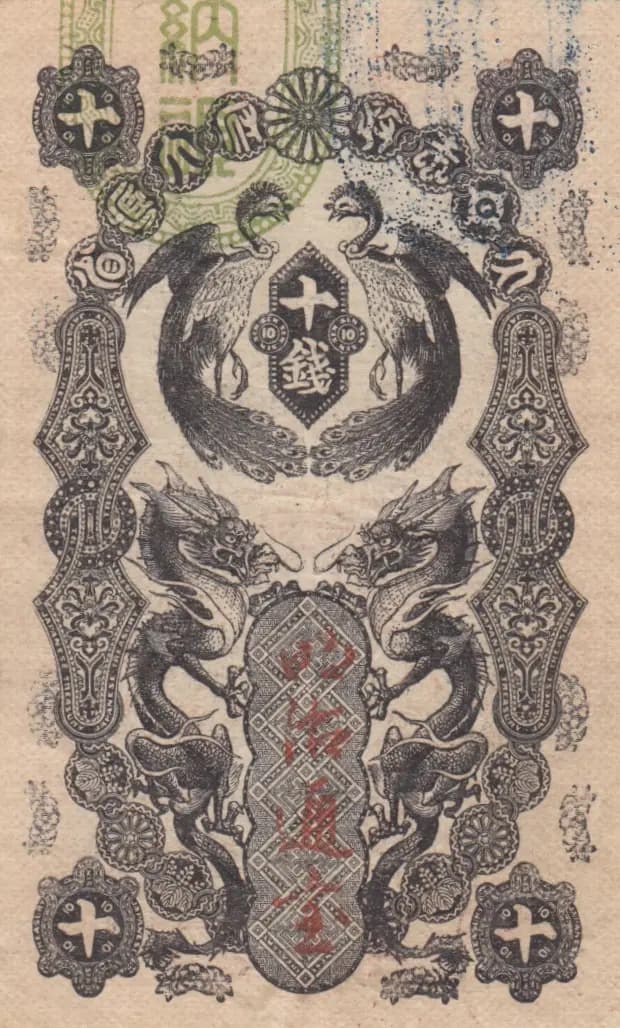
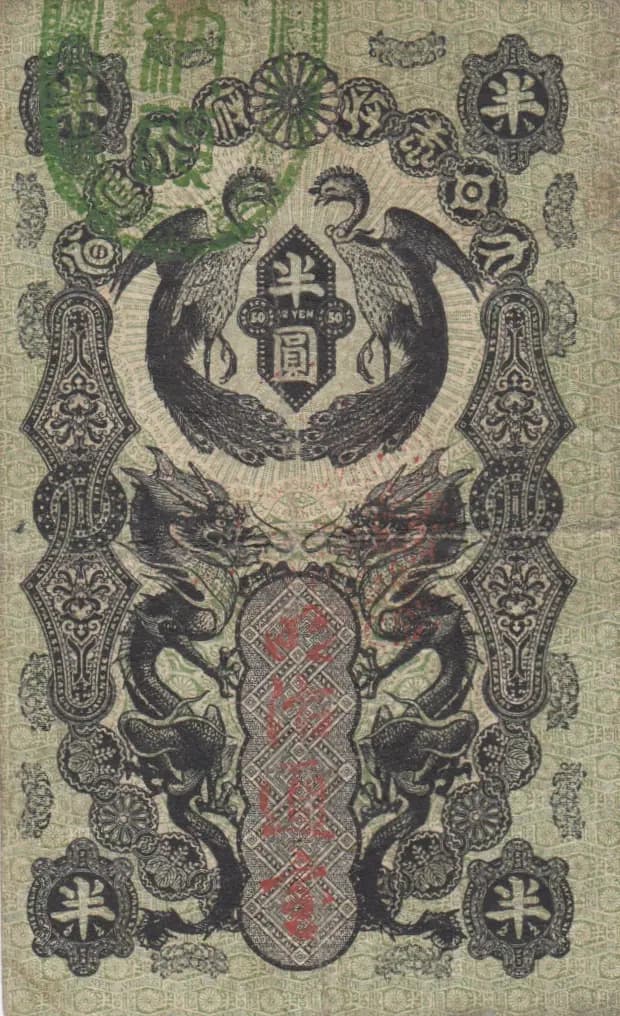
The obverse features a formal portrait of Takeuchi Sukune, the legendary Nara period courtier and scholar, rendered as an elderly bearded man in traditional Japanese dress within an ornate oval frame with a peachy-salmon colored background. Two red circular seals flank the portrait, bearing Japanese characters typical of official government seals. An ornamental chrysanthemum flower crowns the center top, with elaborate decorative corner pieces featuring spiral and floral patterns reflecting classical Japanese artistic traditions. The reverse depicts the Ube Shrine within a large ornamental cartouche bordered by cloud-like scrollwork and layered decorative frames, surmounted by a circular sun symbol—standard iconography for Japanese shrine imagery. Purple-lavender denomination panels appear on the left and right sides of the reverse. Both sides are framed with intricate borders combining geometric and floral elements characteristic of high-denomination Japanese notes from this period.
Front side: 日本銀行券 (Nippon Ginko Ken - Bank of Japan Note), 壱圓 (Ichi En - One Yen), 大日本帝國 (Dai Nippon Teikoku - Empire of Japan), plus a handwritten notation '1443' in red ink. Back side: 壱圓 (Ichi En - One Yen), 日本銀行 (Nippon Ginko - Bank of Japan). The reverse also contains Japanese characters indicating the Ube Shrine subject matter, though the specific shrine inscription is not fully legible in the visual analysis.
The note employs fine line engraving throughout, evidenced by the detailed crosshatching visible in the portrait and the intricate border patterns observed in both the visual analysis and characteristic of Japanese currency production of this era. Multiple color separation techniques were used to achieve the distinct color zones (black, red, purple, cream) visible on both sides. This appears to be classic intaglio printing methodology standard for Japanese Imperial currency, though the specific security printer for P-54a is not definitively documented in the provided references. The quality and detail suggest production by Japan's state-controlled currency printing facilities operational during the 1944-1945 issuance period.
The note displays a handwritten block number notation (visual analysis indicates '1443' in red ink at top left), which aligns with catalog references noting that this variety is identified by 'Block # only' rather than combined block and serial numbers. Per the banknote.ws reference, similar notes with both block and serial numbers are cataloged separately as P-49. The watermark consists of a fancy floral design associated with block numbers 35-47 per the Realbanknotes.com reference. The AU condition and presence of the block number notation confirm this as the standard P-54a variety. No evidence of overprints or other distinguishing varieties is visible in the images analyzed.