1 yen 1945
Market Prices
12 salesAbout This Note
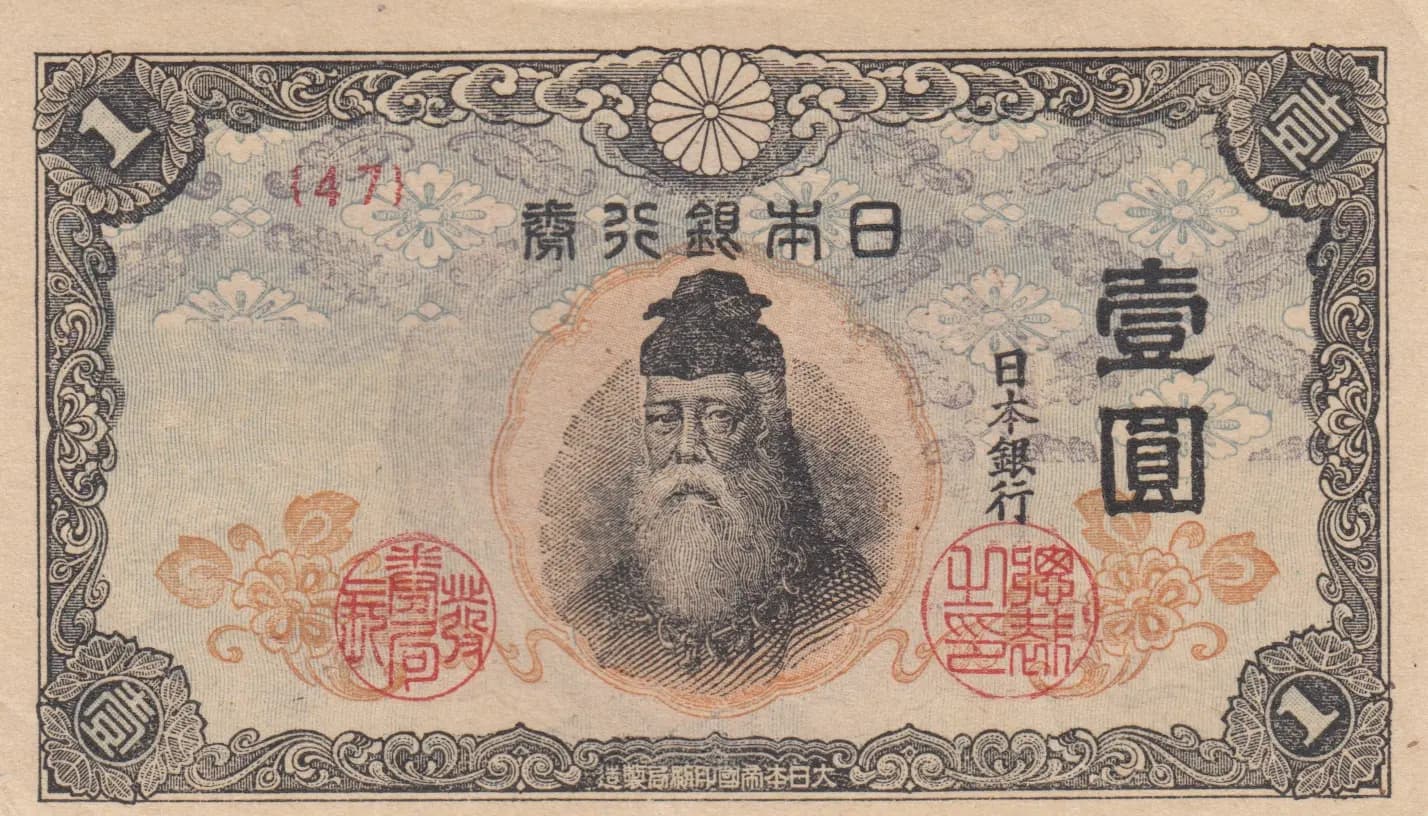
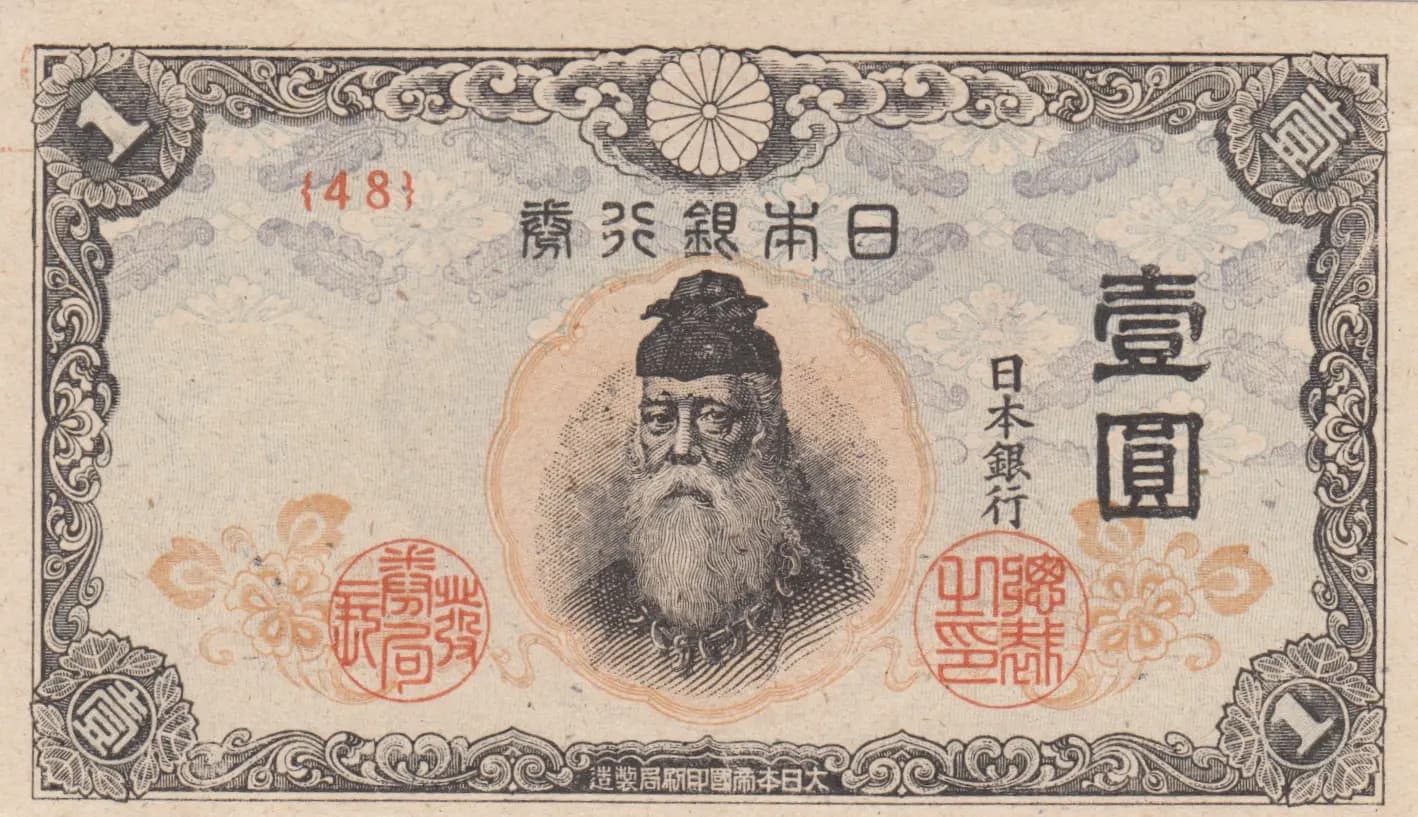
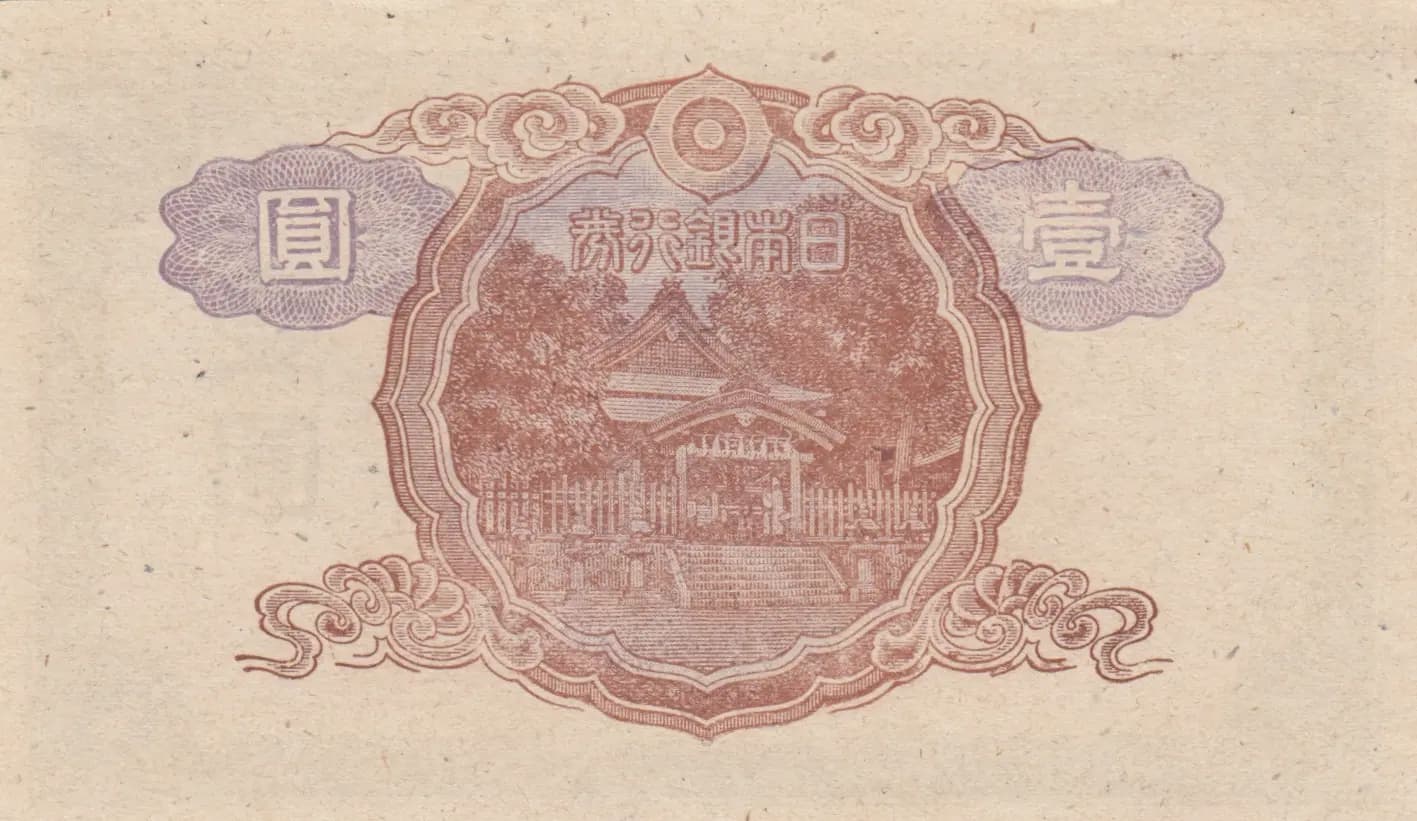
This is a 1945 Japanese 1 Yen note (Pick P-54b) in About Uncirculated condition, featuring a striking portrait of Takeuchi Sukune, a legendary figure from Japanese history, rendered in fine black engraving on cream-colored paper with red seal accents. The reverse displays the Ube Shrine in a detailed landscape composition framed by elaborate decorative scrollwork. Despite showing age-related foxing and minor handling marks consistent with its 1945 issuance date, the note retains strong visual appeal with crisp impressions of the fine-line engraving throughout.
Common. Despite its wartime issuance and historical significance, the 1945 1 Yen note is widely available in the numismatic market. eBay pricing data shows consistent sales in the $3-$38 range depending on condition, with even high-grade examples (PMG 65) selling for approximately $27-29 in recent years. The 2016 catalog value of $20 for uncirculated notes further confirms this is a readily obtainable issue. Large print runs during the final year of WWII mean these notes were produced in substantial quantities and have survived in reasonable numbers.
Issued during the final year of World War II by the Bank of Japan (Nippon Ginko), this note represents Japanese Imperial currency during a period of significant military and economic strain. The selection of Takeuchi Sukune—a venerated figure from Japan's legendary past—reflects the government's attempt to invoke historical continuity and cultural pride during wartime, while the depiction of the Ube Shrine grounds the design in Japan's spiritual heritage, reinforcing national identity through the currency itself.
The obverse features a central oval portrait of Takeuchi Sukune, depicted as an elderly bearded gentleman in traditional Japanese dress, flanked by two red circular official seals bearing Japanese characters. The design is enclosed within an ornate rectangular frame with elaborate scrollwork, floral motifs (including a chrysanthemum at the top center), and geometric corner ornaments executed in fine-line engraving. The reverse presents a landscape scene of the Ube Shrine—a multi-roofed temple structure with characteristic East Asian architecture set against a mountainous background, all framed within a double-bordered decorative cartouche with scrollwork and cloud motifs. Purple/lavender ornamental cartouches frame the denomination on either side of the shrine image.
Front side: '日本銀行' (Nippon Ginko / Bank of Japan), '壱圓' (One Yen denomination), block number '148', and artist/engraver signature '南昌鶴萬閣書'. Back side: '圓' (Yen denomination marker) and '日本帝國通用紙幣' (Japanese Imperial Currency Note / Imperial Japanese Government Note). The back inscriptions establish this as official imperial currency during the wartime period.
Intaglio engraving (steel plate printing) with multiple color printing. The fine-line engraving visible throughout the border, portrait details, and landscape elements is characteristic of traditional Japanese banknote production of the 1940s era. The combination of black primary imagery with red and purple accent colors suggests multi-pass printing, with decorative guilloché patterns providing security features typical of this production period.
This example bears block number 148, which serves as a variety identifier for this issue. The external catalog reference notes that block numbers are the primary means of distinguishing between examples of this regular issue, with block numbers 48-49 being documented in the watermark area. The note exhibits the standard design with portrait at center and Ube Shrine reverse consistent with Pick P-54b classification. No overprints or other distinguishing varieties are evident from the visual analysis.