1 yen 1943
Market Prices
22 salesAbout This Note
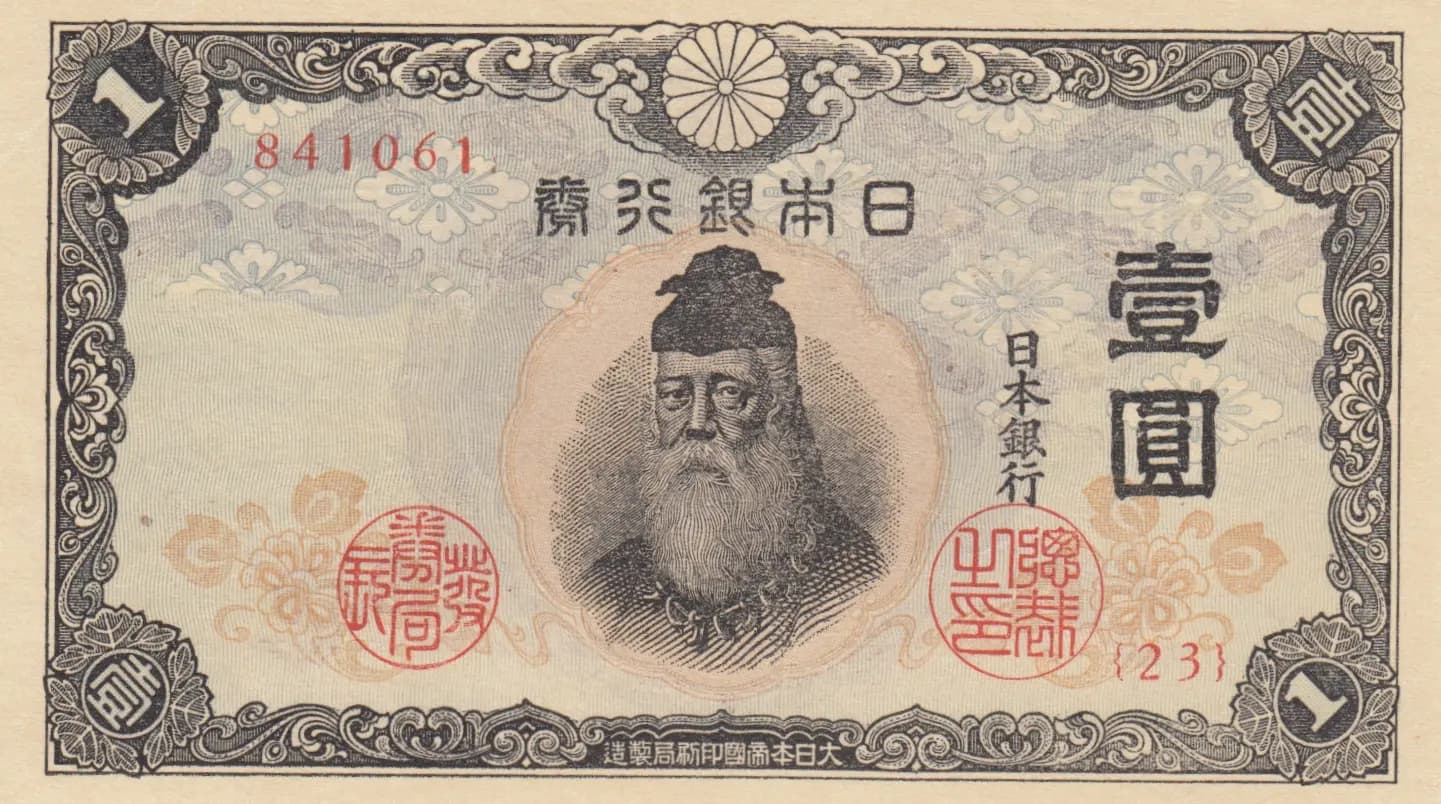
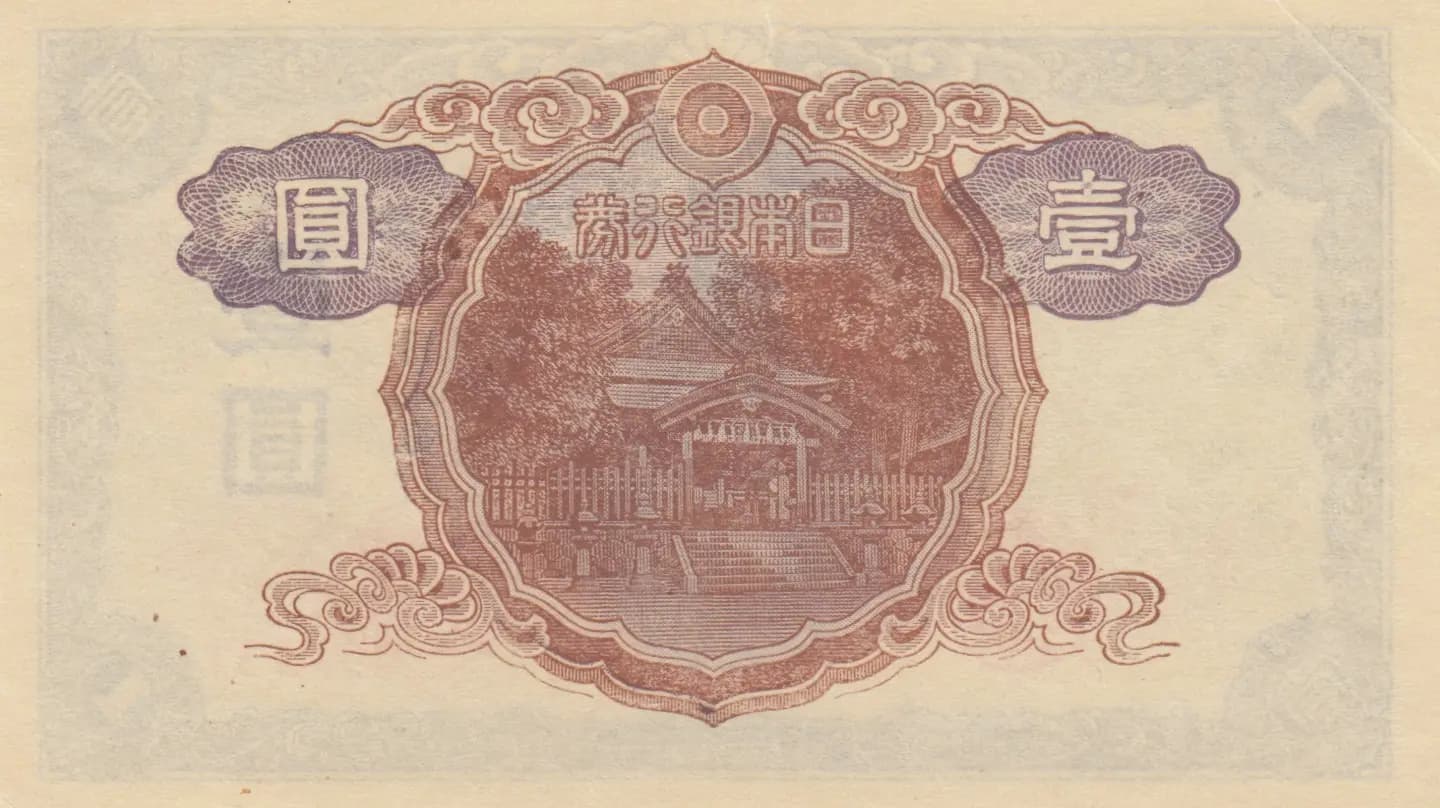
This 1943 Japanese 1 Yen note presents in AU condition with excellent eye appeal, displaying the characteristic black and red engraving on light cream underprint that defines this wartime emission. The front features an impressive portrait of Takeuchi Sukune in traditional dress within an ornate peach-toned oval frame, flanked by red circular official seals, while the reverse showcases the Ube Shrine architectural landmark in fine detail. The note's crisp condition, minimal wear, and sharp engraving make it an attractive example of Japanese Imperial-era currency from a historically significant period.
Common. The eBay sales data provided shows consistent sales activity across multiple condition grades (VG to PMG 65) ranging from $1.04 to $27.70, with numerous transactions documented across a 15-year period (2010-2025). The 2016 catalog value for UNC condition ($10) combined with regular market circulation at modest prices indicates substantial print runs and ongoing collector availability. Notes trading consistently under $30 even in premium grades are characteristic of common issues. This 1943 1 Yen was part of Japan's regular currency circulation and survives in adequate quantities.
Issued in 1943 by the Bank of Japan during the final years of Imperial Japan's wartime regime, this note reflects the government's continued faith in convertible currency despite mounting military pressures. The selection of Takeuchi Sukune—a legendary figure from Japanese mythology associated with longevity and benevolence—and the Ube Shrine as decorative elements served nationalist and cultural propaganda purposes, reinforcing imperial authority and continuity during the Pacific War. The inscription referencing the 'Great Japan Empire Government Mint Bureau' underscores the centralized control of currency production under the Imperial administration.
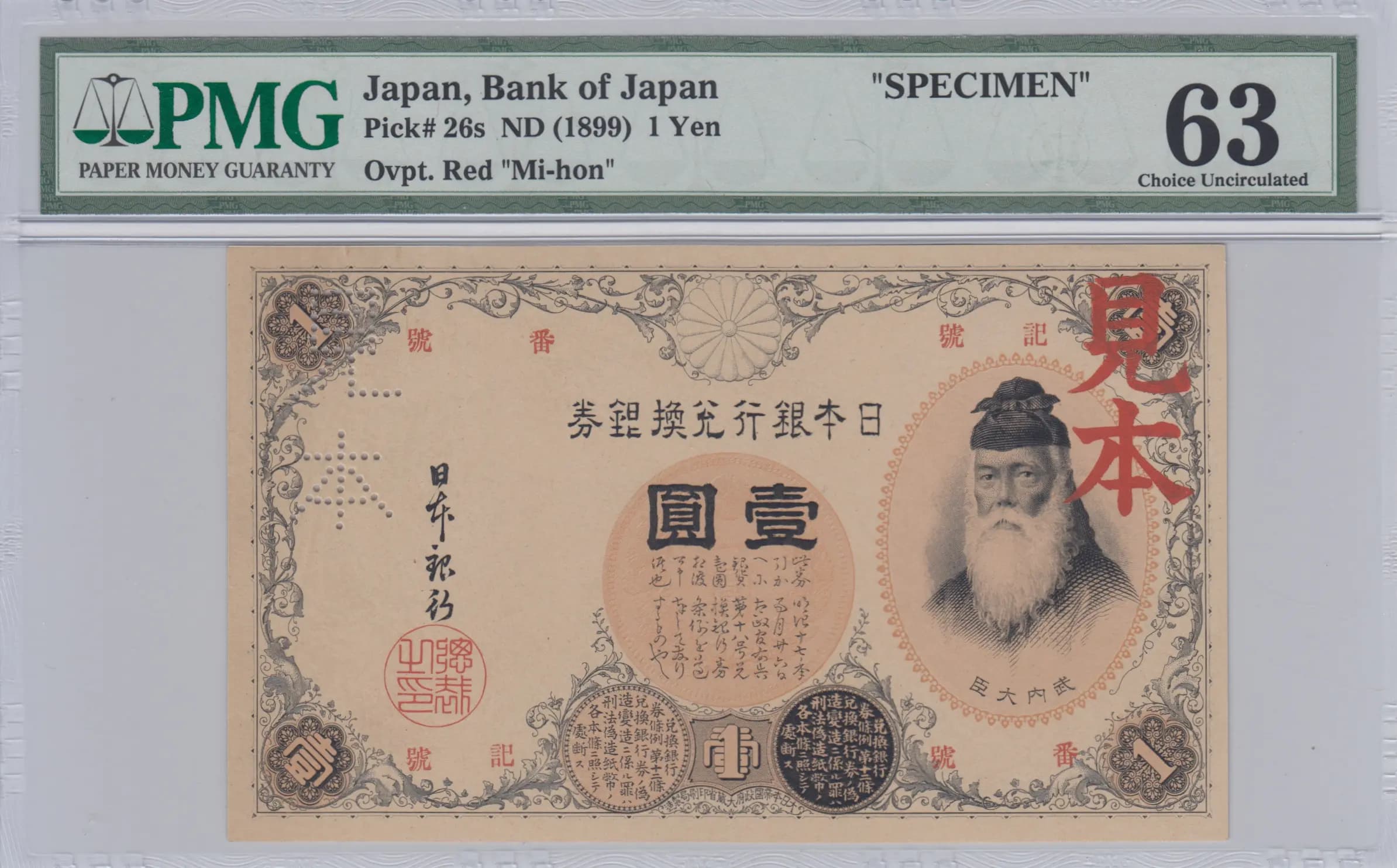
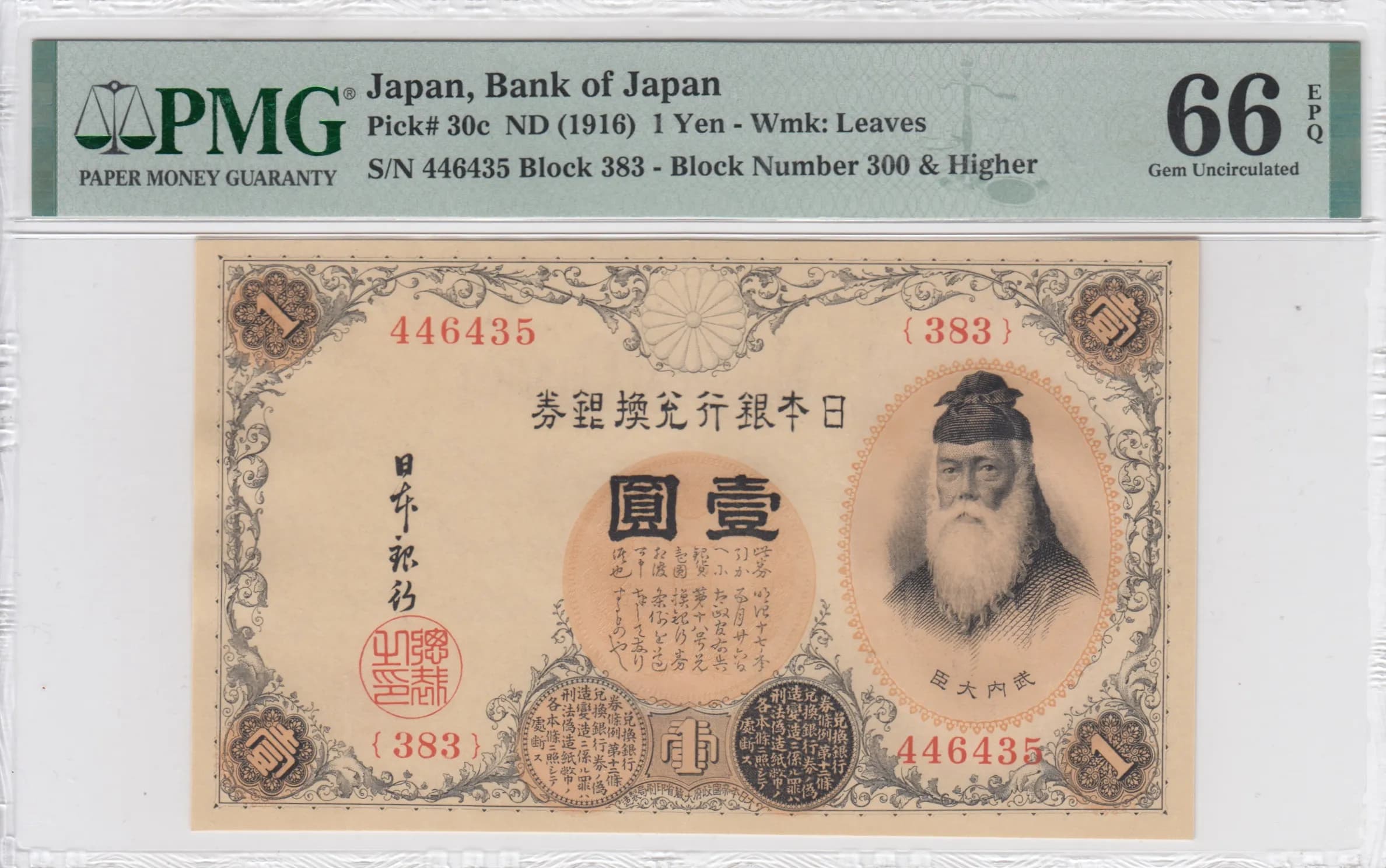
The obverse depicts Takeuchi Sukune (武内宿禰), a semi-legendary statesman from Japan's ancient Nara and Heian periods, rendered as an elderly bearded man in formal traditional dress and court hat, enclosed within an ornate peach-colored oval cartouche. The design is framed by elaborate scrollwork borders with floral and geometric patterns typical of Meiji-Taishō era security engraving. Two prominent red circular official seals (chops) flank the portrait, representing government authentication. The reverse features the Ube Shrine (宇部神社), rendered as a multi-tiered traditional temple pavilion set within a landscape, complete with decorative cloud scroll motifs in the border and rectangular purple/navy seals in the upper corners. The overall composition exemplifies the ornamental security printing standards of Japanese Imperial currency.
FRONT: 壹圓 (One Yen); 日本銀行 (Bank of Japan); 大日本帝國政府造幣局印刷 (Great Japan Empire Government Mint Bureau Print); Serial Number: 841061. BACK: 壹圓 (One Yen); 日本銀行兌換券 (Bank of Japan Convertible Note); Additional Japanese character seals in upper corners. All text rendered in traditional kanji characters reflecting formal monetary authority.
Intaglio engraving (copperplate) with multiple color passes—black for primary design elements, red for portrait frame background and official seals, and brown/reddish-brown for the reverse landscape. The fine line engraving technique visible throughout, particularly in the intricate border scrollwork and architectural details of the shrine, is characteristic of the Bank of Japan's security printers during the 1940s period. The delicate parallel lines, cross-hatching, and ornamental flourishes are consistent with traditional Japanese security engraving methods employed for high-security convertible notes.
The observed specimen shows serial number 841061 with block number designation visible. Per the external catalog reference (banknote.ws), this Pick-49 issue is distinguished from Pick-54 by the presence of both block and serial numbers (as opposed to block number only on the variant). The red serial number placement at top and the specific block numbering system (numbered 1-34 per community references) may provide further variety identification. Collectors should cross-reference the specific block number against known varieties, though the standard 1943 issue appears well-documented and established.