50 centesimi
About This Note
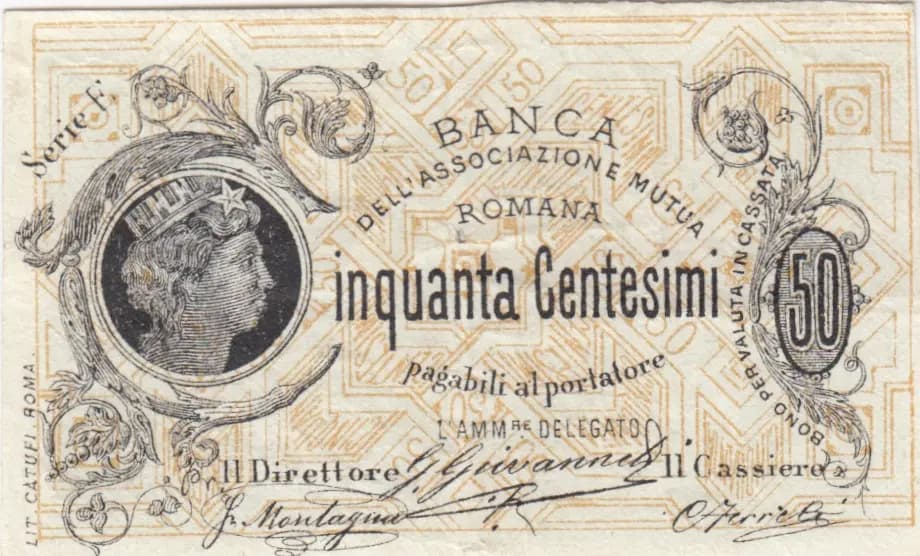
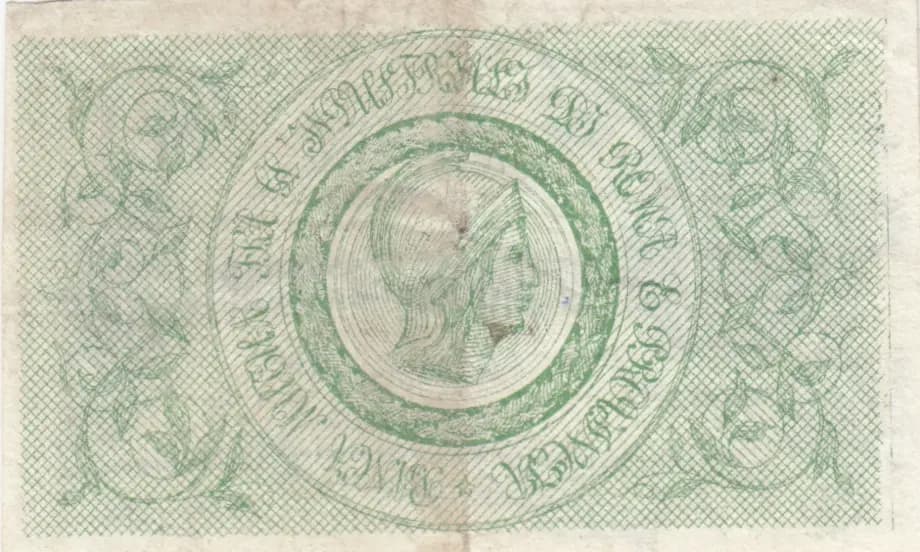
An exceptionally well-preserved example of a 50 centesimi note issued by Banca della Associazione Mutua Romana, graded VF with pleasing age-related toning in cream and tan tones. The note features a classical female allegorical portrait in a prominent circular medallion on both sides, accompanied by intricate ornamental borders, geometric patterns, and fine-line engraving throughout. This unlisted Pick number represents an interesting piece of Italian monetary history from a regional Roman mutual association bank, notable for its elaborate classical design and multiple authorized signatures.
Common. While this note carries an 'unlisted' Pick designation and represents a regional Italian issuer, the Banca della Associazione Mutua Romana appears to have issued notes in standard commercial quantities for its operational period. No evidence suggests restricted print runs, short-lived operations, or subsequent recall that would elevate rarity. The VF condition grade is desirable but not exceptionally rare for this note type. Regional Italian mutual bank notes of this era, while not abundant, are encountered regularly in the numismatic market and do not command premium valuations typical of genuinely scarce issues.
The Banca della Associazione Mutua Romana represents the 19th-century Italian banking system's reliance on mutual associations and regional credit institutions during Italy's post-unification period. The classical allegorical female imagery—reminiscent of Britannia or Liberty personifications—reflects the common European practice of depicting Liberty or civic virtue as a feminine ideal, a design convention that provided legitimacy and classical refinement to small-denomination currency notes. The 'pagabili al portatore' (payable to bearer) notation indicates this note functioned as a bearer instrument typical of the era before stricter banking regulations.
This 50 centesimi banknote exemplifies late 19th-century Italian regional bank currency design. The obverse features a classical female allegorical figure—likely representing Liberty, Virtue, or a personification similar to Britannia—rendered in fine detail within a circular medallion positioned on the left side of the note. The reverse displays the same allegorical portrait prominently centered within an elaborate circular frame, suggesting its importance as the note's primary design element. The entire note is surrounded by ornate decorative borders incorporating geometric patterns with repeating rectangular and diamond motifs, scrollwork with floral elements, and flourons (decorative flourishes) characteristic of security printing practices. The background utilizes fine-line engraving and intricate crosshatching patterns to provide anti-counterfeiting complexity. Three handwritten signatures of authorized officers (the Director, Cashier, and Delegate) appear on the front, indicating manual authorization—a requirement for bearer instruments of this era.
FRONT SIDE: 'BANCA DELLA ASSOCIAZIONE MUTUA ROMANA' (Bank of the Roman Mutual Association) / 'inquanta Centesimi' (Fifty Centesimi) / '50' (numeral fifty) / 'pagabili al portatore' (Payable to bearer) / 'AMME DELEGATO' (Delegate) / 'Il Direttore' (The Director) / 'Il Cassiere' (The Cashier) / Handwritten signatures: 'Giovannes' (Giovanni), 'F. Montaigne' (F. Montagne), 'Carretti'. BACK SIDE: Circular inscriptions around the portrait medallion (text not fully legible in provided image quality).
The note employs fine-line intaglio engraving (copperplate or steel plate engraving) as its primary printing method, evidenced by the crisp detail in the portrait, the consistent fine lines in the geometric border patterns, and the intricate crosshatching visible on the reverse. The complexity of the background patterns and the precision of the portrait engraving suggest work by a skilled security printer, likely an Italian firm specializing in banknote production during the 19th century. The multi-color printing (black/dark ink on cream/tan paper with green elements on the reverse) indicates separate plate passes or potentially lithographic color application for the reverse side.
This example represents a standard issued note from Banca della Associazione Mutua Romana with three authorized signatures (Giovannes/Giovanni, F. Montaigne/Montagne, and Carretti). Potential varieties may exist based on signature combinations, as different officers would have signed notes during different periods of the bank's operation. The handwritten nature of authorization signatures means each note technically carries unique signatures, though the combination of authorized signatories would define the primary variety. Without access to comprehensive catalog data on this unlisted Pick number, specific variety assignments cannot be confirmed, but collectors should note signature variations as distinguishing characteristics if comparing examples.