1000 lire 1980
Market Prices
22 salesAbout This Note
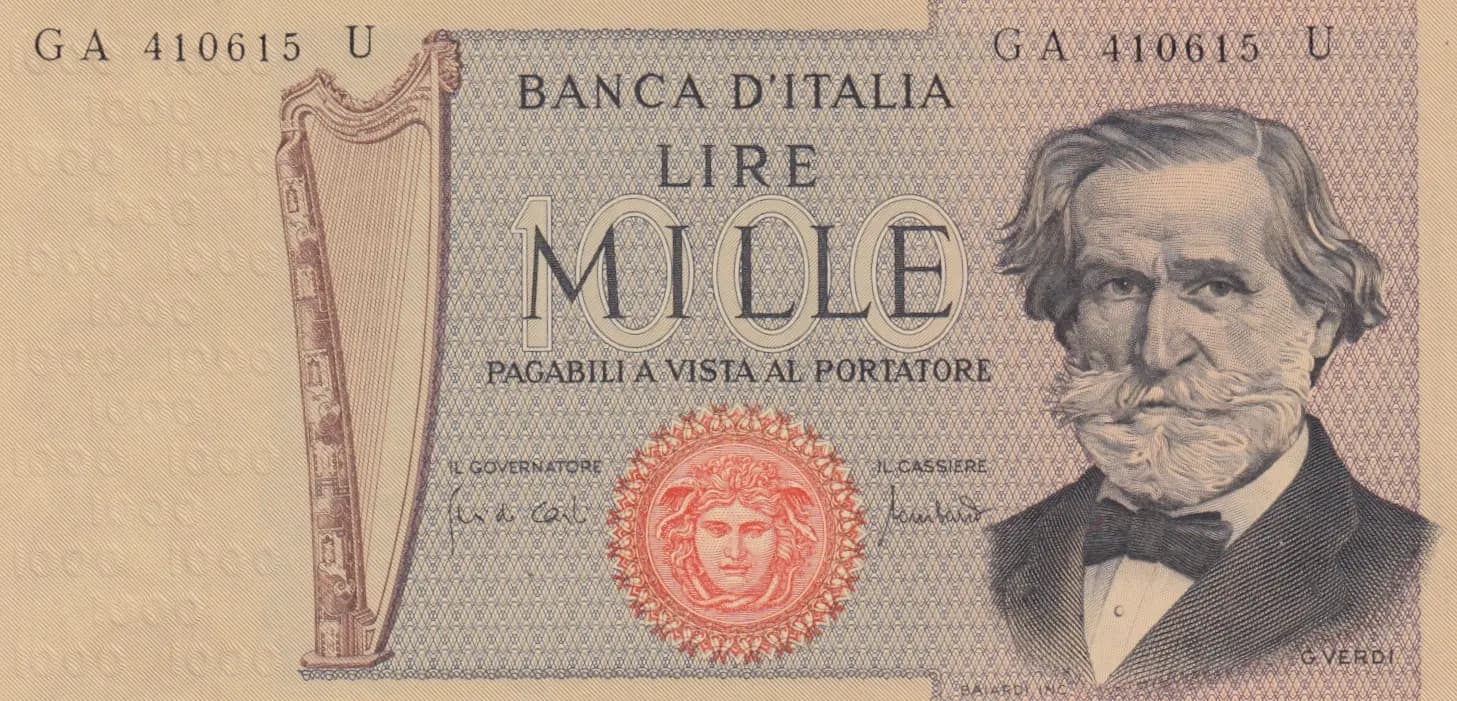
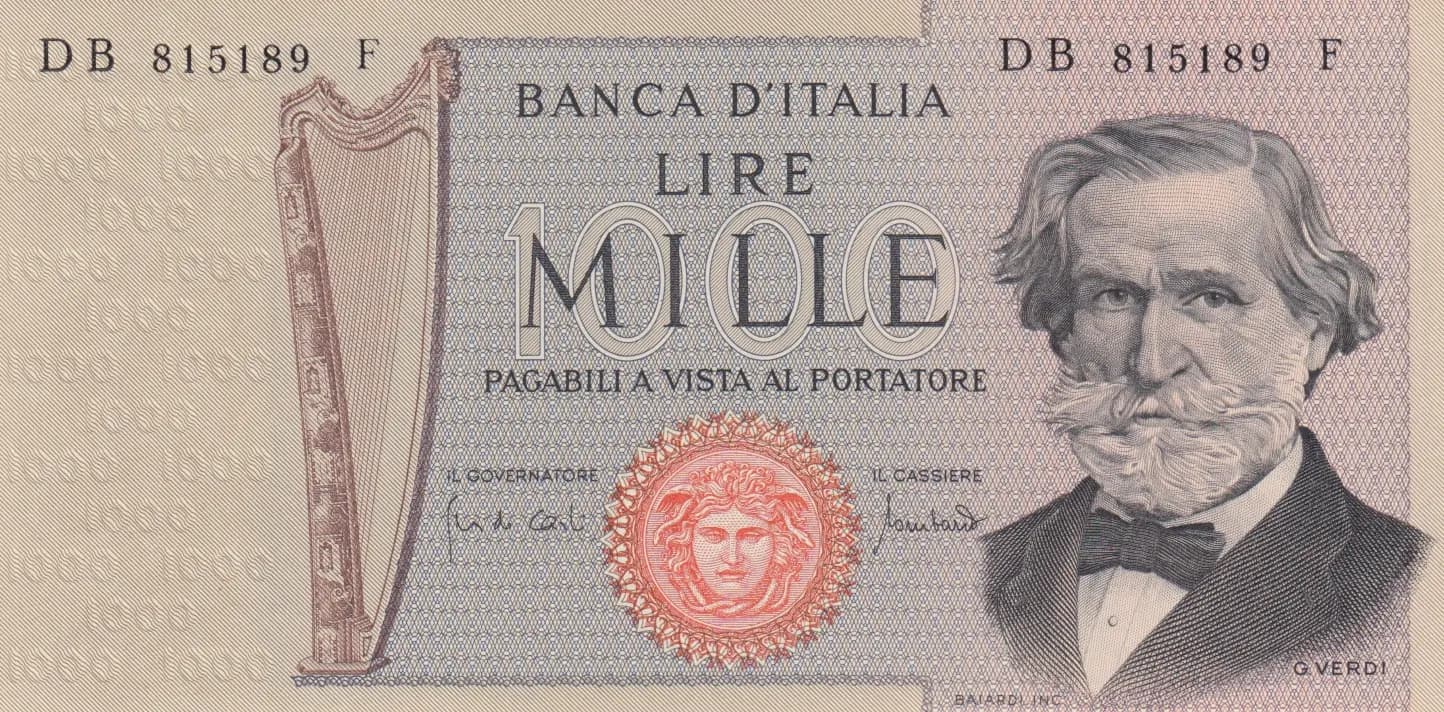
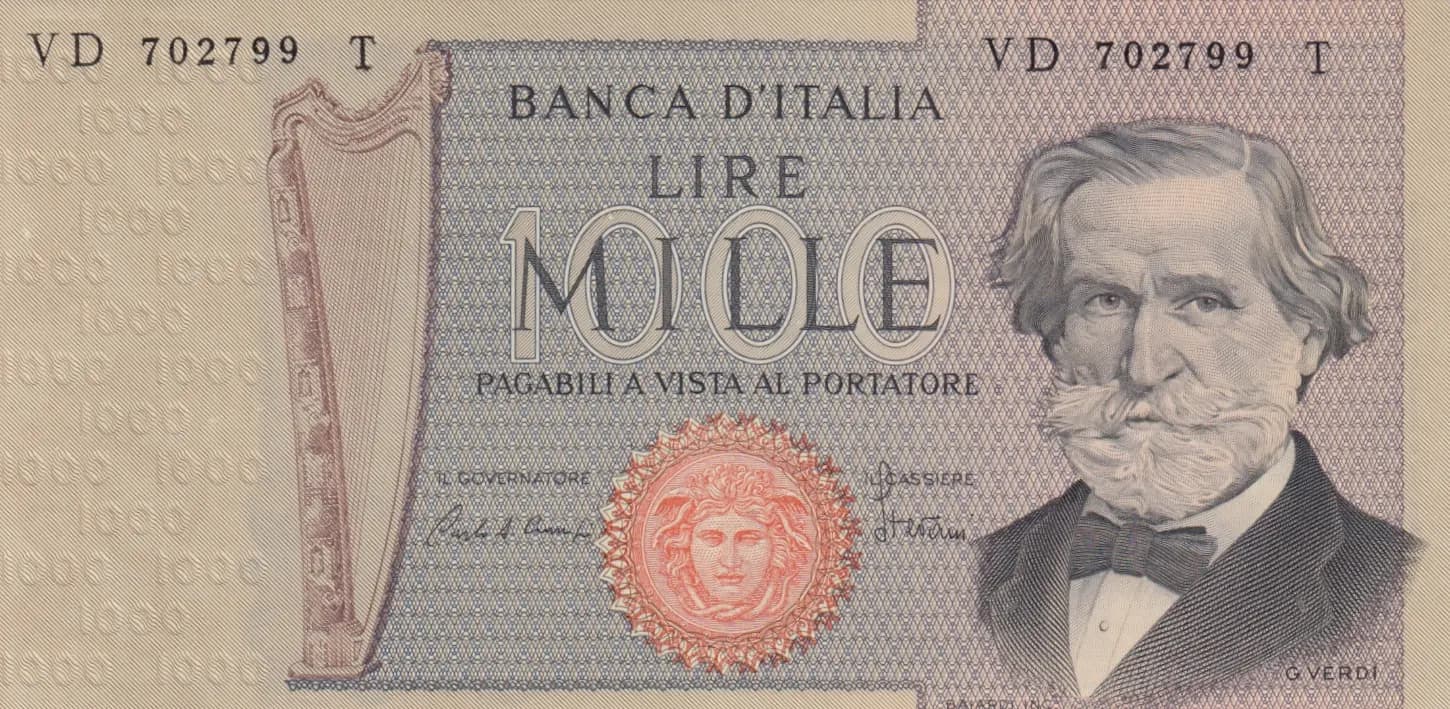
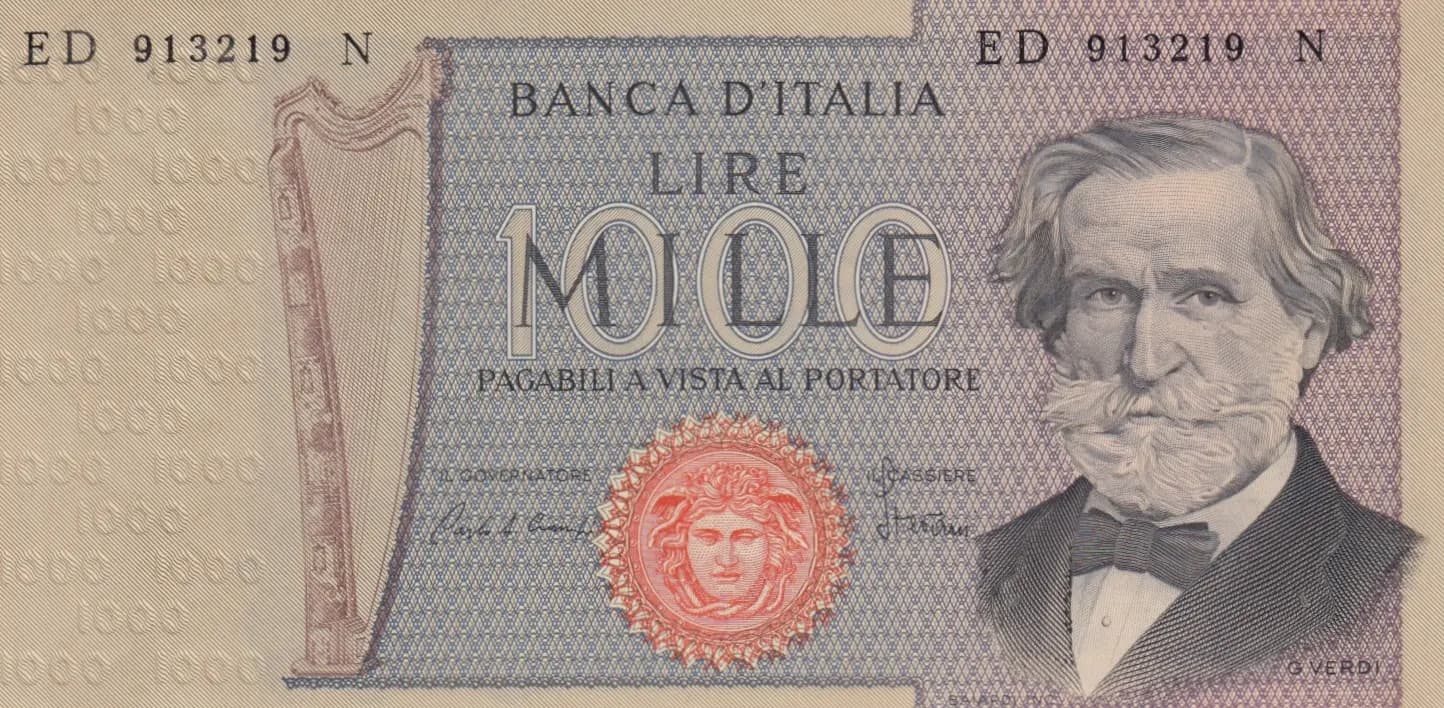
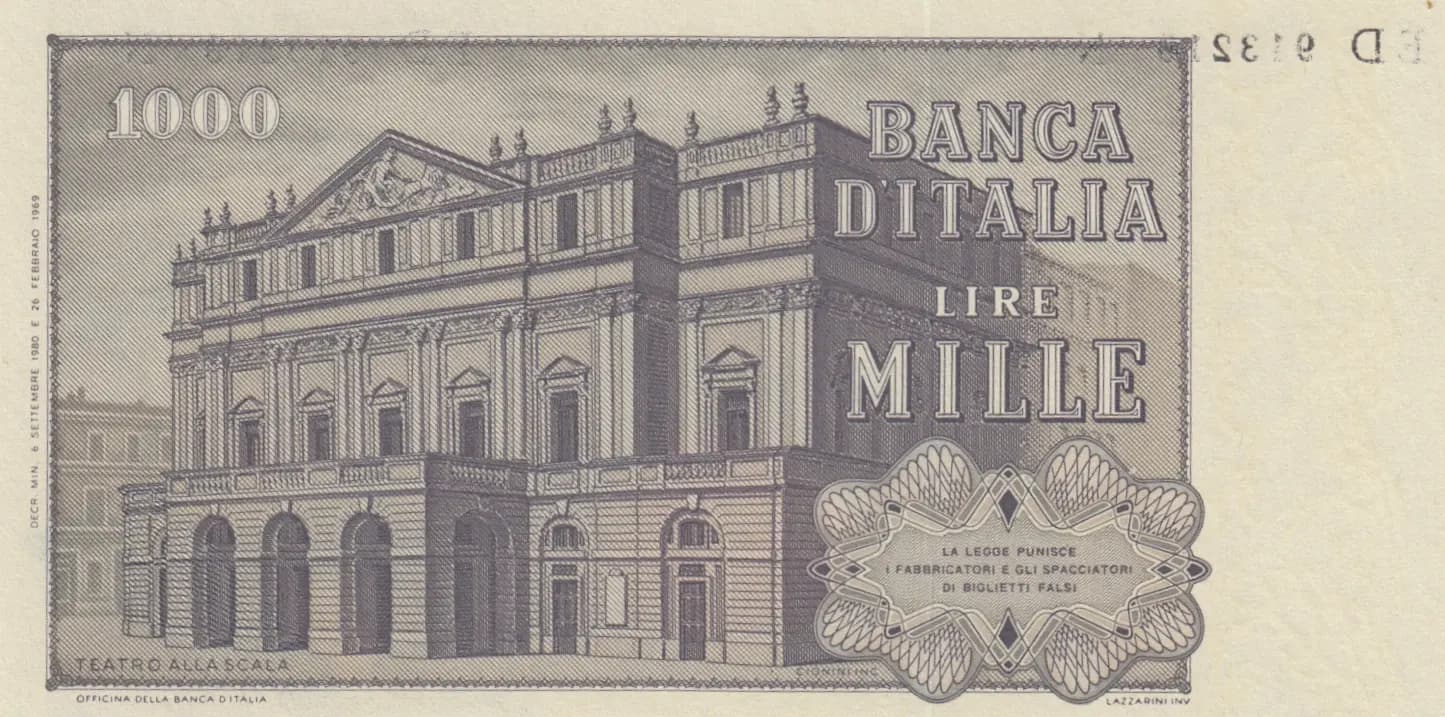
This 1980 Italian 1000 Lire banknote in Uncirculated condition is a well-preserved example of Banca d'Italia's classical design era, featuring the celebrated composer Giuseppe Verdi on the obverse and the iconic Teatro alla Scala of Milan on the reverse. The note exhibits pristine condition with crisp printing, vibrant purple and lavender tones on the front, and the characteristic fine engraving of the architectural landmark that defines this series.
Common. Market data indicates consistent availability at modest prices; eBay sales history shows AUNC and UNC examples selling in the $4-$31 USD range over the past decade, with 2019 catalog values at $15 UNC. The production run was substantial across the 1969-1981 circulation period, and this specific 1980 printing represents mid-series standard output rather than a scarce or commemorative issue. High population in professional grading suggests widespread survival and active circulation in the collector market.
Issued during the period 1969-1981 by Banca d'Italia, this note celebrates two of Italy's greatest cultural achievements: Giuseppe Verdi, whose operatic works defined 19th-century Italian cultural identity, and the Teatro alla Scala, one of the world's most prestigious opera houses. The 1980 date places this note in the final years before Italy's transition to the Euro, representing the pinnacle of classical Italian banknote design from the post-war era.
The obverse features a formally dressed portrait of Giuseppe Verdi, the 19th-century Italian operatic composer, positioned on the right side in characteristic bearded appearance wearing a dark jacket and bow tie. The denomination '1000' is centrally placed above a circular emblem depicting a classical Medusa head with elaborate ornamental borders in red/coral coloring, a symbolic representation of classical Italian heritage. The background employs a repeating geometric pattern in purple and lavender tones for security purposes. The reverse showcases the neoclassical Teatro alla Scala theater building in detailed architectural engraving, with its characteristic columns, arched windows, and ornamental balustrades prominently centered. A decorative winged emblem appears at the bottom center, typical of Banca d'Italia's design language.
Front side: 'BANCA D'ITALIA' (Bank of Italy), '1000 LIRE' (One thousand Lire), 'FACABILI A VISTA AL PORTATORE' (Payable on demand to bearer), Serial number 'ED 913219 N'. Back side: 'BANCA D'ITALIA' (Bank of Italy), 'LIRE MILLE' (One thousand Lire), 'TEATRO ALLA SCALA' (Scala Theater), 'LA LEGGE PUNISCE I FABBRICATORI E GLI SPACCIATORI DI BIGLIETTI FALSI' (The law punishes manufacturers and distributors of counterfeit notes), 'OFFICINA DELLA BANCA D'ITALIA' (Office/Works of the Bank of Italy), 'LAZZARINI INV' (Lazzarini designer/inventor mark).
Intaglio engraving (recess printing) executed by the Officina della Banca d'Italia in Rome, the central bank's own printing facility. The fine detail visible in the portrait, architectural rendering, and decorative elements, combined with the geometric security patterns and color layering (evident from the multi-toned front and contrasting back design), indicates advanced multi-stage intaglio production typical of European central bank notes of this era. Security features include a watermark of laureate heads, an embedded security thread, and the prominent Medusa seal design.
This note is cataloged as Pick P-101g (1980 issue). The catalog data indicates Pick has identified variants P-101a and P-101d with the same watermark type (laureate heads). The serial number prefix 'ED' and the date of 6.9.1980 (September 6, 1980) establish this as a standard circulation printing from the middle of the note's authorized production window. No overprints, special markings, or commemorative features are present; this represents the regular business-as-usual issue for the denomination during this year.