5 dinars 1982
Market Prices
41 salesAbout This Note
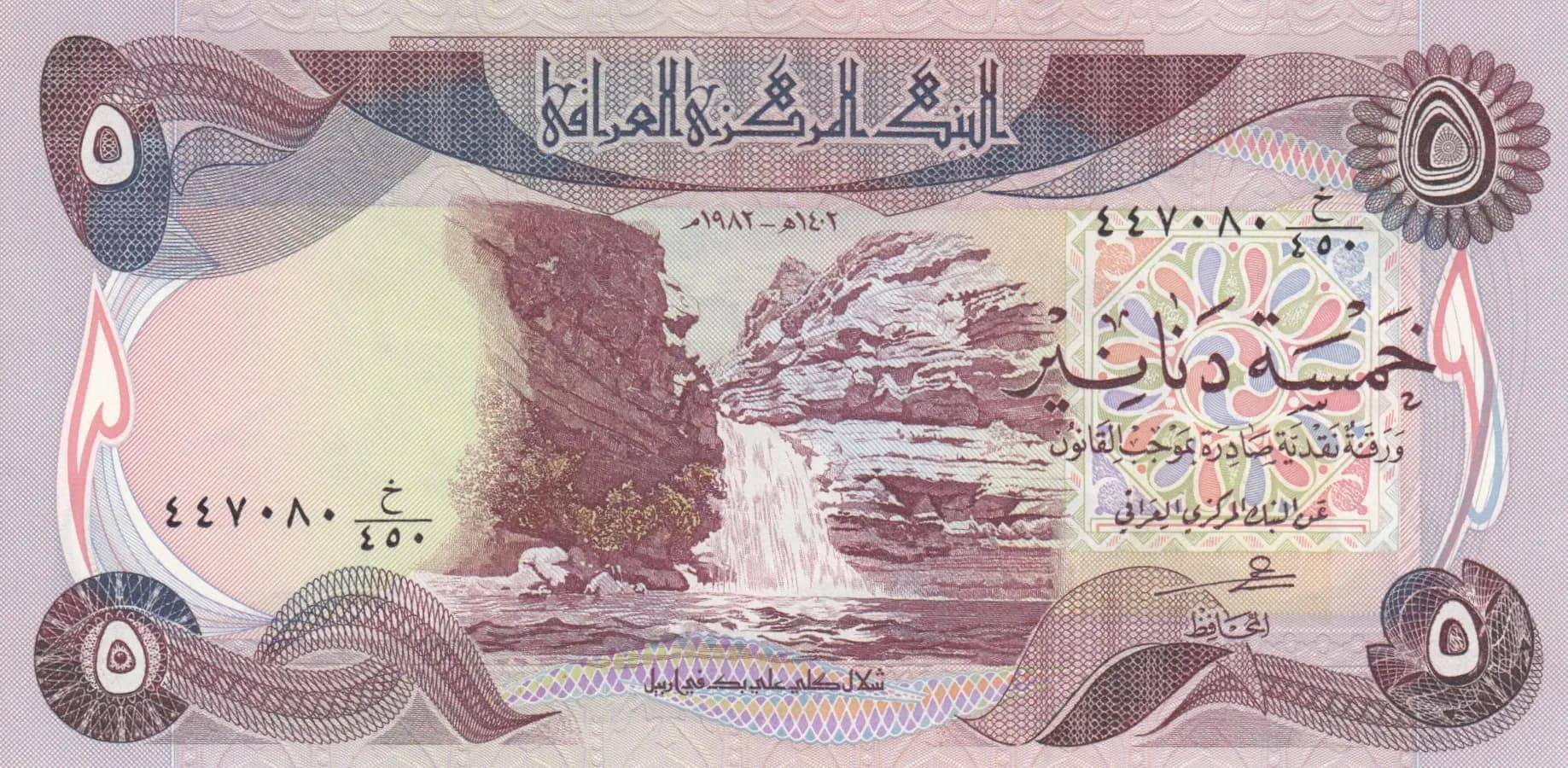
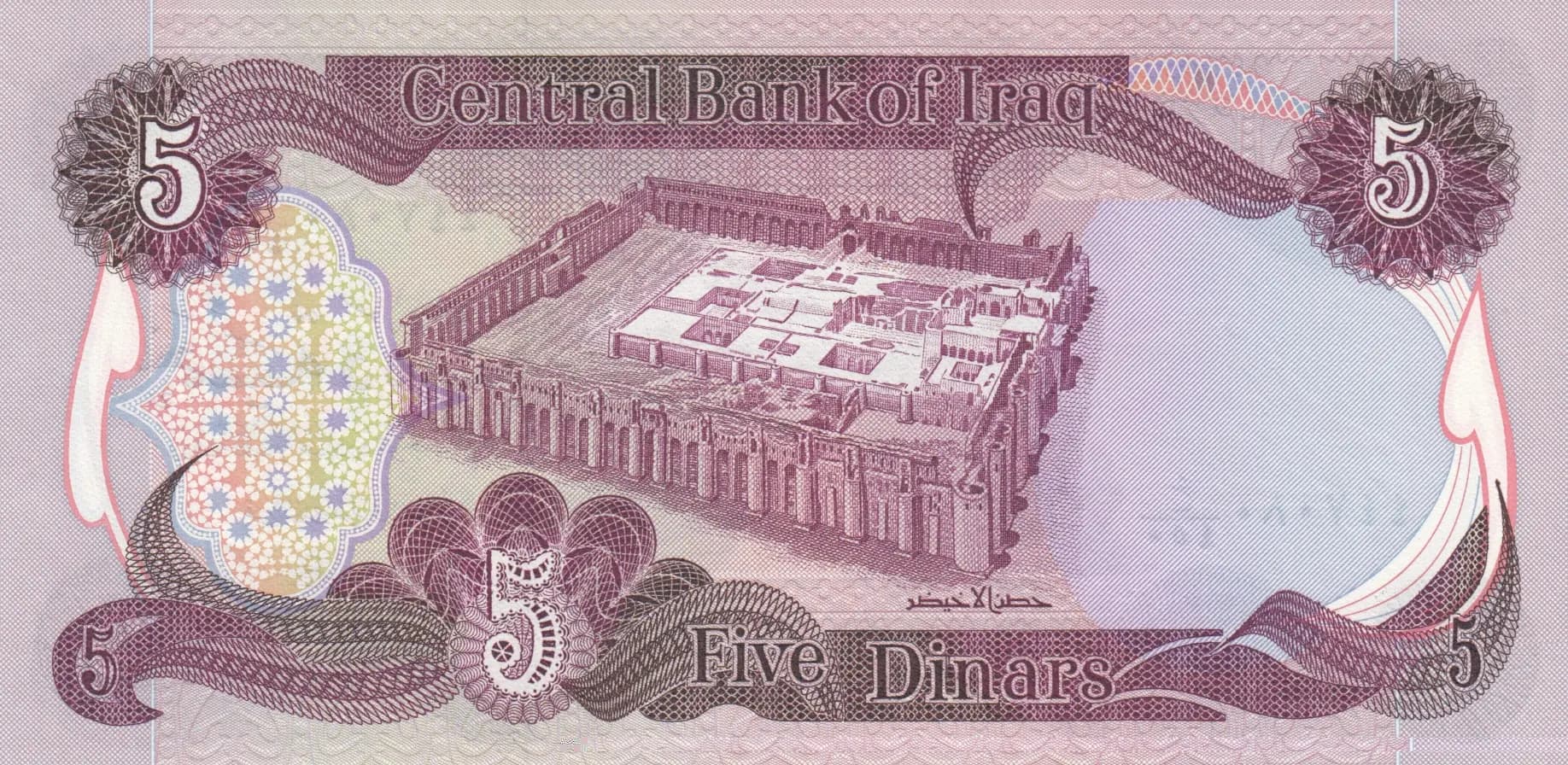
This is an uncirculated 1982 Iraqi 5 Dinar note (Pick P-70a) in exceptional condition, featuring a striking pink-mauve color scheme with ornate Islamic geometric patterns and rosette medallions in all corners. The obverse showcases the scenic Gali Ali Beg waterfall in Kurdistan in the central vignette, while the reverse displays an isometric architectural rendering of the Ukhaidir fortress. The note exhibits crisp, clear printing throughout with no signs of wear, creasing, or damage, making it a pristine example of this denomination from the early post-1980 Iraqi currency series.
Common. Despite the note's aesthetic appeal and historical interest, the eBay sales data demonstrates consistent and robust market circulation with numerous transactions at modest prices. UNC examples have sold for $1.25 to $5.50, with PMG-graded specimens commanding higher premiums ($15-$50+ for grades 65-67) but still well within the range for commonly produced notes. The note was part of a standard issue series (1980-1982) with substantial print runs, and no evidence of rarity or limited circulation exists. Most banknotes are common unless specific knowledge indicates otherwise, and this denomination's pricing and availability confirm typical circulation patterns.
Issued during the early years of the Central Bank of Iraq's modern banknote series (1980-1982), this denomination reflects Iraq's nationalistic imagery by featuring significant cultural and historical landmarks. The Gali Ali Beg waterfall represents Iraq's natural heritage in the Kurdistan region, while the Ukhaidir fortress on the reverse is one of the finest examples of pre-Islamic Arabian architecture, both symbols of Iraq's rich historical legacy. This series was produced during a period of relative stability in Iraqi monetary policy, preceding the economic disruptions of the 1980s conflict.
The obverse features the Gali Ali Beg waterfall (also known as Gali Ali Beg or Bekhal waterfall) located in the Arbil region of Iraqi Kurdistan as the central vignette, depicted as a tall cascade descending rocky terrain with natural vegetation. The reverse displays the Ukhaidir fortress (Hisn al-Ukhaydir), an 8th-century Islamic palace and fortress complex, rendered in isometric architectural perspective showing its distinctive courtyard and colonnade structures. Both sides employ the same sophisticated pink and mauve color palette with complementary gray-brown and cream elements. The design incorporates extensive Islamic geometric and floral ornamental patterns, particularly visible in the decorative borders and corner rosette medallions containing Arabic numerals. Fine line engraving and microprint details are evident throughout the design, demonstrating high-quality security printing.
FRONT: 'الجمهورية العراقية' (Al-Jumhuriyah al-'Iraqiyah) = Republic of Iraq; 'خمسة دنانير' (Khamsah Dananir) = Five Dinars. BACK: 'Central Bank of Iraq' (English); 'Five Dinars' (English); 'حمسة دنانير' (Hamsa Dananir) = Five Dinars (Arabic). The note also bears numerical denomination indicators '5' in ornamental medallions at all four corners on both sides.
Intaglio engraving (line engraving), characteristic of currency produced by TDLR (Thomas de la Rue), the noted British security printer. The visual evidence of intricate fine line patterns, microprint elements visible in decorative borders, complex geometric security patterns, and the overall crispness and clarity of impression indicate professional intaglio printing with multiple color plates. The color gradation and fine detail reproduction are consistent with de la Rue's established standards for banknote production in this period.
Pick P-70a is the primary variety catalogued with printer designation TDLR (Thomas de la Rue). A second variant P-70s exists without specific printer attribution noted. The catalogued date range (1980-1982 AH1400-1402) represents the multi-year issue span. Specific variety identification would require examination of printer marks, security features, and exact issue date on the note itself (1982/AH1402 for this example), though the visual analysis does not provide sufficient detail to distinguish between P-70a and P-70s variants at this resolution. The presence of fine microprinting and sophisticated geometric patterns is consistent with TDLR production standards.