1/2 dina 1935
Market Prices
About This Note
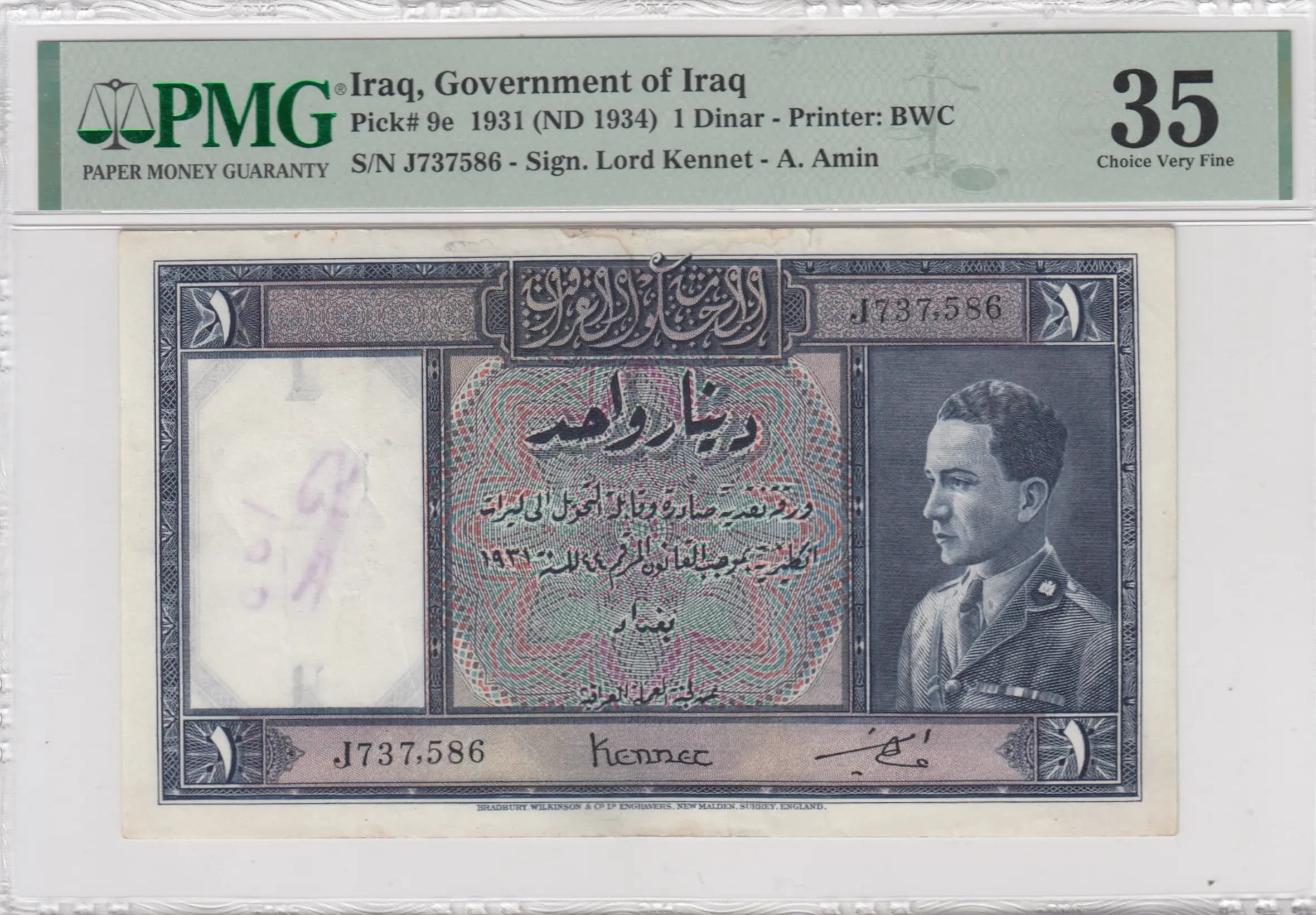
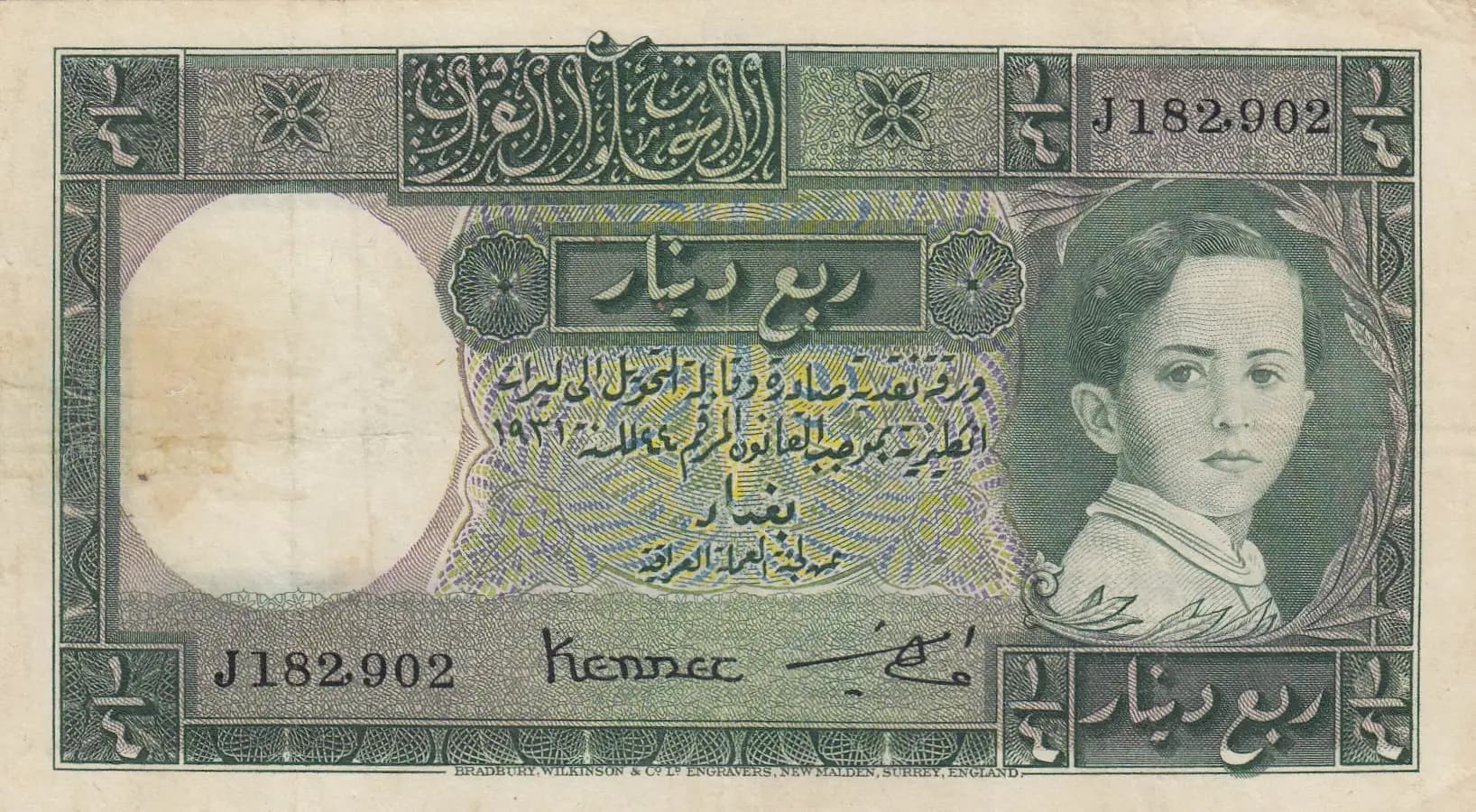
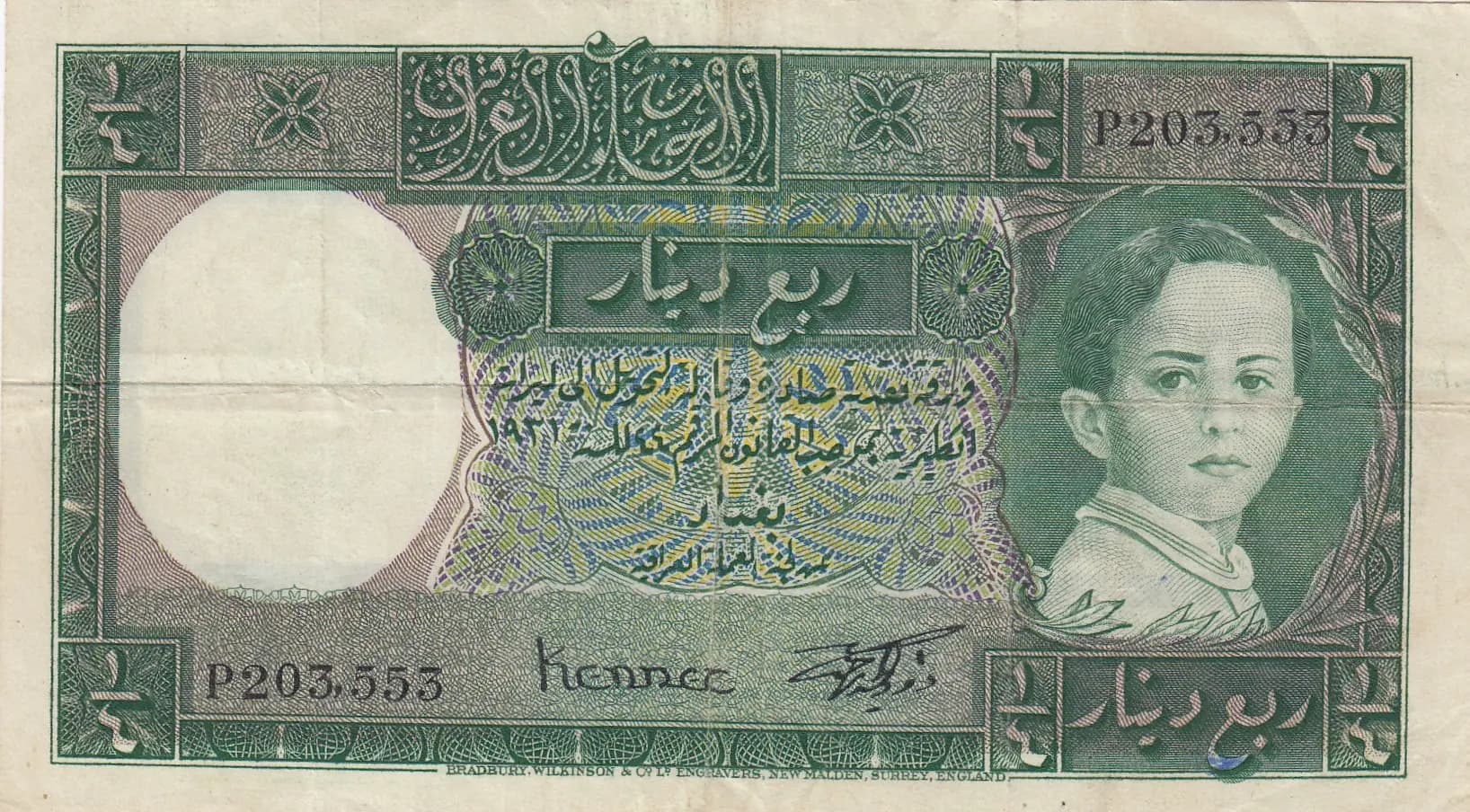
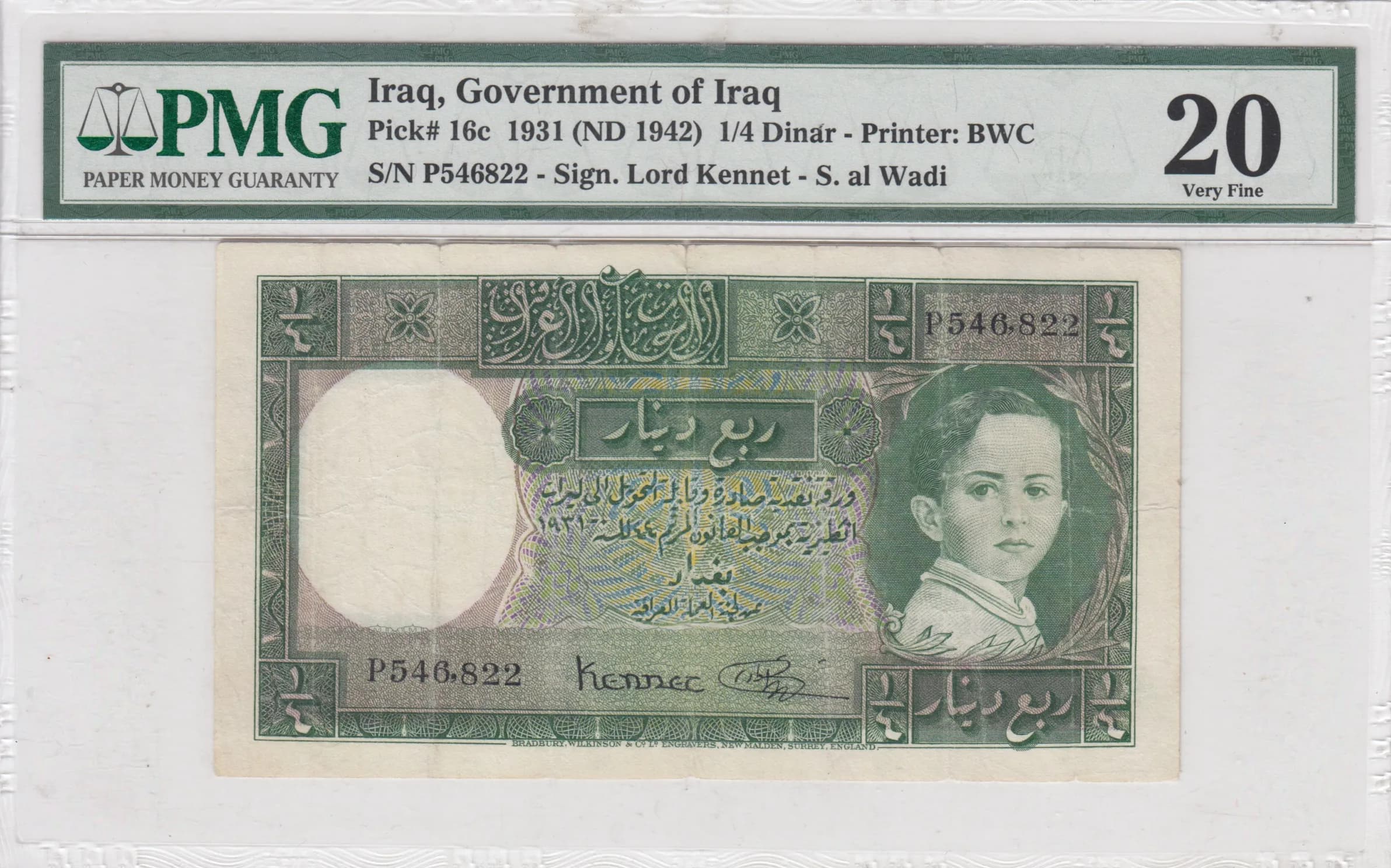
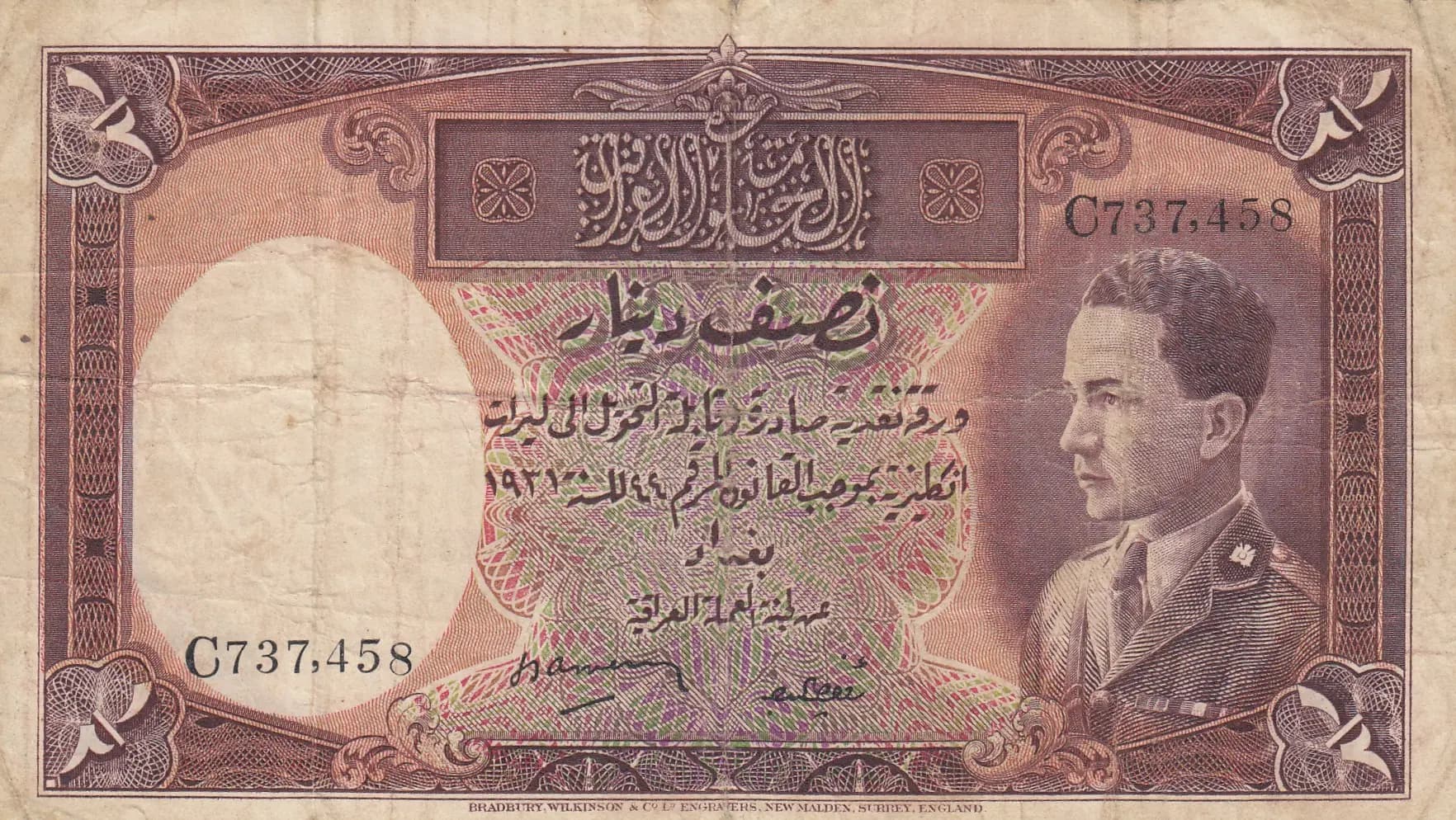
This is a 1/2 Dinar note from Iraq's 1935 Government Issue (Pick P-8c), graded in Fine condition with visible circulation wear including multiple fold creases and foxing throughout the aged paper. The note features an elegant portrait of King Ghazi in military uniform on the obverse and displays the characteristic brown and mauve color scheme with intricate guilloche and geometric border work typical of Bradbury Wilkinson's engraving. As an early Iraqi currency issue from the pre-modern period, this note represents an important piece of Iraq's monetary history during the reign of King Ghazi.
Common. While this is an early Iraqi note with historical significance, the 1935 Government Issue of 1/2 Dinars (Pick P-8c) appears to have had a substantial print run typical of fractional denominations. The catalog reference prices from 2016 show F grade at $600 USD, which suggests decent availability in the market. eBay price data showing a range of $2-$50 for circulated examples, combined with the existence of multiple variants catalogued by PMG, indicates this is a regularly encountered note in the Iraqi banknote collecting community. The Fine condition grade is a common grade for surviving examples of this vintage.
Issued under the Government of Iraq in 1931 (L. 1931) but circulated in 1935, this note was produced during the reign of King Ghazi, who ruled Iraq from 1933 to 1939 as the second Hashemite king. The obverse portrait depicts King Ghazi in formal military dress, reflecting Iraq's post-mandate status and the modernization efforts of the period. The reverse's reference to 'Law No 44 of 1931' and Sterling convertibility reflects Iraq's continued economic ties to Britain following the 1930 Anglo-Iraqi Treaty, demonstrating the nation's transition toward independence while maintaining monetary stability through Sterling backing.
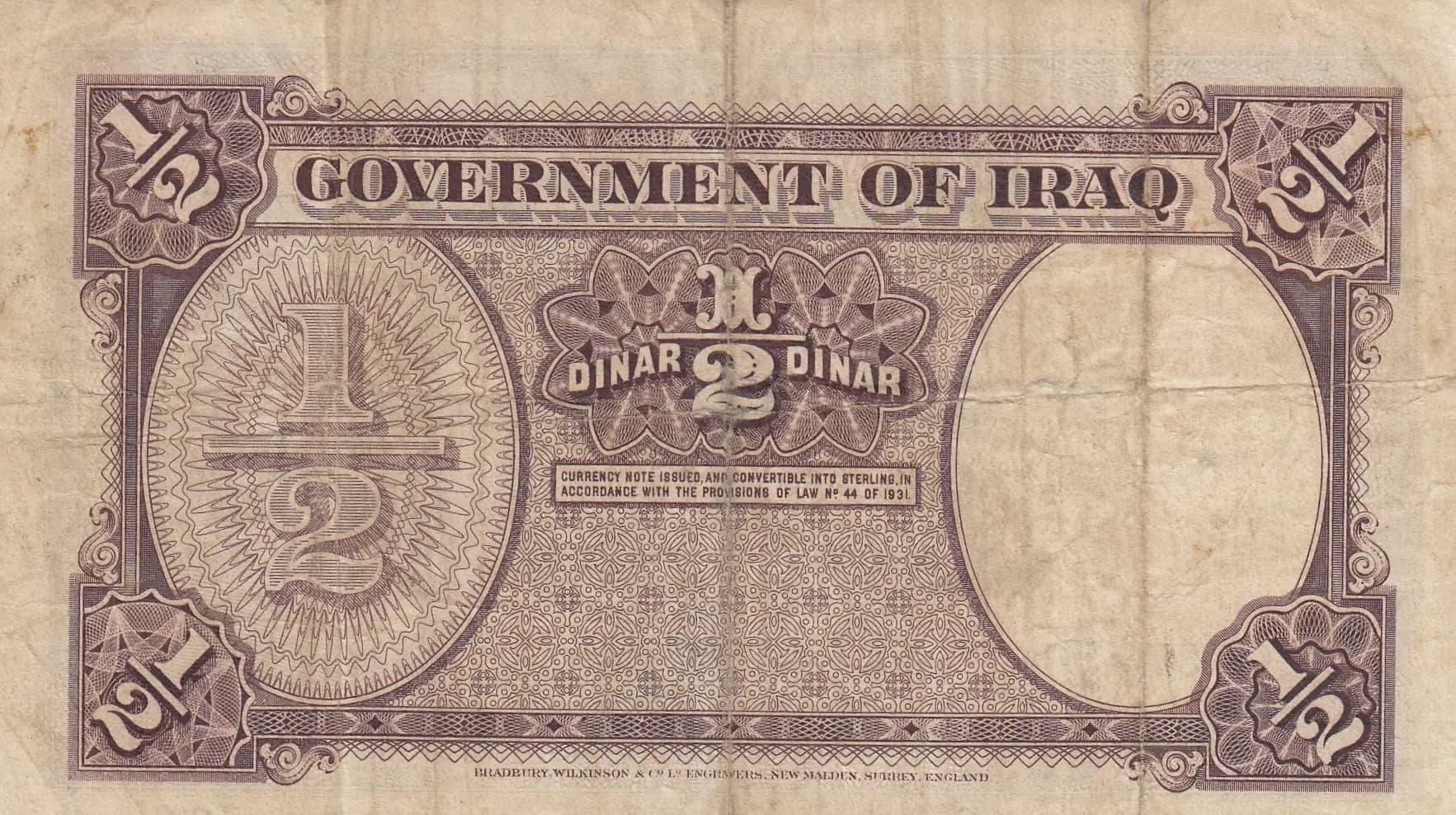
The obverse features a formal profile portrait of King Ghazi positioned on the right side, depicted in military uniform with distinctive collar insignia, facing leftward. The design is framed by ornate borders featuring Islamic geometric patterns and floral botanical motifs in the corners, with elaborate guilloche work and lattice patterns throughout. A rectangular panel containing Arabic calligraphy appears at the top center, with serial numbers positioned in the top right and bottom left corners. The reverse displays a large ornamental numeral '2' in an elaborate cartouche on the left side, backed by a radiating sunburst pattern characteristic of security engraving. The center features a 'GOVERNMENT OF IRAQ' text banner with a decorative shield containing denomination information. Both sides employ symmetrical corner flourishes and complex decorative elements typical of high-security currency design of the period.
FRONT SIDE: Arabic text 'بنك الرافدين' (Bank of Mesopotamia/Bank of Iraq); English printer attribution 'BRADBURY WILKINSON & CO LTD ENGRAVERS, NEW MALDEN, SURREY, ENGLAND'; Serial numbers 'C737,458' (appear in top right and bottom left). REVERSE SIDE: 'GOVERNMENT OF IRAQ' banner at top center; Large denomination numeral '2' with text 'DINAR' (repeated twice); Legal inscription 'CURRENCY NOTE ISSUED AND CONVERTIBLE INTO STERLING IN ACCORDANCE WITH THE PROVISIONS OF LAW No 44 OF 1931'; Printer attribution 'BRADBURY WILKINSON & CO LTD ENGRAVERS, NEW MALDEN, SURREY, ENGLAND' at bottom.
This note was produced using intaglio (line engraving) printing by Bradbury Wilkinson & Co Ltd, a renowned British security printer. The visual analysis confirms the characteristic fine-line engraving throughout, with detailed crosshatching patterns, complex guilloche designs, and intricate ornamental borders that serve as anti-counterfeiting measures. The precision of the sunburst radiating pattern on the reverse and the fine linear security features are hallmarks of the intaglio process used for high-value currency during this period.
This specimen is identified as Pick P-8c, one of several catalogued variants of the 1/2 Dinar issue. The note displays the characteristic features of the 1931 date issue (L. 1931) with the brown and multicolor underprint. The serial number 'C737,458' visible on both sides is consistent with the standard numbering scheme for this issue. PMG records indicate P-8d exists as a variant, suggesting this series may have minor printing differences between varieties, though the exact distinguishing characteristics would require comparison of multiple examples. The Bradbury Wilkinson printer attribution (BWC) confirms this is from the British-printed series of early Iraqi currency.