1 dinar 1942
Market Prices
7 salesAbout This Note
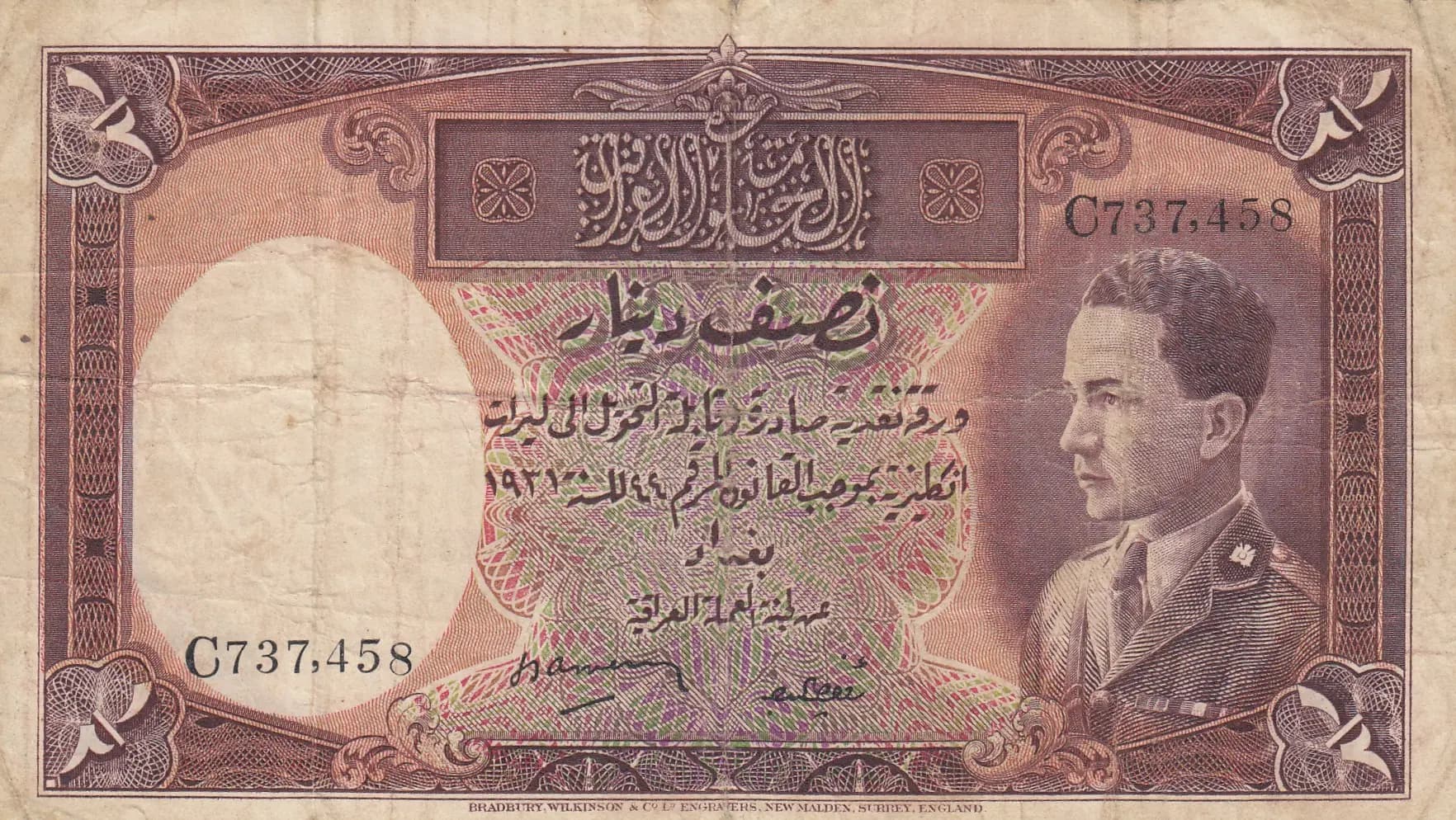
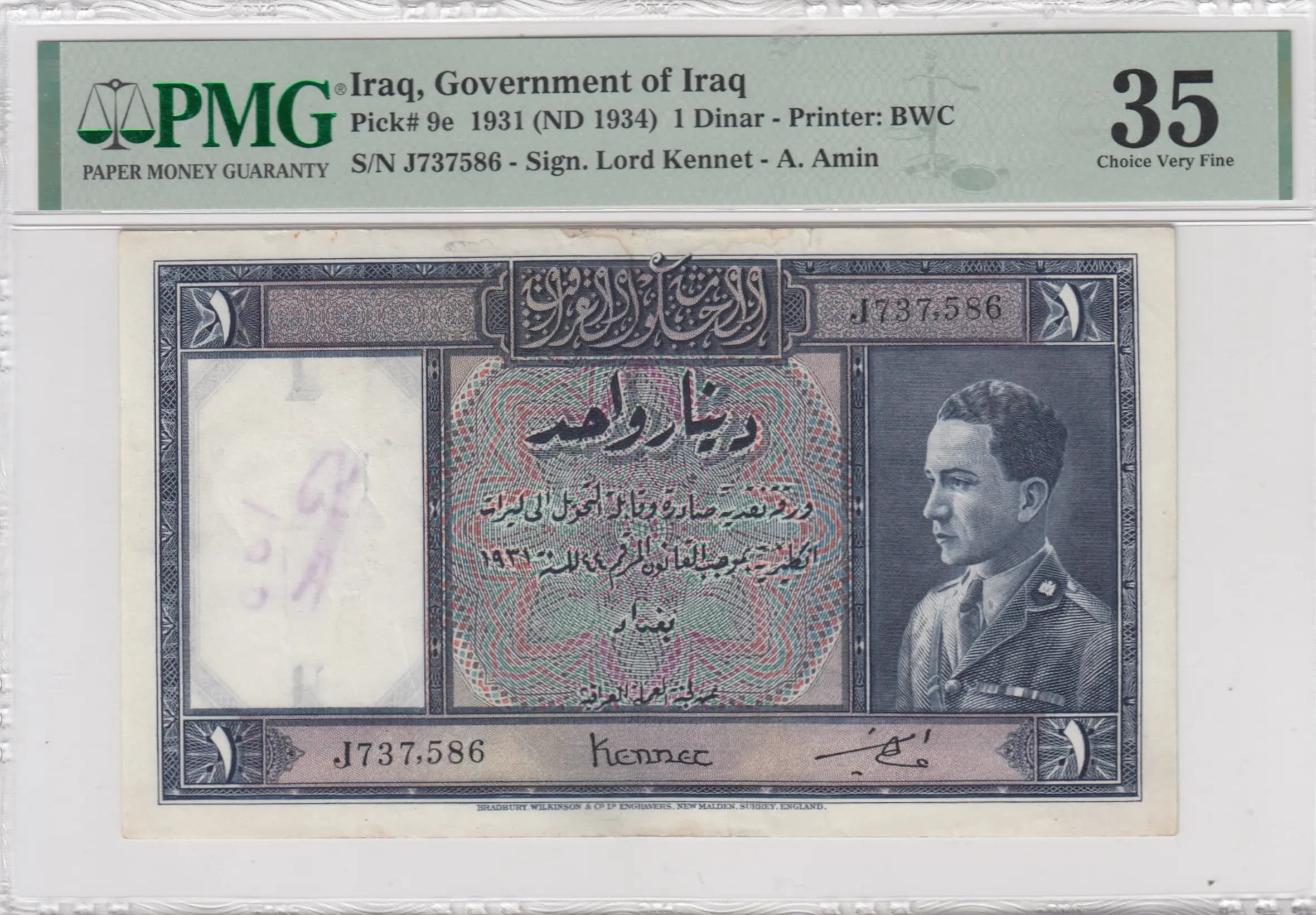
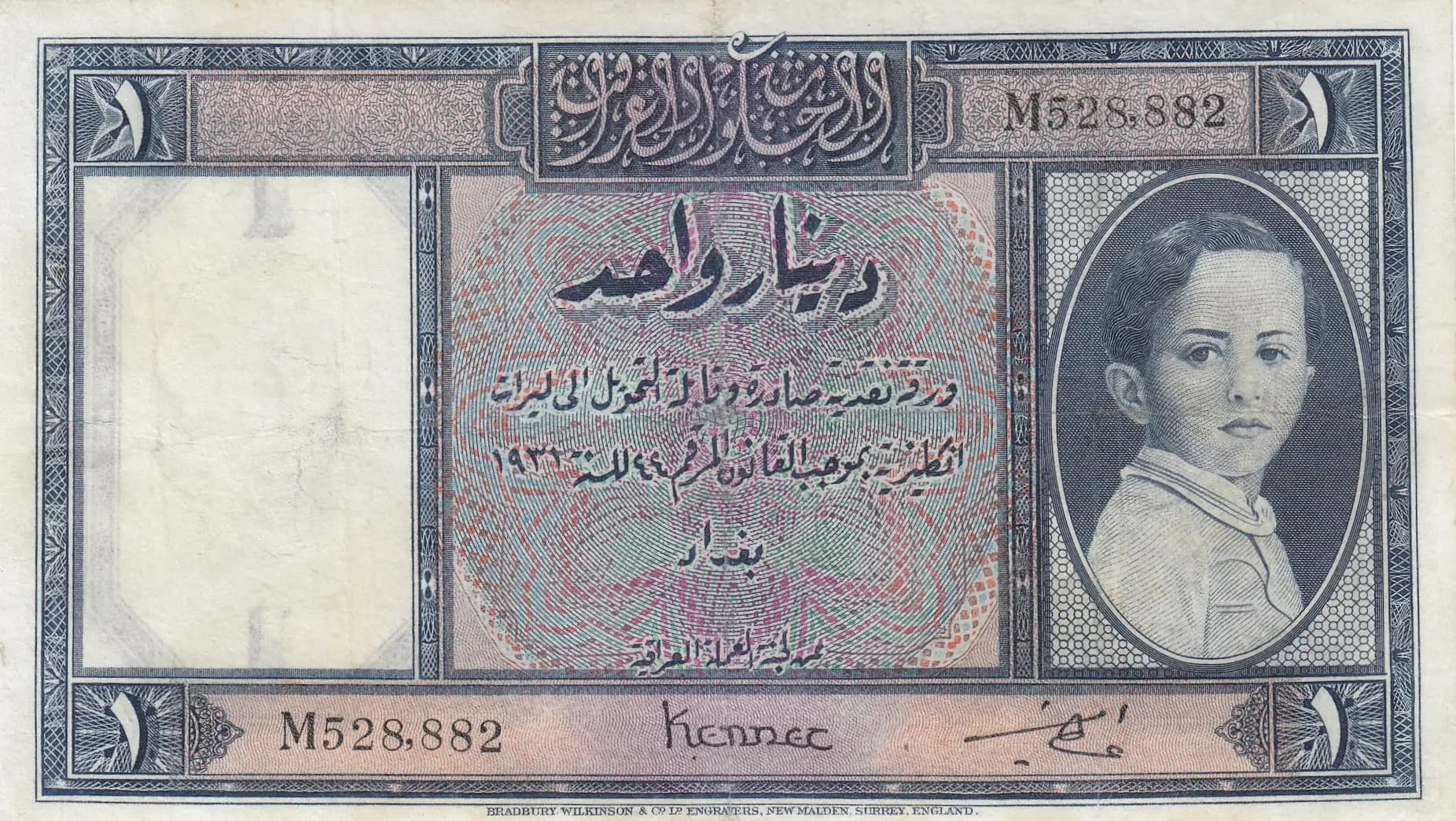
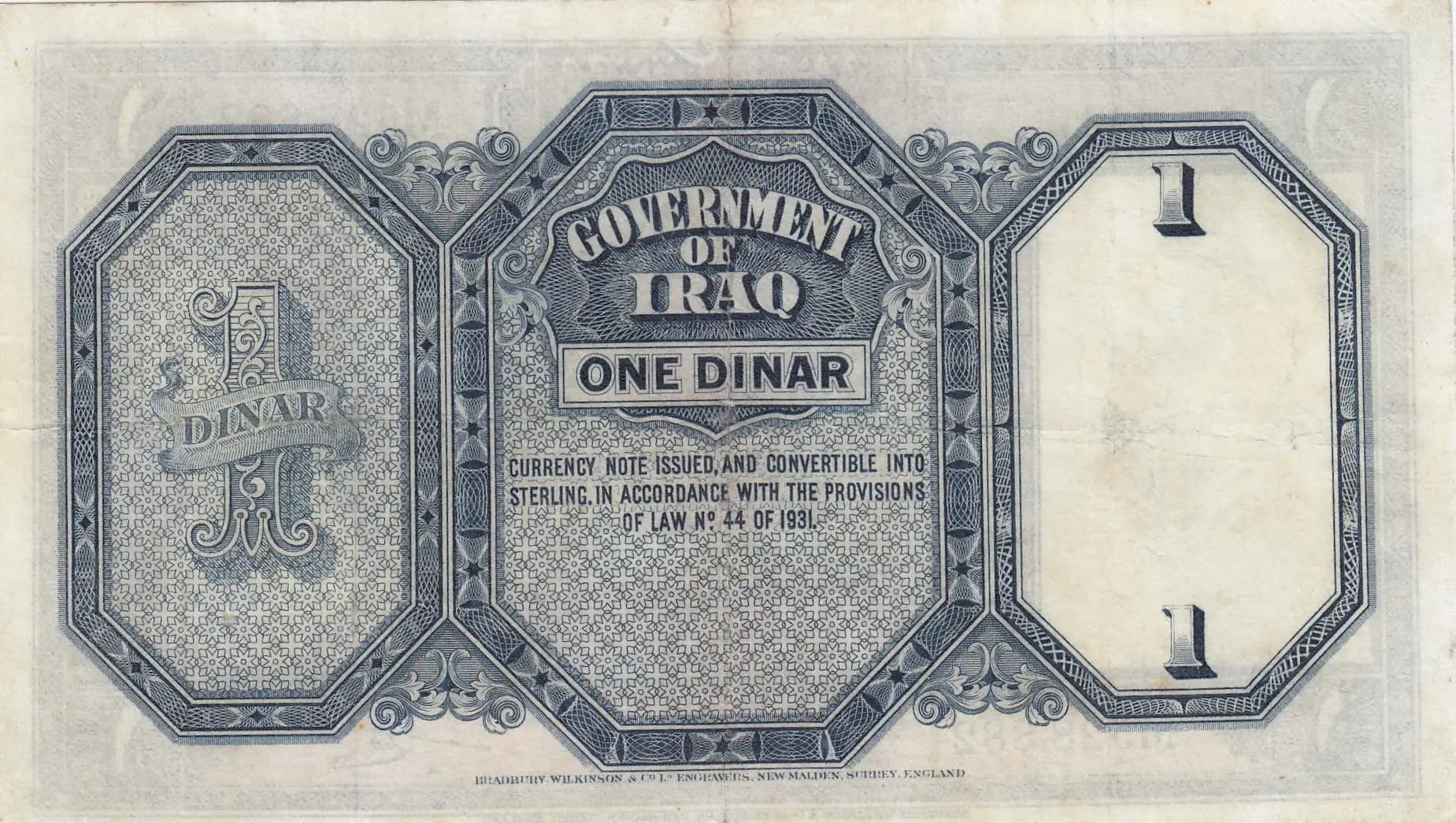
This is an Iraqi 1 Dinar note from 1942 (Law 1931), featuring a young King Faisal II in profile on the obverse and ornate geometric designs with English text on the reverse. The note displays typical circulation wear with yellowing and minor creasing consistent with VF condition; the engraving remains sharp and legible throughout, showcasing the fine work of Bradbury Wilkinson & Co Ltd.
Common. This is a regular issue of Iraq's early post-mandate period with multiple variant printings (P-18a and P-18b documented by PMG). eBay market data shows consistent sales activity across multiple condition grades from 2009–2018, with VF examples selling for approximately $100–$120, indicating strong but not exceptional collector demand. The note was issued in substantial quantities and remains readily available in most grades.
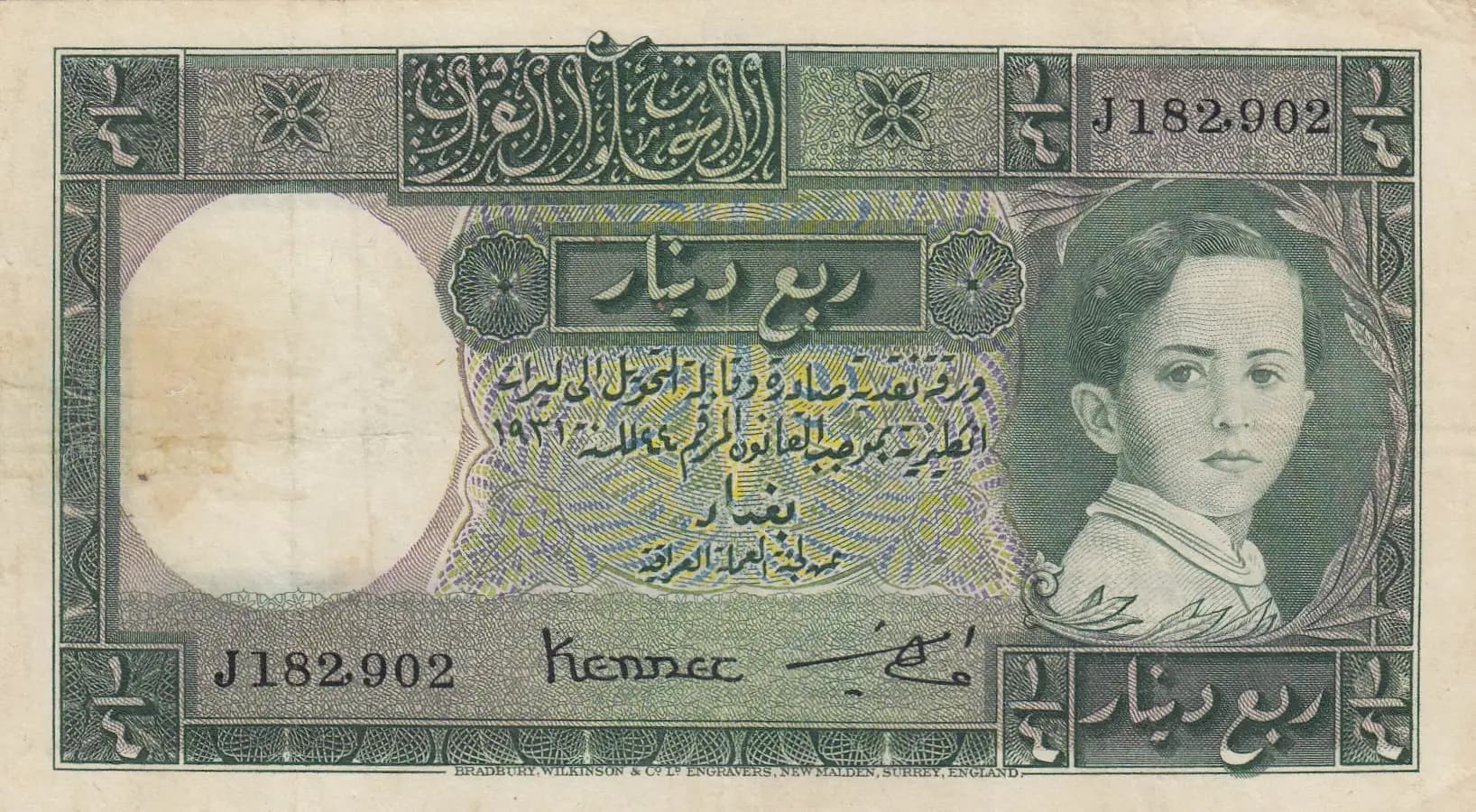
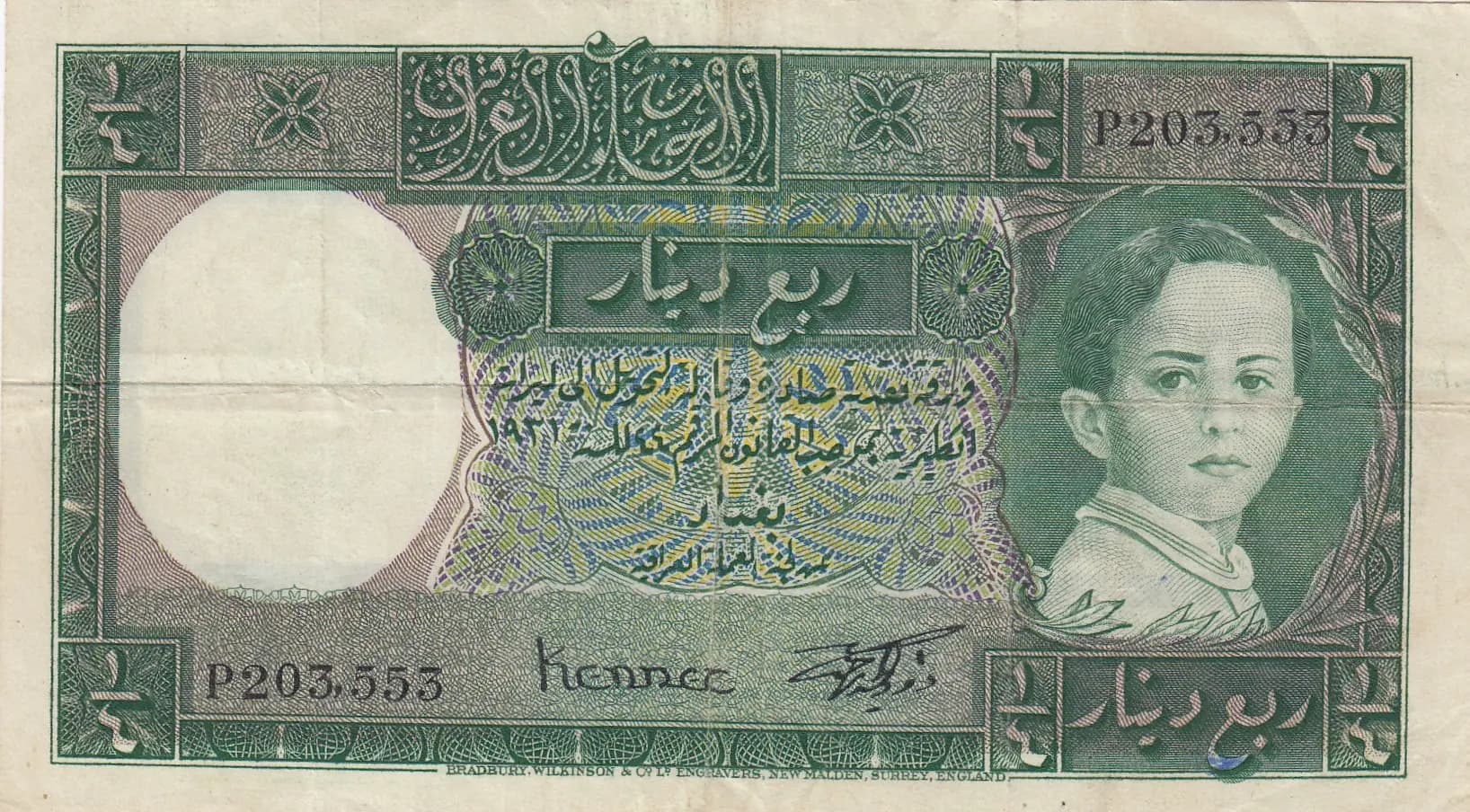
Issued under Law No. 44 of 1931, this note represents early post-mandate Iraq during the reign of King Faisal II, who is depicted as a child in the portrait. The note's convertibility into Sterling reflects Iraq's monetary ties to Britain during this period of the monarchy. The bilingual English-Arabic design and British printing credentials underscore the influence of British financial administration in Iraq during the interwar and WWII era.
The obverse features King Faisal II as a young man in left-facing profile, rendered in fine engraving technique on the right side of the note. The design employs a multi-panel layout with a large blank left section balanced against ornate central calligraphy in an elaborate geometric frame. Crescent moon and curved line motifs accent the upper corners, reflecting Islamic design traditions. The color scheme of blue and pink/mauve tones with cream underprint creates visual hierarchy while maintaining the dignity appropriate for a sovereign currency. The reverse presents a more restrained, formal composition with three octagonal panels featuring English text and geometric borders, emphasizing the note's legal status as currency convertible into Sterling. Fine line work and geometric micropatterns throughout provide anti-counterfeiting security typical of Bradbury Wilkinson's standards.
{"obverse":{"serialNumber":"M528.882 (repeated at top and bottom)","arabicCentral":"Central ornate panel contains Arabic script indicating denomination and issuing authority (specific transliteration not determinable from image quality)"},"reverse":{"governmentDesignation":"GOVERNMENT OF IRAQ","denomination":"ONE DINAR / DINAR / 1","legalClause":"CURRENCY NOTE ISSUED, AND CONVERTIBLE INTO STERLING IN ACCORDANCE WITH THE PROVISIONS OF LAW N° 44 OF 1931.","printerCredit":"BRADBURY WILKINSON & Co Ltd ENGRAVERS, NEW MALDEN, SURREY, ENGLAND."}}
Intaglio engraving on banknote paper, executed by Bradbury Wilkinson & Co Ltd (BWC), New Malden, Surrey, England. The sharp, detailed line work visible in both the portrait rendering and the geometric border designs, along with the fine micropattern backgrounds, are characteristic of high-quality intaglio security printing. The multicolor underprint on the obverse was achieved through separate color passes typical of 1930s–1940s banknote production.
This note is catalogued as P-18a under Pick's standard. Two variants exist for this base number (P-18a and P-18b), both printed by BWC. Specific distinguishing features between variants (potentially signature varieties, serial number prefixes, or subtle design differences) are not fully determinable from the visual analysis provided, though the serial number prefix 'M' and the signature placement noted in the visual analysis may be relevant to variety identification. Further comparison with catalogued reference examples would be needed to definitively establish which sub-variety this specific specimen represents.