1/4 dinar 1942
Market Prices
1 saleAbout This Note
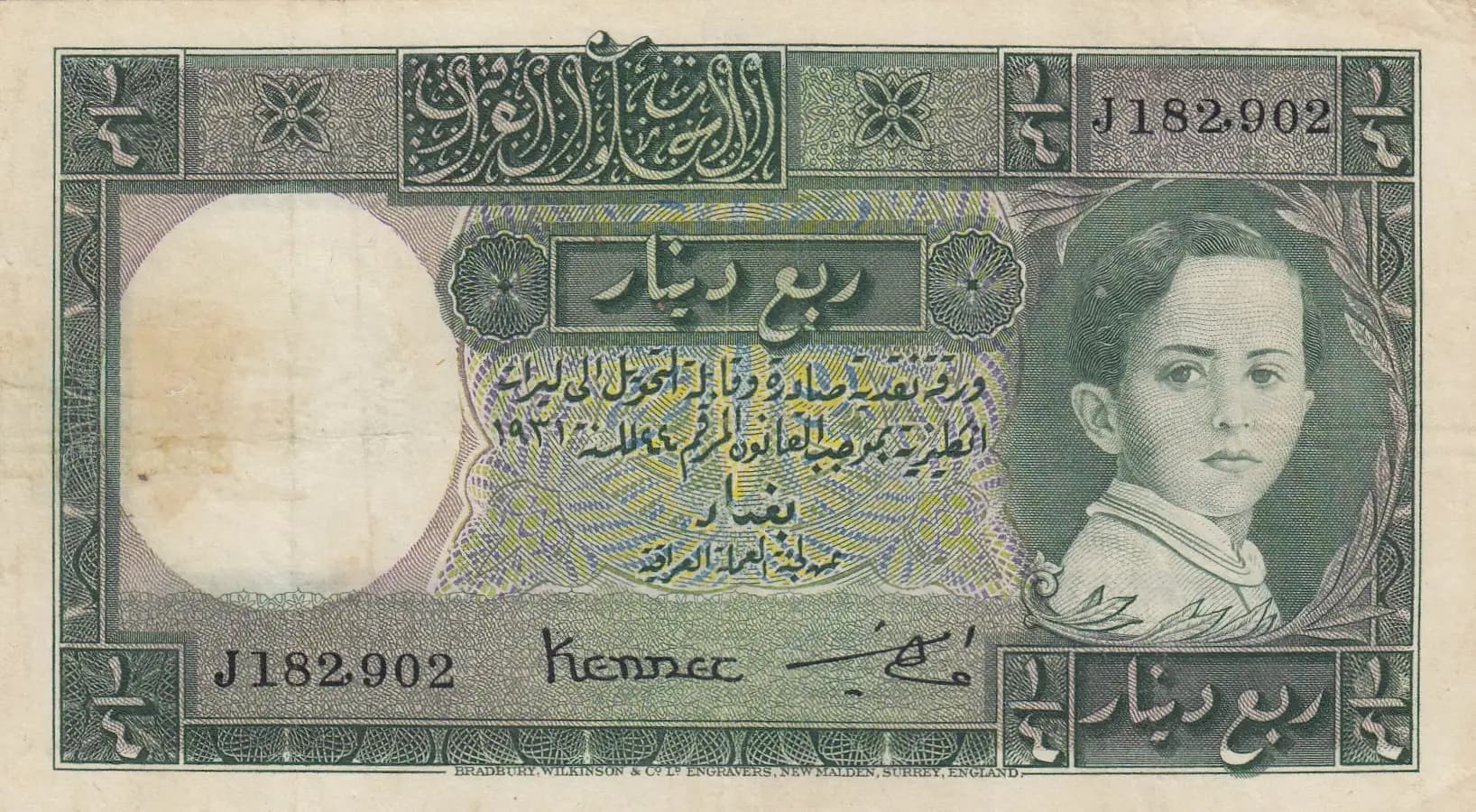
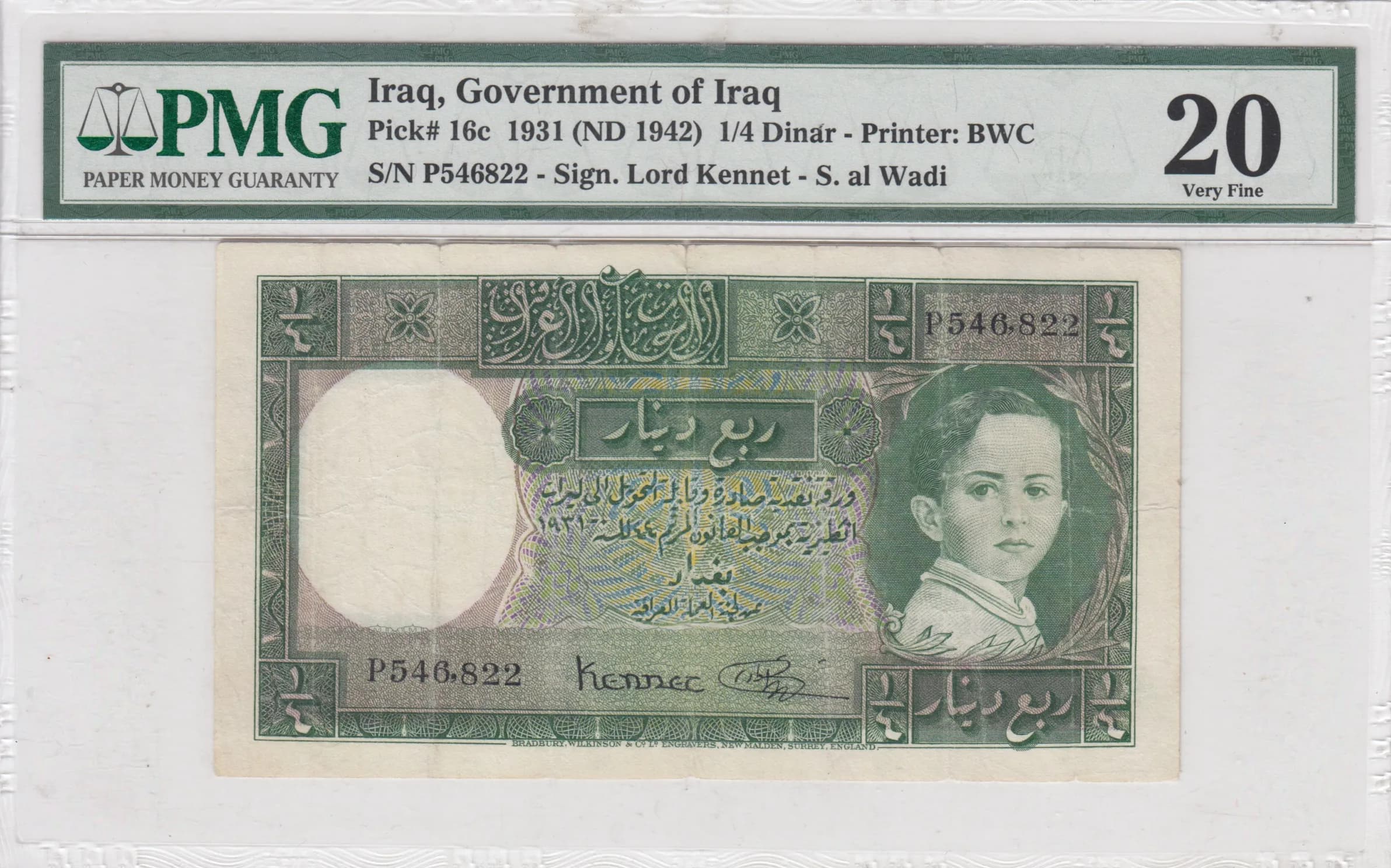
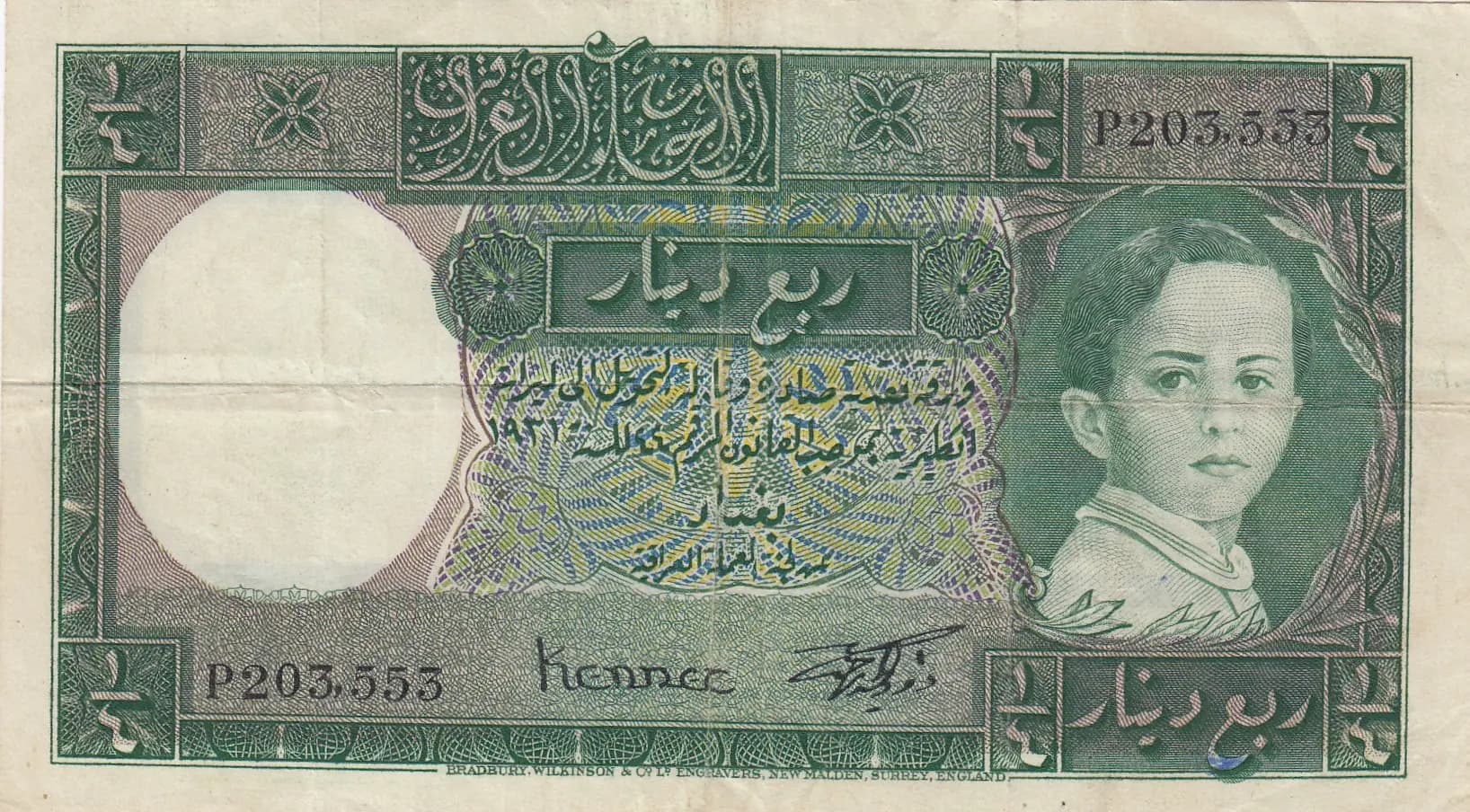
This is a VF-grade 1/4 Dinar note from Iraq's 1942 issue (Pick P-16b), featuring a striking green intaglio portrait of young King Faisal II in classical profile on the obverse. The note exhibits the characteristic aging patina and light creasing consistent with genuine circulation use during the mid-20th century, with all design elements remaining crisp and legible. This early Iraqi currency note from the British-supervised mandate period represents an important chapter in Iraq's monetary history and remains moderately collectible, with market values reflecting its age and historical significance.
Common. While this is an early Iraqi banknote with historical significance, the print run for the 1942 series appears to have been substantial, as evidenced by its regular circulation during the period. Market data from realbanknotes.com shows the 2016 catalogue value for VF condition at approximately $300, and recent eBay transactions (February 2021) for PMG 12 graded specimens sold at $179.85, indicating steady but not exceptional collector demand. This pricing level and transaction frequency suggest ordinary circulation availability in the collector market rather than scarcity.
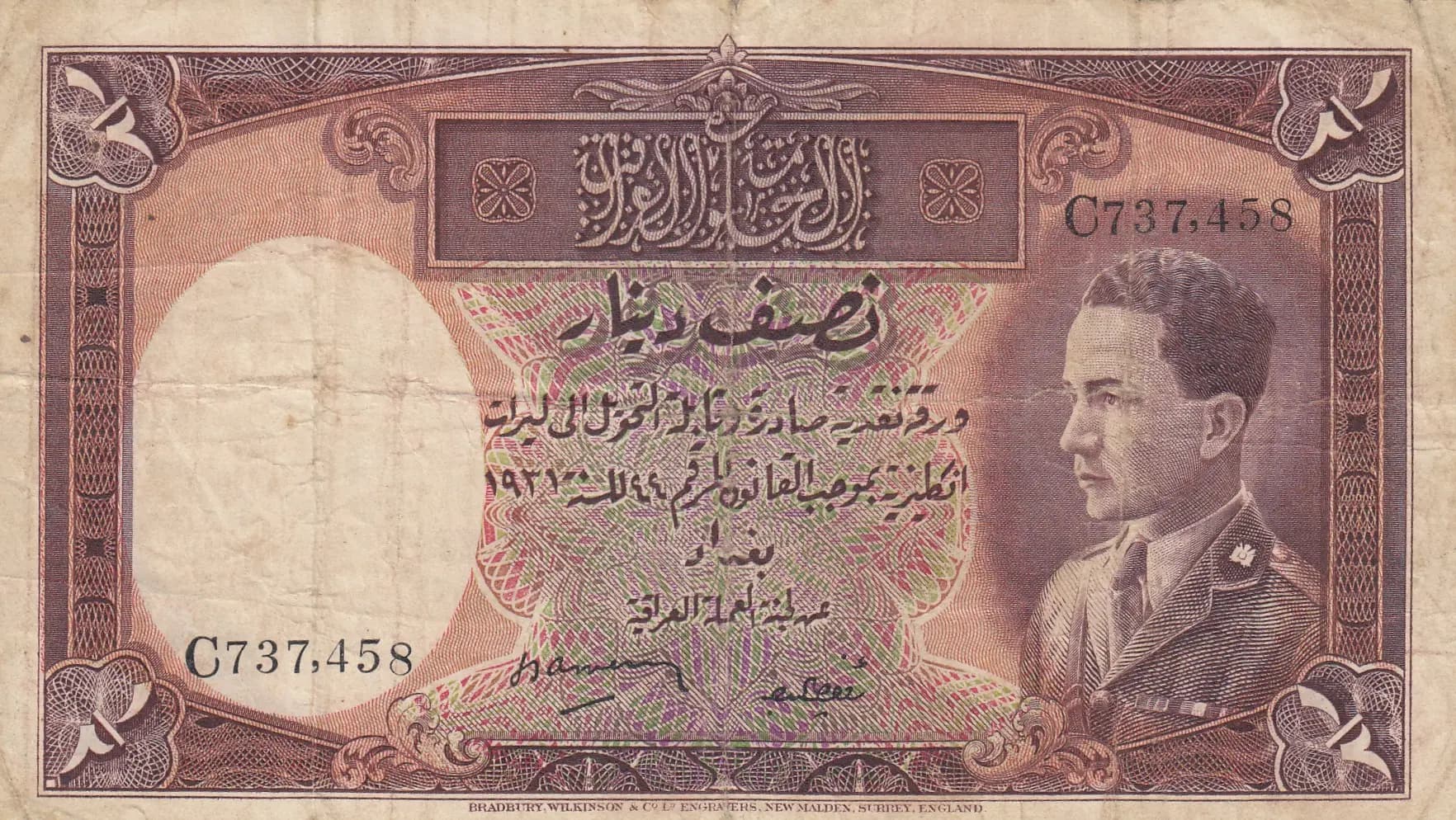
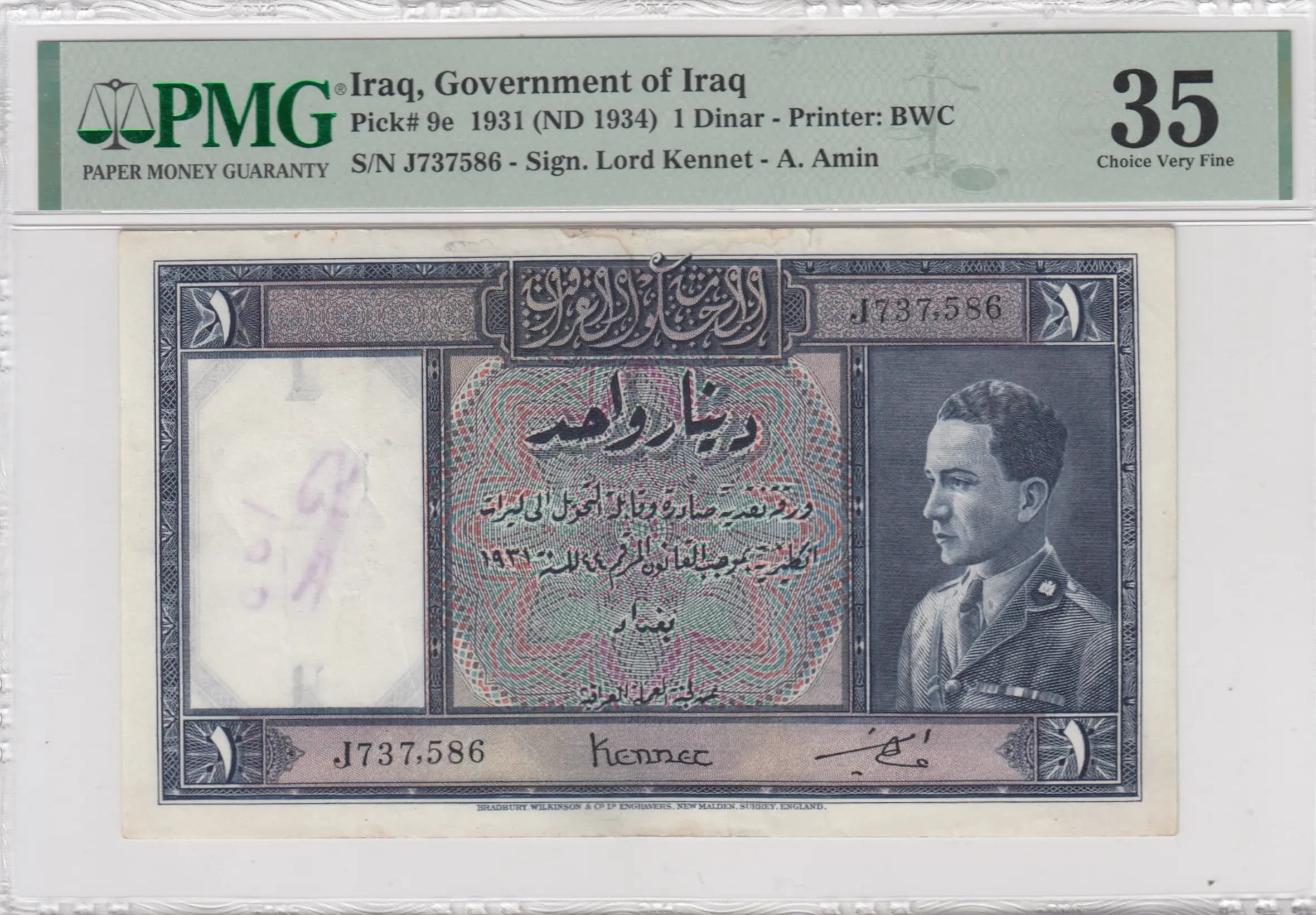
Issued under the Government of Iraq during the British mandate period (Law No. 44 of 1931), this note features the young King Faisal II, who ascended to the throne in 1939 at age four following his father's death. The English-language inscription and sterling convertibility clause reflect Iraq's status as a British-influenced territory in the interwar and early WWII period. The ornate Islamic geometric and floral patterns in the design represent the cultural heritage of Iraq while the European security printing (by Bradbury Wilkinson & Co Ltd of England) demonstrates the technical capabilities required for modern currency production in this era.
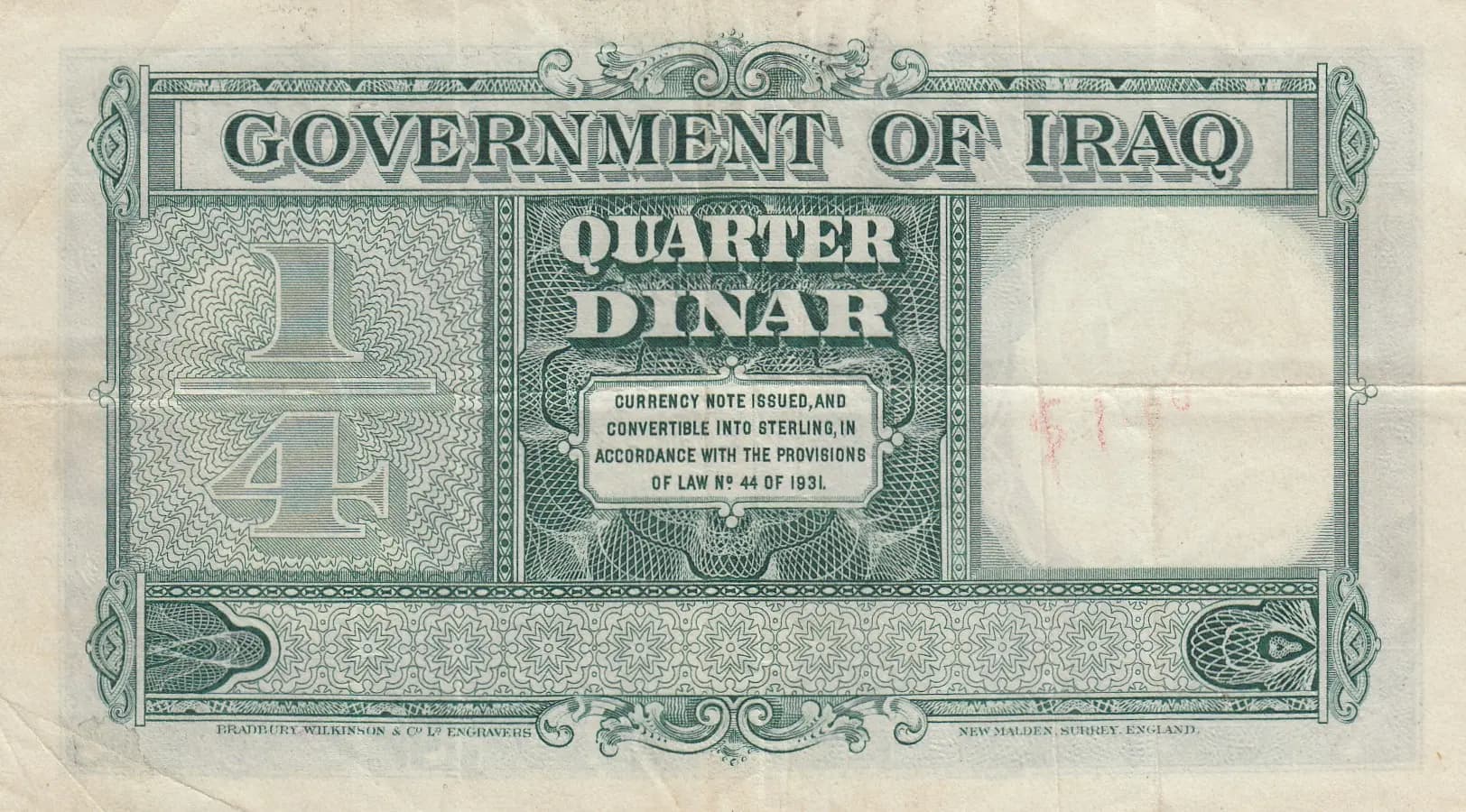
The obverse features a classical profile portrait of King Faisal II as a young boy, rendered in green intaglio on the right side of the note, facing left. The left side contains an empty circular guilloche pattern area (watermark space) framed within ornate Islamic geometric borders. Arabic calligraphy and text occupy the central ornamental cartouche. The entire note is bordered by intricate geometric arabesque patterns and floral scrollwork typical of early 20th-century Middle Eastern currency design. The reverse displays the denomination 'QUARTER DINAR' and issuing authority information in English within a formal text box, with decorative fish or aquatic creature motifs visible in the bottom corners, complemented by ornamental corner scrollwork and geometric security patterns in the background.
FRONT SIDE: Arabic calligraphy present in central ornamental cartouche (specific content not fully legible in provided image). Serial number: P205533. BACK SIDE: 'GOVERNMENT OF IRAQ' / 'QUARTER DINAR' [denomination in English]. 'CURRENCY NOTE ISSUED, AND CONVERTIBLE INTO STERLING, IN ACCORDANCE WITH THE PROVISIONS OF LAW No. 44 OF 1931.' [Legal tender declaration]. 'BRADBURY WILKINSON & CO LTD ENGRAVERS, NEW MALDEN, SURREY, ENGLAND' [Printer attribution].
Intaglio engraving (copperplate), executed by Bradbury Wilkinson & Co Ltd, New Malden, Surrey, England. The note exhibits deep, crisp intaglio lines characteristic of this security printing method, with complex guilloche patterns and fine geometric detail visible throughout. The dominant green color and multicolor underprint are consistent with early 20th-century intaglio currency production standards.
This note is catalogued as Pick P-16b, indicating it is part of a variant series within the 1/4 Dinar 1942 issue. The PMG Population Report identifies three variants: P-16a, P-16b, and P-16s. Both P-16a and P-16b were printed by Bradbury Wilkinson & Co Ltd (BWC). No specific overprints, date variations, or signature changes are evident in this specimen, classifying it as a standard regular issue variant. The serial number P205533 appears consistent with standard numbering of the period.