5 dinars 1955
Market Prices
2 salesAbout This Note
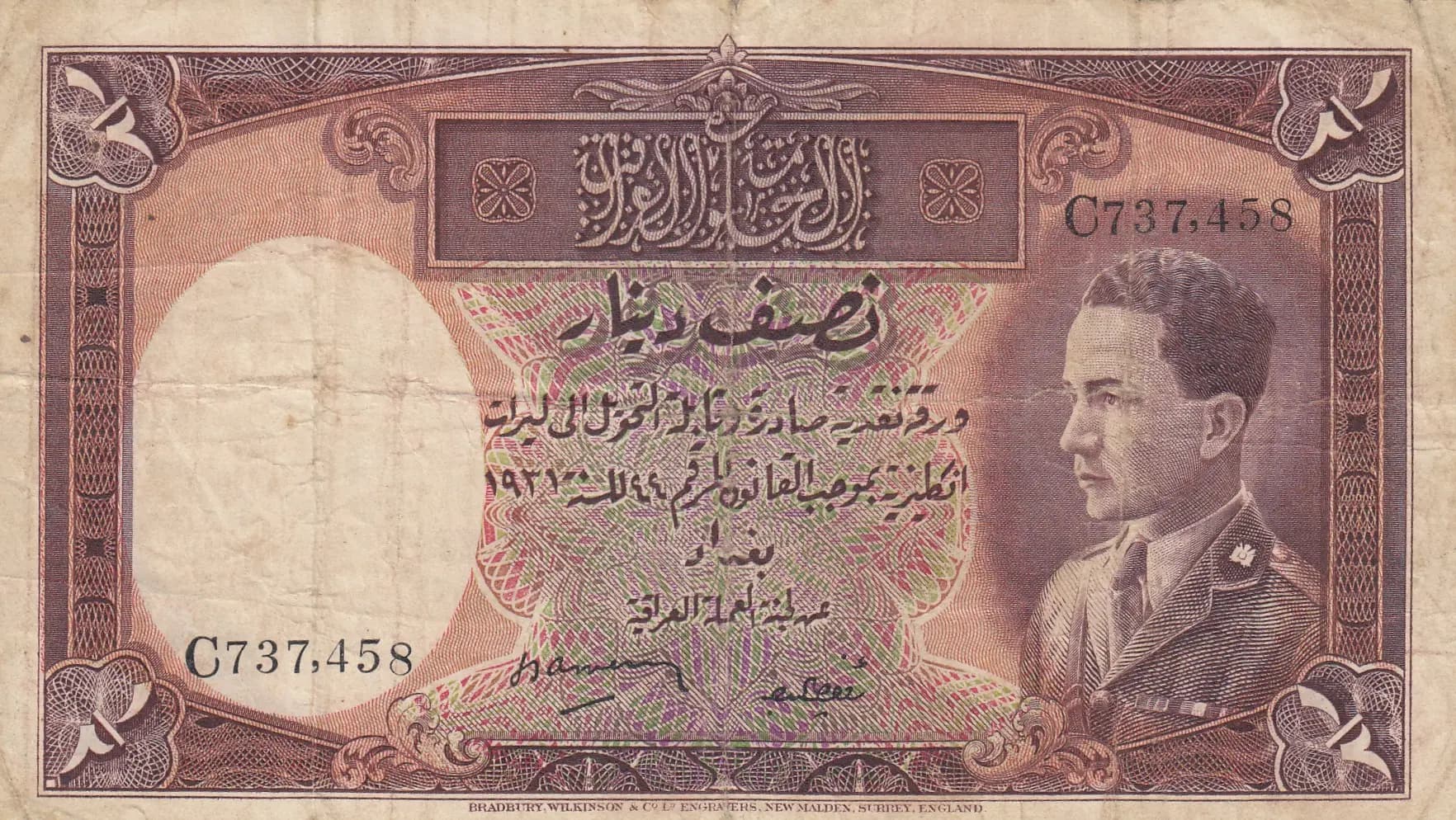
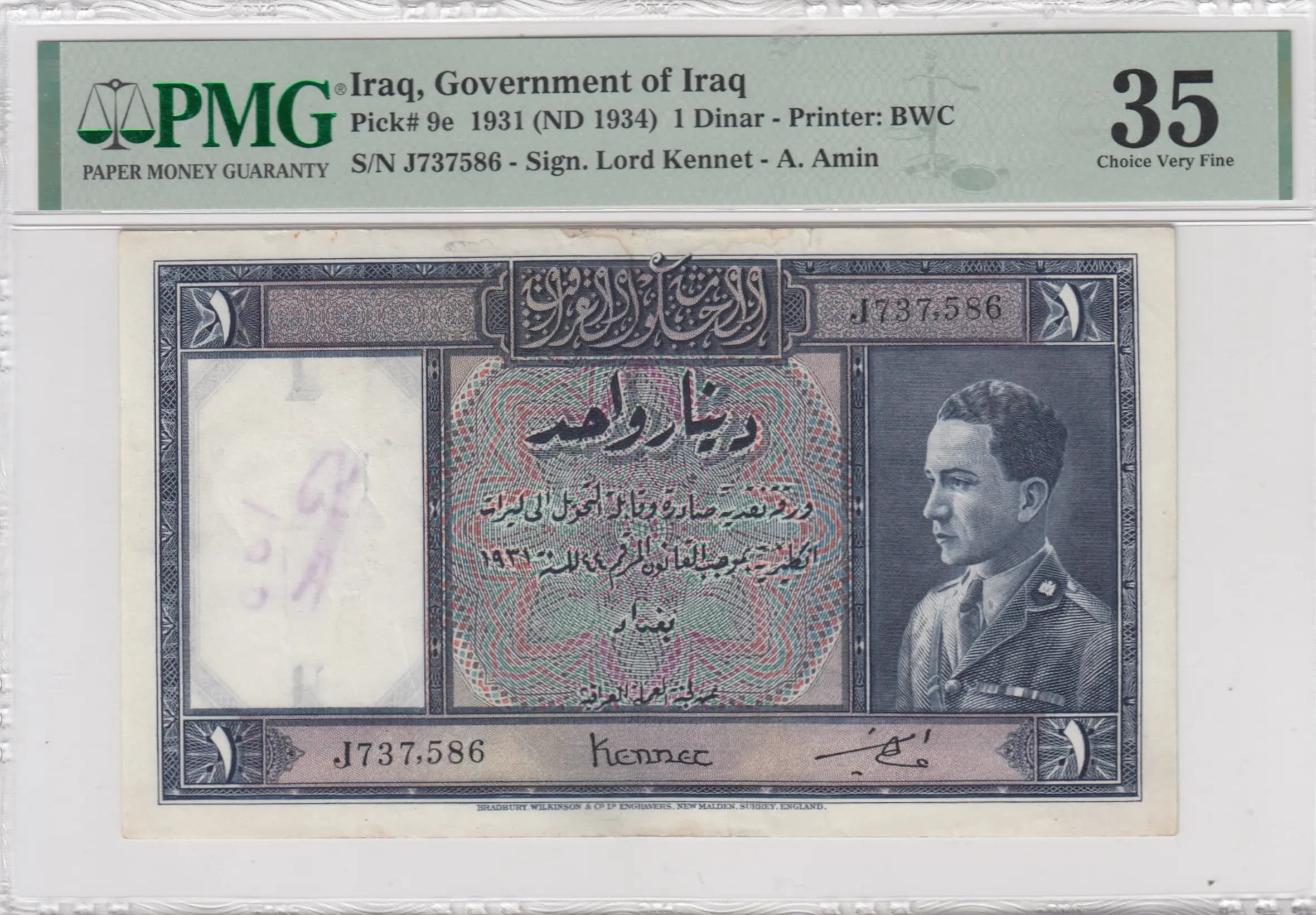
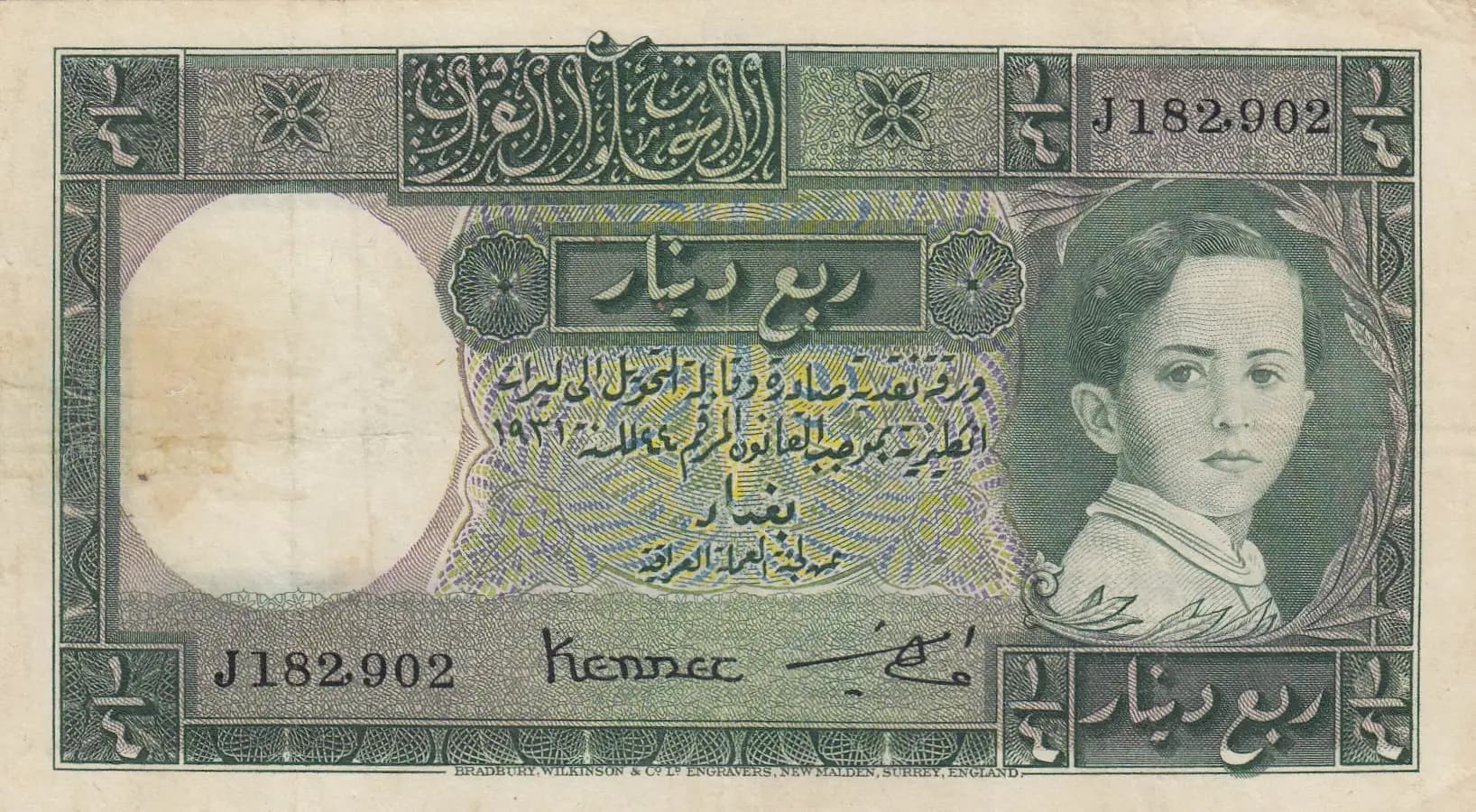
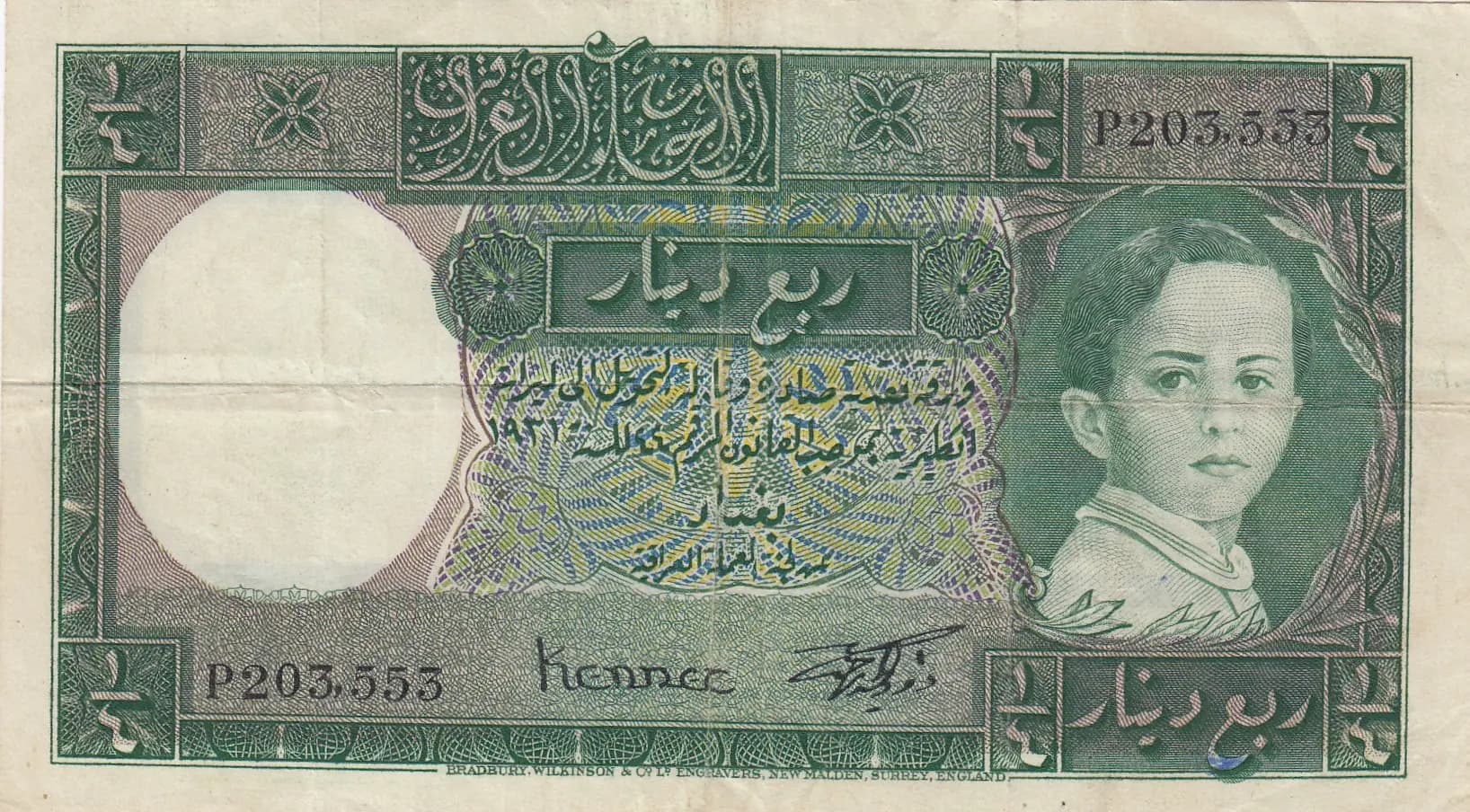
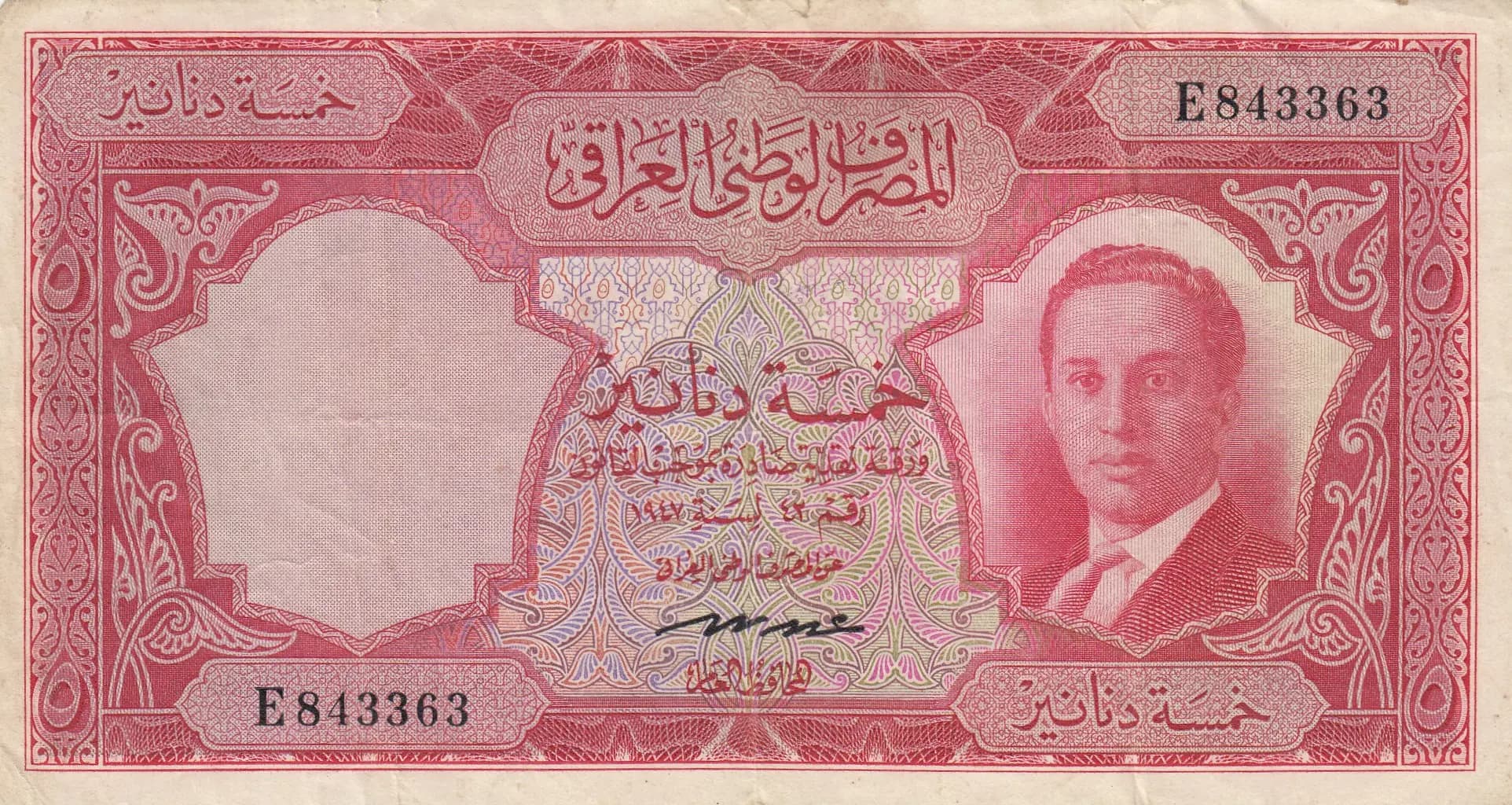
This Iraqi 5 Dinar note from 1955 (Pick-40) presents a stunning example of mid-20th century Middle Eastern currency design, featuring King Faisal II as an adolescent in formal dress on the obverse. The note displays the characteristic red and multicolor color scheme with elaborate Islamic geometric patterns and arabesques throughout, though visible creasing, foxing, and aged yellowing indicate considerable circulation history consistent with its VF grade.
Common. While this is a historically significant note from the Kingdom of Iraq period, eBay market data shows VG examples selling in the $200-230 range and PMG-graded examples at $137.50, indicating adequate availability in the collector market. The note was issued by the National Bank of Iraq as a regular issue with substantial print runs. No evidence of short print runs, recalls, or rarity is documented in standard catalogs. The 2016 catalog values (G: $200, F: $300, EF: $500) further support common status with modest but not exceptional pricing.
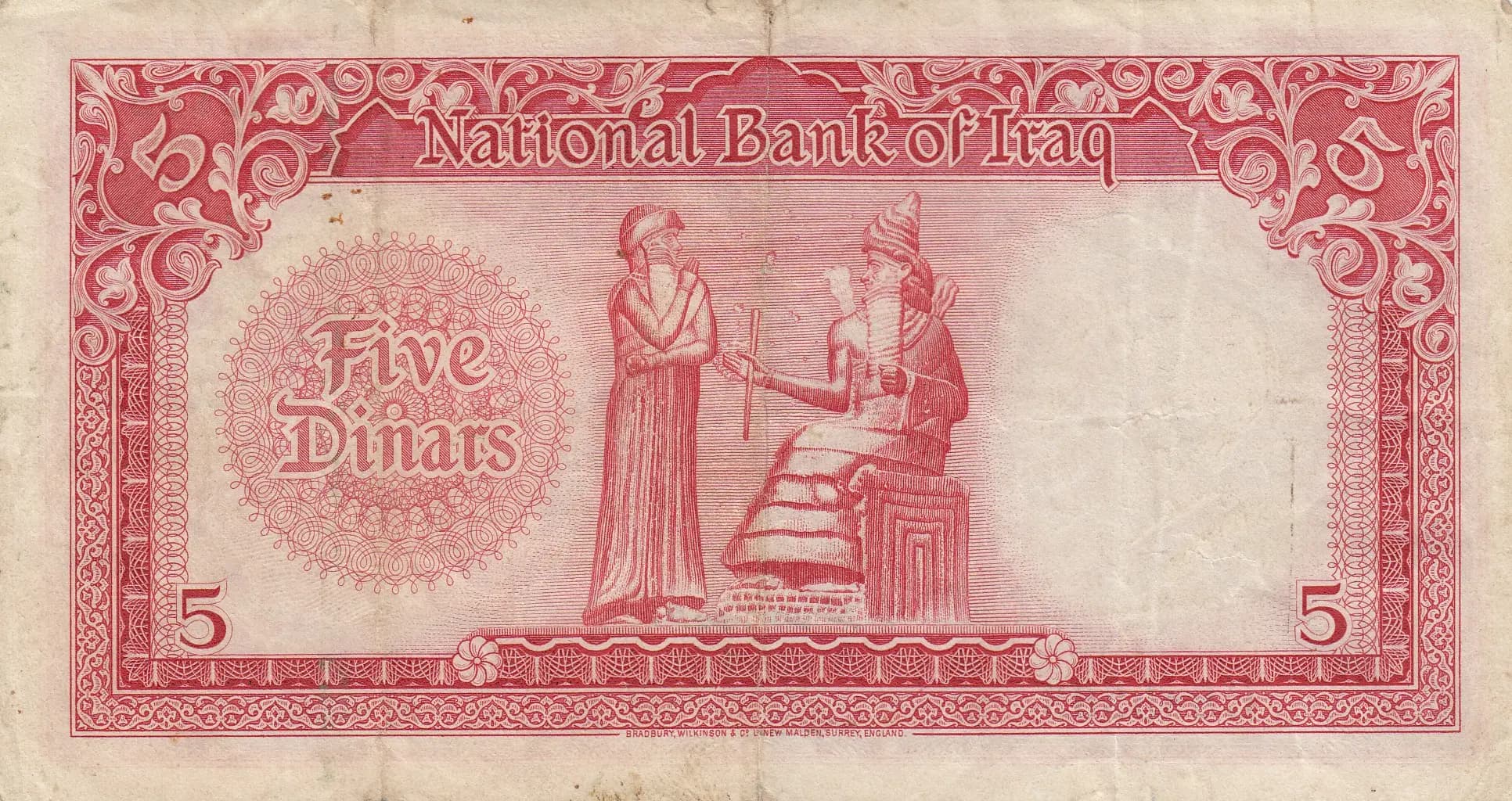
Issued during the reign of King Faisal II under the Kingdom of Iraq (prior to the 1958 republic), this note celebrates both the monarchy and ancient Mesopotamian heritage through its dual imagery. The reverse depicts the famous Code of Hammurabi scene—King Hammurabi receiving the laws—connecting modern Iraq to its ancient Babylonian civilization, while the young portrait of Faisal II represents the contemporary ruling authority of the 1950s.
The obverse features a formal portrait of King Faisal II positioned at the right, depicted as a young man in Western formal dress with suit and tie, facing forward in three-quarter profile. The design is dominated by intricate Islamic geometric and floral arabesques forming ornate decorative borders in red and pink tones. A central elaborate geometric medallion occupies the center field, with a blank cartouche reserved on the left side. The reverse showcases the famous Hammurabi Code scene—a classical Mesopotamian composition depicting King Hammurabi standing on the left in traditional robes and headpiece, receiving laws from a seated figure on the right, with architectural elements featuring stepped or tiered structures in the background. A large circular medallion on the left contains decorative patterns and the denomination. Serial numbers appear in matching positions on both sides.
Front Side: خمسة دنانير (Khamsah Dananir) = Five dinars; جمهورية العراق (Jumhuriyyat al-Iraq) = Republic of Iraq; Serial numbers: E843363 (top right and bottom left). Back Side: National Bank of Iraq (English); Five Dinars (English); BRADBURY, WILKINSON & CO LIMITED, MAIDEN, SURREY, ENGLAND = Printer information identifying the security printer as Bradbury, Wilkinson & Co Limited, located in Maiden, Surrey, England.
Intaglio engraving, the standard security printing technique for banknotes of this era. The note was produced by Bradbury, Wilkinson & Co Limited (BWC), one of the world's premier security printers, known for their expertise in elaborate engraved designs. The complex narrative scene on the reverse and intricate geometric patterns throughout demonstrate the sophisticated engraving capabilities typical of BWC's work. The multiple color printing (red on multicolor underprint) required careful registration and multiple printing passes.
This example corresponds to Pick-40b (the cataloged BWC variant). The visual analysis confirms the Bradbury, Wilkinson & Co Limited printer mark on the reverse. The serial number prefix 'E' and the specific number E843363 are consistent with standard Iraqi currency from this period. No overprints, date variants, or signature variations are apparent in the images. The portrait style (King Faisal II as an adolescent with fuller lips) is consistent with the P-40 type, distinguishing it from the earlier P-35 variant which reportedly shows a portrait with thinner lips.