10 dinars 1973
About This Note
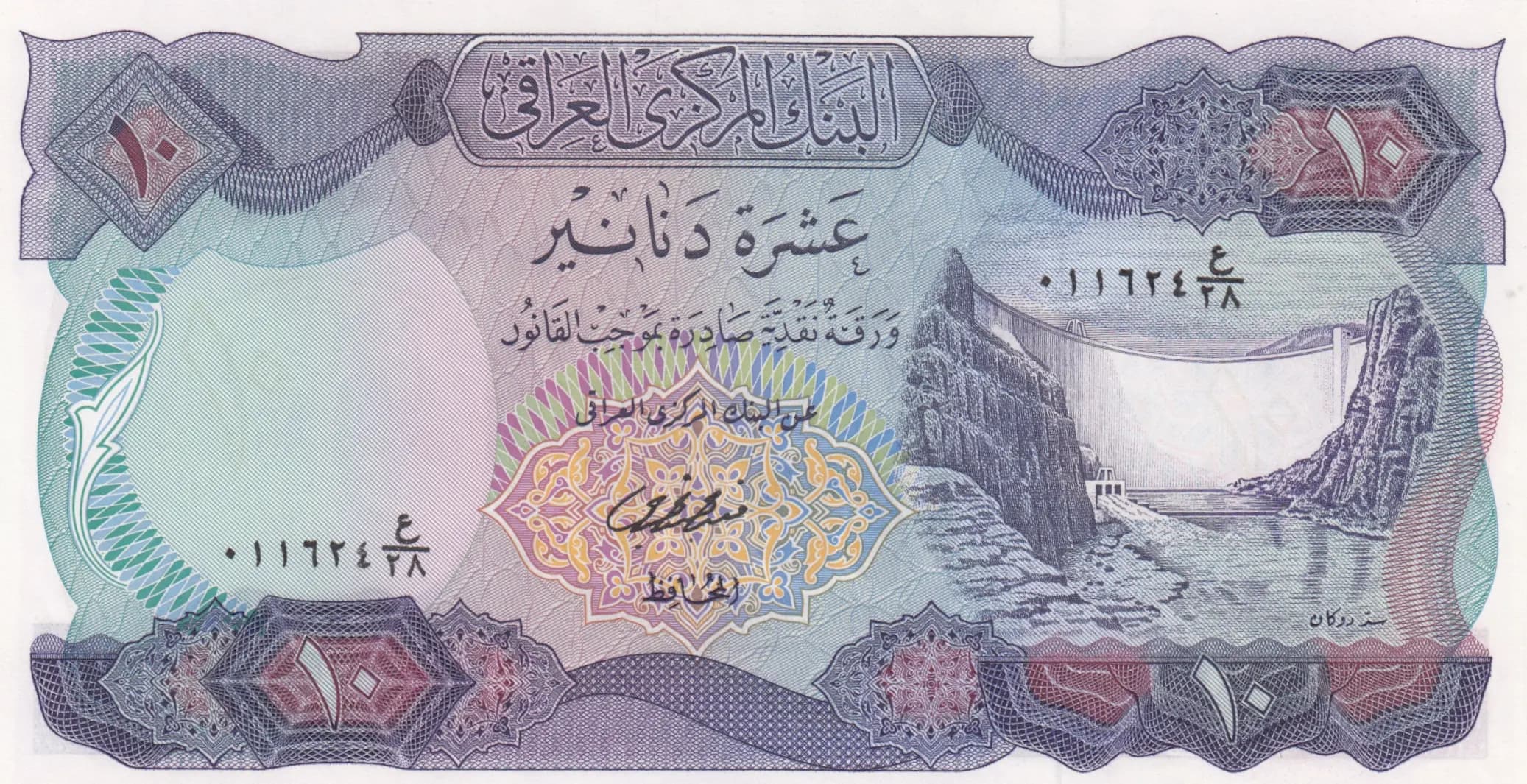
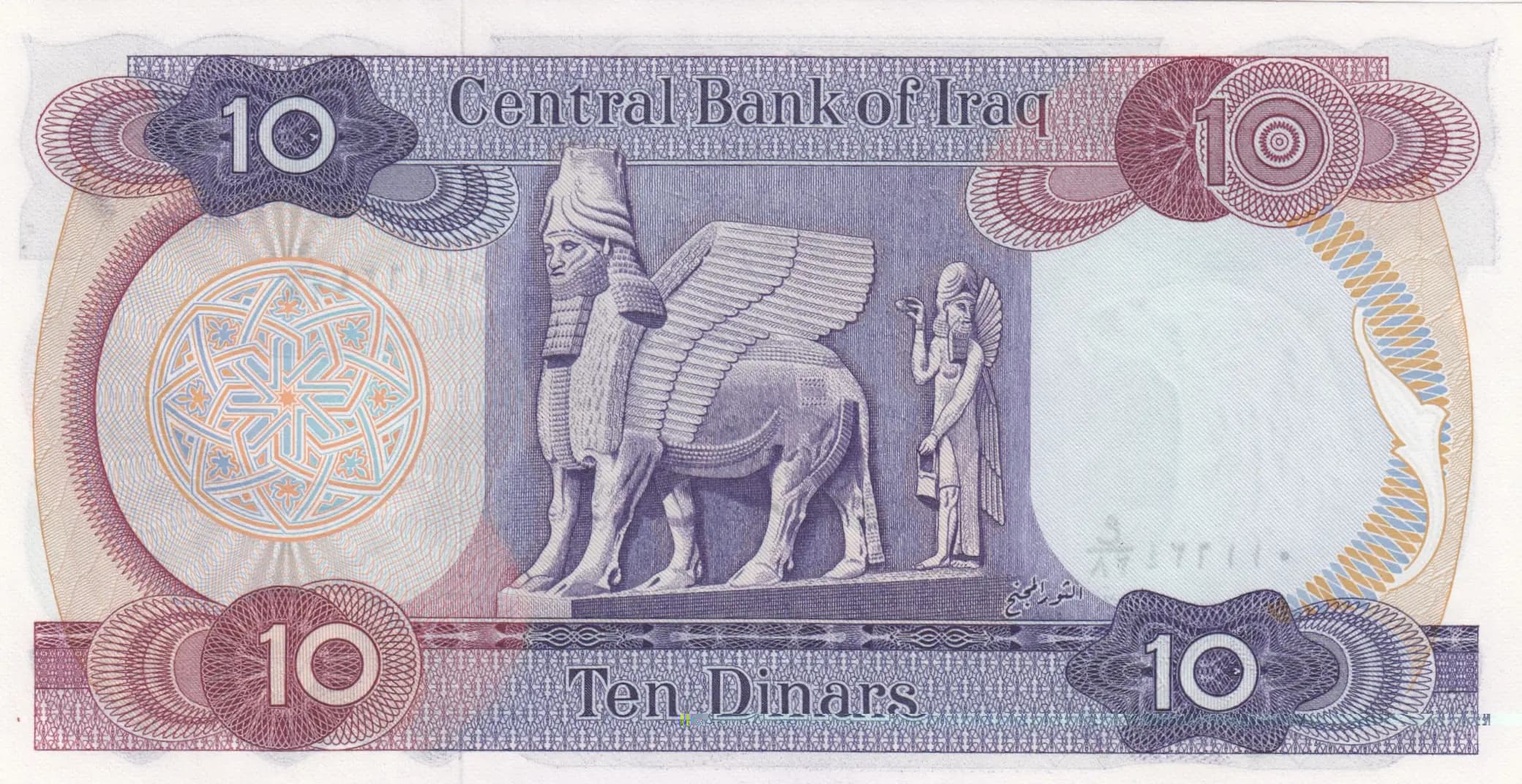
This 1973 Iraqi 10 Dinar note (Pick 65(2)) presents in pristine UNC condition with vibrant multi-color printing throughout. The obverse features an ornate Islamic geometric medallion in pink, blue, yellow and green alongside an engraved landscape of Dukan Dam's river valley with steep cliff formations, while the reverse displays a finely detailed Mesopotamian lamassu (winged bull) with human head alongside an ancient priest figure from Sargon II's palace complex at Khorsabad. The exceptional sharpness of engraving and clarity of color separation across both sides exemplifies the high-quality intaglio printing standards of the Central Bank of Iraq during this period.
Common. The 1973 10 Dinar note (Pick 65(2)) is a standard circulation issue from the Central Bank of Iraq's regular series with substantial print runs. No historical evidence indicates limited production, recall, or short-lived issuing circumstances. Notes from this series remain readily available in collections, with UNC examples appearing regularly in the secondary market at modest valuations consistent with common-grade banknotes.
Issued in 1973 during the early Ba'athist era under the Central Bank of Iraq, this note reflects Iraq's emphasis on national pride through imagery of modern infrastructure (Dukan Dam) alongside ancient Mesopotamian heritage symbols. The prominent display of Assyrian palace reliefs from Khorsabad connects contemporary Iraq to its ancient civilizations, while the dual Arabic and English inscriptions indicate the note's role in both domestic and international commerce during the pre-oil embargo period.
The obverse features the Dukan Dam (Ducan Dam), a significant hydroelectric and water management project in northern Iraq, rendered as an engraved landscape showing the dramatic river gorge with steep canyon walls and the dam structure. The reverse depicts two iconic Mesopotamian/Assyrian artifacts from the Palace Complex of Sargon II at Khorsabad: a winged bull lamassu (symbolic protective guardian figure) with a human head in profile, and an Assyrian priest or official in ancient ceremonial dress standing beside it. Both sides employ ornamental circular and geometric medallions characteristic of Islamic design traditions, with the corner ornaments and border patterns in red, blue, and geometric arrangements creating a cohesive nationalist aesthetic celebrating Iraq's modern development and ancient heritage.
FRONT: الجمهورية العراقية (Republic of Iraq) | عشرة دنانير (Ten Dinars) | وزارة المالية والاقتصاد (Ministry of Finance and Economy) | سردشت (Sardasht - location reference). Serial number: 1112641. BACK: Central Bank of Iraq | 10 | Ten Dinars | الشروقي (Signature/Official name).
Intaglio engraving (line engraving) with multi-color offset printing for the geometric medallions and landscape elements. The fine line work visible throughout, particularly in the sculptural relief reproduction on the reverse and the landscape details on the obverse, indicates traditional steel engraving plates. The color separation and multi-layer printing observed in both the ornamental medallions and the complex border work suggests combined intaglio and lithographic techniques. The printer for this series is not definitively identified in standard catalogs, but Iraqi notes of this era were typically produced domestically or by specialized security printers under Central Bank supervision.
The observed serial number 1112641 indicates this is from the standard series. Varieties for Pick 65(2) may include different signature blocks (the reverse shows 'الشروقي' signature), serial number prefixes, and potentially slight variations in color saturation across different print runs, though these are not well-documented in available catalogs. The specific location reference 'سردشت' (Sardasht) on the obverse may indicate a regional variant or commemorative issue, though this requires verification against the full catalog range for 1973 Iraqi notes.