1 dinar 1971
About This Note
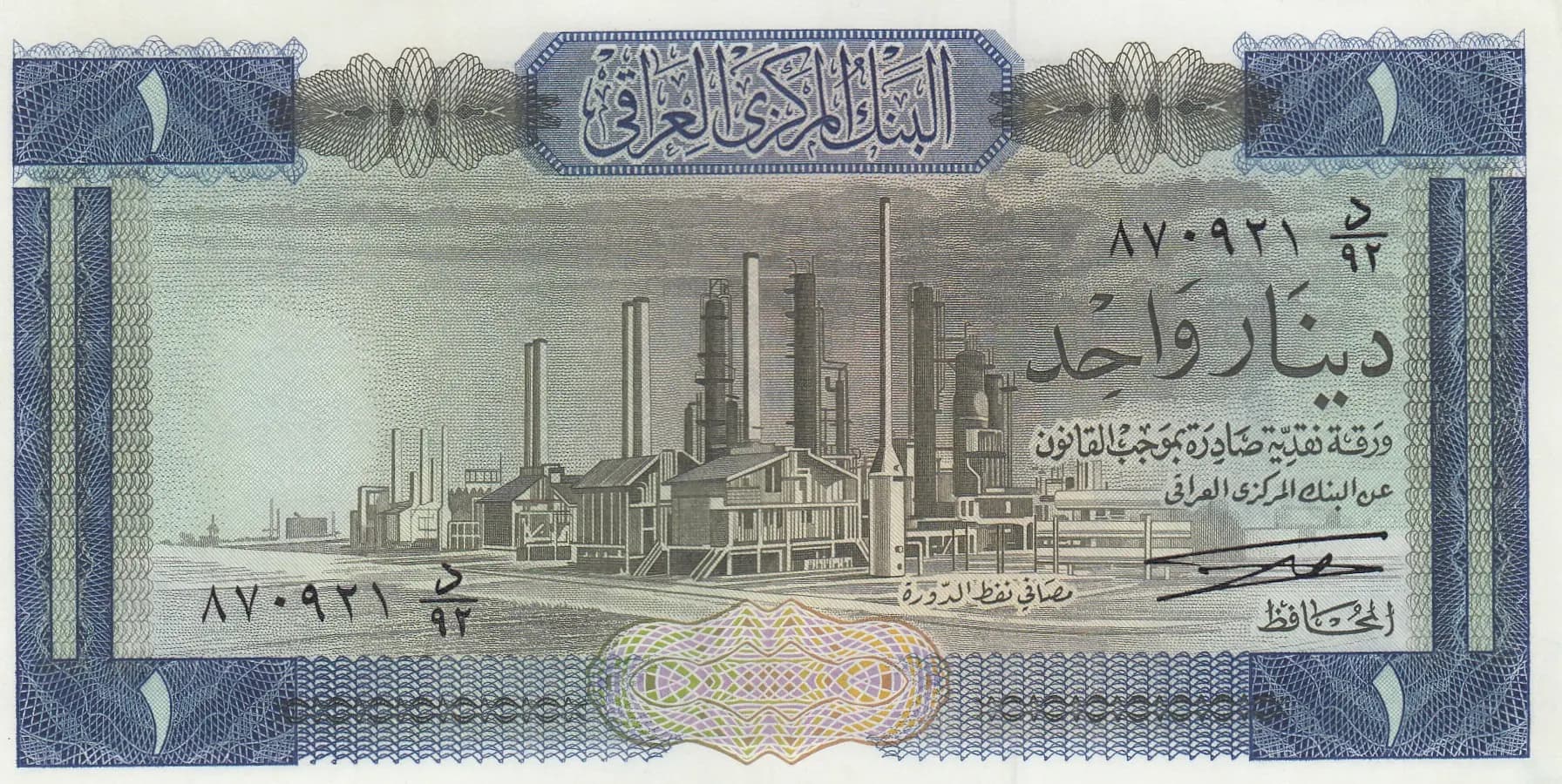
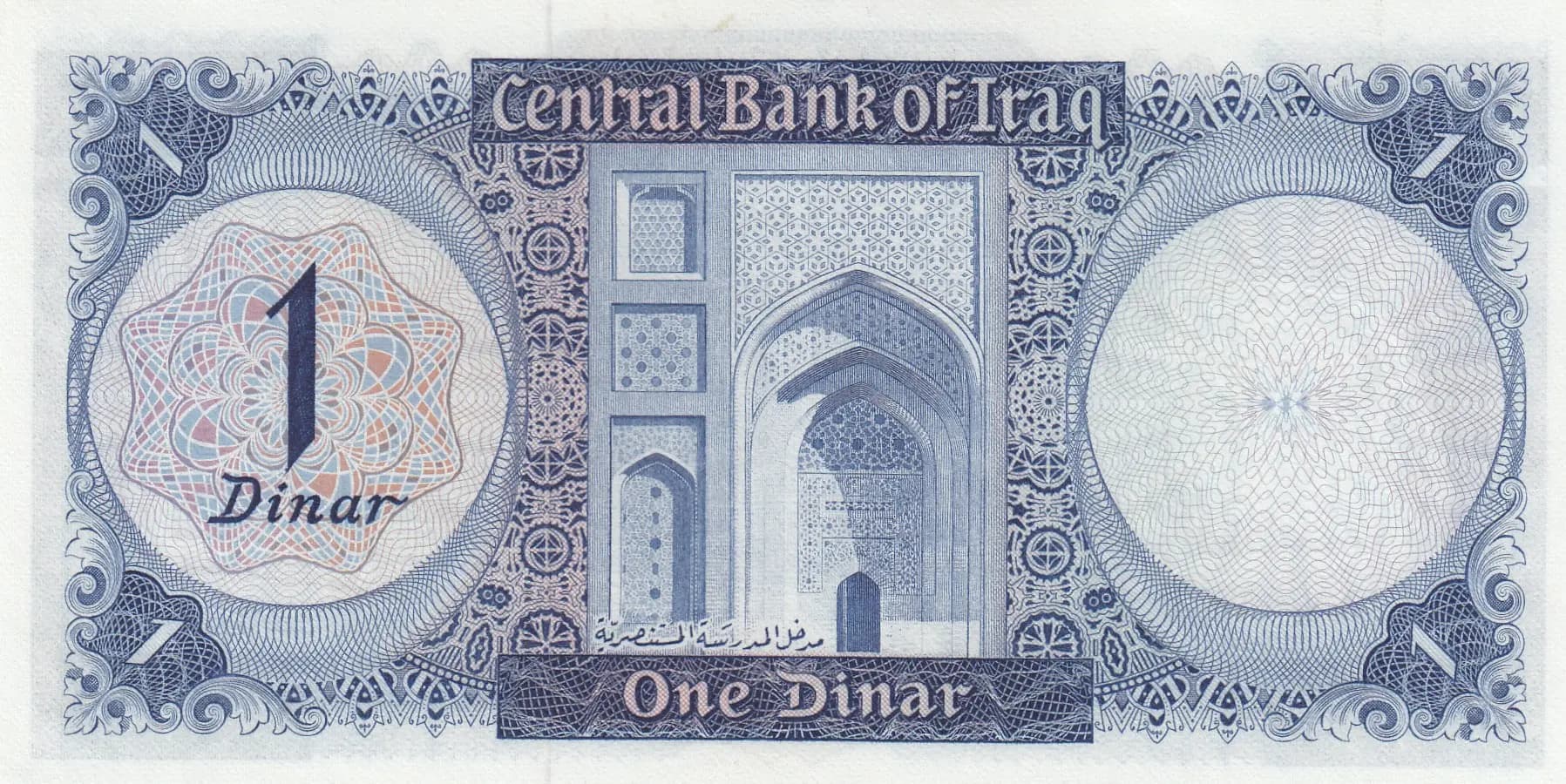
This is a crisp, uncirculated example of Iraq's 1971 1 Dinar banknote (Pick 58(1)), featuring a striking industrial theme centered on the al-Dura oil refinery complex with multiple tall smokestacks dominating the obverse. The reverse displays an elegant Islamic architectural gateway—the entrance to the al-Mustansiriya School in Baghdad—rendered in blue and sepia tones. The note exhibits excellent preservation with sharp printing, vibrant colors, and no signs of wear, creasing, or damage, making it an attractive example of Iraq's mid-20th-century petroleum-era currency design.
Common. The 1971 1 Dinar (Pick 58(1)) was part of a standard circulation series with substantial print runs. While this particular specimen is in uncirculated condition and therefore more desirable than circulated examples, the note itself is not scarce. First-denomination notes typically circulated widely, and examples in UNC condition remain readily available in the numismatic market at modest premiums over face value.
Issued in 1971 by the Central Bank of Iraq during a period of significant economic development driven by oil revenues, this banknote celebrates Iraq's petroleum industry and cultural heritage. The al-Dura refinery depicted on the obverse was a major symbol of Iraq's industrial modernization and oil wealth in the post-1968 Ba'athist era, while the al-Mustansiriya School on the reverse—one of Baghdad's most historically significant Islamic educational institutions—represents the nation's cultural pride and intellectual traditions during this era of national development.
The obverse features the al-Dura oil refinery complex as the primary design element, depicted as an industrial waterfront facility with multiple tall smokestacks, processing equipment, and piping—symbolizing Iraq's petroleum wealth and industrial capacity. The reverse showcases the Madkhal al-Madrasa al-Mustansiriya (entrance gateway of the al-Mustansiriya School) in Baghdad, rendered as an ornate Islamic arched doorway with geometric patterns and traditional Islamic architectural elements. Both sides incorporate decorative floral rosette patterns in the corners, ornamental guilloche borders throughout, and denomination numerals '1' in cartouches. The color palette employs blue, green, sepia, and cream tones, creating a sophisticated yet accessible design that balances industrial modernity with Islamic cultural heritage.
Front side: 'البنك المركزي العراق' (Central Bank of Iraq); 'دينار واحد' (One Dinar). Back side: 'Central Bank of Iraq' (English); 'One Dinar' (English); 'Dinar' (English). Additional Arabic text relating to petroleum operations and date notations appear in Arabic numerals on the obverse (٢١/٢٩ ٢٧ ٨), with Islamic calligraphy integrated into the architectural design on the reverse.
Intaglio engraving with multi-color offset printing, as evidenced by the fine guilloche line patterns, intricate engraved details in the industrial and architectural imagery, and the crisp, detailed security features visible throughout. The colorful geometric security pattern with interlocking wave designs in the center-bottom of the obverse indicates advanced security printing techniques typical of Central Bank of Iraq notes from this period. The precision of the engraved details and the quality of color registration suggest production by a specialized security printer, likely De La Rue or similar high-security printer contracted by the Central Bank of Iraq.
Pick 58(1) designation indicates this is the first cataloged variety of the 1971 1 Dinar issue. Specific variety identification would require examination of signature varieties, serial number prefixes, and printing dates; the visual analysis indicates Arabic date notation (٢١/٢٩ ٢٧ ٨) that may correspond to a specific printing period. No overprints or substitutions are evident from the images provided. Collectors should note signature blocks and serial number ranges for more precise variety classification within this Pick number.