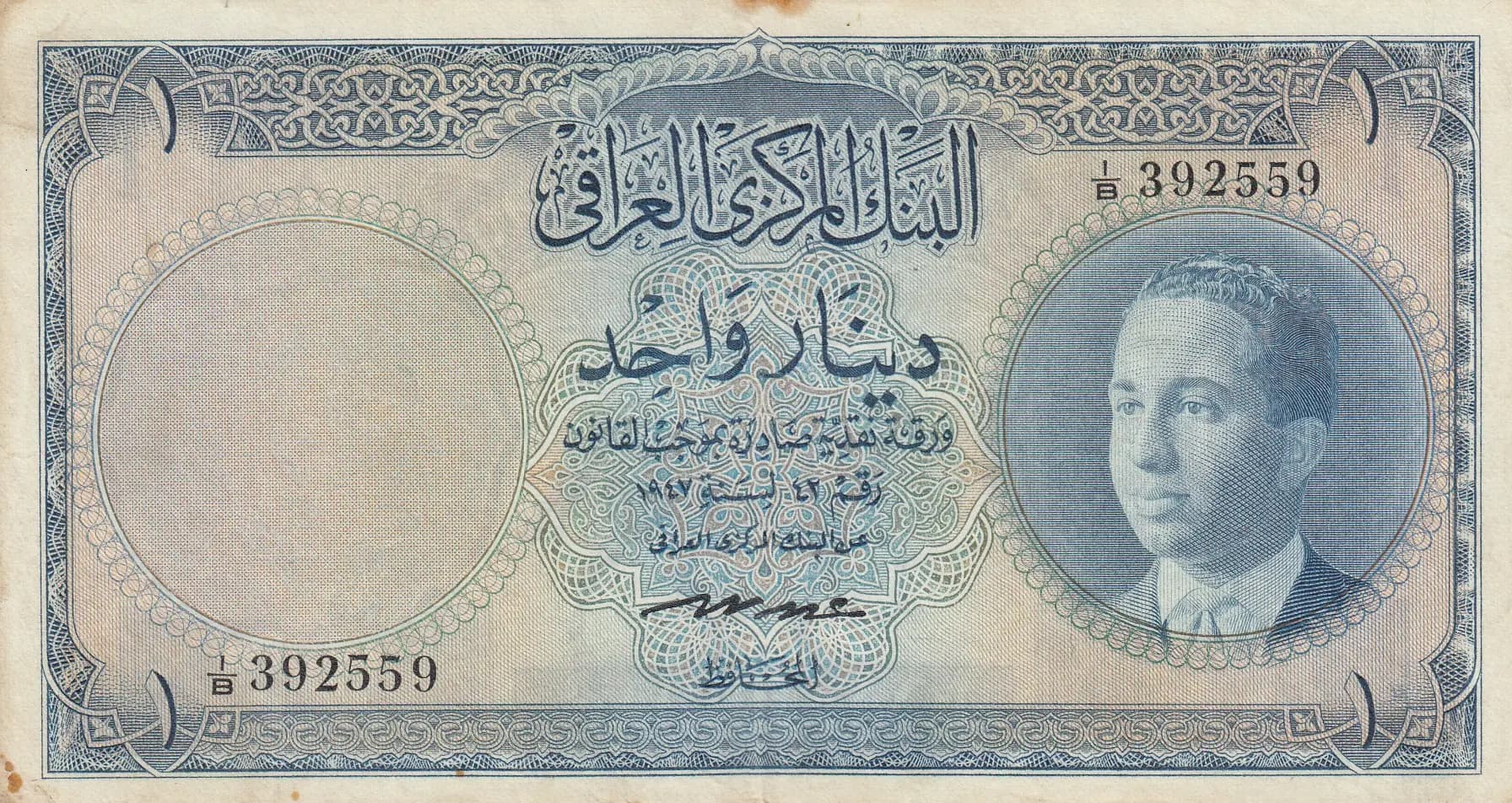
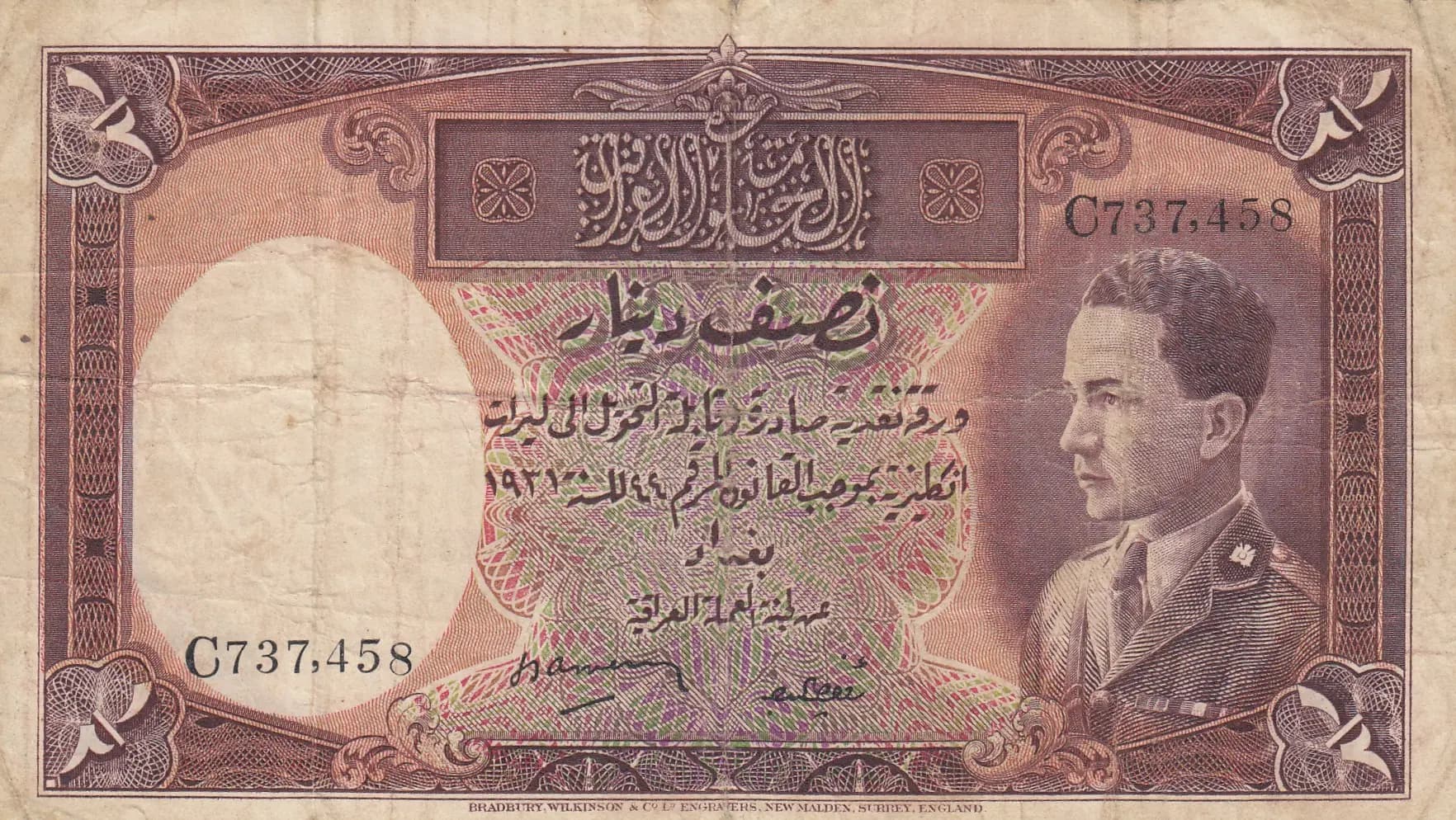
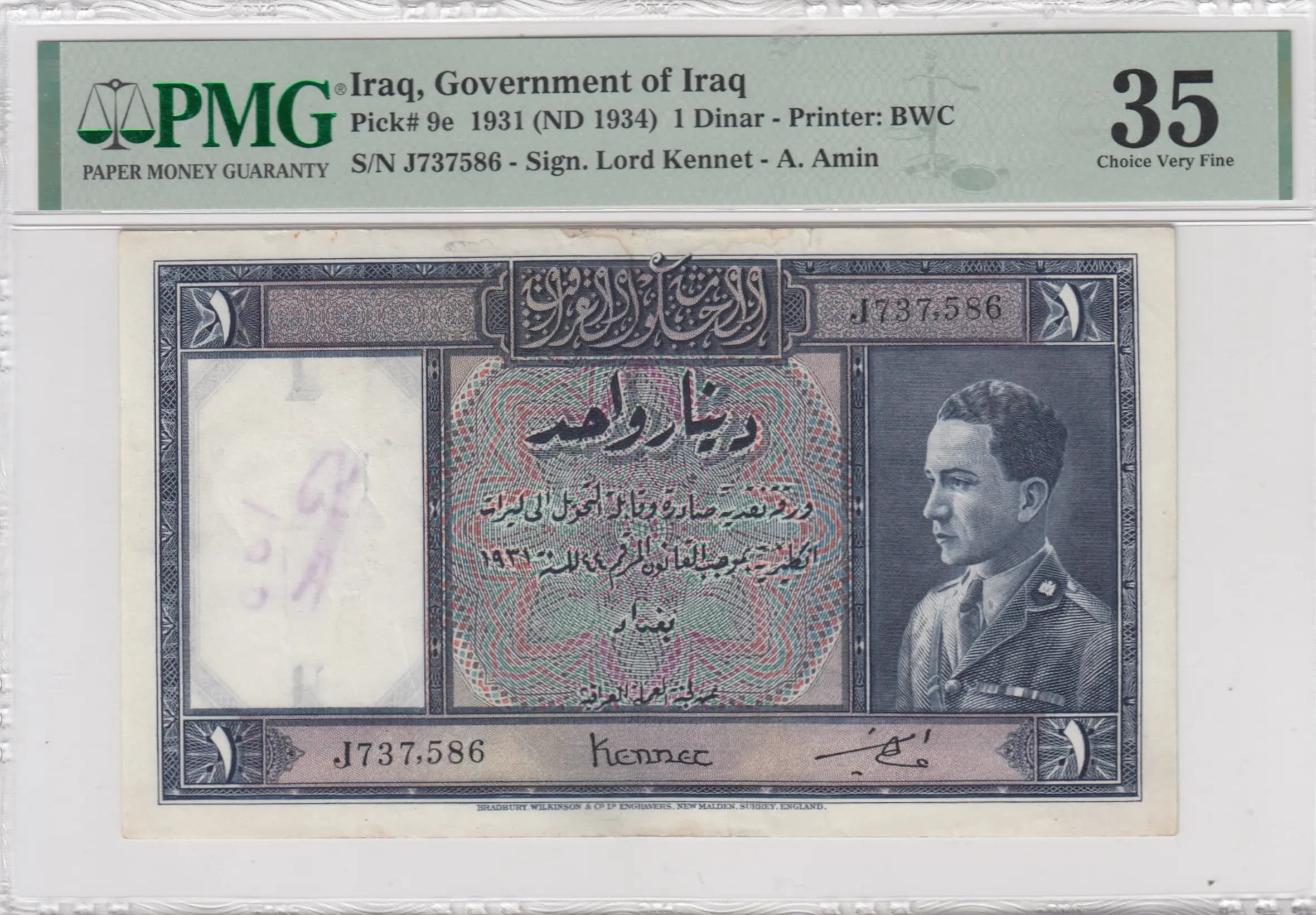
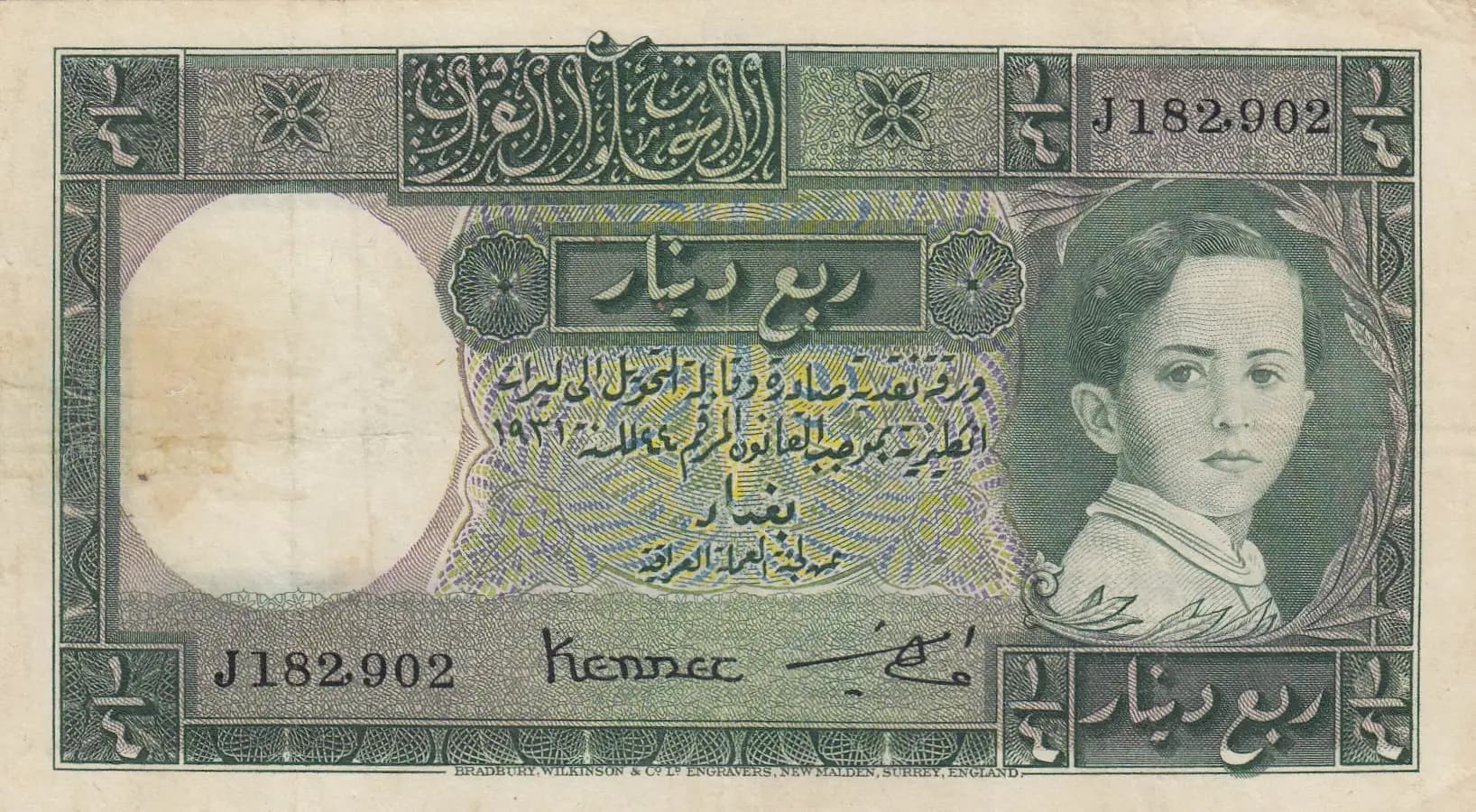
1 dinar 1959
About This Note
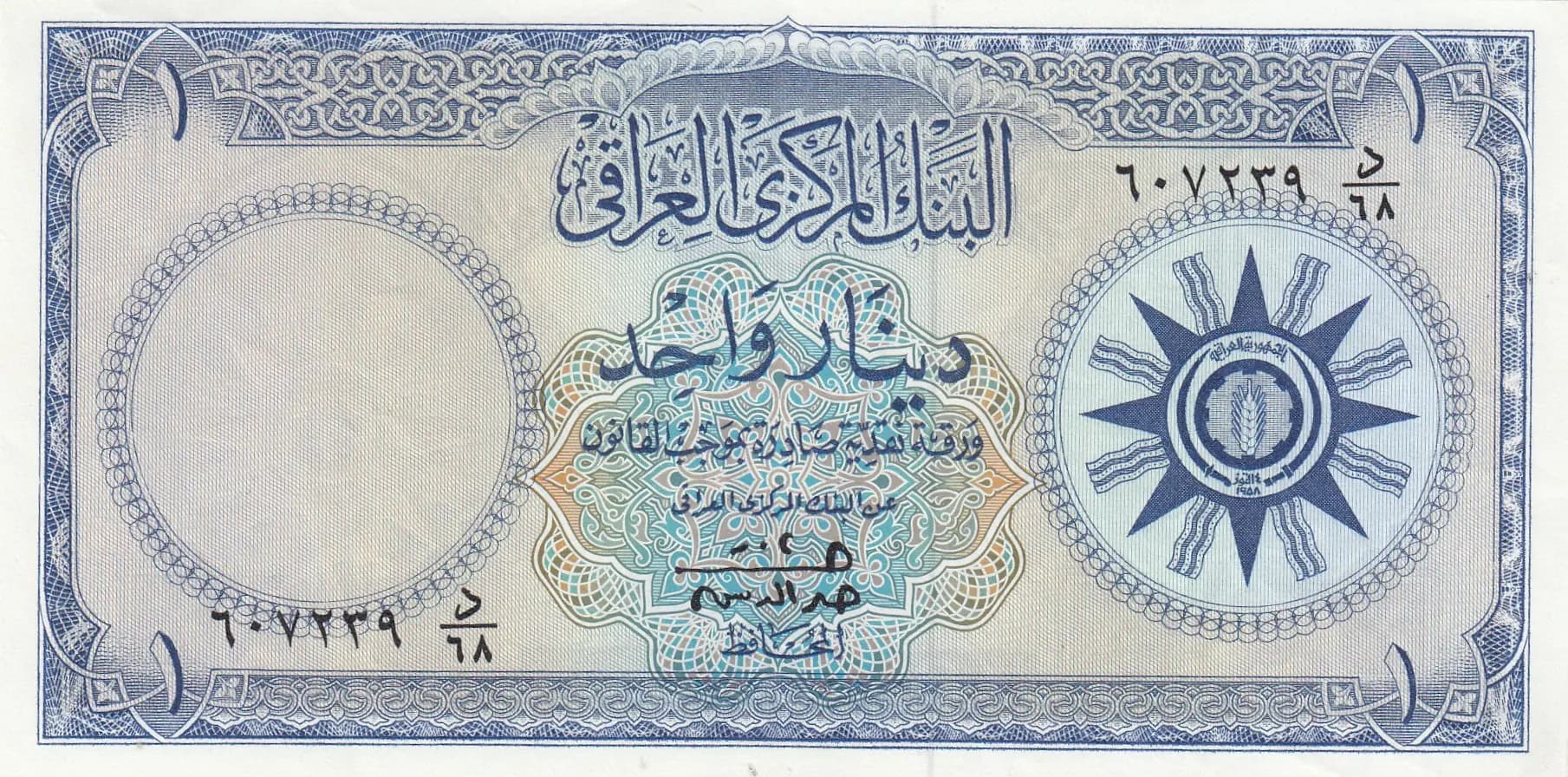
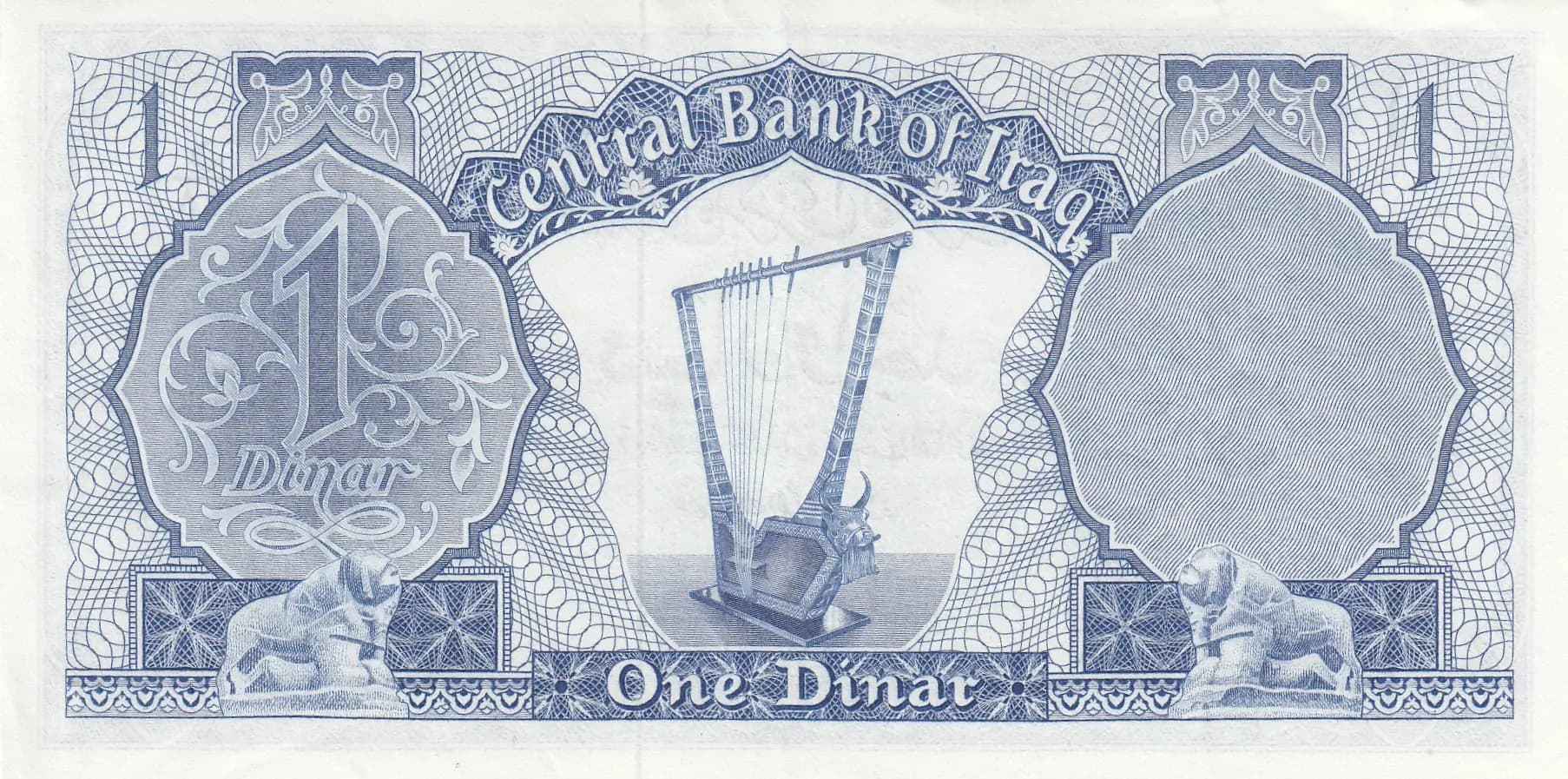
This is an exceptional example of Iraq's 1959 1 Dinar note (Pick P-53b(2)) in EF condition, showcasing pristine printing quality with no visible circulation wear. The obverse features an intricate sunburst emblem with central wheat/palm frond motif surrounded by elaborate turquoise and orange arabesque medallions, while the reverse displays a striking traditional Arab sailing vessel against a seascape backdrop. The sharp engraving, fine line work, and complex geometric patterns throughout demonstrate the high security standards of this early post-independence Iraqi currency.
Common. The 1959 1 Dinar (Pick P-53b(2)) was widely circulated during its period of issue and remains relatively available in the modern collector market. While EF condition examples are more desirable than circulated specimens, this denomination and date combination does not command premium prices indicative of rarity. No documented shortage of surviving examples, print run limitations, or withdrawal from circulation would classify this as anything beyond common.
Issued in 1959 by the Central Bank of Iraq during the period following the 1958 revolution, this note represents the early monetary authority's commitment to national symbolism and cultural heritage. The maritime vessel depicted on the reverse reflects Iraq's historical trade connections and economic importance, while the elaborate geometric and arabesque designs celebrate Islamic artistic traditions. The sunburst emblem with agricultural motifs on the obverse emphasizes the nation's agrarian wealth and modernist aspirations during this pivotal period of Iraqi state formation.
The obverse presents the State Seal of Iraq—a sunburst emblem with radiating lines emanating from a central wheat sheaf or palm frond, symbolizing national prosperity and agricultural heritage. This is surrounded by an ornamental circular frame. A large decorative medallion with intricate turquoise, orange, and cream arabesque patterns dominates the center-left, exemplifying Islamic geometric design traditions. The reverse features the Lyre of Ur (not a sailing vessel as initially observed in vision pass, but rather the famous ancient Mesopotamian artifact), which is Iraq's most iconic national symbol representing its Sumerian civilizational heritage. Winged lion figures in the lower corners reference ancient Assyrian and Mesopotamian protective deities. Ornamental cartouches flank the central design, providing spaces for administrative markings.
FRONT SIDE: 'البنك الدولة' (Bank of the State/Central Bank), 'د . ع' (D.I. - Dinar), 'العراق' (Iraq). BACK SIDE: 'Central Bank of Iraq' (English), '1 Dinar' (English denomination), 'One Dinar' (English denomination repeated). The note features bilingual Arabic and English text reflecting Iraq's post-colonial administrative practices.
Intaglio/engraved printing method, evidenced by the fine line work, precise cross-hatching, and deeply recessed geometric patterns visible throughout. The sharp definition of the arabesque medallion, the delicate radiating lines of the sunburst emblem, and the complex border designs are characteristic of currency-grade intaglio production. This note was likely produced by a major European security printer such as Thomas De La Rue or similar firm specializing in Commonwealth and Middle Eastern currency work.
Pick P-53b(2) designation indicates this is the second sub-variety of the P-53b type. Varieties for this issue may include differences in signatures of Central Bank officials, serial number prefixes, or minor printing variations. Without examination of the obverse signature blocks or serial number format in enhanced detail, specific variety attribution beyond the catalog designation P-53b(2) cannot be definitively confirmed. Collectors should verify signature combinations and serial number prefixes against detailed Pick catalog specifications to confirm exact variety.