1 dinar 1959
Market Prices
8 salesAbout This Note
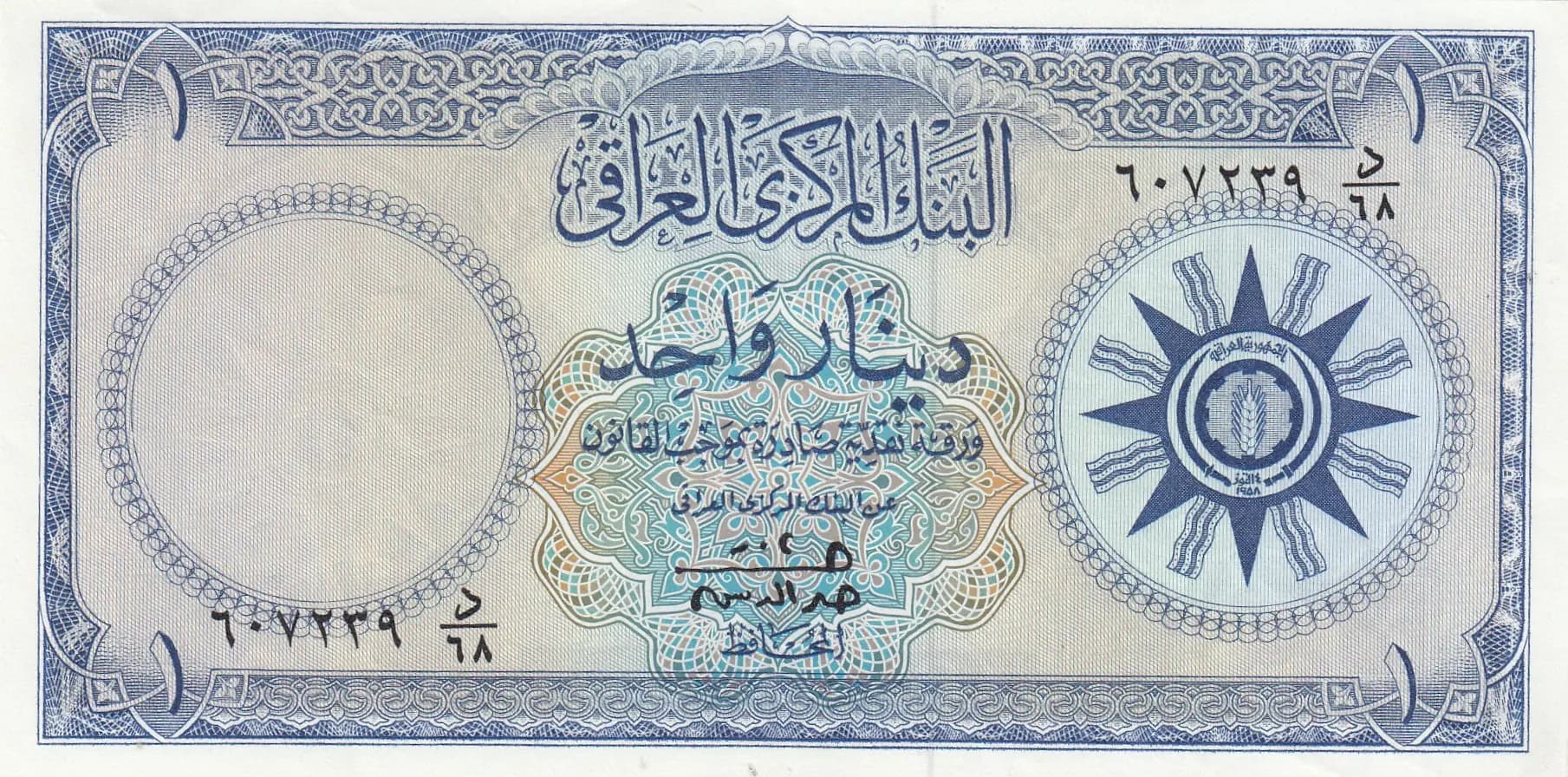
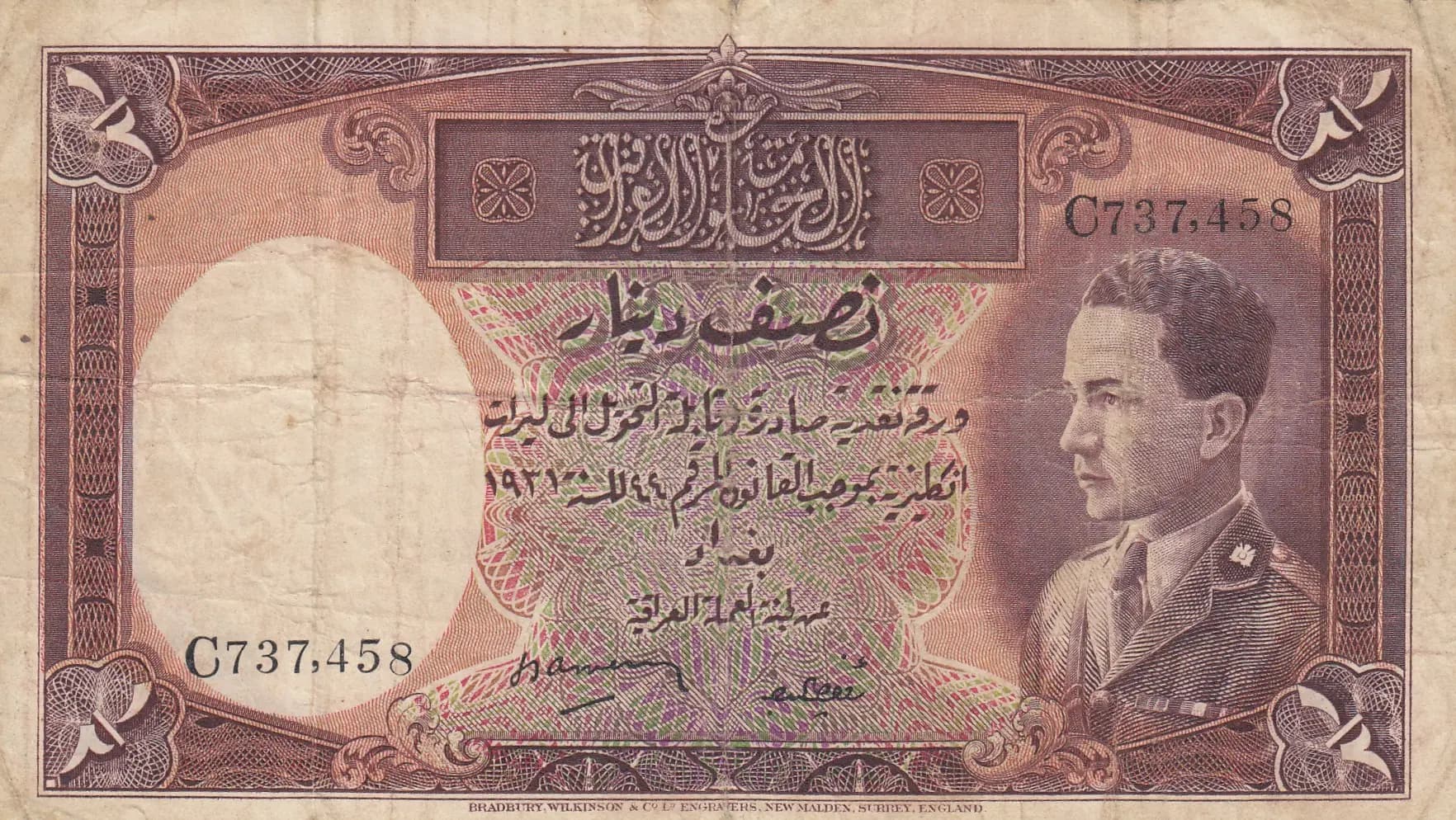
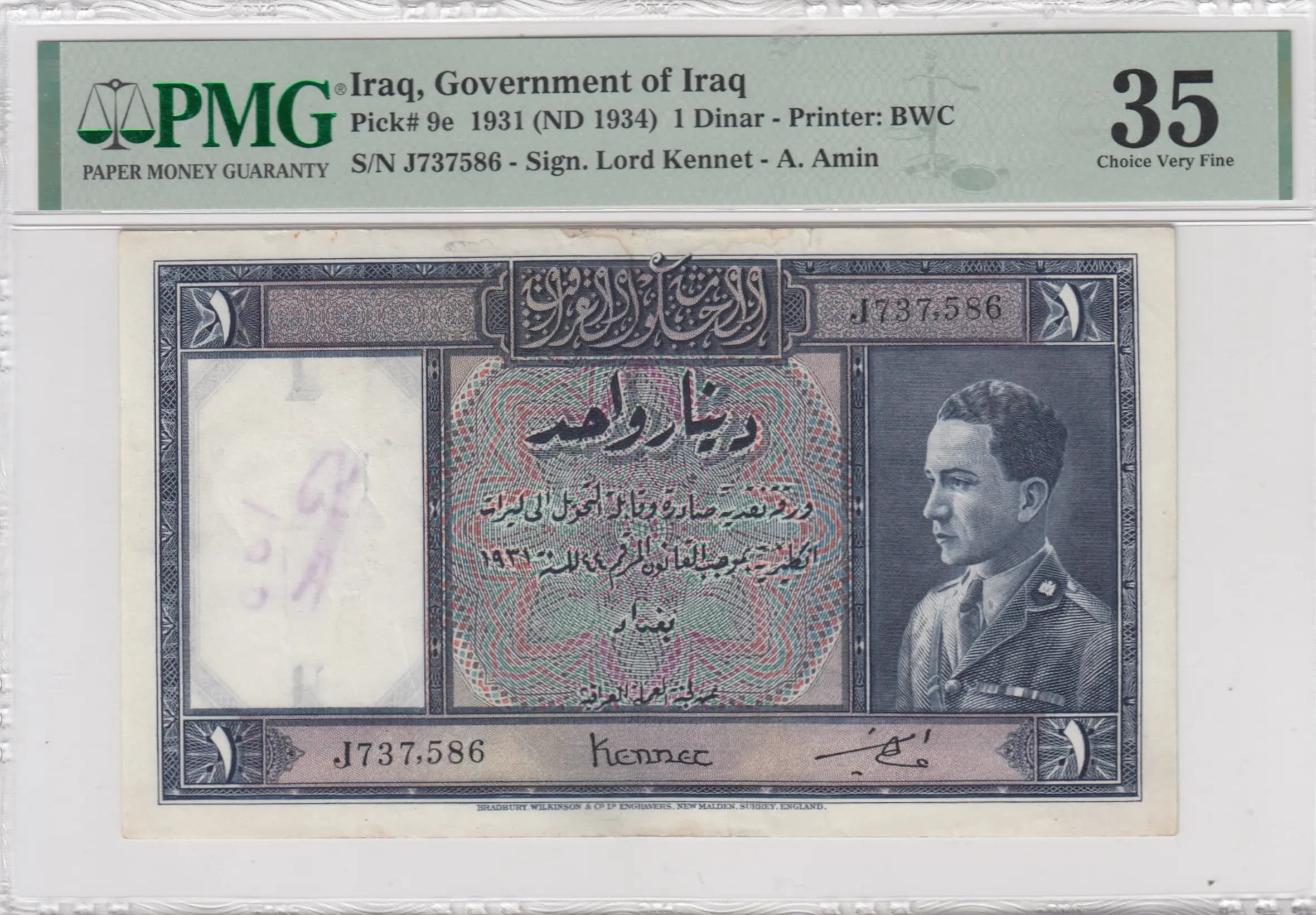
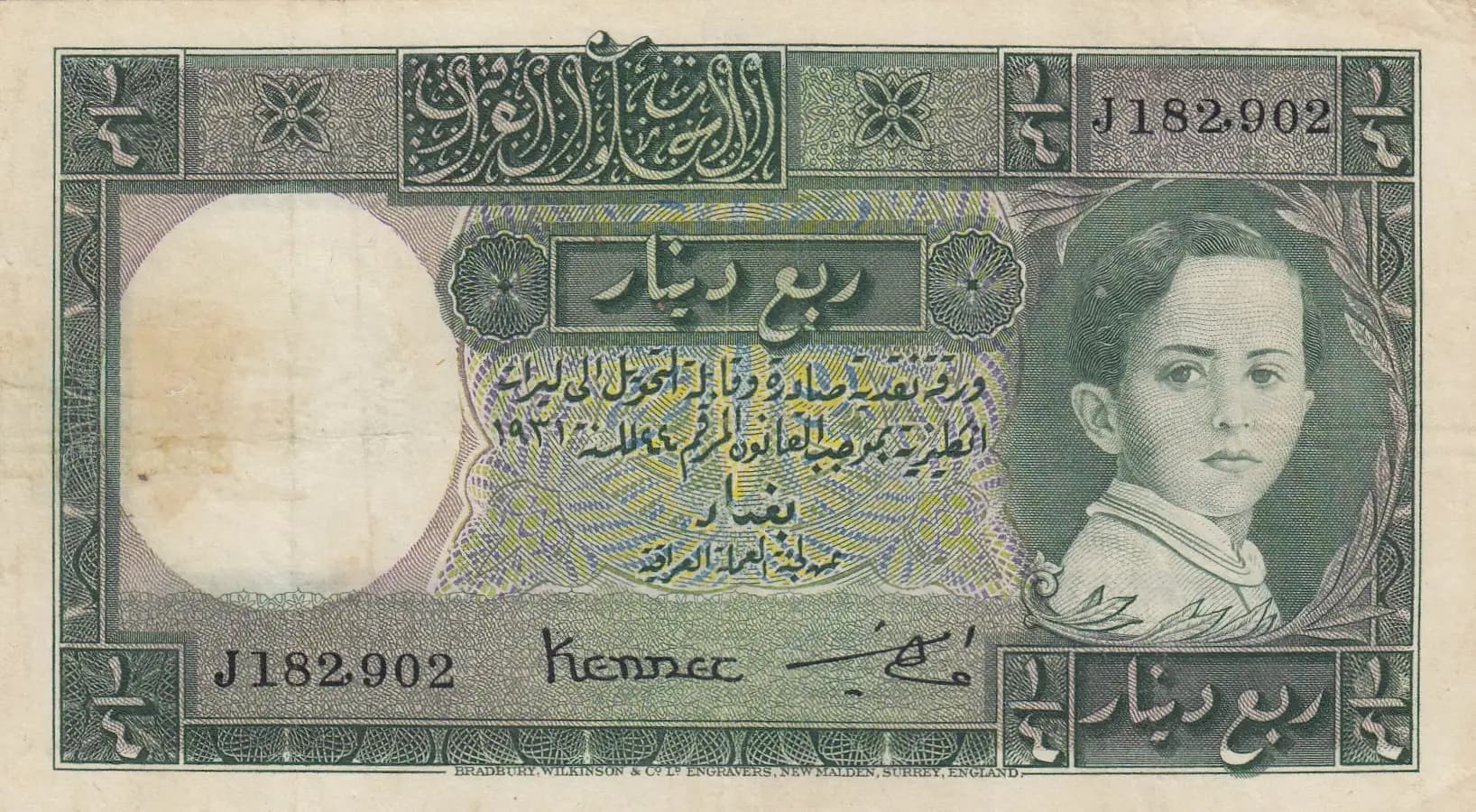
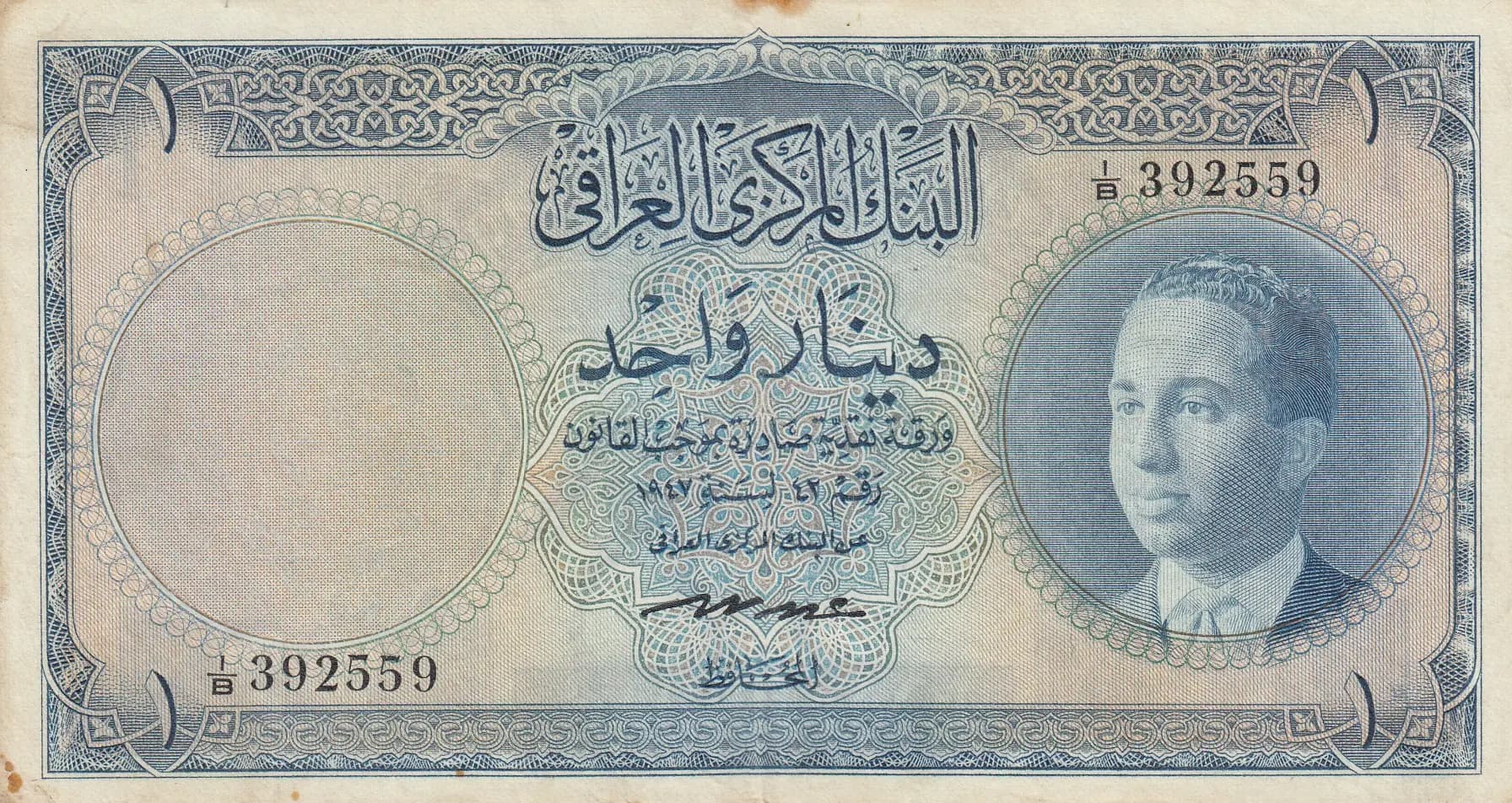
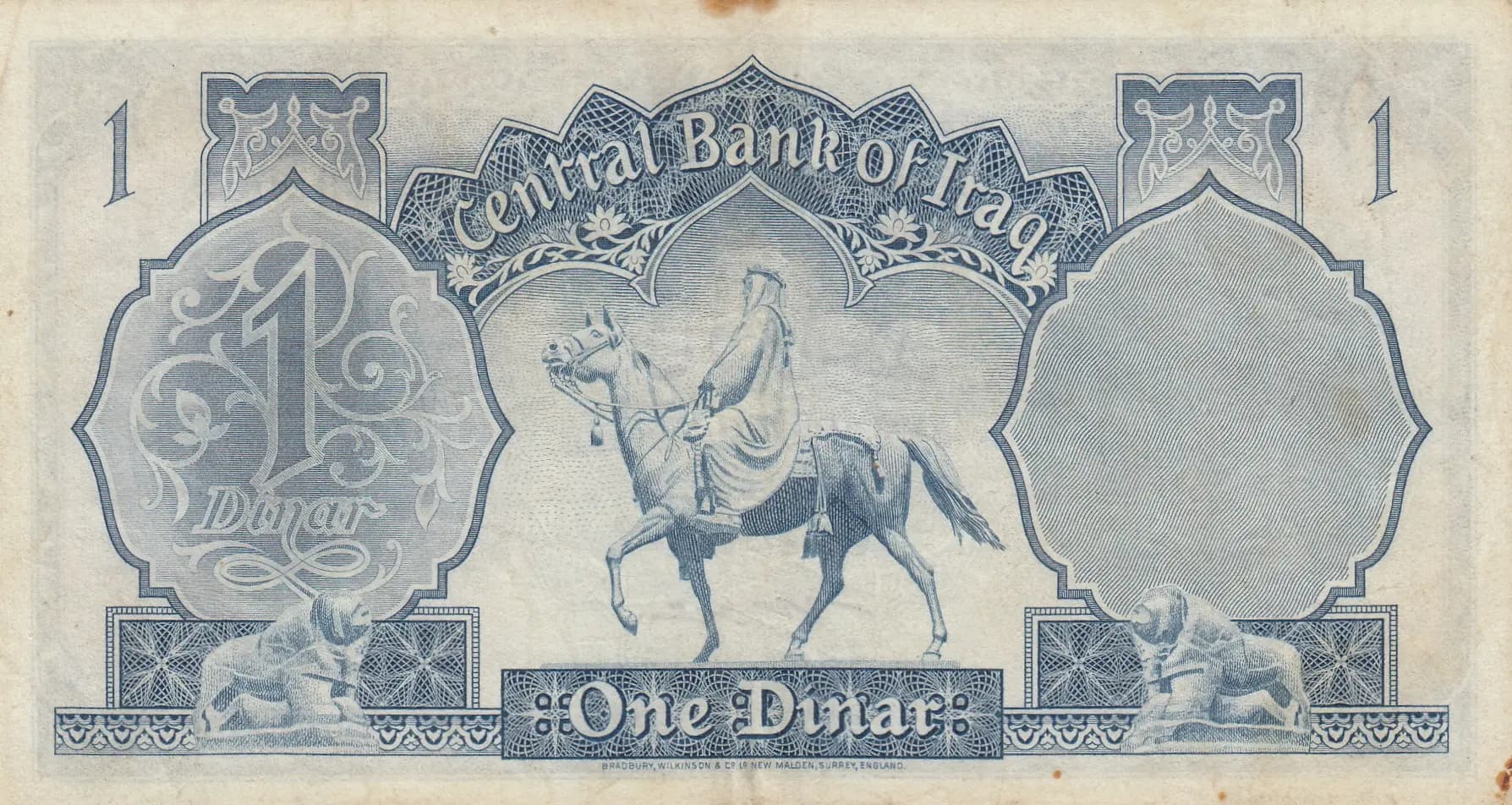
This is a VF-graded 1 Dinar note from Iraq's 1959 issue, featuring King Faisal II in formal Western dress on the obverse and an equestrian figure on a camel on the reverse. The note shows authentic age-appropriate patina with foxing and discoloration consistent with circulation and storage over six decades, while maintaining good structural integrity and clear visibility of the intricate engraved designs characteristic of Bradbury Wilkinson's craftsmanship.
Common. The eBay price tracking data shows multiple VF-graded examples selling in the $66-$172 range over the past decade, with one UNC example listed at only $1.45, indicating robust supply in the collector market. The 2016 catalogue value for VF is $150, and consistent sales activity across multiple grade levels (VG, F, VF, EF, UNC) demonstrates regular availability. Pick-48 appears to have had a substantial print run typical of regular-issue circulating currency during the Faisal II era.
Issued in 1959 during the reign of King Faisal II, this banknote represents Iraq's monarchy period before the 1958 revolution and subsequent 1963 coup that fundamentally altered the nation's political landscape. The portraiture of the young King Faisal II and the depiction of the mounted figure (likely referencing King Faisal I, the dynasty's founder) reflect the Hashemite monarchy's connection to Arab heritage and leadership. The note's English-language printer information and Western design aesthetic underscore Iraq's mid-20th-century ties to British financial institutions during the post-Ottoman modernization era.
The obverse features a formal portrait of King Faisal II positioned in profile facing left within a circular decorative frame on the right side of the note, rendered in the neoclassical style typical of mid-20th-century monarchy portraiture. The left side contains a blank circular medallion with ornamental border, likely a design element for symmetry or future security features. The center is dominated by an ornate cartouche with intricate floral and geometric patterns containing Arabic text identifying the Central Bank. The reverse displays a detailed engraved illustration of a mounted figure on a camel in the center panel, flanked by blank cartouches on both sides and heraldic lion figures in the bottom corners, all framed by a repeating geometric border pattern throughout. The color scheme utilizes blue-gray as the dominant tone with cream and white accents, creating a formal, austere aesthetic appropriate to the period.
Front side: 'البنك المركزي' (Al-Bank al-Markazi) = 'Central Bank'; Serial numbers: 'B 392559' and variant '= 392559' in English alphanumeric format. Back side: 'Central Bank of Iraq' (English header); '1 Dinar' and 'One Dinar' (denomination in English); 'BRADBURY, WILKINSON & Co LTD NEW MALDEN, SURREY, ENGLAND' (printer attribution).
Intaglio engraving by Bradbury Wilkinson & Co Ltd, a renowned British security printer based in New Malden, Surrey. The fine line work, intricate geometric patterns, detailed camel and rider illustration, and crisp portrait rendering all demonstrate the hallmark techniques of traditional steel plate engraving used for currency production during this era. The multiple serial number placements and precision of the decorative borders are consistent with high-security currency printing standards of the 1950s.
PMG has catalogued one variant for Pick-48 (Printer: BWC - Bradbury Wilkinson & Co). The observed specimen carries serial number B 392559, falling within the documented issue range. No signature varieties, date variations (all dated L.1947 / 1959), or overprints are noted. The blank circular medallions on both sides of the obverse may represent design elements consistent across the entire P-48 issue rather than a specific variety marker.