1/4 dinar 1942
Market Prices
About This Note
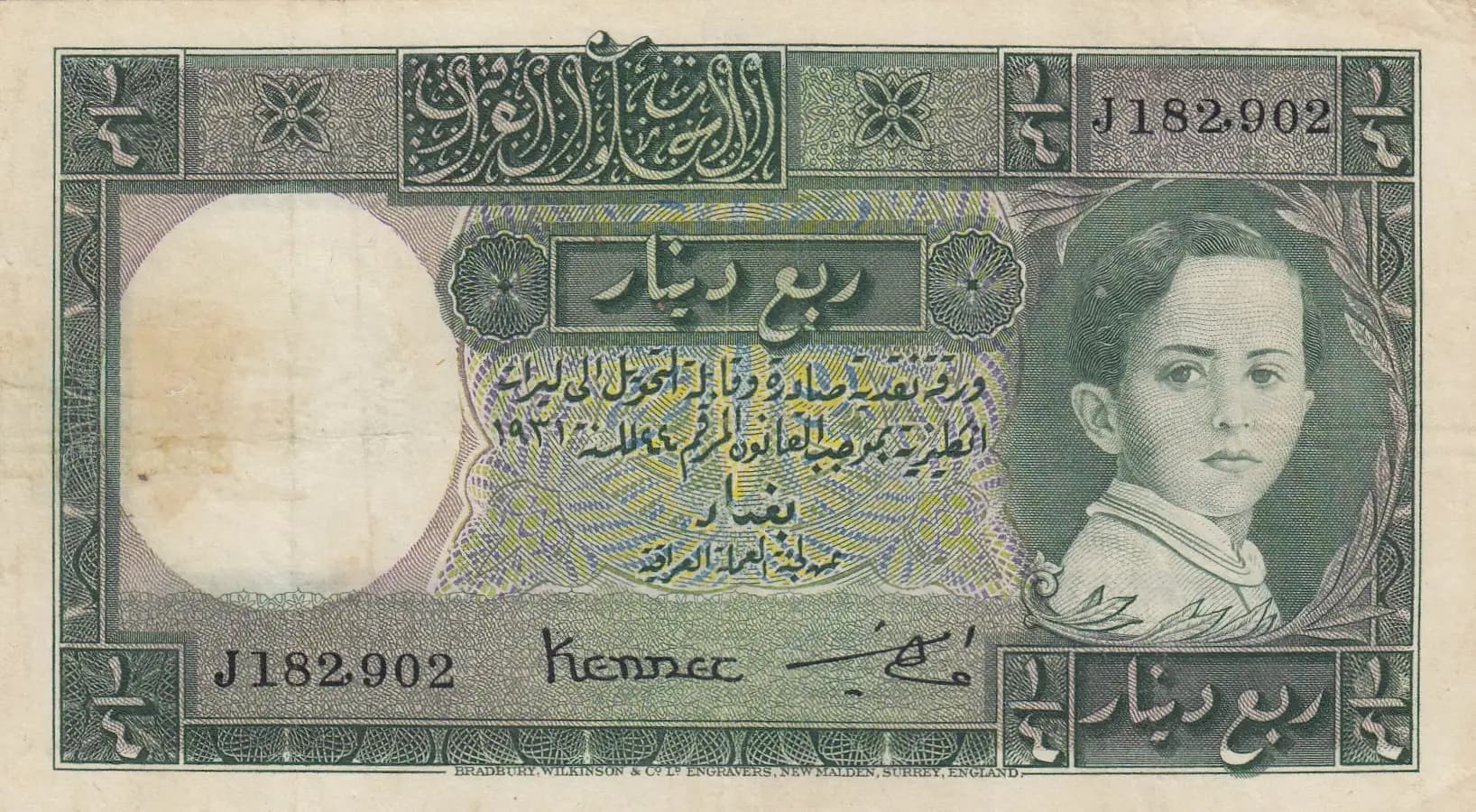
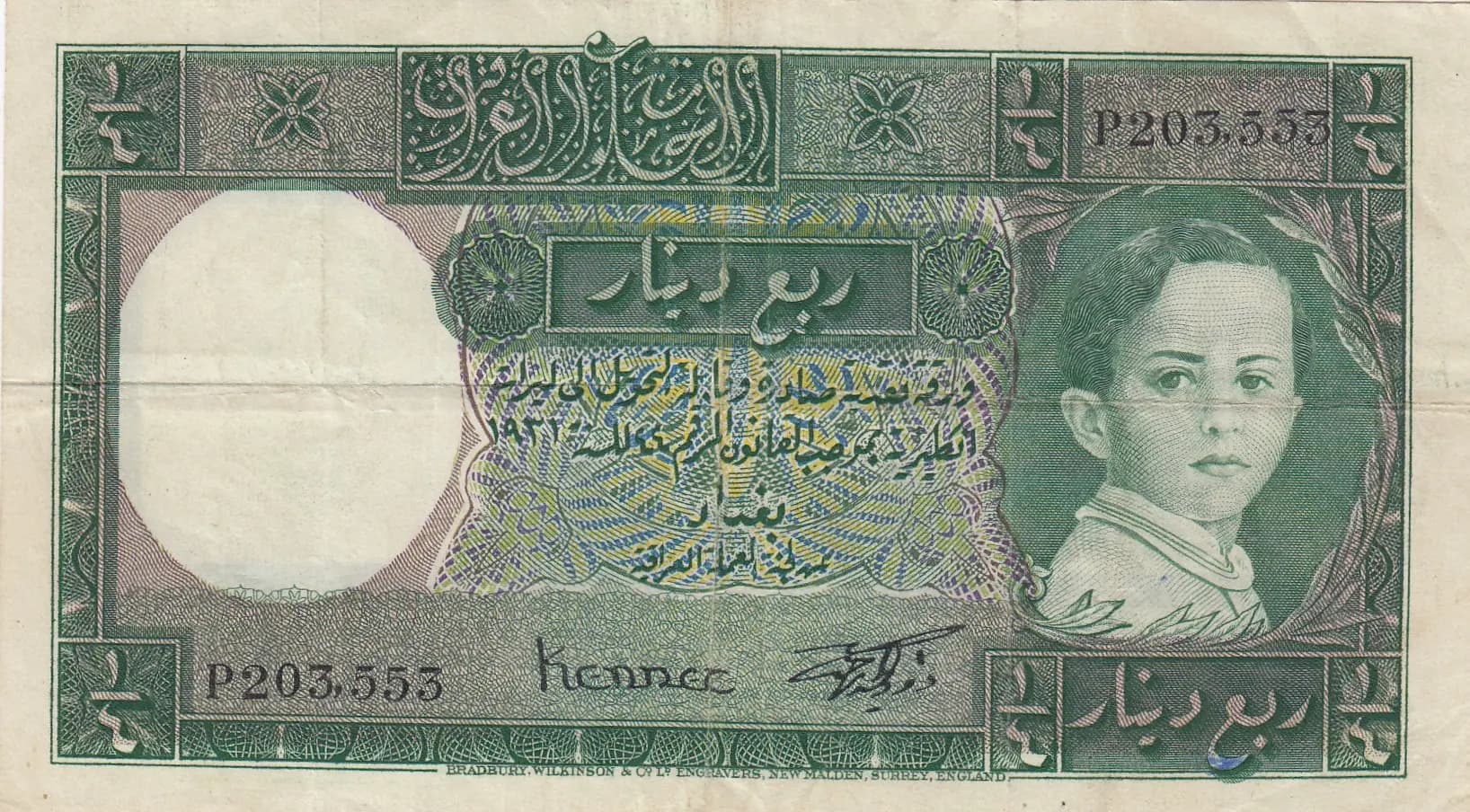
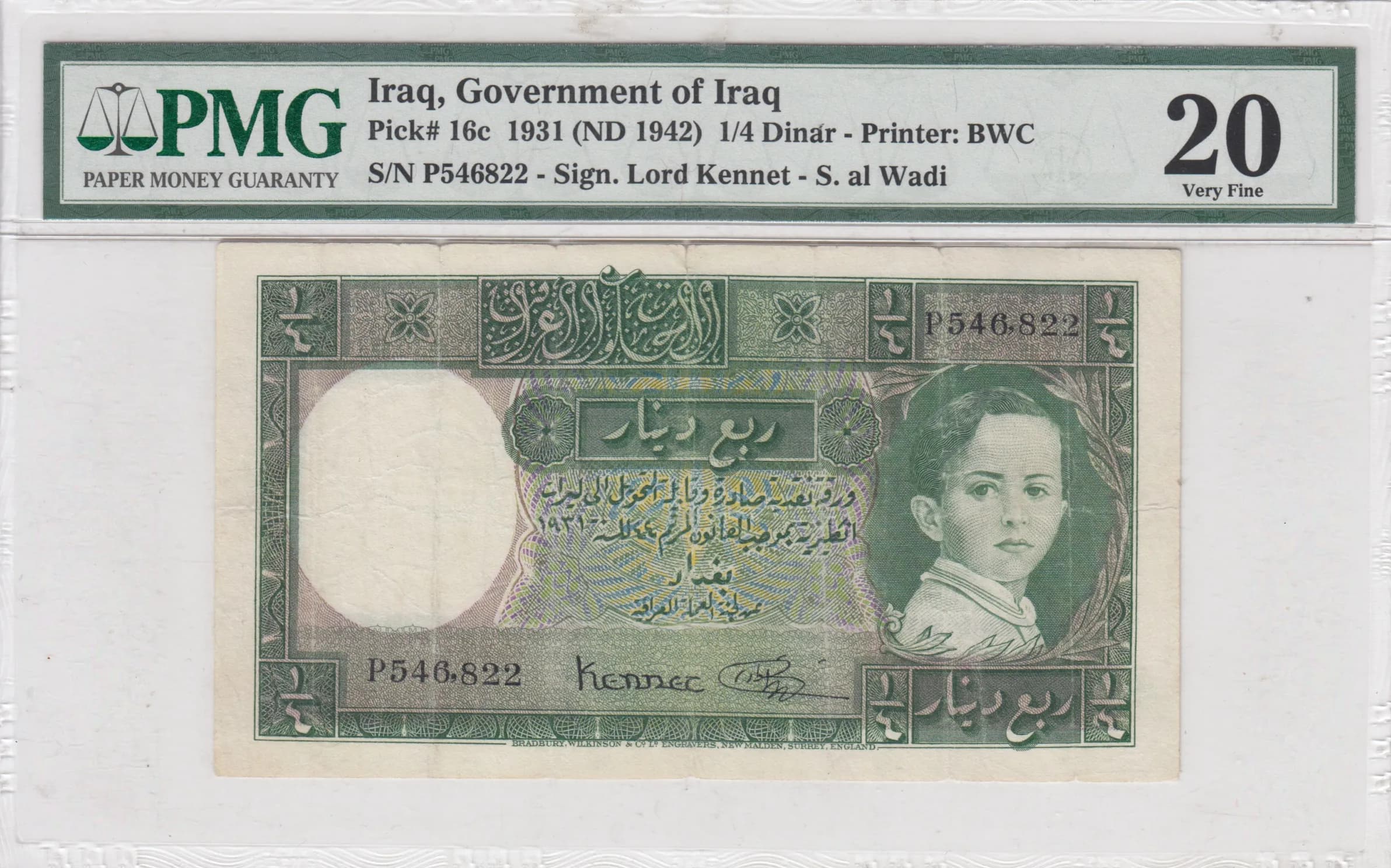
This 1/4 Dinar note from the Government of Iraq (1942) presents a classic example of early Iraqi currency featuring a portrait of a young man in green ink on the obverse. Graded PMG 20 (Very Fine), the note displays typical aging characteristics including light foxing and staining on the cream background, consistent with circulation wear from over 80 years of potential handling. The note is notable for its English-language legal text referencing sterling convertibility under Law No. 44 of 1931, reflecting Iraq's post-WWI monetary framework, and bears the signature of Lord Kennet alongside S. al Wadi.
Common. The 1/4 Dinar 1942 (Pick 16c) was produced in substantial quantities as a fractional denomination note serving everyday commerce in Iraq during the mandate period. No evidence of restricted print runs, early recall, or rarity in the numismatic market exists for this issue. The PMG 20 grade represents typical condition for circulated notes of this age and is not unusually scarce.
Issued during the British Mandate period of Iraqi governance, this 1942 quarter dinar reflects Iraq's transitional monetary system wherein currency remained convertible into British sterling. The English-language inscriptions and the explicit reference to Law No. 44 of 1931 demonstrate the close fiscal ties between Iraq and Britain during this era. The young male portrait and the government seal represent the newly consolidated Iraqi state asserting its institutional authority through standardized currency.
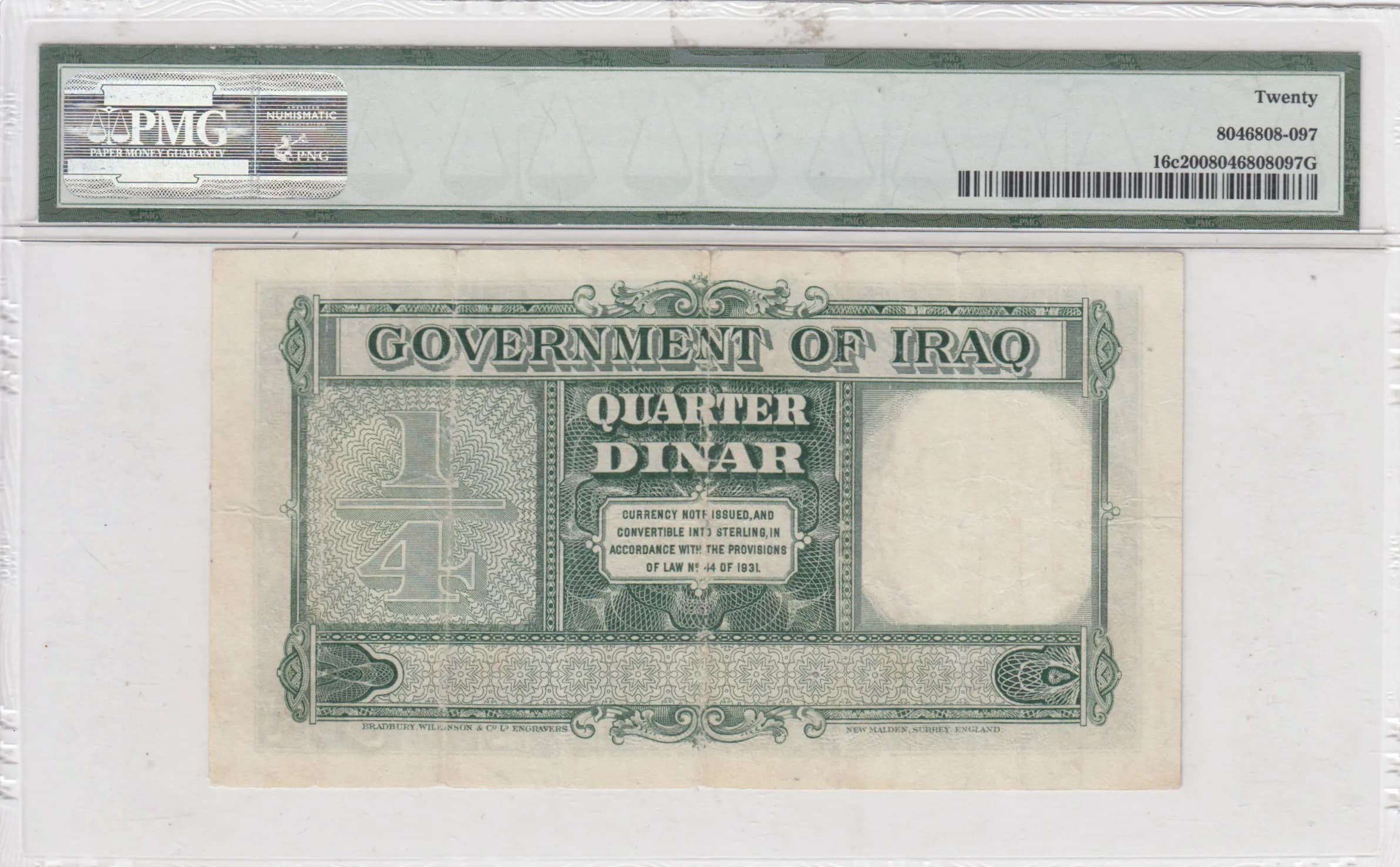
The obverse features a portrait of a young male figure rendered in profile facing right, executed in green ink with fine detailing characteristic of high-security currency engraving. A large circular element on the left side likely represents a watermark or security vignette area. Ornamental corner designs incorporating floral and geometric patterns frame the note's perimeter. The reverse displays a formal layout with the English-language government and denomination text prominently centered, flanked by large '1/4' numerals. Decorative corner flourishes and a geometric border frame complete the design. The color scheme of green ink on cream background is consistent throughout both sides, with pink/light red accent tones visible on the obverse.
FRONT SIDE: 'الدولة العراقية' (The State of Iraq) and 'ربع دينار' (Quarter Dinar) appear in Arabic script. Serial number P546822 is printed in English numerals. Signatures read 'Kennet' (Lord Kennet) and 'S. al Wadi'. BACK SIDE: 'GOVERNMENT OF IRAQ' appears in large block letters across the top center. 'QUARTER DINAR' is displayed below the government designation. Large denomination numerals '1/4' frame the left and right sides. Central text reads: 'CURRENCY NOTE ISSUED AND CONVERTIBLE IN STERLING IN ACCORDANCE WITH THE PROVISIONS OF LAW Nº 44 OF 1931.' At the bottom: 'BRADBURY WILKINSON & CO LTD ENGRAVERS, NEW MALDEN SURREY ENGLAND.'
This note was produced using intaglio (engraved) printing, the standard security printing method for currency of this era. The fine-line geometric patterns and intricate detail work visible throughout the design are characteristic of intaglio production. The printer was Bradbury Wilkinson & Co Ltd, a renowned British security printer located in New Malden, Surrey, England. This firm was one of the leading currency engravers of the 20th century, known for high-quality banknote production incorporating sophisticated anti-counterfeiting measures.
This note is identified as Pick 16c, representing the 1942 issue of the Government of Iraq 1/4 Dinar. The observed specimen bears serial number P546822 with signatures of Kennet and S. al Wadi. Variations within the Pick 16c type may include different serial number prefixes and signature combinations; however, the basic design, color scheme, and legal text referencing Sterling convertibility remain consistent across this Pick variety. No overprints or unusual varieties are apparent in this example.