1/2 dinar 1973
About This Note
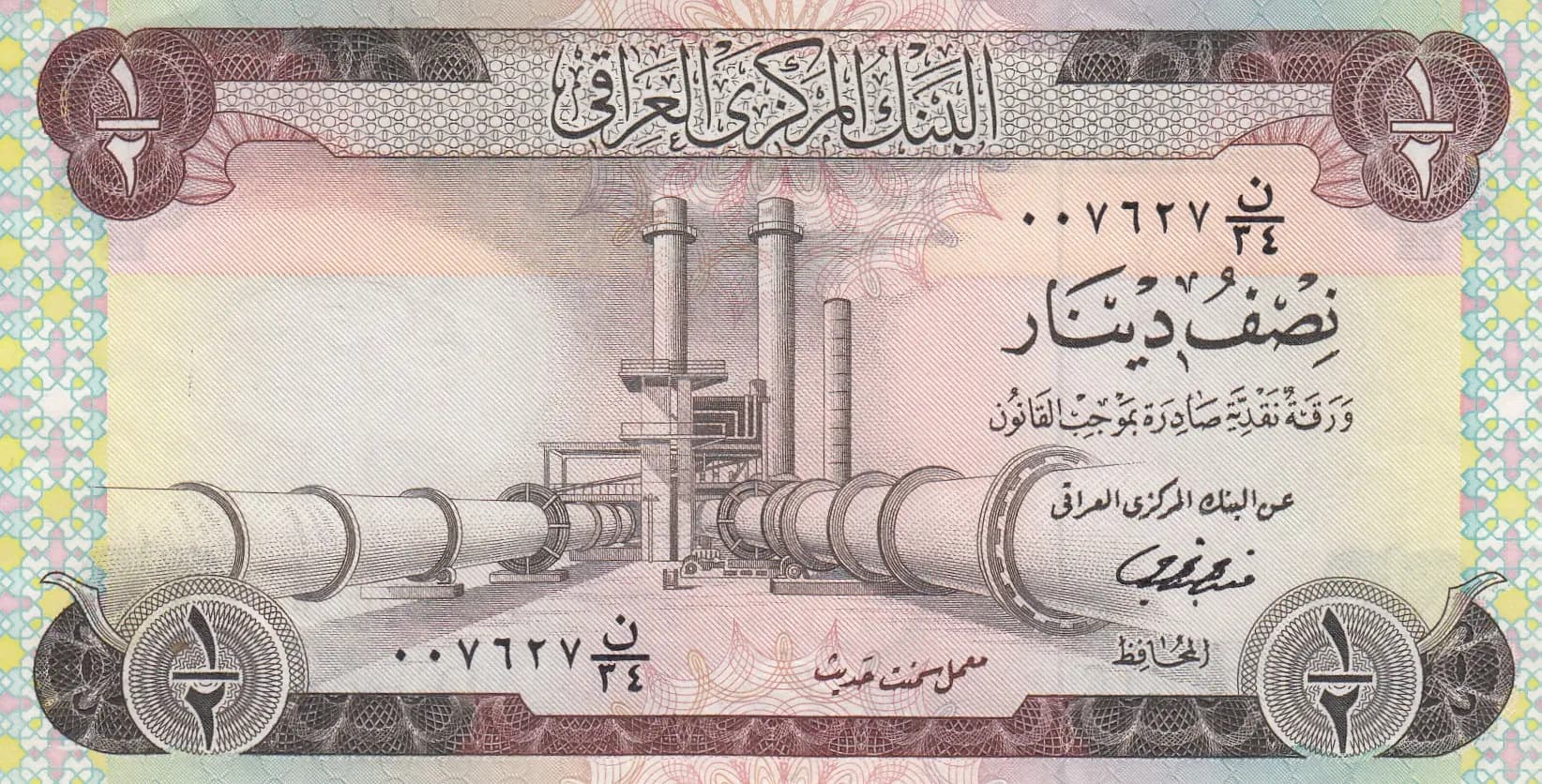
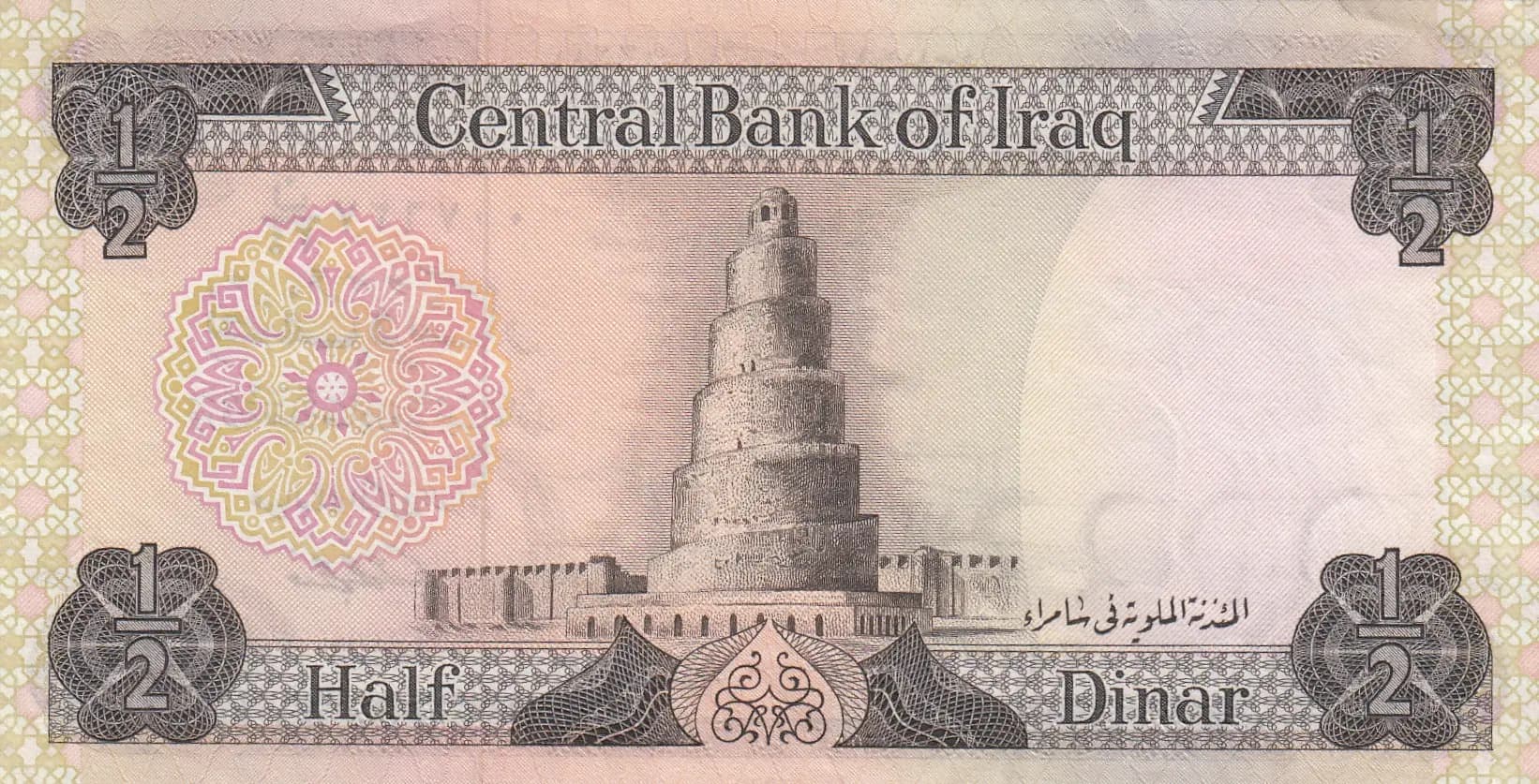
This is an exceptionally well-preserved example of the Iraqi half dinar from 1973, graded AU and displaying pristine condition throughout. The note showcases two distinct industrial and historical themes: the front features a modern cement factory with prominent smokestacks and cylindrical storage tanks rendered in pink and cream tones, while the reverse depicts the famous spiral minaret of Samarra with its distinctive helical architecture and fortification walls. The geometric border design and intricate guilloche patterns demonstrate sophisticated security printing characteristic of the early 1970s Central Bank of Iraq issues.
Common. The 1973 half dinar (Pick 62(2)) was part of a standard circulation series issued by the Central Bank of Iraq and likely produced in substantial quantities for domestic circulation. No evidence suggests limited print runs, recall status, or short-lived issuing conditions that would elevate rarity. While AU condition examples are more desirable than circulated specimens, the note itself remains readily available in the collector market.
This 1973 half dinar was issued during a significant period in Iraq's modern history, specifically three years after the 1970 Ba'athist coup and during a time of economic growth driven by oil revenues. The front design celebrating the cement factory (Mamal simant hadith) reflects the nation's focus on industrial development and modernization infrastructure projects of the era. The reverse's depiction of the spiral minaret at Samarra—one of Iraq's most iconic historical monuments from the 9th-century Abbasid period—connects the contemporary economic agenda with the nation's rich cultural heritage.
The front of the note features a detailed engraving of a modern cement manufacturing facility, the centerpiece of Iraq's industrial development program. Two tall industrial smokestacks flank multiple large cylindrical storage tanks or pipe assemblies arranged horizontally, rendered in brown/maroon engraving with a cream and pink background. The reverse displays the Al-Malwiya minaret of Samarra, characterized by its distinctive spiraling helix design ascending through multiple architectural tiers, with fortification walls depicted at its base. A circular Islamic geometric medallion with intricate patterns in pink, yellow, and purple occupies the left side of the reverse. All four corners of both sides feature decorative torch-like emblems. The entire note is framed by a delicate geometric border pattern utilizing pastel colors (pink, yellow, green, light beige) that provide visual interest while maintaining security printing principles.
Front side: 'البنك المركزي العراقي' (Central Bank of Iraq), 'نصف دينار' (Half Dinar), 'وزارة المالية' (Ministry of Finance), 'عن البنك المركزي العراقي' (From/On behalf of the Central Bank of Iraq). Back side: 'Central Bank of Iraq' (English), 'Half Dinar' (English), Arabic denominations shown as '۱' (one) and '۲' (two, indicating one-half). Serial numbers visible in Arabic-Indic numerals on the front.
Intaglio (engraved) printing, evidenced by the fine line work, intricate guilloche patterns throughout, and the precise geometric border designs characteristic of security printing. The complex background engravings, detailed architectural renderings of both the cement factory and the Samarra minaret, and the elaborate Islamic geometric patterns in the circular medallion all indicate traditional intaglio production. This note was likely printed by a prominent European or international security printer contracted by the Central Bank of Iraq, consistent with Iraqi banknote production standards of the 1970s.
Pick catalog designation 62(2) indicates this is the second variety/issue of the half dinar design from the 1973 series. Varieties within this Pick number may be distinguished by signature varieties (Central Bank officials' signatures), subtle design modifications, or serial number prefix changes. The observed specimen displays serial numbers in Arabic-Indic numerals; comparing these prefixes with documented examples would help establish the specific variety within the 62(2) designation. No overprints are visible on this example.