1 rupee 1944-46
About This Note
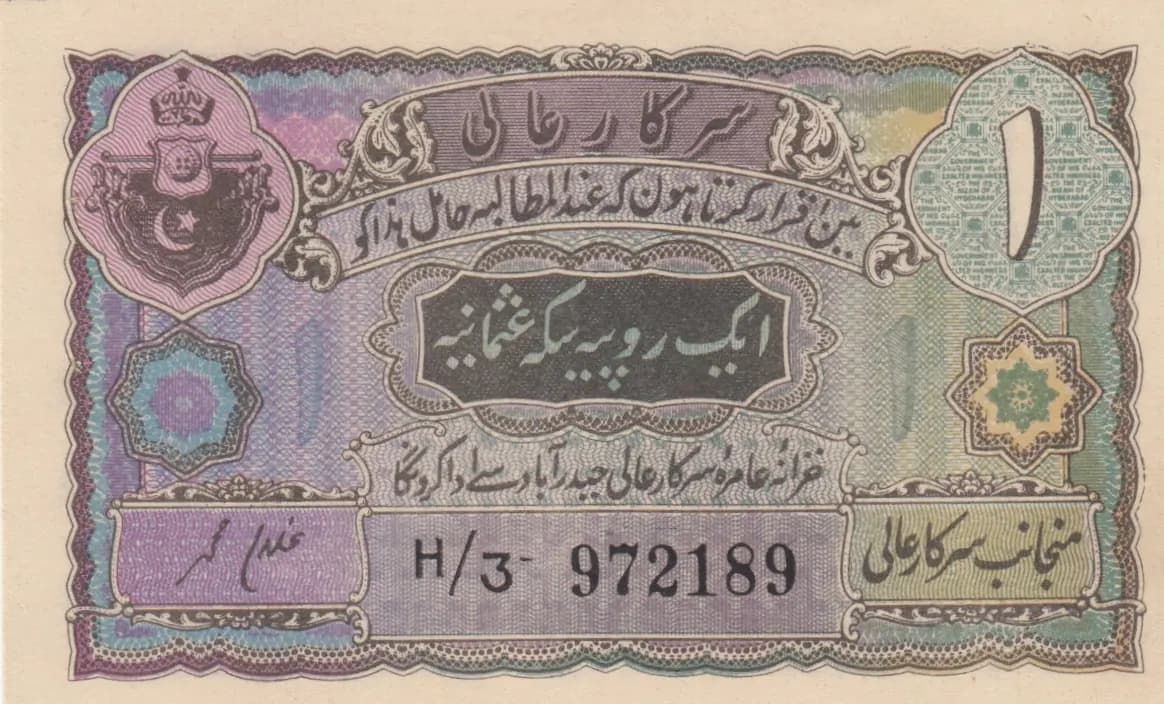
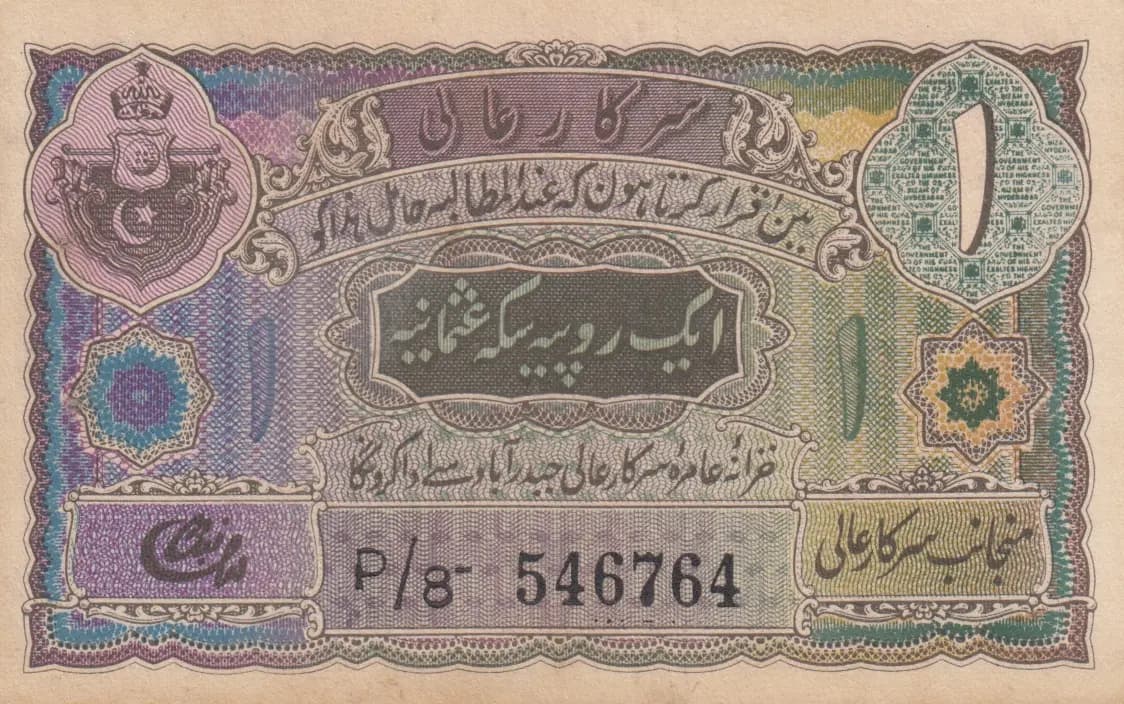
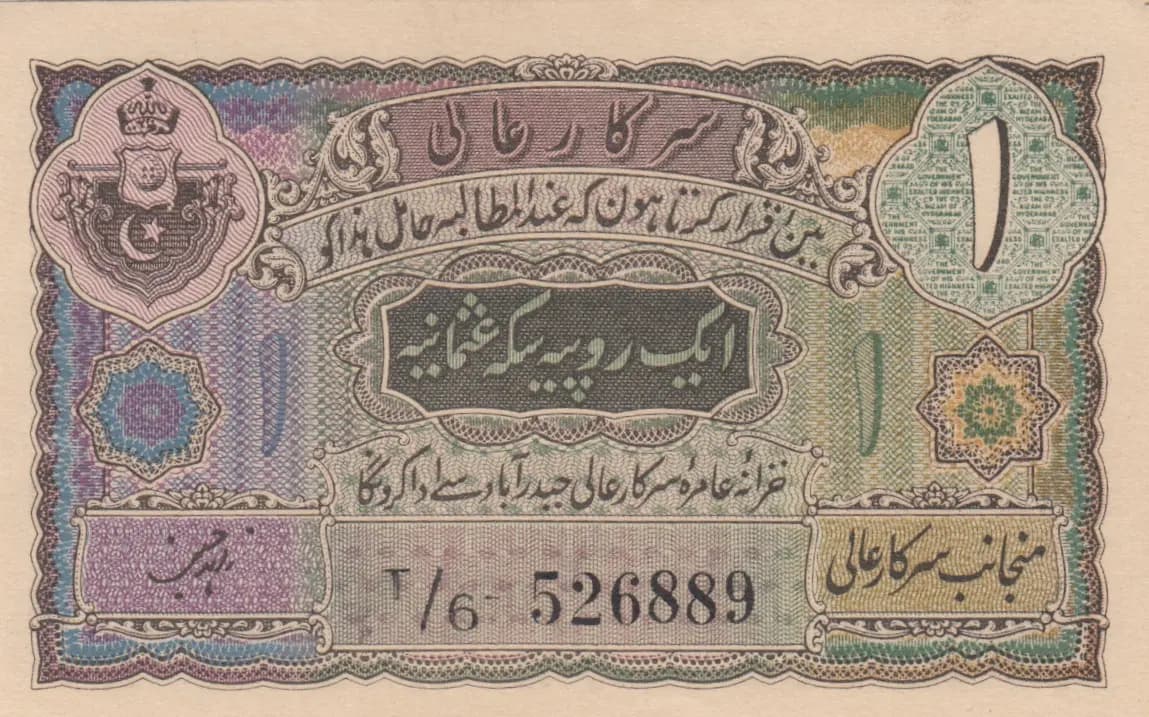
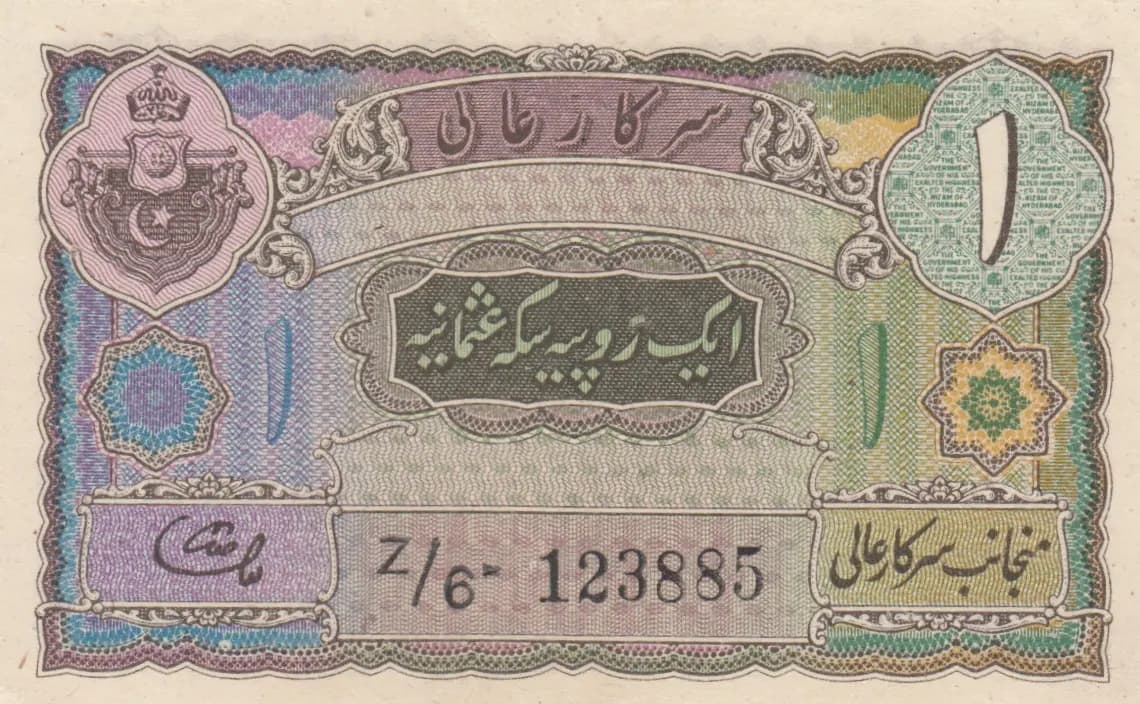
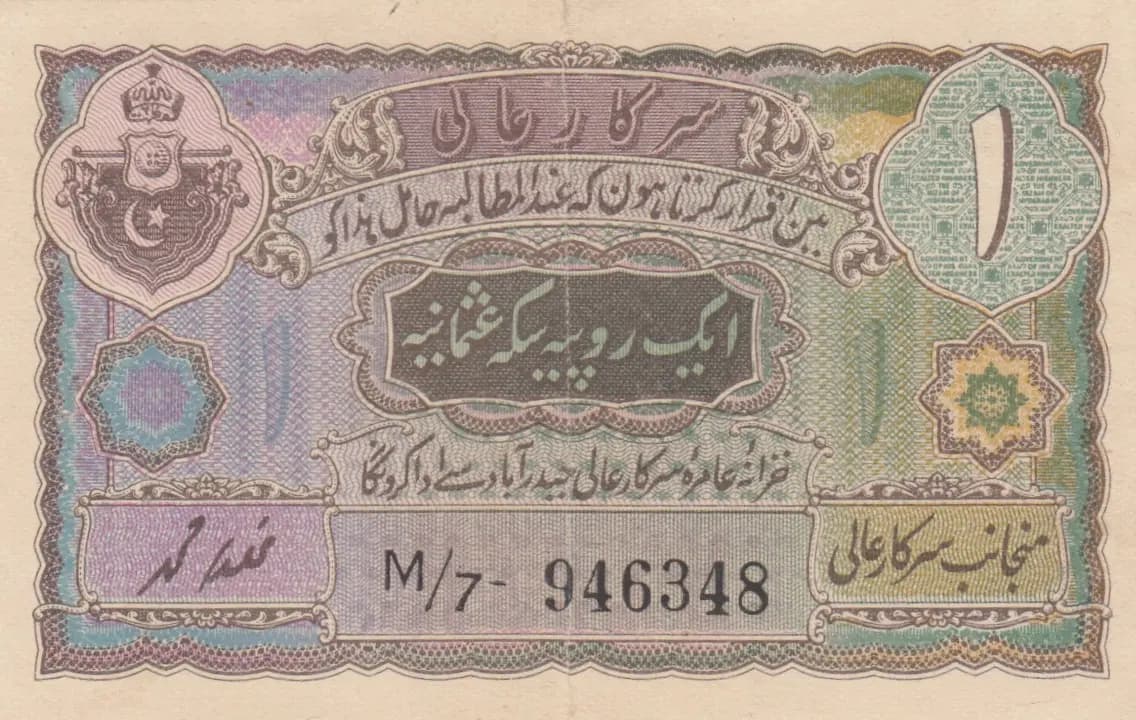
An exceptional example of a 1944-46 Hyderabad 1 Rupee note from the Rupee Sicca Osmania System (Pick P-S271d), displaying the characteristic dual-color design with purple-pink transitioning to green on the obverse. The note exhibits VF condition with minimal wear, clear printing of intricate engraved details, and well-preserved inscriptions in English, Urdu/Persian, and Kannada, making it an important artifact of the princely state's monetary history.
Common. The Hyderabad 1 Rupee notes from 1944-46 were produced in substantial quantities during the final years of the Nizam's monetary authority. While the Rupee Sicca Osmania System is historically significant, these notes remain relatively accessible to collectors. The VF condition grade observed here is desirable but not exceptional enough to command premium pricing. No evidence of restricted mintage, early recall, or short-lived issuing authority status exists to elevate this note above common circulation.
This banknote was issued during the final years of the Hyderabad State's autonomy, under the authority of the Nizam as indicated by the Persian inscription 'نظام الملک شاہی فرمان' (Nizam's Royal Decree). The inclusion of Kannada script alongside Urdu and English reflects Hyderabad's multilingual administration and its position as a major princely state in India. The depicted fortified structure on the reverse likely represents a significant architectural landmark of the Nizam's realm, symbolizing the state's sovereignty and cultural heritage during this transitional period before India's independence.
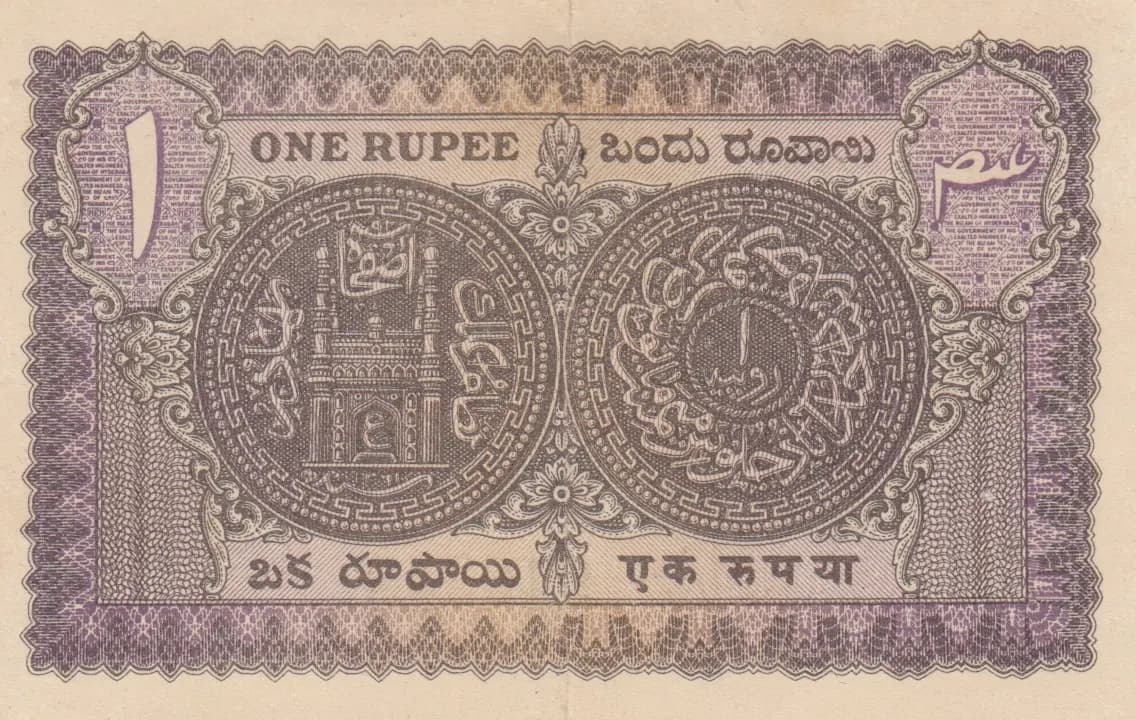
The obverse features an elaborate coat of arms with a crown and heraldic elements positioned on the upper left, symbolizing the Nizam's authority. The denomination '1' appears in a decorative cartouche on the right side. Star motifs in square and hexagonal frames on the lower corners provide additional heraldic ornamentation. The dual-color security feature—purple-pink transitioning to green—was characteristic of Osmania System notes. The reverse displays two large circular medallions set within ornate decorative frames: the left medallion depicts a fortified palace or fort structure (likely a significant Nizam residence or administrative building), while the right medallion contains intricate heraldic or relief sculpture. Fine guilloche patterns and geometric borders frame the entire composition, with ornamental numerals '1' positioned in the corners. The design reflects Persian and Islamic artistic influences consistent with the Nizam's court aesthetics.
FRONT: Serial number M/7 946348 (English); 'ایک روپیہ' (Urdu/Persian: One Rupee); 'نظام الملک شاہی فرمان' (Persian/Urdu: Nizam's Royal Decree); 'ایک روپیہ پرانتہ' (Urdu/Persian: One Rupee). BACK: 'ONE RUPEE' (English); 'ಒಂದು ರೂಪಾಯಿ' (Kannada: One Rupee); 'ایک روپیہ' (Urdu/Persian: One Rupee); 'ಹೈದರಾಬಾದ್' (Kannada: Hyderabad).
Intaglio engraving (line engraving and relief work) combined with color separation printing, as evidenced by the fine line guilloche patterns, intricate engraved medallion imagery, and precise color transitions between sections. The complex relief work visible in the circular seals and the sharp definition of decorative borders are characteristic of high-quality intaglio security printing. This technique was typical of British-Indian currency printers producing notes for princely states during this period; the De La Rue Company or similar security printers likely produced this issue, though attribution cannot be definitively confirmed without examination of printer's marks.
The observed serial number M/7 946348 indicates this note is from the later printing runs of the 1944-46 series. The 'M/7' prefix suggests a specific printing batch. Varieties of P-S271d notes may exist based on signature variations, watermark differences, or serial number ranges, though the visual analysis does not reveal signature variations that would definitively establish a specific sub-variety. Further examination of the watermark area and signature blocks (if present on the left margin) would be necessary to determine the precise variety within the P-S271d designation.