1 rupee 1941-45
About This Note
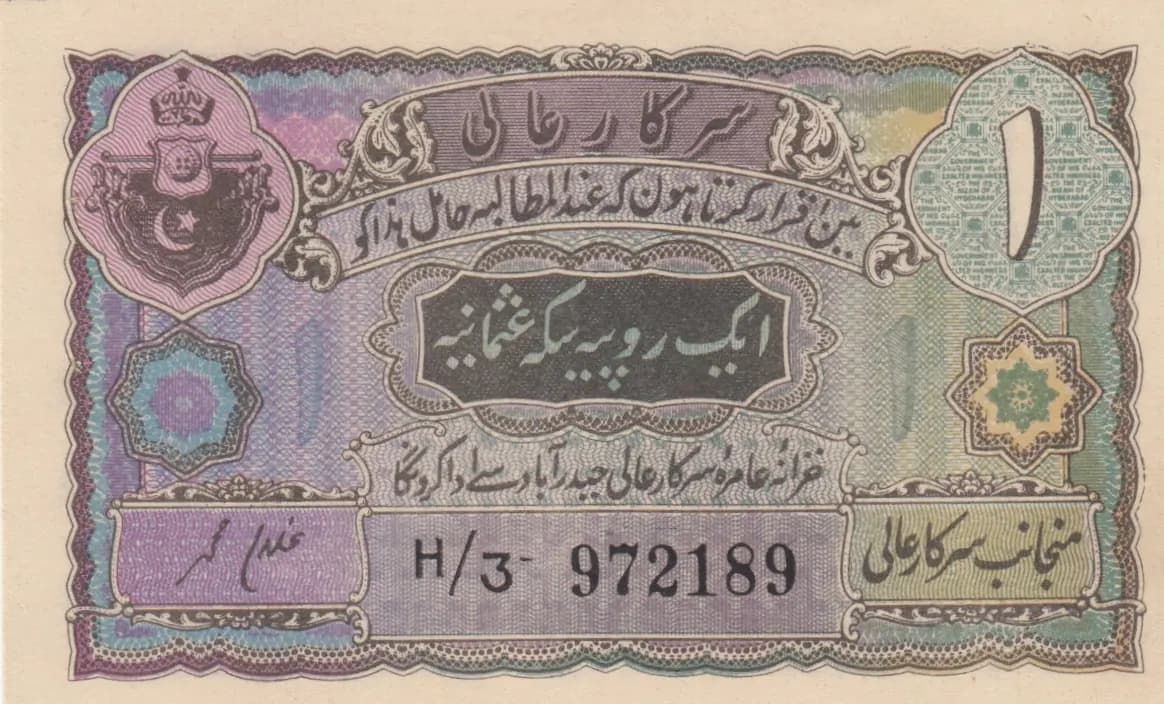
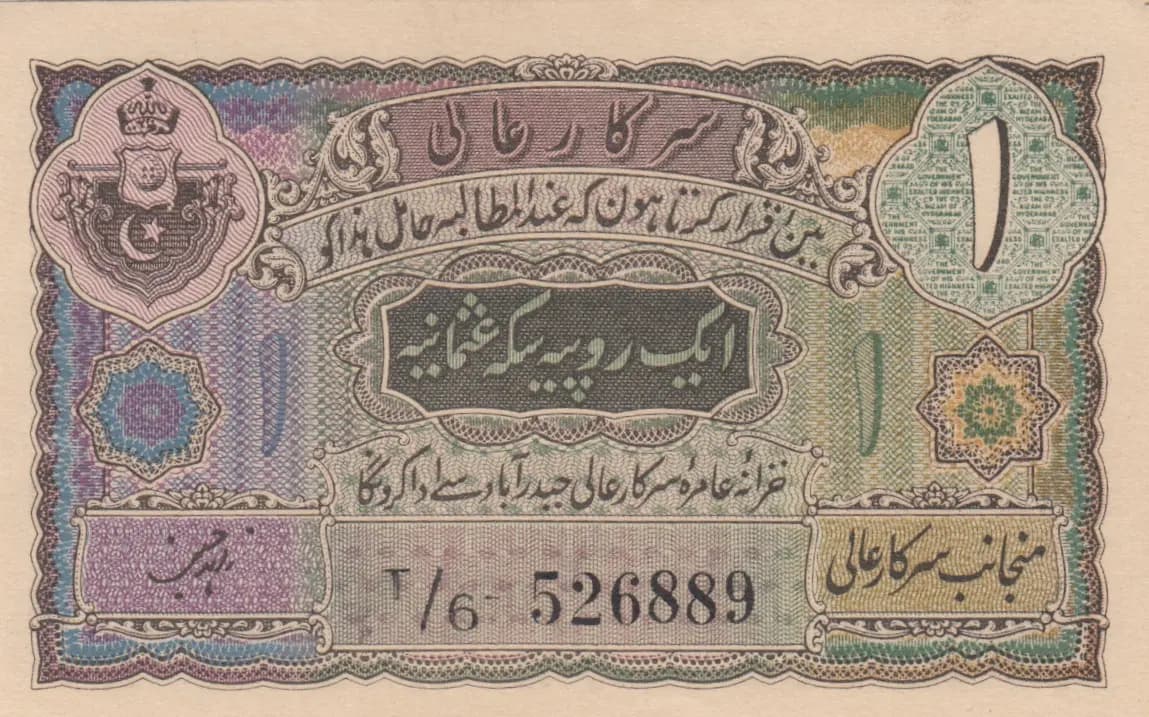
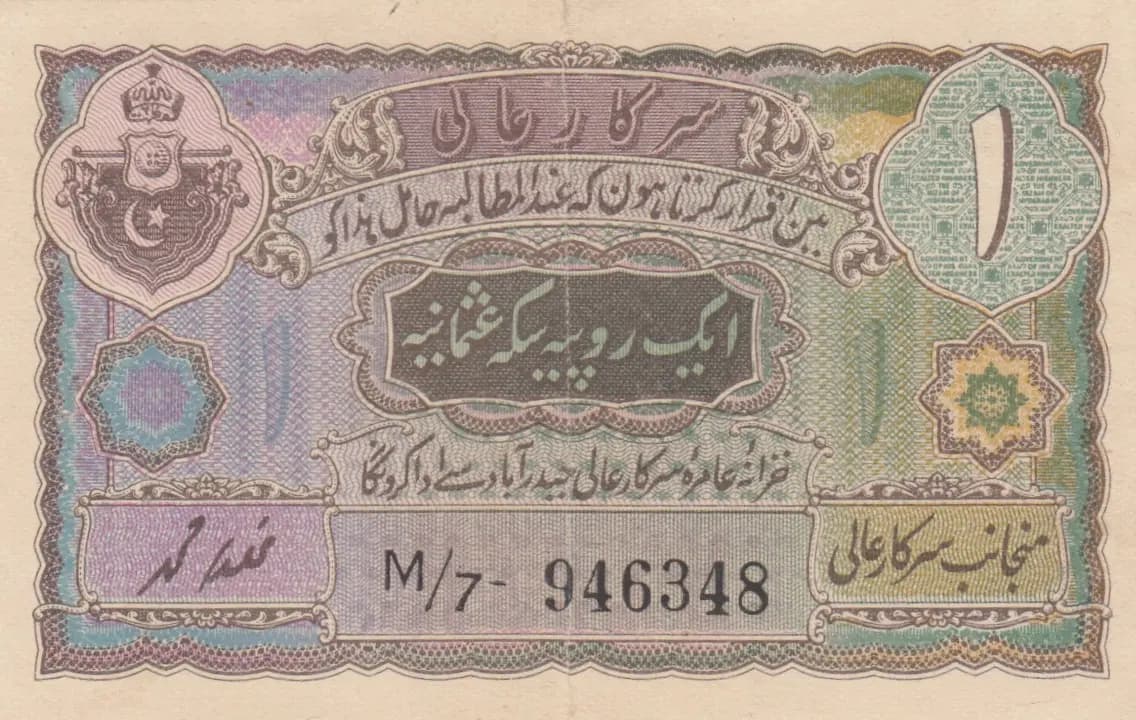
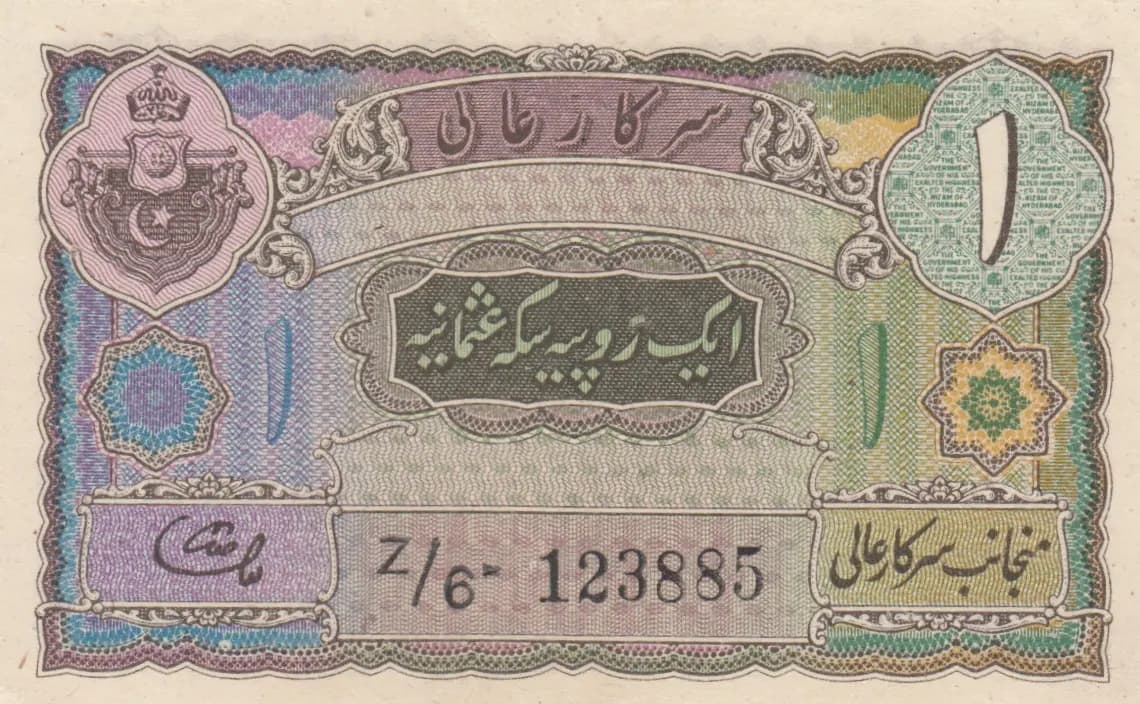
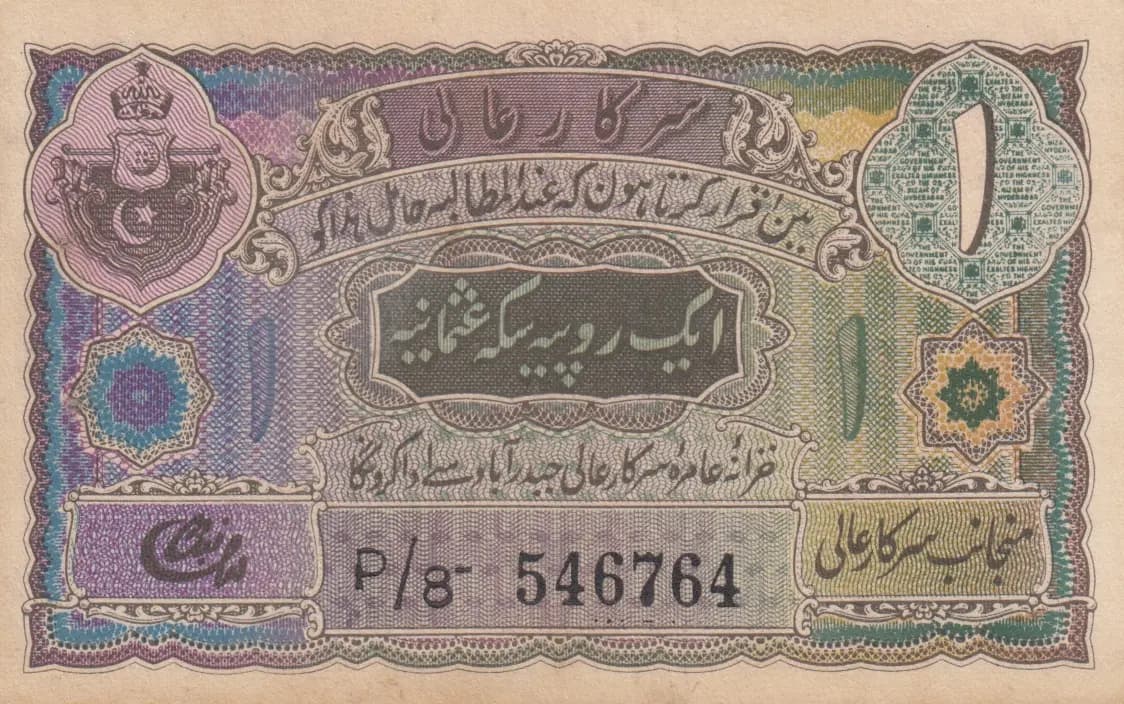
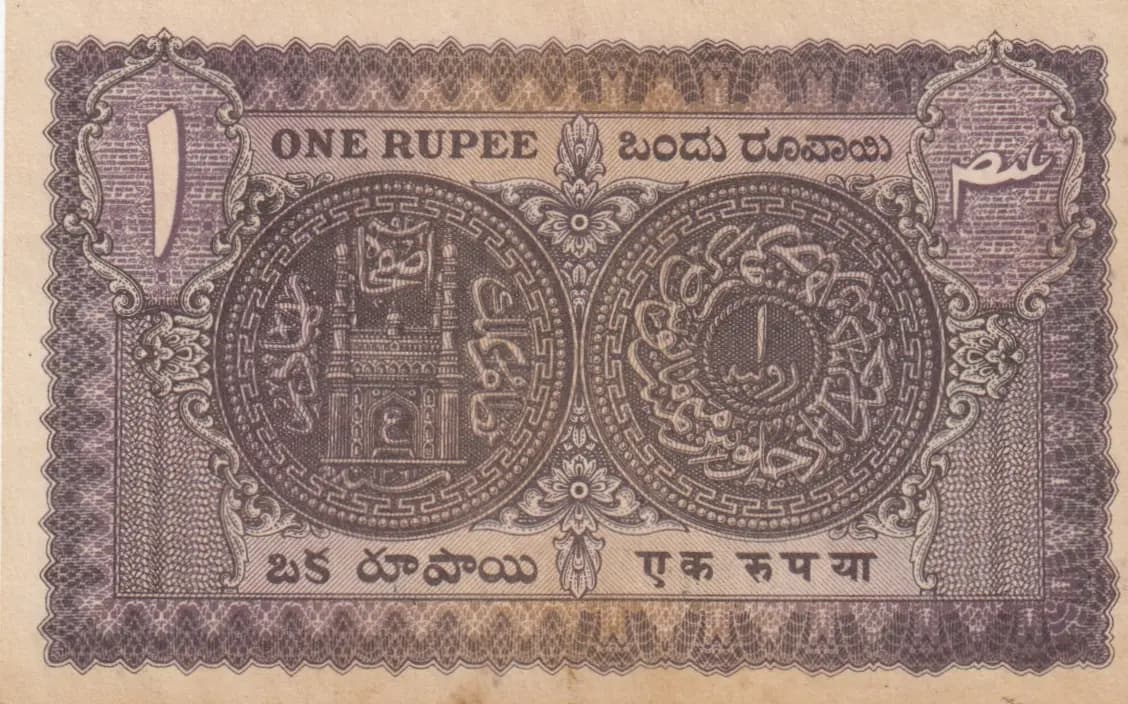
A decorative 1 Rupee from the Hyderabad State during the final years of British rule (1941-45), featuring the distinctive Indo-Islamic ornamental aesthetic characteristic of Osmania currency. The note displays a predominantly purple/mauve color scheme with intricate fine-line engraving, elaborate geometric borders, and dual circular medallions on the reverse containing architectural imagery. In VF condition, this example shows age-appropriate cream/tan patina and foxing consistent with an 80+ year old banknote from circulation, with no major tears or creases detracting from its appeal to collectors of Indian State currency.
Common. The 1 Rupee denomination from Hyderabad State (Pick S271c) was issued in substantial quantities between 1941-45 and represents the final, most accessible issue of Osmani currency before the state's integration into India. Multiple prefix varieties exist (the P/8 prefix observed here is standard), and surviving examples in circulated grades are readily available to collectors. No specific rarity factors such as limited print runs, recall orders, or short-lived status apply to this Pick number. The VF grade and age-related wear are entirely typical for notes of this vintage.
Issued during the twilight of the Hyderabad State's monetary autonomy before the 1948 integration into the Indian Union, this Rupee Sicca represents the last generation of Osmani currency under the Nizam's rule. The note's ornamental design reflects the Indo-Islamic artistic traditions favored by the Hyderabad court, incorporating Persian/Urdu script and regional language denominations (Kannada, Bengali) that underscore the cosmopolitan nature of the Deccan sultanate's administration. The architectural and decorative medallions on the reverse likely commemorate significant structures or cultural motifs central to Hyderabad State's identity during this final period of independence.
This banknote exemplifies the sophisticated engraving traditions of the Hyderabad State currency. The obverse features an ornamental state crest or emblem in the upper left corner topped with a crown, surrounded by elaborate scrollwork and Islamic geometric patterns. Decorative star and flower motifs occupy all four corners, framed by intricate border work characteristic of Indo-Islamic design. The denomination cartouche is centrally positioned with ornamental surrounds. The reverse showcases two large circular medallions—likely depicting significant Hyderabad architectural landmarks or cultural symbols—symmetrically arranged with fine-line engraving detailing. A central decorative floral element separates the medallions, with additional ornamental corner frames and geometric flourishes throughout. The consistent use of purple/mauve as the primary color, complemented by blue, green, and gold/tan accents, creates visual hierarchy while the cream/beige paper stock provides contrast for the intricate line work.
Front Side: Serial number 'P/8 546764' (English); 'داکہ روپیہ' (Urdu: 'One Rupee'); 'دکن روپیہ' (Urdu: 'Deccan Rupee'). Back Side: 'ONE RUPEE' (English); 'ಅಂದುರ ರುಪಾಯಿ' (Kannada: 'One Rupee'); 'ওয়ান রুপি' (Bengali: 'One Rupee'). The multilingual inscriptions reflect the administrative and cultural diversity of Hyderabad State, with Persian/Urdu addressing the court and educated classes, while Kannada and Bengali served regional populations within the state's territory.
The note was produced using intaglio (engraved) printing, evidenced by the fine-line detail work throughout and the tactile quality visible in the architectural medallions and border patterns. The multi-color printing, with purple/mauve as the dominant color supplemented by blue and green accents, suggests the use of multiple color plates typical of security printing practices for state currencies of this era. Hyderabad State currency was typically produced by Indian Security Press or other Indian printers under royal authorization, employing traditional engraving methods refined during British rule.
This example carries the serial number prefix 'P/8' with serial number 546764, representing a standard variety within Pick S271c(2). The catalog designation '(2)' likely indicates this is the second recorded variety of the 1941-45 Rupee Sicca issue, possibly differentiated by signature varieties, printer marks, or subtle design variations. Hyderabad State notes of this period exhibit multiple known signature and prefix combinations; collectors should compare against reference catalogs to identify specific sub-varieties within the P/8 prefix range.