1 rupee 1944-46
About This Note
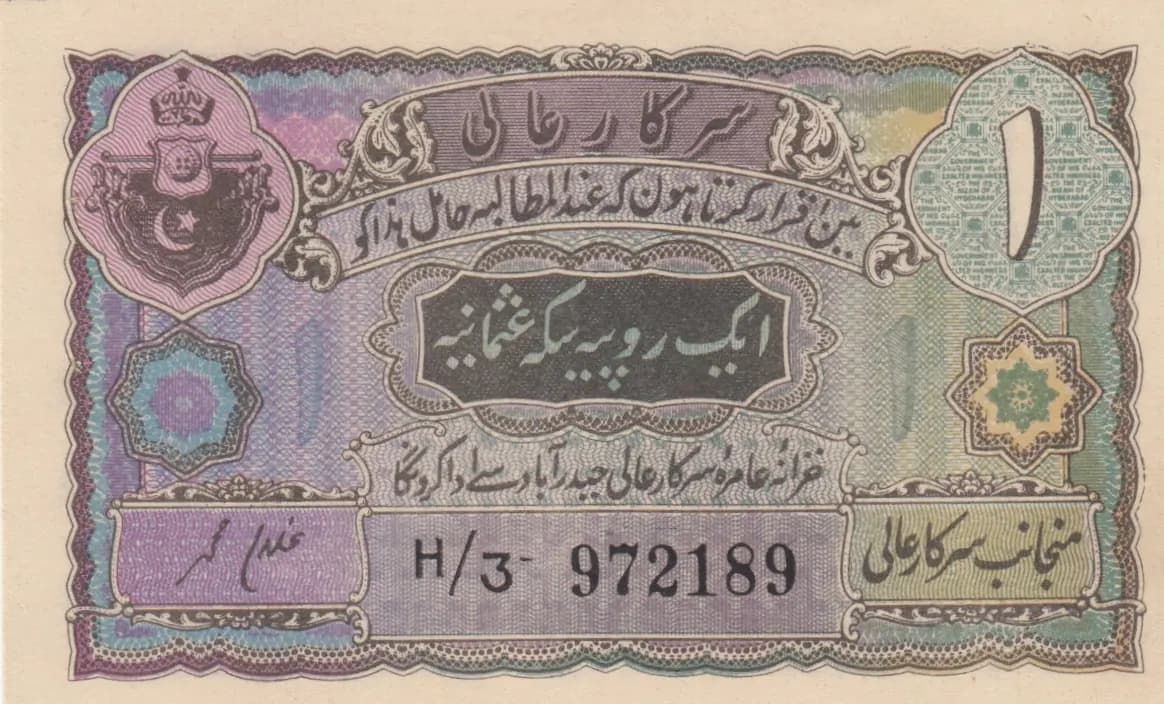
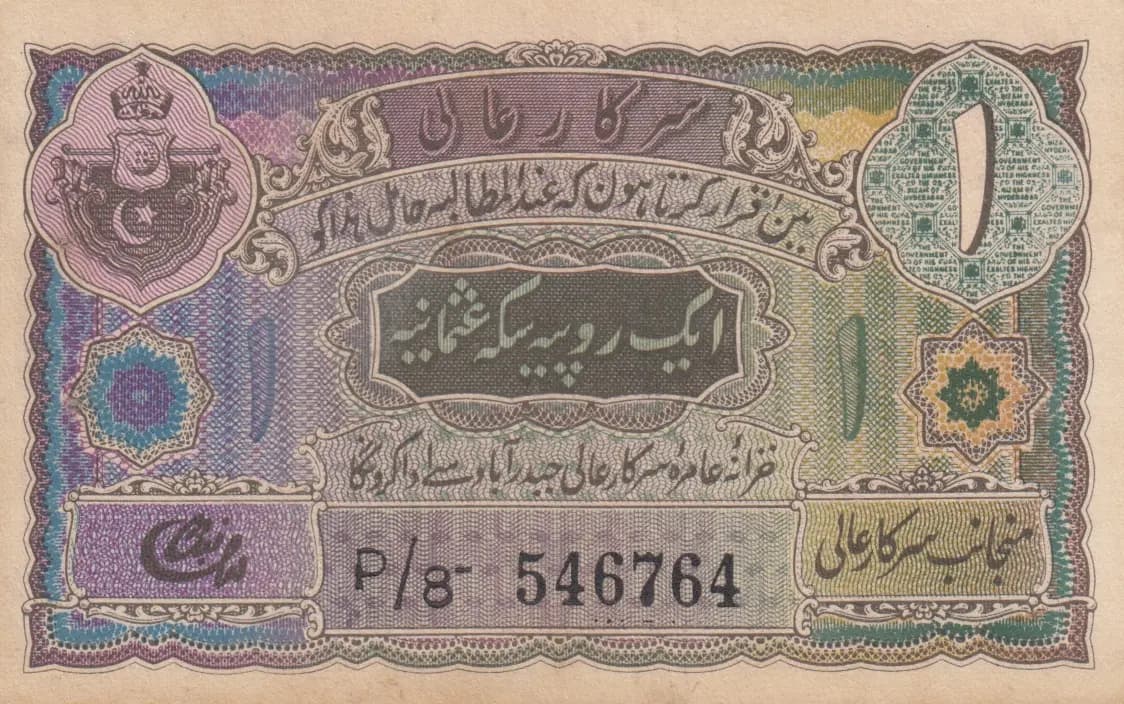
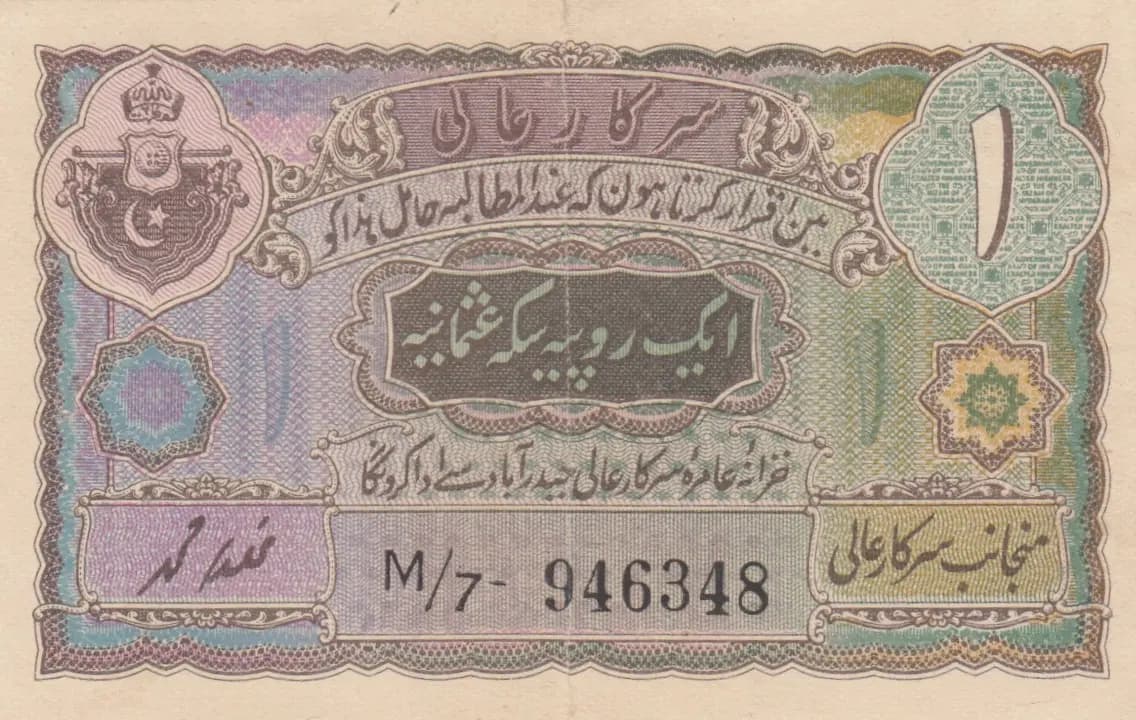
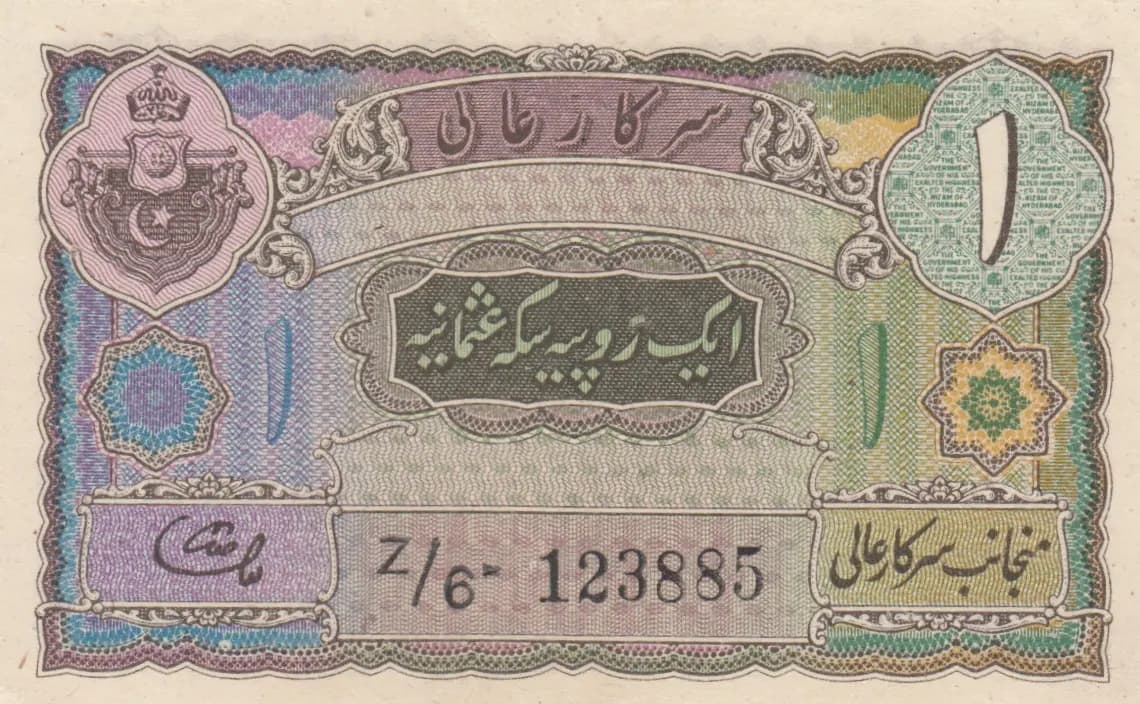
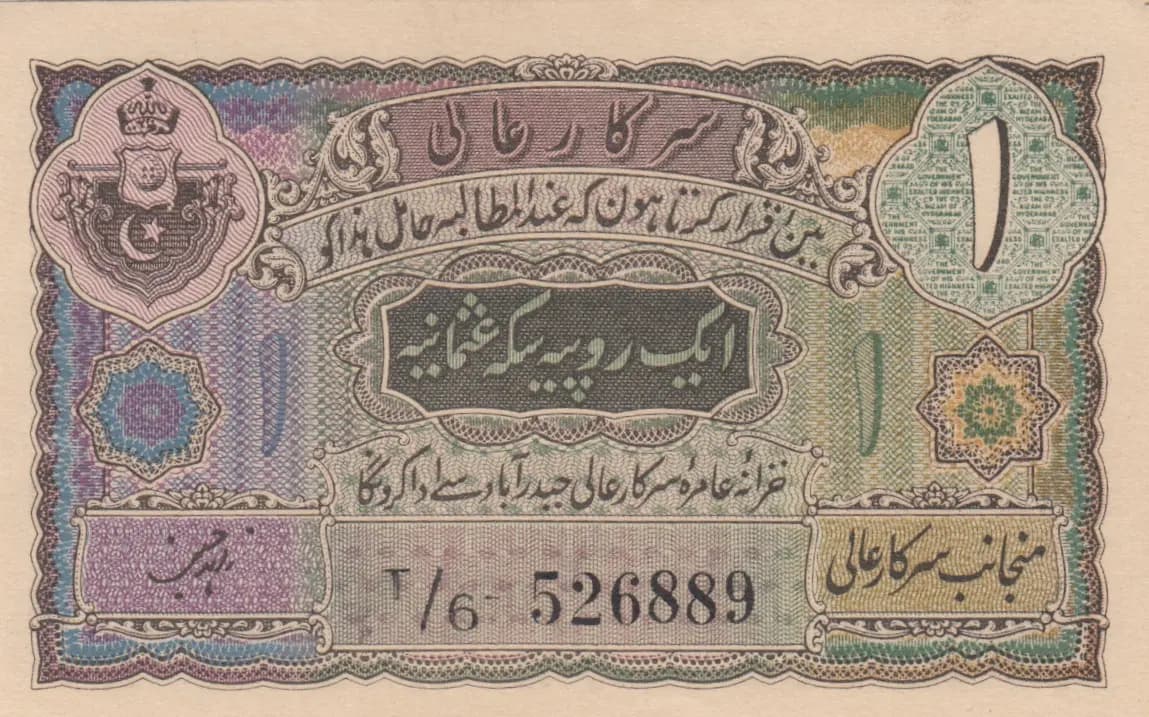
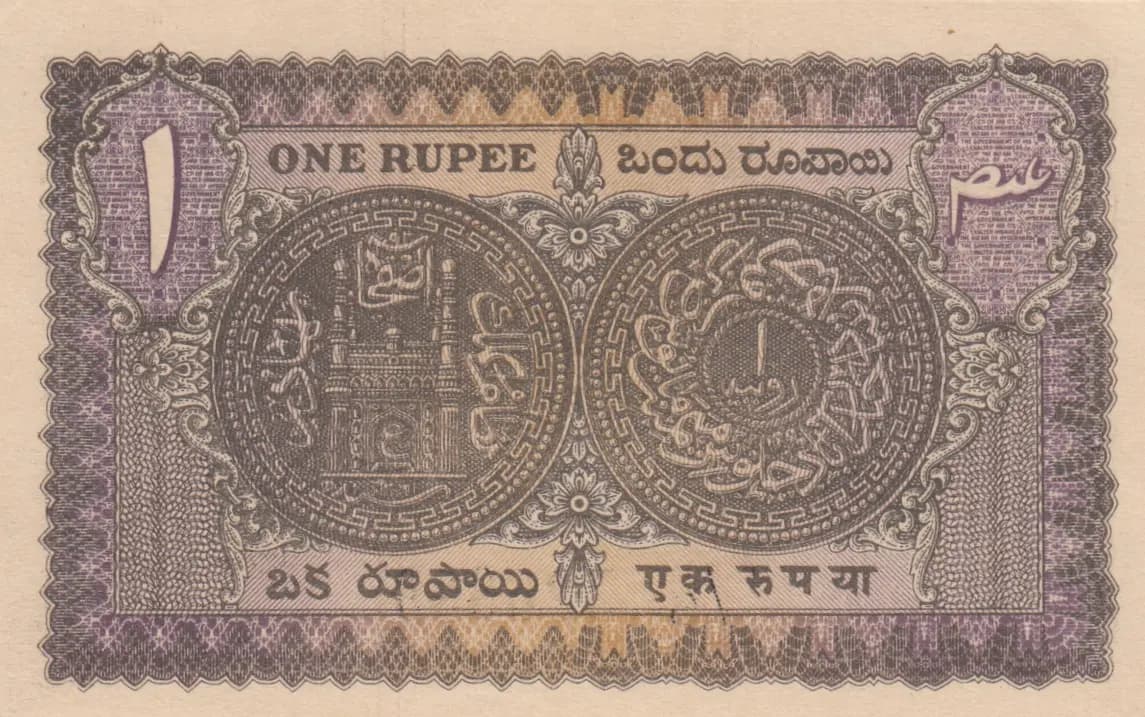
An exceptionally well-preserved example of the 1 Rupee from the Hyderabad State (Osmania System), issued during 1944-1946. This UNC-graded note displays the characteristic ornate Indo-Islamic design aesthetic with vibrant multi-colored printing on the obverse and distinctive dual-medallion reverse design. The note features fine line engraving throughout with minimal wear, slight natural aging, and clear impressions of all design elements including the Arabic/Urdu inscriptions and English denomination markings.
Common. The Hyderabad State 1 Rupee notes from 1944-1946 were issued in substantial quantities during the final years of the state's monetary sovereignty before Indian independence and currency unification in 1950-1951. While historically significant as examples of princely state currency, these notes are widely available to collectors in various grades. The UNC condition grade is relatively obtainable for this denomination and issue, as lower denominations typically survive in better condition due to less frequent circulation.
This banknote was issued by the princely state of Hyderabad during the final years of British colonial rule in India. The state maintained its own currency system under the Osmania nomenclature, as evidenced by the Arabic/Urdu inscriptions referencing 'Hyderabad Deccan' visible on the obverse. The design elements, including what appears to be architectural structures within the reverse medallions and the use of multiple regional script languages (Urdu, Kannada, and Devanagari), reflect Hyderabad's cosmopolitan character as a major South Indian principality with diverse linguistic and cultural communities.
The obverse features an ornate circular portrait medallion on the left depicting a ruler or high dignitary wearing traditional Mughal-influenced regalia and a crown, representing the state authority of Hyderabad. The design employs multi-lobed ornamental cartouches and frames typical of Indo-Islamic aesthetic principles. The reverse displays two large circular medallions with symmetric composition; the left medallion contains what appears to be the Charminar or another historic Hyderabad architectural monument, reflecting the state's cultural heritage. Fine decorative floral and geometric patterns, including intricate borders and corner ornaments, frame both sides. The color palette of pink/mauve, blue, green, brown, and cream creates visual hierarchy while maintaining the elegant formality expected of official state currency.
Front side: 'سرکار کراچی' (Government/State Authority), 'حیدرآباد دکن' (Hyderabad Deccan), and serial number 'T/6 526889'. Reverse side: 'ONE RUPEE' (English denomination), 'ಒಂದು ರೂಪಾಯಿ' (Kannada: One Rupee), and partial Devanagari script text. The denomination '1' appears in ornamental frames on both sides.
Intaglio engraving (line engraving) with multicolor printing, a standard security printing method for banknotes of this era. The fine line work visible throughout, complex ornamental details, and the clarity of the portrait medallion are characteristic of intaglio production. The multiple color layers suggest sequential printing passes, likely executed by the British-Indian security printers who handled princely state currency production during this period. The consistent registration and crisp impressions indicate professional security printing standards.
This specific example is identified as Pick S271d, representing a known variety within the 1944-1946 emission series. The serial number prefix 'T/6' indicates a particular printing batch or series within the issue. The note exhibits the characteristic features of the final Hyderabad State currency series, with the bilingual/multilingual inscriptions and standardized ornate design that remained consistent across the denomination variants of this issue. No obvious overprints, date variations, or signature varieties are visible on this specimen.