1 rupee 1946-47
About This Note
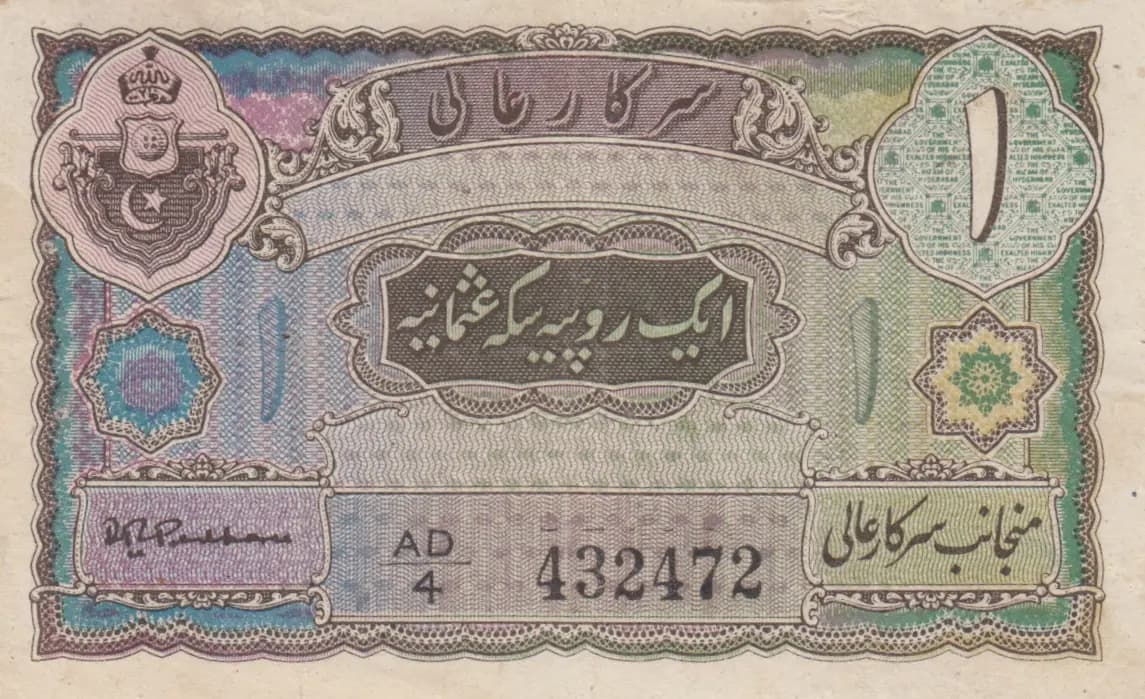
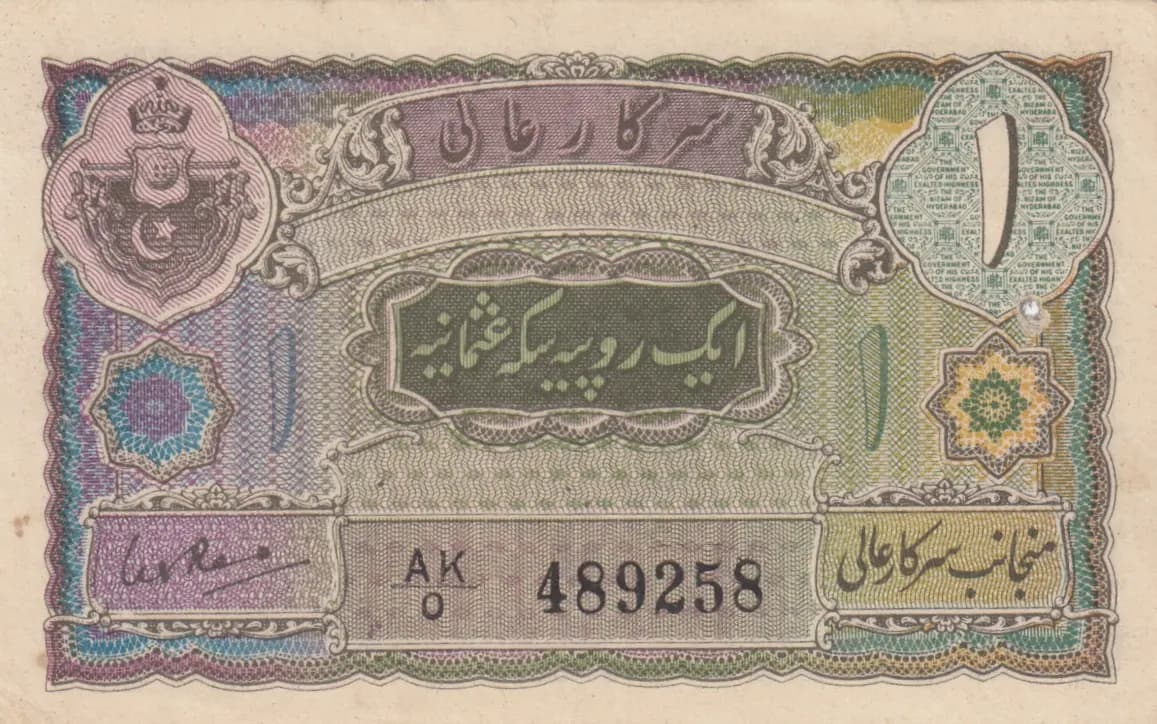
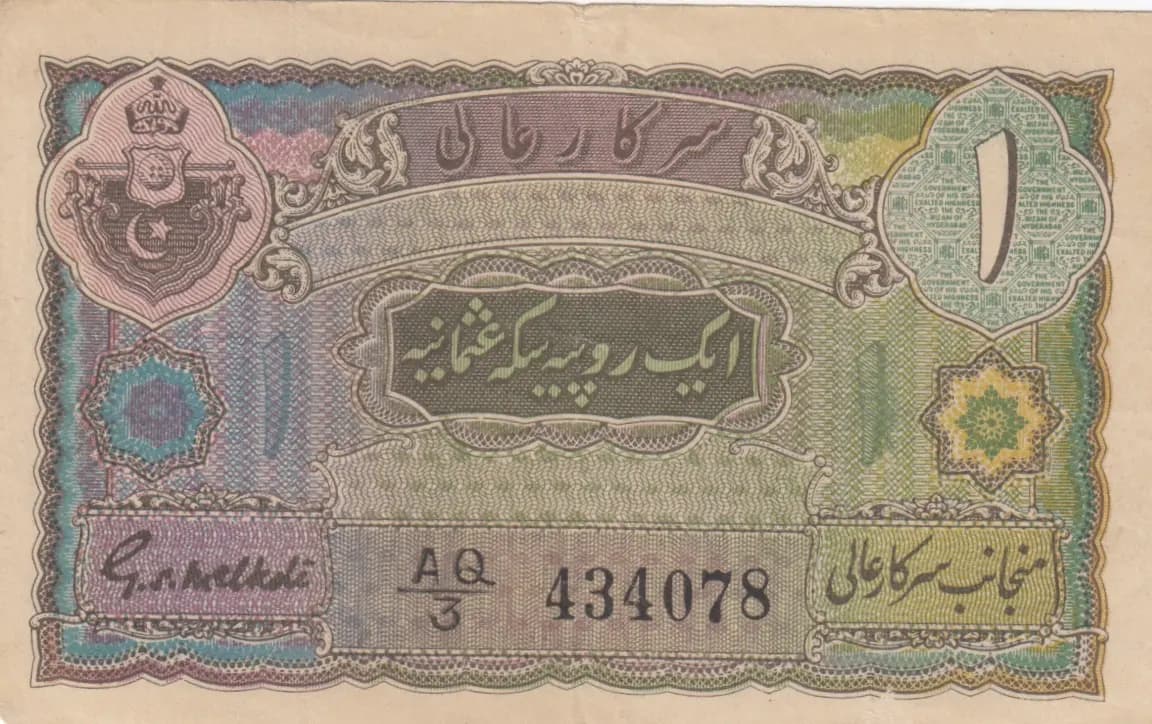
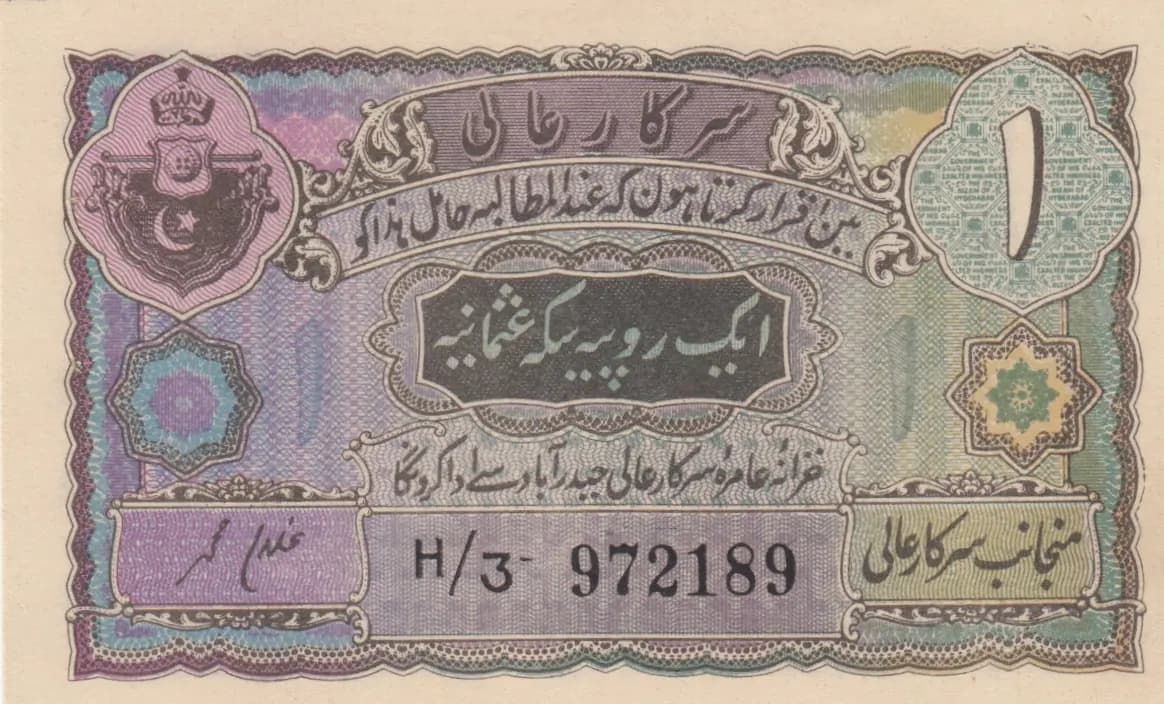
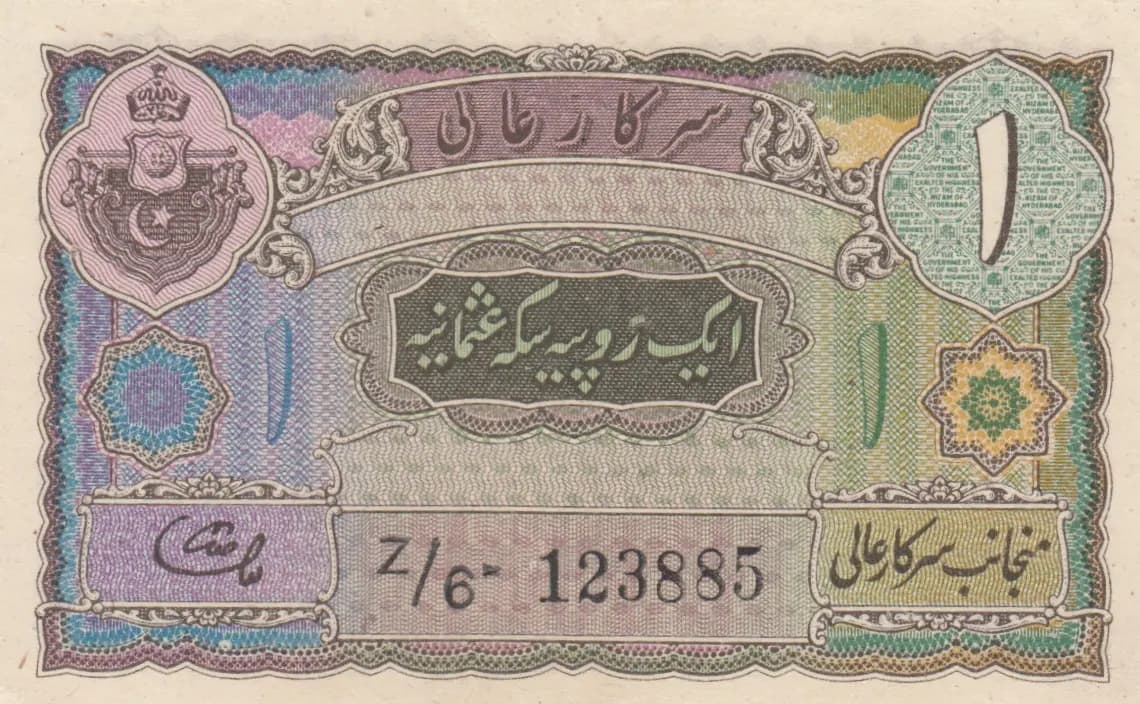
An exceptional example of the 1 Rupee Sicca Osmania banknote from the Hyderabad State period (1946-47), graded AU. This note showcases the intricate ornamental design characteristic of the Osmania system, featuring elaborate Persian/Urdu calligraphy, multi-color printing in purple, green, yellow, and brown tones, and sophisticated geometric security patterns. The note exhibits only light age-related foxing with no tears or creases, representing a well-preserved specimen of this historically significant regional currency.
Common. The Hyderabad State 1 Rupee Sicca Osmania notes from 1946-47 were issued in substantial quantities during the final year of princely state autonomy. While historically significant, these notes remain readily available in the collector market. The AU condition grade elevates its desirability above worn specimens, but does not change the fundamental commonality of the denomination and issue.
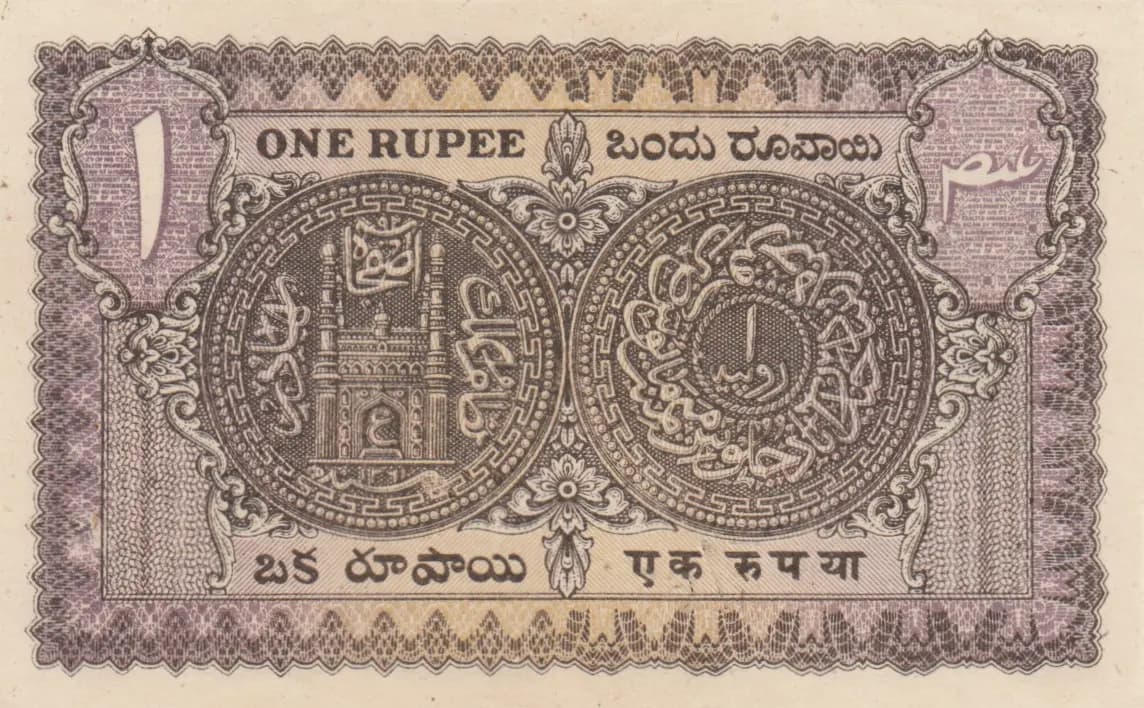
The Hyderabad State's Rupee Sicca Osmania banknotes represent the final period of princely state currency before India's independence and monetary unification in 1947. The presence of Urdu/Persian script and the architectural imagery (including the minaret in the reverse medallion, likely referencing Hyderabad's distinctive Islamic heritage) reflects the Nizam's cultural and administrative traditions. This 1946-47 dated note coincides with the twilight of Hyderabad's autonomous monetary system, making it a numismatic artifact of India's transition from fragmented princely currencies to unified national currency.
This banknote features a symmetrical, highly ornamental design typical of the Osmania system's aesthetic preferences. The obverse displays the State emblem or coat of arms in a circular ornamental cartouche in the upper left, with the denomination '1' similarly framed in the upper right. The center features a prominent calligraphic panel in Persian/Urdu script. The reverse presents two large circular medallions enclosed within Greek key pattern borders: the left medallion depicts what is likely the Charminar minaret or similar Hyderabad architectural landmark, while the right medallion contains geometric ornamentation. Both sides employ elaborate floral and geometric borders throughout, creating a frame of decorative flourishes consistent with high-security printing traditions of the period.
FRONT SIDE: '1' (English numeral), 'اک روپیہ' (Urdu: One Rupee), 'ರೂ' (Kannada: Rupee abbreviation), 'Z/6' 1233885' (Serial number). REVERSE SIDE: 'ONE RUPEE' (English), 'ಒಂದು ರೂಪಾಯಿ' (Kannada: One Rupee), 'راج کپیہ' (Urdu/Persian: Rupee), '1' (numeral). The multilingual inscriptions in English, Urdu, Persian, and Kannada reflect Hyderabad's diverse linguistic and administrative character.
Intaglio engraving (recess printing), evidenced by the fine line work, intricate geometric patterns, and the depth of impression visible in the ornamental designs. The security features include elaborate engraved patterns, fine-line security printing throughout borders and medallions, and precise calligraphic reproduction. The Osmania banknotes of this period were typically produced by established security printers; this note likely utilized British or Swiss security printing expertise common to Indian princely state currency production.
Pick catalog number P-S272a indicates this is variety 'a' of the 1 Rupee Sicca Osmania series. The serial number format 'Z/6' 1233885' and the specific color combination (purple/lavender primary with green, yellow, and brown accents) are consistent with documented 1946-47 issue characteristics. No overprints or significant varieties are observed on this specimen.