1 rupee 1950-53
About This Note
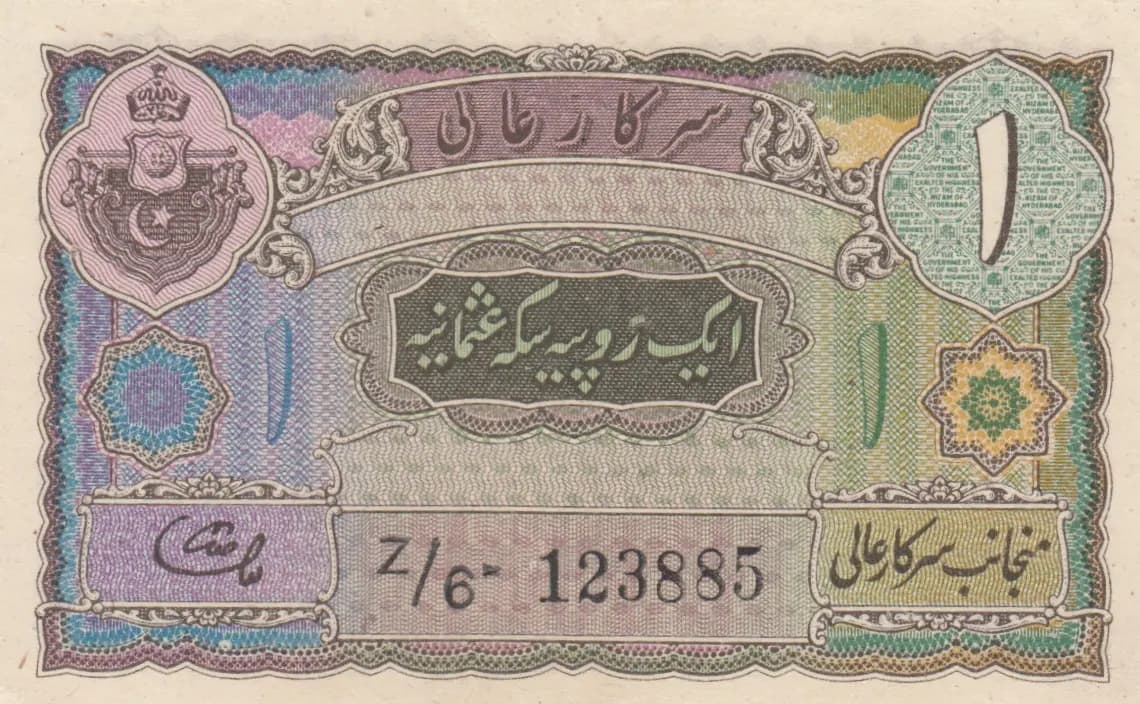
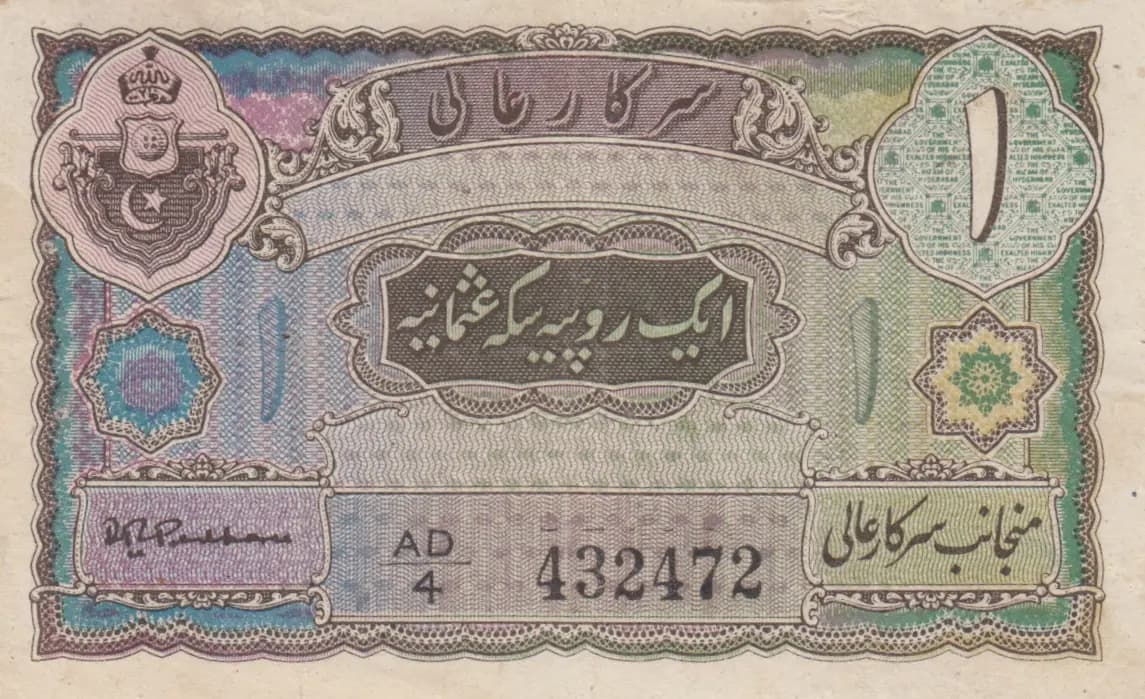
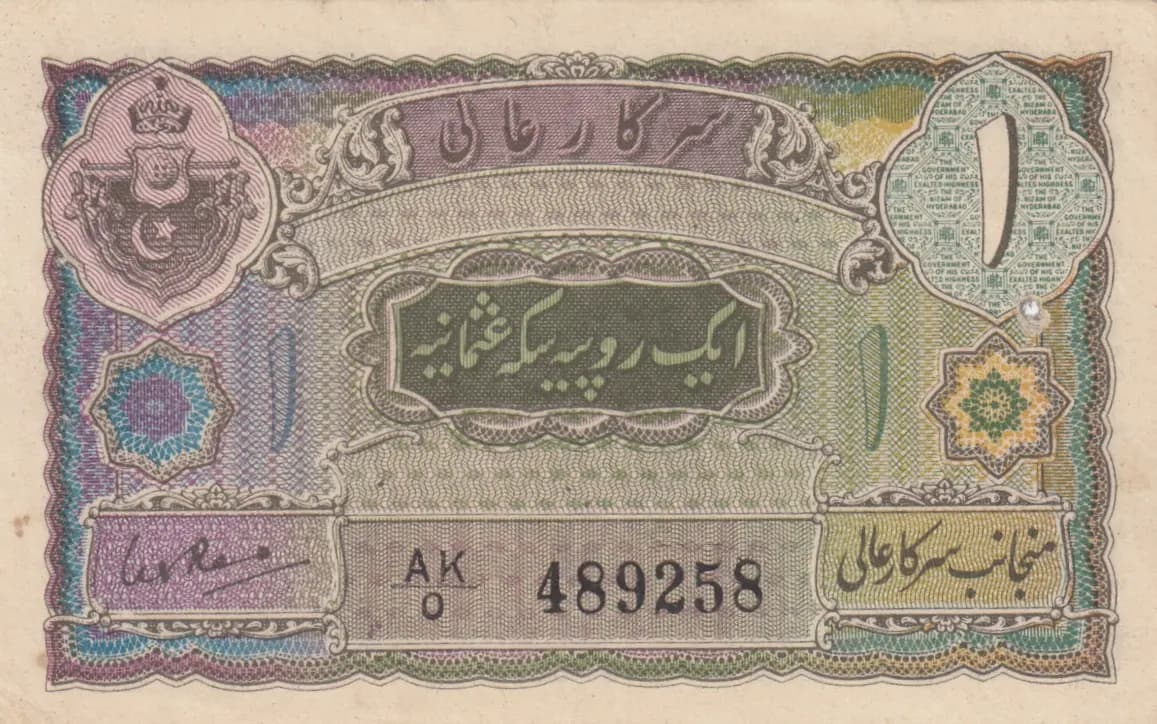
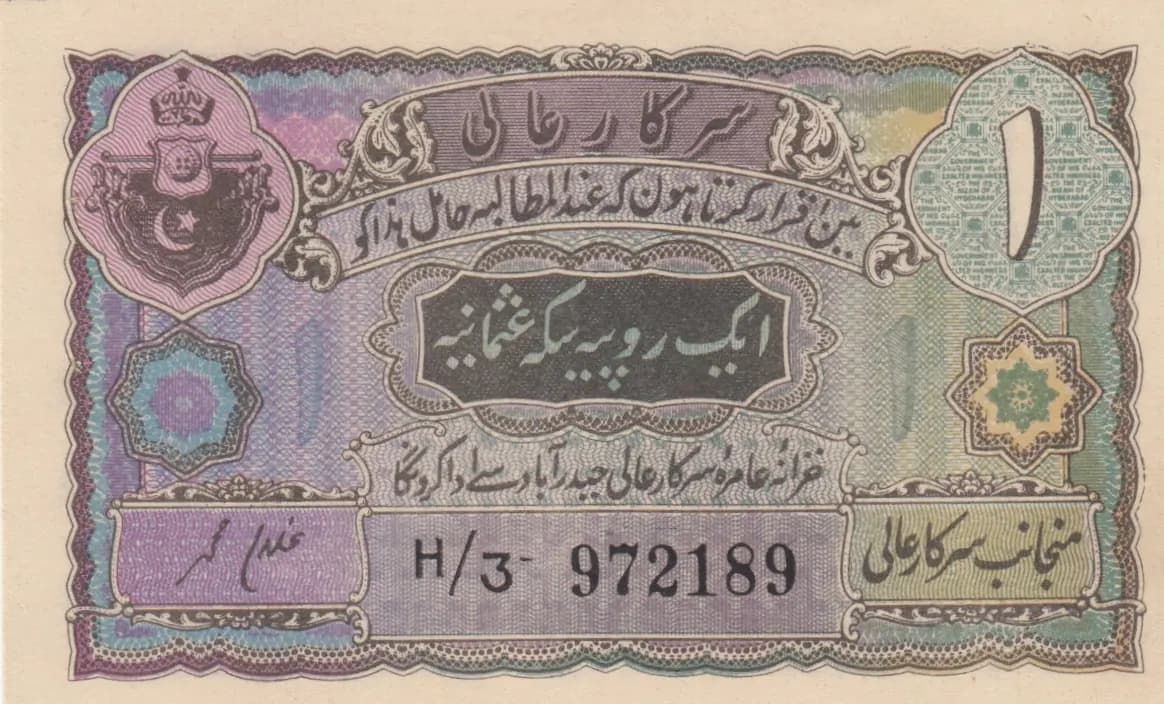
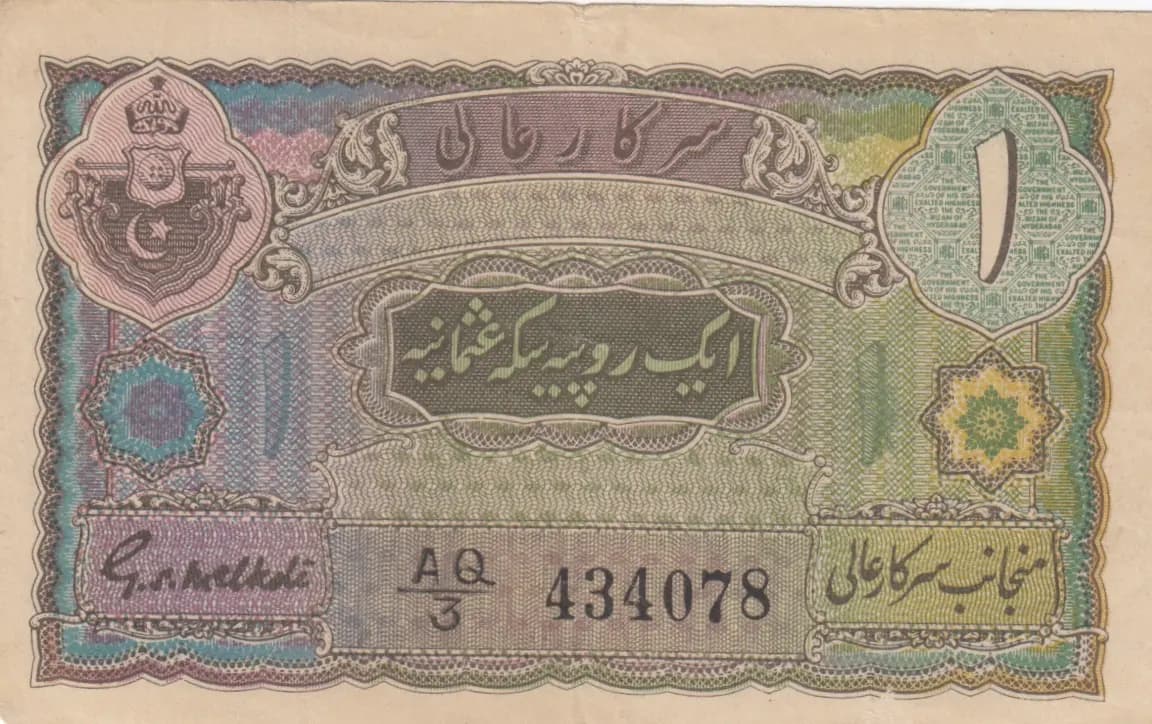
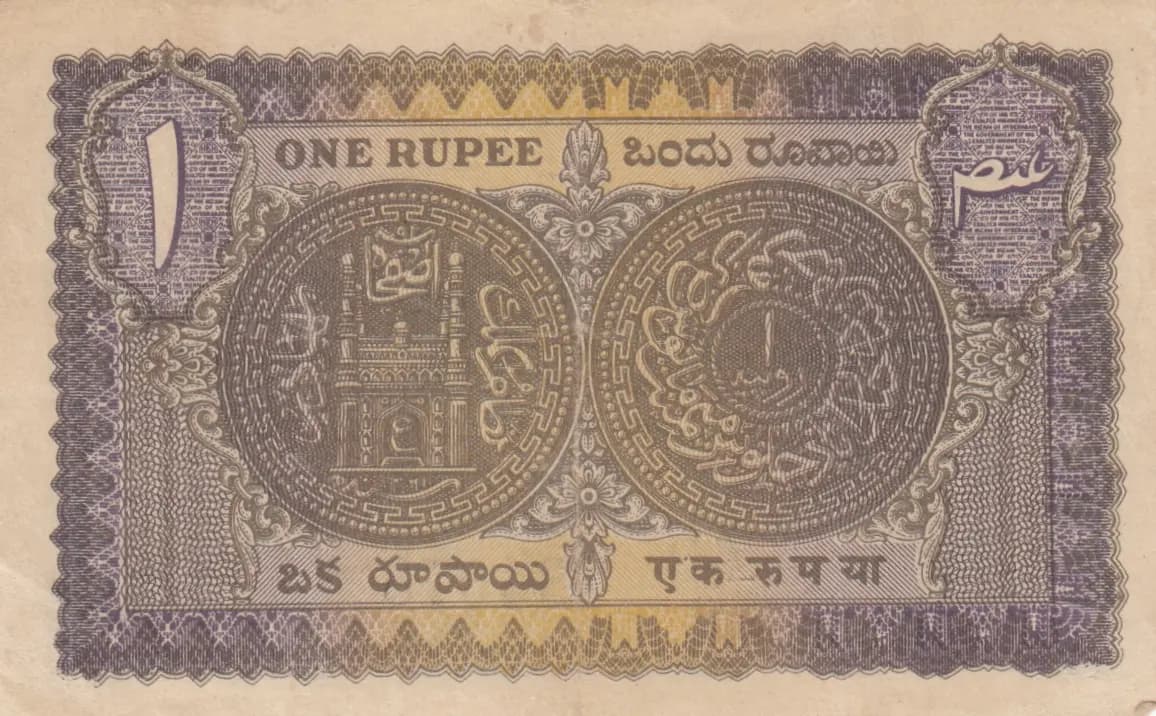
This 1 Rupee note from the Hyderabad State currency system (1950-53) exemplifies the ornate Indo-Islamic design aesthetic of early post-independence India. The obverse features elaborate pink and green decorative paneling with a state coat of arms, while the reverse presents two striking circular medallions depicting an architectural landmark and heraldic lion within geometric borders. In VF condition, the note displays expected age-related patina and foxing consistent with a well-circulated 1950s banknote, yet retains sharp engraved detail and excellent structural integrity.
Common. The Hyderabad State 1 Rupee (1950-53) was issued during a three-year period with substantial print runs to supply a population of several million. While Hyderabad State currency is historically interesting and less commonly encountered than Reserve Bank of India notes, the denomination and timeframe indicate widespread circulation and typical survival rates. VF condition examples appear regularly in numismatic commerce without premium pricing, suggesting this Pick number remains readily available to collectors.
The Hyderabad State rupee represents a unique numismatic window into the brief period following Indian independence when princely states maintained autonomous currency systems before integration into the unified Indian rupee. The temple architecture depicted in the reverse medallion likely represents a significant Hyderabad landmark, while the heraldic lion reflects the state's royal heritage and sovereignty. The multilingual inscriptions in Urdu, Kannada, and Hindi on the reverse demonstrate the linguistic pluralism of the Hyderabad region during this transitional era.
The obverse features an elaborate ornamental composition centered on a large oval cartouche with elaborate scrollwork and floral borders in cream, pink, and green. A heraldic coat of arms or state emblem appears in a pink shield on the left side, representing Hyderabad's princely authority. The right side displays an intricate green geometric ornamental design with repeating patterns. The reverse presents the denomination within two prominent circular medallions: the left medallion depicts an ornate architectural structure (likely the Charminar or similar Hyderabad monument) rendered in detailed engraving, while the right medallion features a heraldic lion figure symbolizing royal authority. Both medallions are framed by geometric Greek key patterns and decorative borders in purple and cream tones. The overall design reflects the sophisticated Indo-Islamic artistic tradition of Hyderabad's court culture.
Front (Obverse): 'ہندوستان' (Urdu: Hindustan); Serial number 'AQ 3 4340786' (English). Back (Reverse): 'ONE RUPEE' (English); 'ಎಂದು ರೂಪಾಯಿ' (Kannada: One Rupee); 'एक रुपया' (Hindi: One Rupee).
Intaglio engraving (recess printing), a security-intensive method characteristic of early 20th-century Indian state currency. The fine line work, crosshatching patterns, and intricate geometric details visible throughout both sides confirm steel plate engraving. The precision of the ornamental borders and medallion frames indicates production by a specialized security printer; the Hyderabad State notes of this period were typically printed by Thomas De La Rue or similar British security printers, though specific printer attribution for P-S272g requires reference to production records.
Serial number prefix 'AQ 3' indicates this specific variety within the P-S272g issue. Hyderabad State notes of this period exist with various serial number prefix combinations (AQ, AR, AS, etc.), which may represent different printing batches or series, though no formally cataloged major varieties are documented for this denomination. The specific signature authority and exact printing dates within the 1950-53 window would require comparison with reference collections to identify minor varieties.