1 rupee 1941-45
About This Note
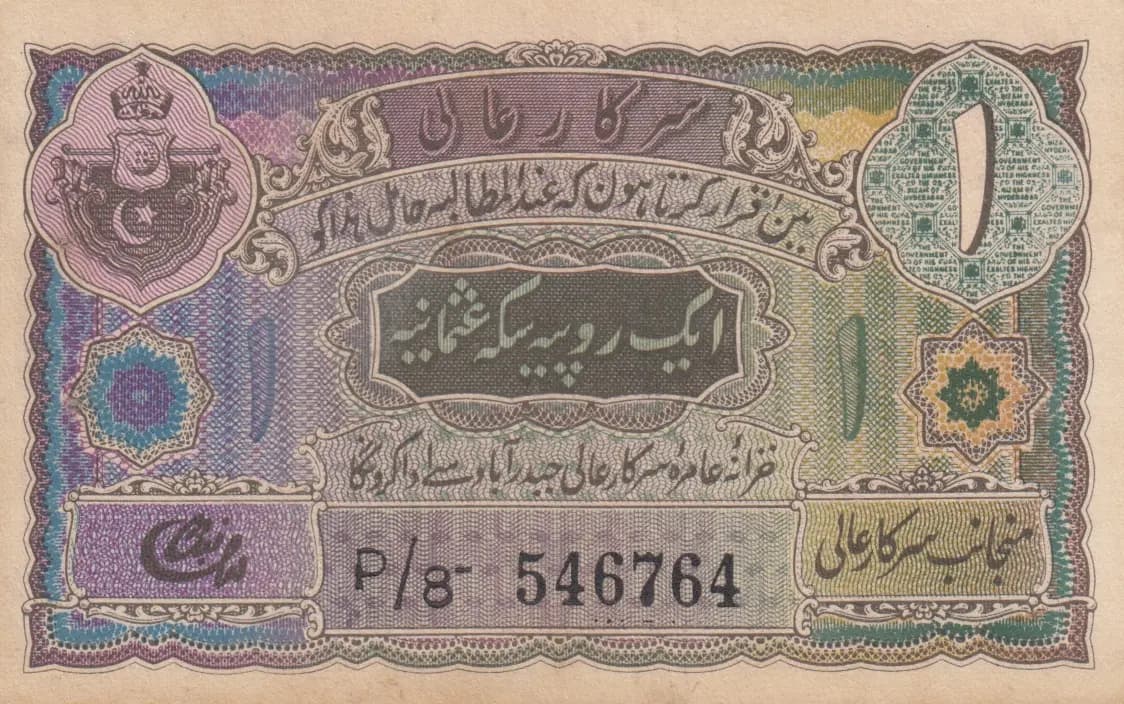
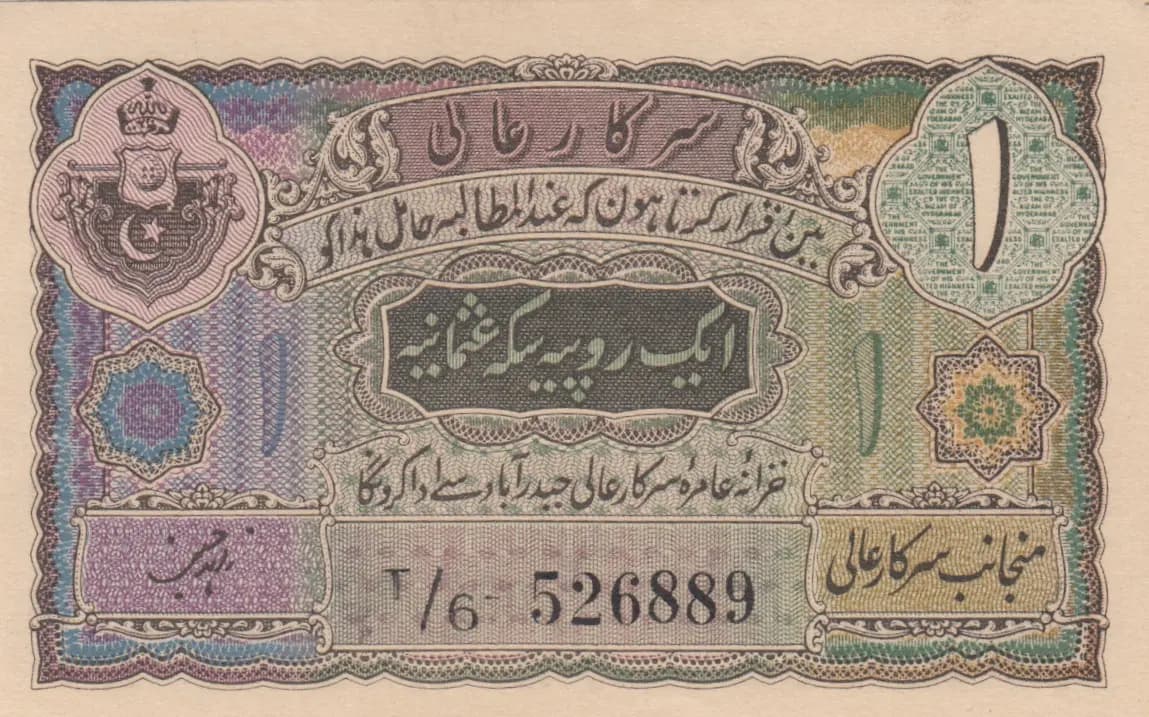
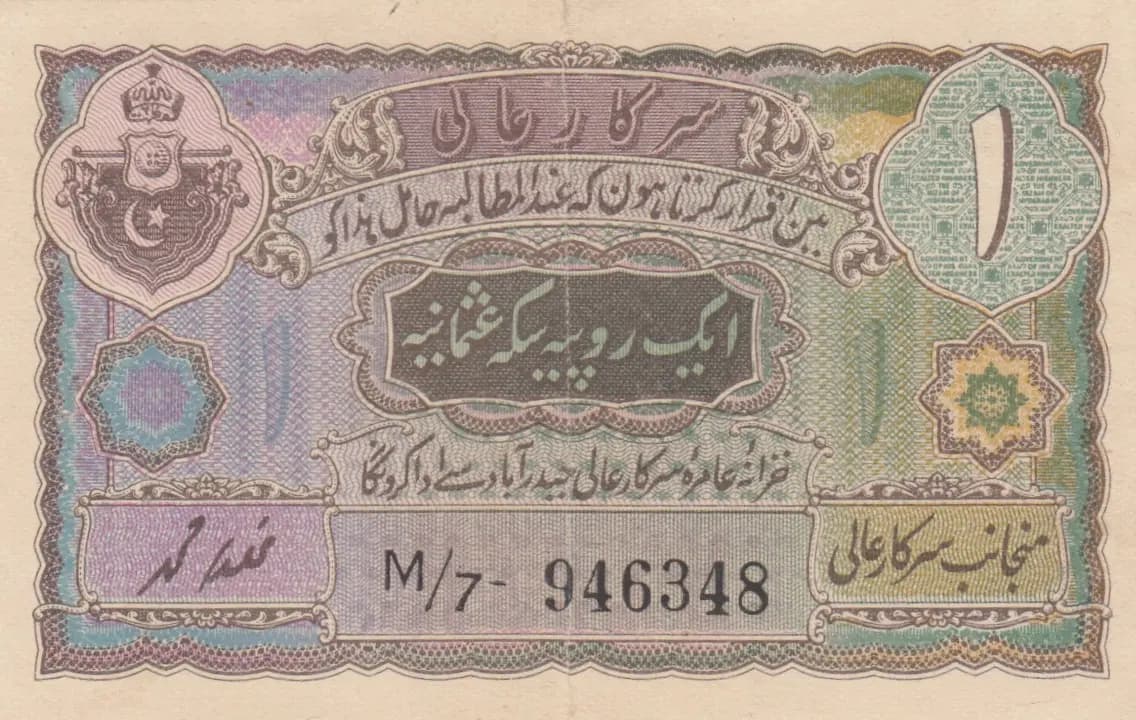
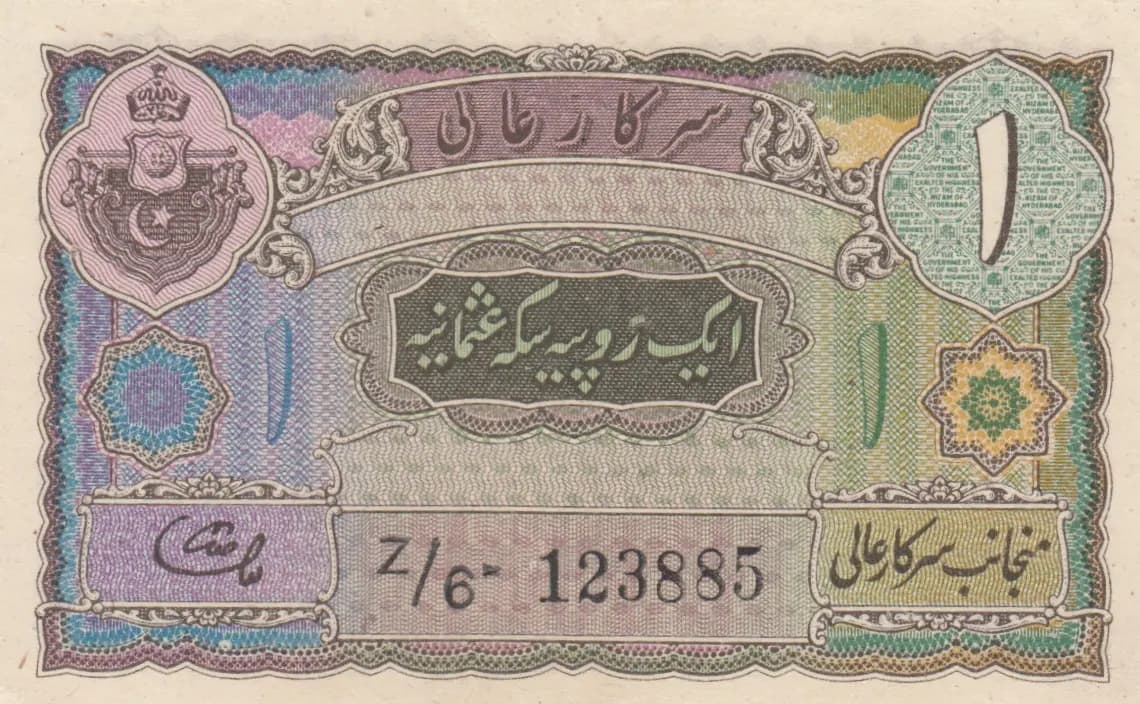
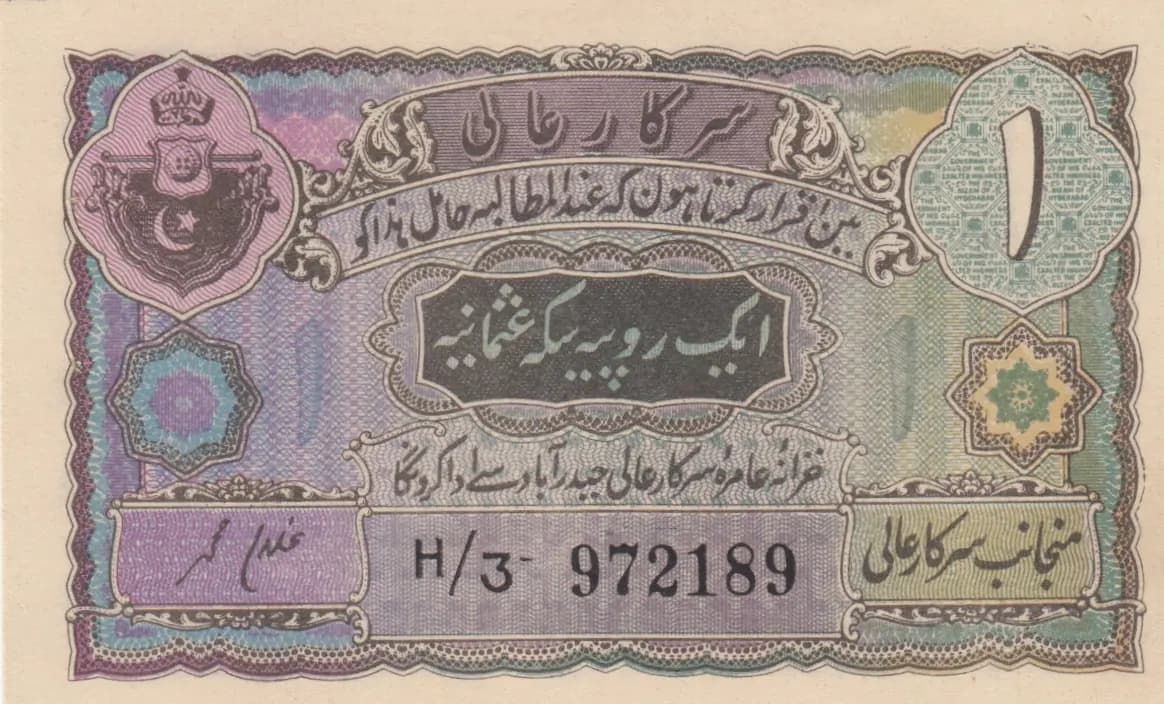
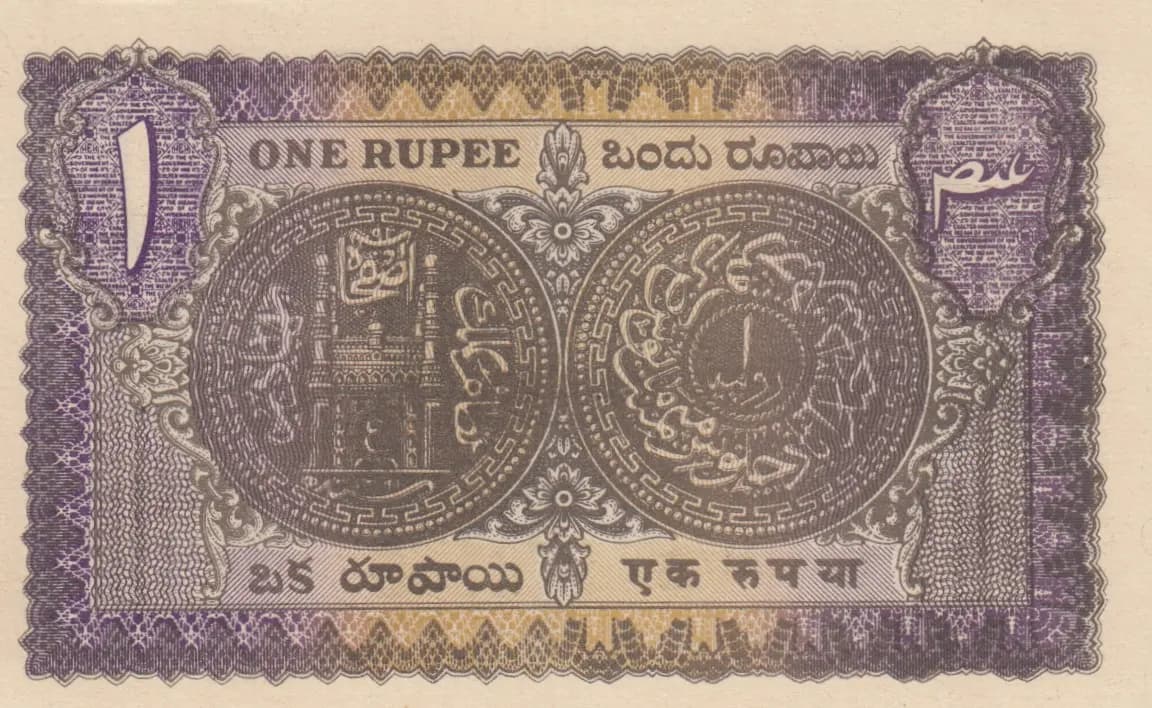
An attractive UNC example of a 1 Rupee banknote from the Hyderabad State during the final years of princely state currency (1941-45). The note displays the characteristic ornate Indo-Islamic design aesthetic of Hyderabad, with vibrant purple, green, and cream coloration and elaborate geometric and floral borders on both sides. The reverse features two impressive circular medallions depicting architectural landmarks of the Hyderabad state, making this a notable example of numismatic art from pre-independence India.
Common. While Hyderabad State currency is of historical significance to collectors of Indian numismatics, the 1941-45 1 Rupee notes (Pick S271c) were issued in substantial quantities during the five-year period and represent the most readily encountered denomination from this series in the secondary market. UNC examples are desirable but not scarce, and this denomination appears regularly in specialized auctions and dealer inventories at modest valuations consistent with common-grade historical currency.
This 1 Rupee Sicca note was issued during World War II under the Nizam of Hyderabad's monetary authority, representing the final decade of the princely state's independent currency system before absorption into the Indian Union in 1948. The architectural imagery on the reverse—featuring what appears to be significant Hyderabadi landmarks—reflects the state's cultural heritage and Islamic architectural traditions under the Nizam's rule. The bilingual inscriptions (English, Persian/Urdu, and regional scripts) illustrate the cosmopolitan character of Hyderabad State's administration during this transitional period.
The front design features an elaborate ornamental composition with a strong Indo-Islamic aesthetic characteristic of Hyderabad State currency. The dominant purple, green, and cream color scheme is framed by intricate geometric and floral borders incorporating traditional Islamic architectural ornamentation. The upper left displays what appears to be the Nizam's coat of arms or state seal, with a crown symbol and star-like emblem in the center-right area. A decorative oval cartouche in the upper right contains the denomination '1'. The reverse displays the note's most striking feature: two large circular medallions within ornate borders. The left medallion depicts an important Hyderabadi architectural landmark—likely the Charminar or another significant mosque/palace structure with domed and minaret features characteristic of Hyderabad's skyline. The right medallion contains elaborate ornamental Islamic geometric patterns and floral motifs. The medallions are connected by a central decorative element (possibly a lotus) and surrounded by Greek key pattern borders and botanical designs in the corners. The overall design demonstrates the sophisticated engraving standards maintained by the Hyderabad State printing authority.
Front side: Serial number 'H/3 972189' in English/numeric format; Persian/Urdu script in upper portion indicating denomination and issuing authority (Hyderabad State Bank or equivalent); central rectangular panel contains Persian/Urdu text referencing the issuing institution; lower sections contain Persian/Urdu script for signatures or authorization marks. Back side: 'ONE RUPEE' in English; Kannada script at top indicating denomination in local script; Persian/Urdu text on left side (partially legible); regional Indian script (Kannada or Telugu) at bottom for denomination or institutional reference. Complete transliteration of Persian/Urdu portions not fully legible from image quality but all appear to be standard denomination and authority declarations consistent with Hyderabad State currency.
Steel engraving/intaglio printing, the standard security printing method for the Rupee Sicca Osmania notes. The extremely fine-line work visible throughout both the front decorative borders and the reverse medallions, combined with the complex geometric and architectural detail work, is characteristic of high-quality engraved banknote production. The security printing was executed by the Hyderabad State's authorized currency printer, with the intricate border patterns and medallion designs serving dual purposes as both aesthetic and anti-counterfeiting security features. The impression depth and clarity of the fine-line engraving visible in the UNC specimen indicates professional execution on currency-grade paper stock.
This specimen carries serial number prefix 'H/3' with number 972189, indicating production from the later stages of the 1941-45 series. The Rupee Sicca Osmania 1 Rupee notes (Pick S271c) are known to exist with various serial number prefixes and signature varieties across the 1941-45 production period. The notation '(1)' in the Pick catalog reference S271c(1) indicates this is the first documented variety within the 1 Rupee 1941-45 classification. Collectors should note that signature varieties and serial prefix variations exist across the issue period, though the core design remains consistent as illustrated in this example.