500 000 adopengö 1946
Market Prices
39 salesAbout This Note
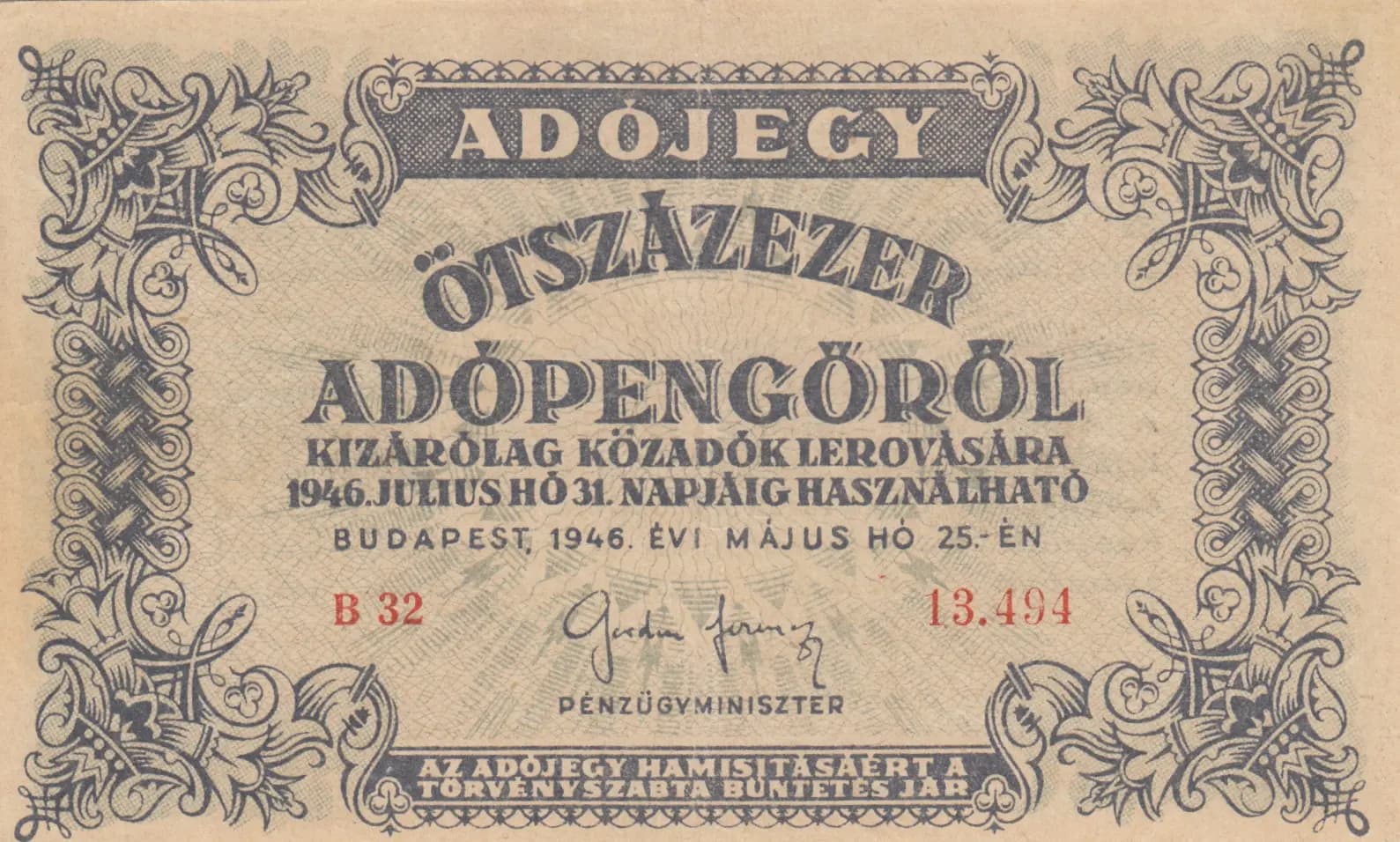
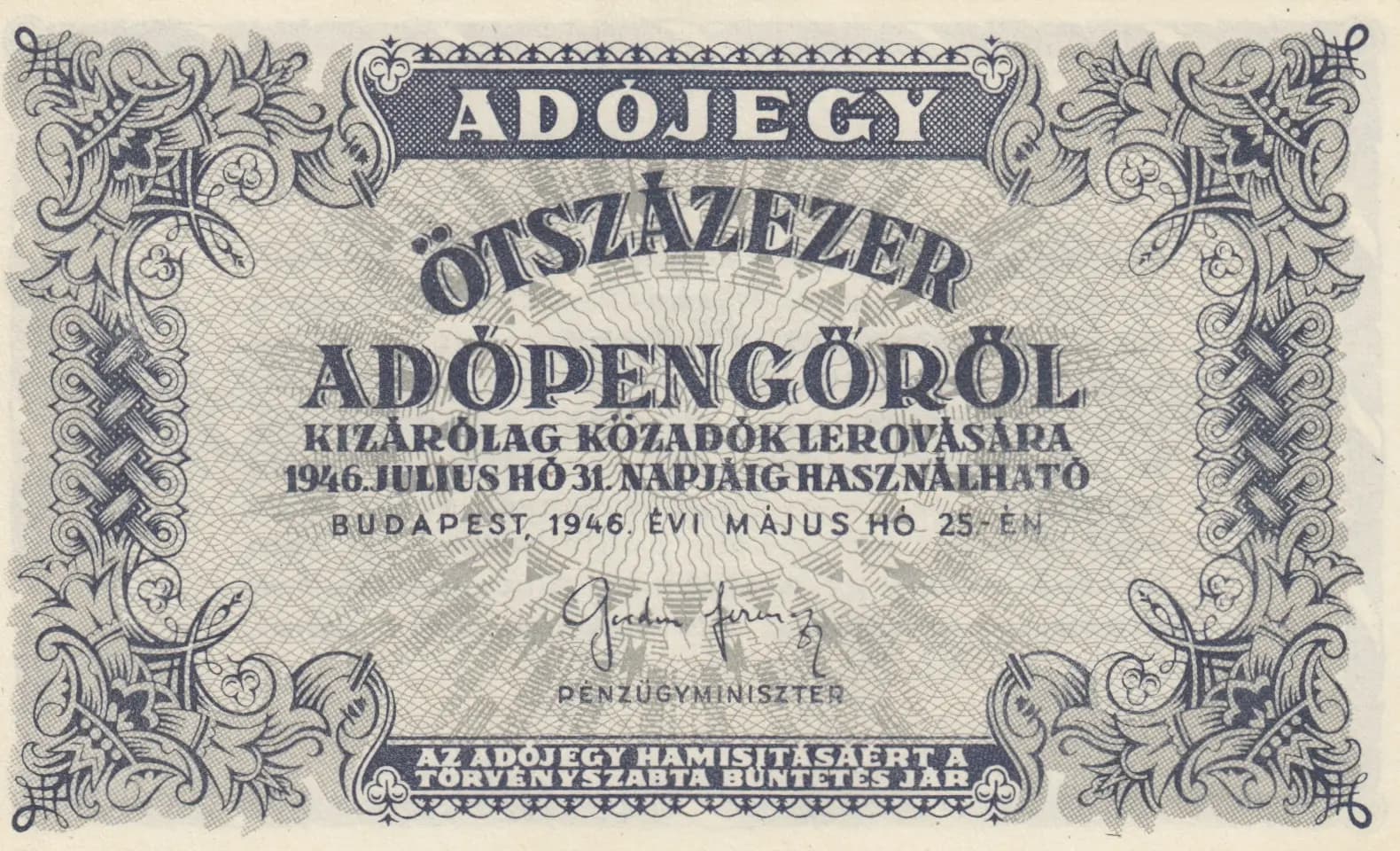
This is a Hungarian 500,000 Adopengő tax certificate from May 25, 1946, graded AU, representing a fascinating artifact from Hungary's post-WWII hyperinflation period. The note features exceptional printing quality with intricate ornamental borders, fine crosshatch security patterns, and sharp typography throughout, appearing virtually uncirculated with no visible wear, tears, or handling marks. This specific issue type—a tax payment certificate rather than conventional currency—makes it a notable collectible for those studying Hungary's emergency fiscal measures during the economic crisis of 1945-1946.
Common. This tax certificate is a common issue within the Adopengő series, with substantial production numbers documented in the catalog and confirmed by eBay auction data showing consistent sales in the $1-$6 range across multiple conditions and time periods. The 2016 catalogue value of $8 for UNC specimens and the steady market history indicating numerous sales at modest prices all point to ready availability. While historically significant as a hyperinflation artifact, these tax certificates were issued in large quantities to facilitate tax collection and have survived in reasonable numbers, making individual specimens readily obtainable for collectors.
The Adopengő (tax pengő) was an emergency currency instrument issued by Hungary's Finance Ministry during the severe hyperinflation crisis that followed World War II. These tax certificates were specifically designed to collect public taxes in a controlled manner, with strict expiration dates (this example valid only until July 31, 1946) and usage restrictions, reflecting the government's desperate attempt to stabilize finances and collect revenue during economic chaos. The formal legal language and ministerial signature on the note underscore the official nature of this fiscal instrument, which served as both a tax collection tool and a form of quasi-currency in the final months before the introduction of the Forint in August 1946.
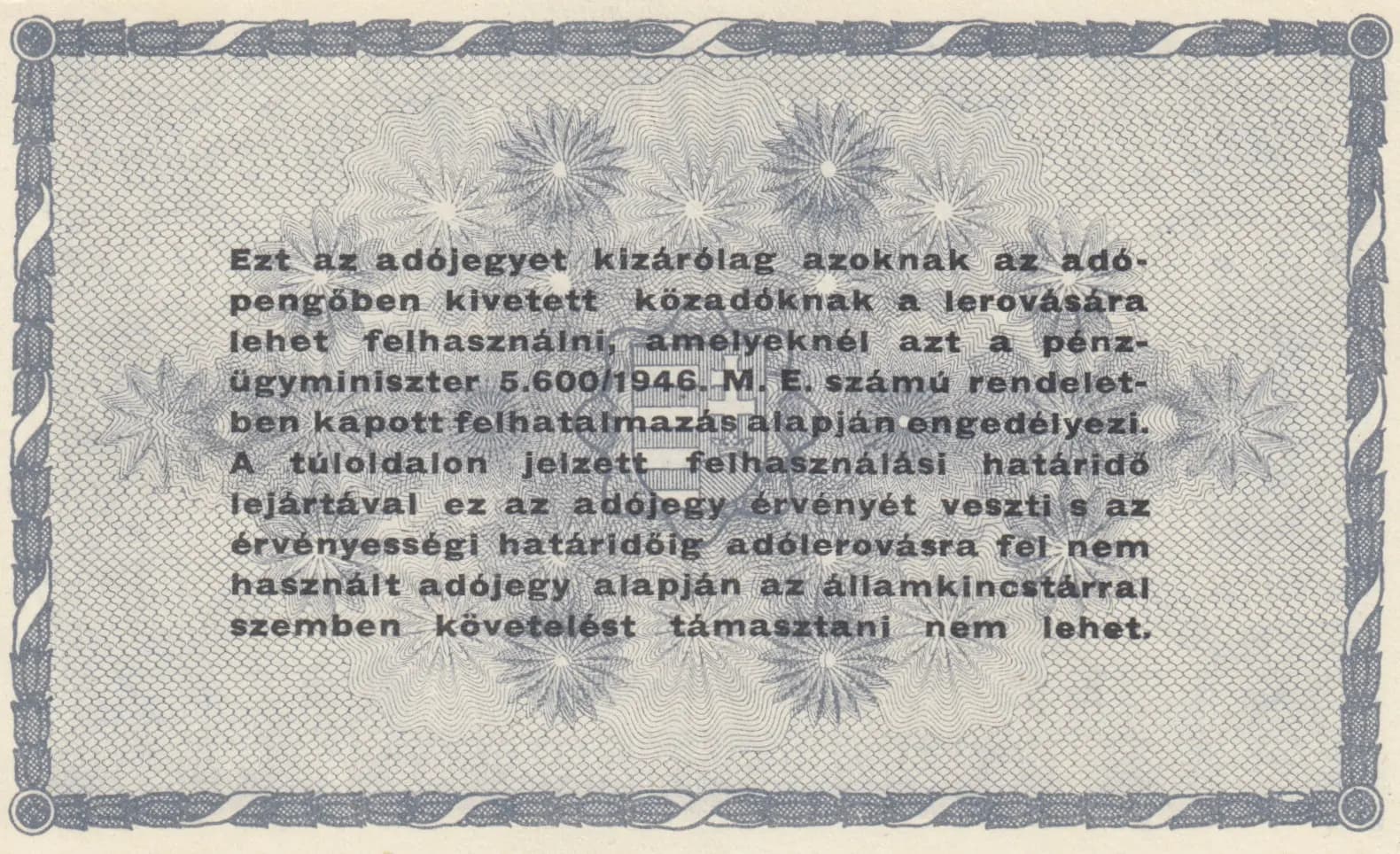
This tax certificate features a formal, symmetrical design characteristic of official Hungarian fiscal documents from 1946. The front displays a decorative banner containing 'ADÓJECTY' at the top center, with the denomination and purpose statement arranged symmetrically below. The design incorporates elaborate ornamental scrollwork and floral patterns in the corners and along the left and right borders, typical of security printing from this era. The background employs fine geometric crosshatch and dot-matrix patterns as a security measure against counterfeiting. The reverse side features an equally formal layout with repeating star or flower-motif patterns arranged in a regular grid, providing additional security patterning and visual interest. The note is printed in dark blue/navy ink on off-white or cream paper, with black text and signatures. No watermark or serial number is present, consistent with its nature as a tax payment certificate rather than circulating currency.
FRONT SIDE: 'ADÓJECTY' (Tax Certificate); 'ÖTSZZÁZEZED ADOPENGÖROL' (Five Hundred Thousand Tax Pengő); 'KIZÁRÓLAG KÖZADÓKLEROVÁSÁRA' (Exclusively for Public Tax Payment); '1946 JÚLIUS HÓ 31 NAPJAIG HASZNÁLHATÓ' (Valid until July 31, 1946); 'BUDAPEST 1946 ÉVI MÁJUS HÓ 25-EN' (Budapest, May 25, 1946); 'PENZÜGYMINISZTER' (Finance Minister); 'AZ ADÓJEGY HAMISITÁSÁÉRT A TÖRVÉNYSZÉK BÜNTETÉSÜL' (For counterfeiting this tax stamp the court sentences [penalties follow]). BACK SIDE: Extended legal text stating 'This tax certificate may be used exclusively for the payment of public taxes levied in adopengő, authorized by Finance Minister decree 5.600/1946 M.E. Upon expiration of the usage deadline indicated on the note, this tax certificate loses its value, and after the validity period expires, no claim can be made against the state treasury for unused tax certificates.'
This note was produced using intaglio (engraved) printing, evidenced by the fine detail visible in the ornate borders, the crisp impression of the security patterns, and the sharp definition of text and signatures. The crosshatch and dot-matrix background patterns, along with the intricate floral and scrollwork designs, are characteristic of security engraving techniques employed by Hungarian state printers during this period. The regular, uniform grid pattern of the reverse design further suggests professional engraving. The specific printer for Pick P-139b is the Penzügyminiszterium (Finance Ministry) printing facility in Budapest.
Pick P-139b represents the standard variety of the 500,000 Adopengő tax certificate issued May 25, 1946. This specific Pick designation (b variant) likely indicates a minor printing or signature variety within the 500,000 denomination series. The note bears a handwritten ministerial signature, and the precise identification of signature varieties would require comparison with other specimens. No serial numbers are present on this issue. The valid-until date of July 31, 1946 is fixed on all specimens of this issue type. Collectors should note that different denominations of Adopengő exist (with corresponding different Pick numbers), and signature varieties may exist within denominations, though detailed variety documentation for this specific hyperinflation currency is limited in standard references.