500 000 adopengö 1946
Market Prices
7 salesAbout This Note
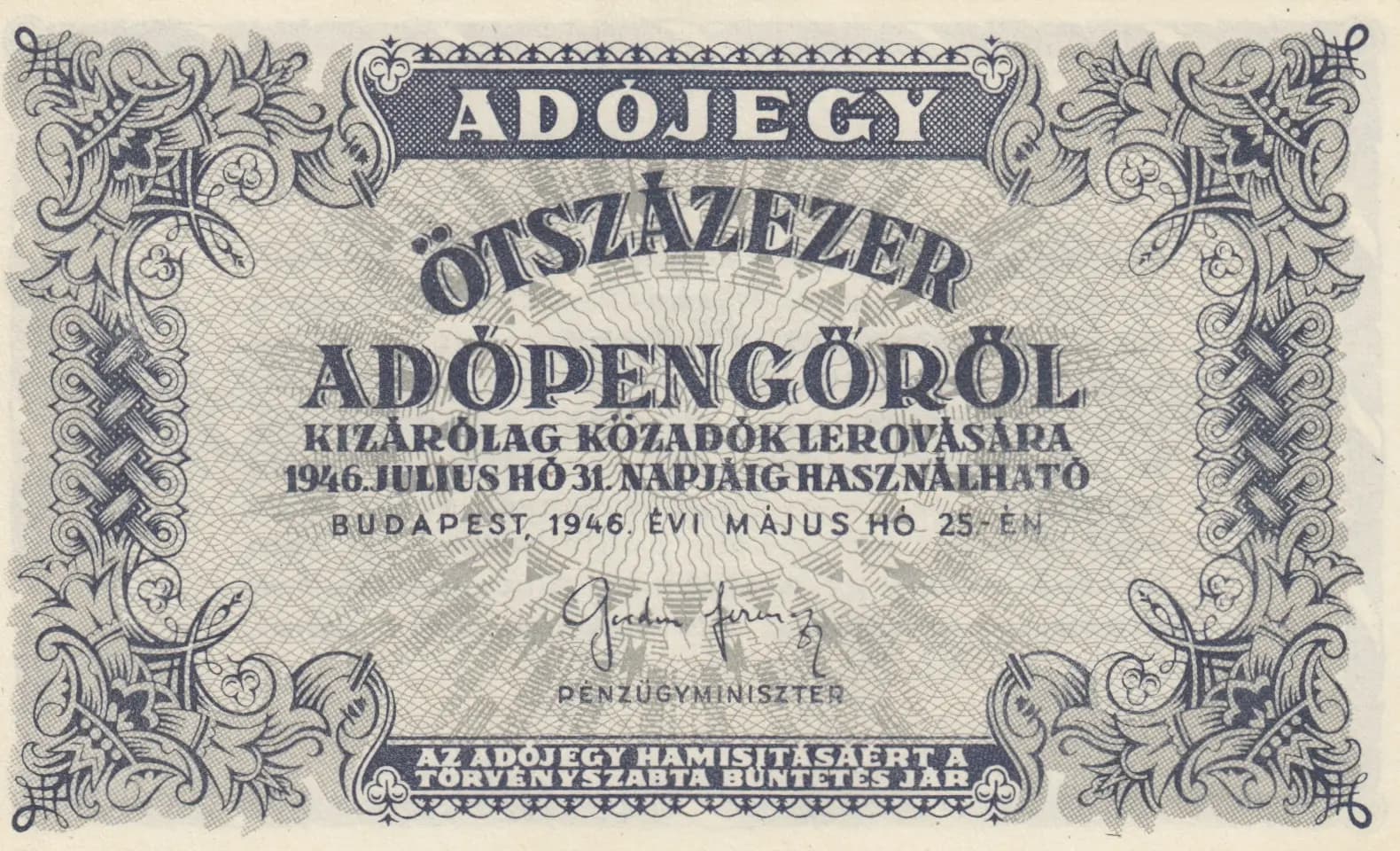
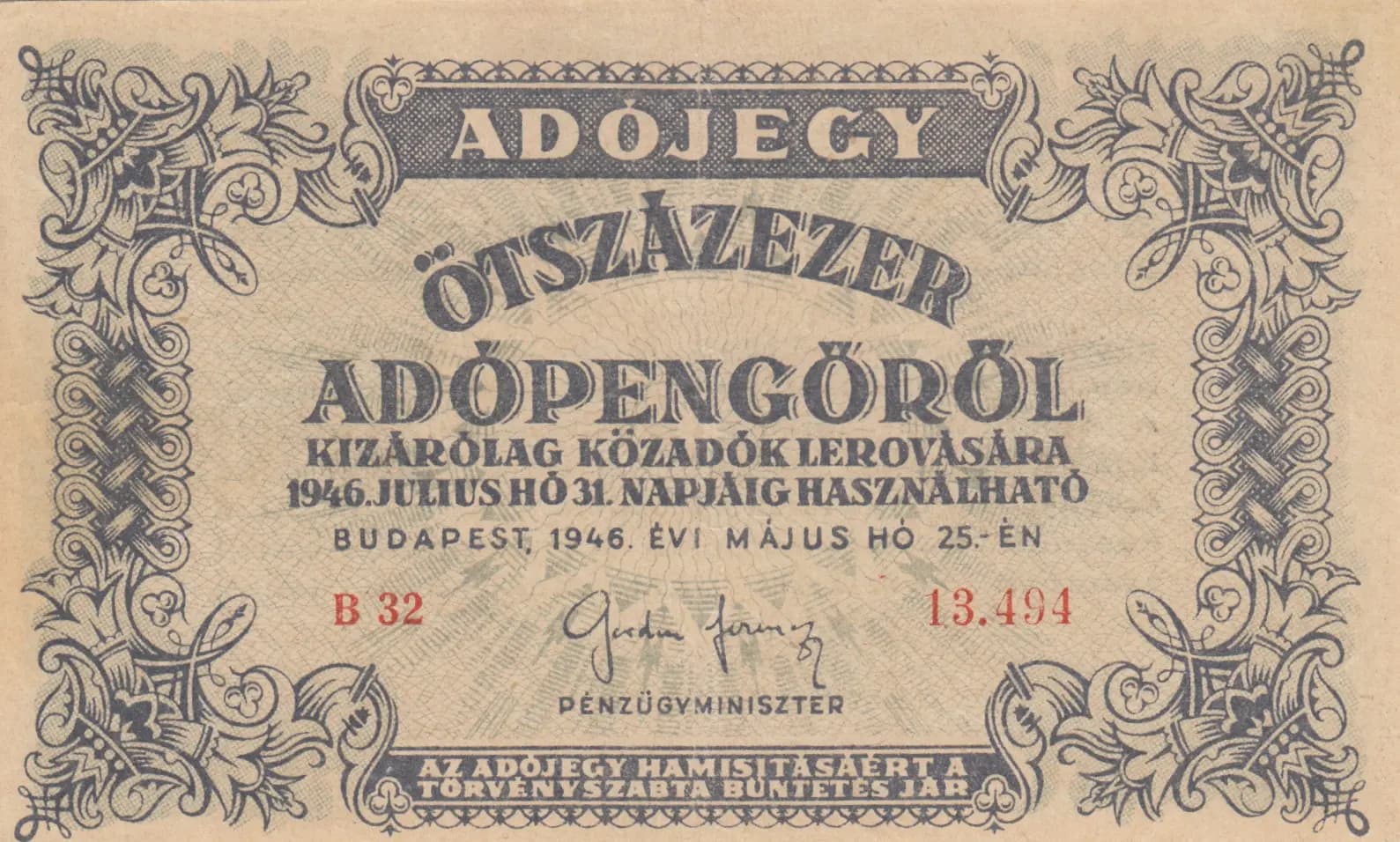
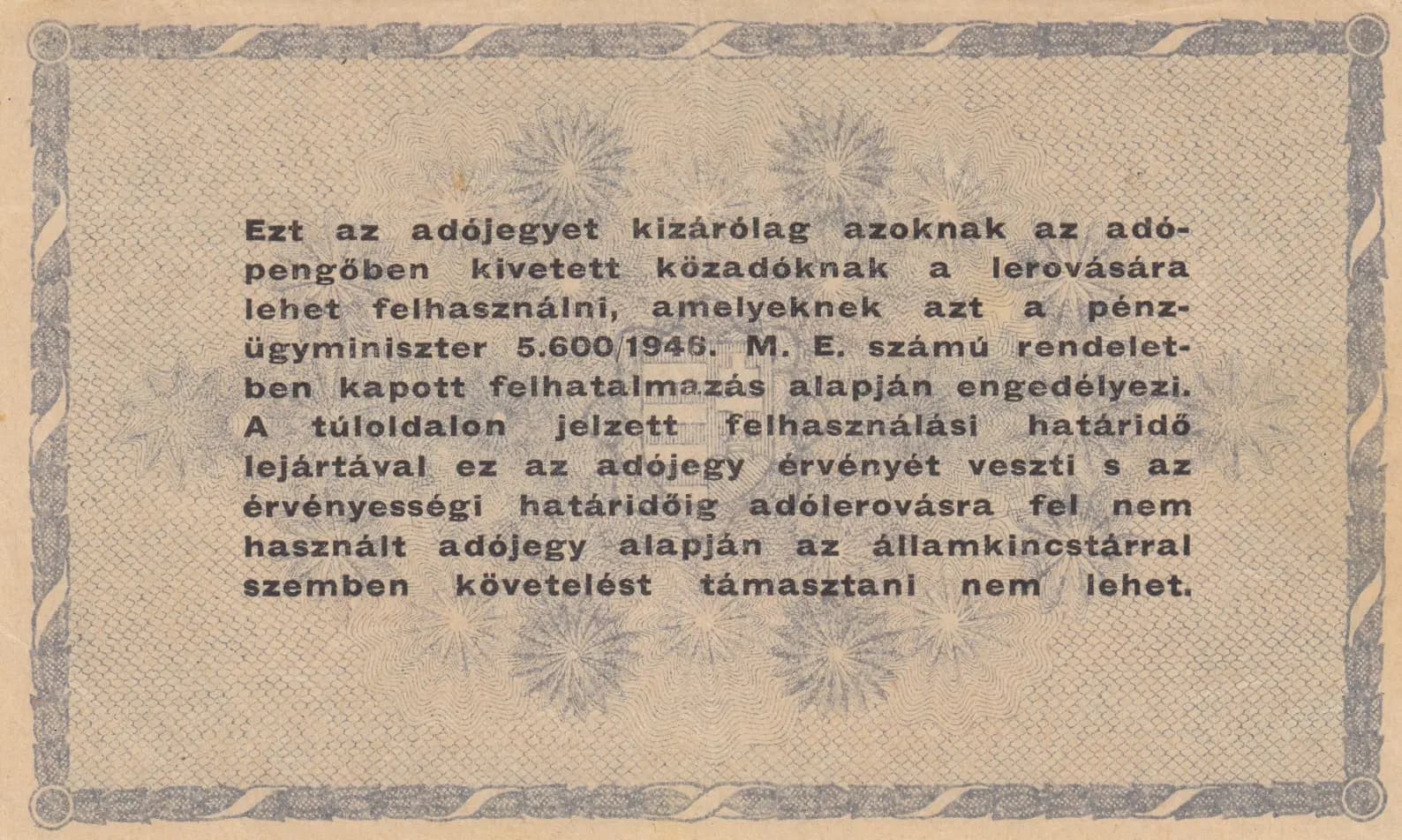
This 500,000 Adópengő tax stamp from May 1946 represents a fascinating example of Hungarian emergency currency issued during the post-WWII hyperinflation crisis. The note displays elegant Art Nouveau-style ornamental borders with intricate scrollwork and geometric patterns, printed in tan/beige with red serial numbering, in Very Fine condition with moderate aging patina and minor foxing consistent with its 78-year age. This temporary tax payment voucher is notable for its dual purpose as both a legal tender and administrative document, featuring comprehensive Hungarian legal text on the reverse explaining its exclusive use for public tax payments, with validity limited to July 31, 1946.
Common. This note represents a regular issue within the Adópengő series with substantial print runs typical of tax payment instruments during the hyperinflation crisis. The eBay price tracking data provided shows consistent sales in the $1-3 range for VF condition specimens, with recent 2025 sales at $2.58, confirming widespread availability in the collector market. The 500,000 denomination was one of the higher values in this emergency series, resulting in larger print quantities to meet the massive volume of tax payments required during hyperinflation. Multiple serial number varieties exist (as evidenced by the B 32 prefix visible on this specimen), indicating diverse printing batches. The limited appeal of tax stamps versus traditional banknotes, combined with their abundant survival rate, places this squarely in the common category despite its historical significance.
The Adópengő was issued by Hungary's Finance Ministry (Pénzügyminiszterium) as an emergency measure during the catastrophic hyperinflation of 1946, which saw the pengő lose value so rapidly that new denominations became necessary almost daily. This particular note, authorized by ministerial decree No. 5.600/1946 M.E., functioned as a specialized tax payment instrument rather than general circulation currency, reflecting the desperate fiscal measures Hungary's government employed to maintain tax revenue collection as conventional money became worthless. The May 25, 1946 issue date places it near the peak of the hyperinflation period, just two months before the currency was entirely replaced by the Forint in August 1946.
This tax stamp banknote features a classical Art Nouveau design aesthetic dominant in Hungarian currency of the interwar and immediate postwar periods. The obverse displays an elaborate decorative border composed of interlocking geometric patterns and flowing floral scrollwork elements framing the central denomination area, with ornamental corner pieces featuring radiating starburst and foliate designs. No historical figures or national landmarks are depicted; instead, the design focuses entirely on elaborate engraved borders and administrative typography. The reverse side continues the ornamental theme with a matching geometric border frame, enclosing the legal text in a formal centered block arrangement. The color scheme employs tan/beige paper stock with black printing for text and legal information, while red ink is used for serial number application, a common practice for security purposes on Hungarian currency of this era.
FRONT SIDE: 'ADÓJECY' (Tax Receipt/Duty Stamp) | 'ÖTSZÁZEZET ADÓPENGÖRŐL' (Five Hundred Thousand Tax Pengő) | 'KIZÁRÓLAG KÖZADÓKLRÓVÁSÁRA' (Exclusively for the Purchase/Payment of Public Taxes) | '1946.JÚLIUS HÓ 31.NAPJÁIG HASZNÁLHATÓ' (Valid until July 31, 1946) | 'BUDAPEST, 1946. ÉRI MÁJUS HÓ 25.-ÉN' (Budapest, May 25, 1946) | 'PÉNZÜGYMINISZTER' (Minister of Finance) | 'AZ ADÓJEGYET HAMISÍTÁSA ÉRT A TÖRVÉNYSZABTA BÜNTETÉS JÁR' (Counterfeiting this tax stamp carries penalties prescribed by law) | Serial number: 'B 32 13.494' REVERSE SIDE: 'Ezt az adójegyet kizárólag azoknak az adópengőben kivetett közadóknak a lerővásására lehet felhasználni, amelyeknek azt a pénzügyminiszter 5.600/1946. M. E. számú rendeletben kapott felhatalmazás alapján engedélyezi. A túloldalaon jelzett felhasználási határidő lejártával ez az adójegy érvényét veszti s az érvényességi határidődig adóleróvásra fel nem használt adójegy alapján az államkincstárral szemben követelést támasztani nem lehet.' (This tax stamp can be used exclusively for the payment of public taxes assessed in adópengo, which the Minister of Finance has authorized by decree No. 5.600/1946 M.E. Upon expiration of the usage deadline indicated on the other side, this tax stamp loses its validity, and any tax stamp not used for tax payment before the validity deadline cannot serve as a basis for claims against the state treasury.)
This note was produced using traditional intaglio (engraved) printing methods, evidenced by the deep, crisp ornamental borders and intricate line-work visible in the scrollwork patterns and corner designs. The precise geometric patterns and multi-layered decorative elements characteristic of security printing are clearly visible in the visual analysis. The engraved border patterns show the hallmarks of high-quality banknote production, with fine line work and consistent depth suggesting professional security printing by Hungary's established currency printer. Red serial numbering was applied separately, likely through letterpress or additional printing process to maintain security protocols. The printer for Pick 139a is typically attributed to the Hungarian State Printing House (Magyar Államnyomda), which handled most official Hungarian currency production during this period.
This specimen carries the serial number prefix 'B 32' with serial '13.494', representing one of multiple documented serial ranges for this Pick number. The Adópengő series shows variation in serial number prefixes (A, B, C series documented), with B series being relatively common. The note is dated May 25, 1946 (25.V.1946) as printed on the obverse, which is the standard issue date for this denomination and variety. No overprints, surcharges, or printing varieties are evident on this particular specimen. Pick 139a specifically denotes the 500,000 Adópengő without additional overprints or modifications, distinguishing it from potential 139b or later varieties that may exist with different security features or administrative markings.