20 forint 1975
Market Prices
43 salesAbout This Note
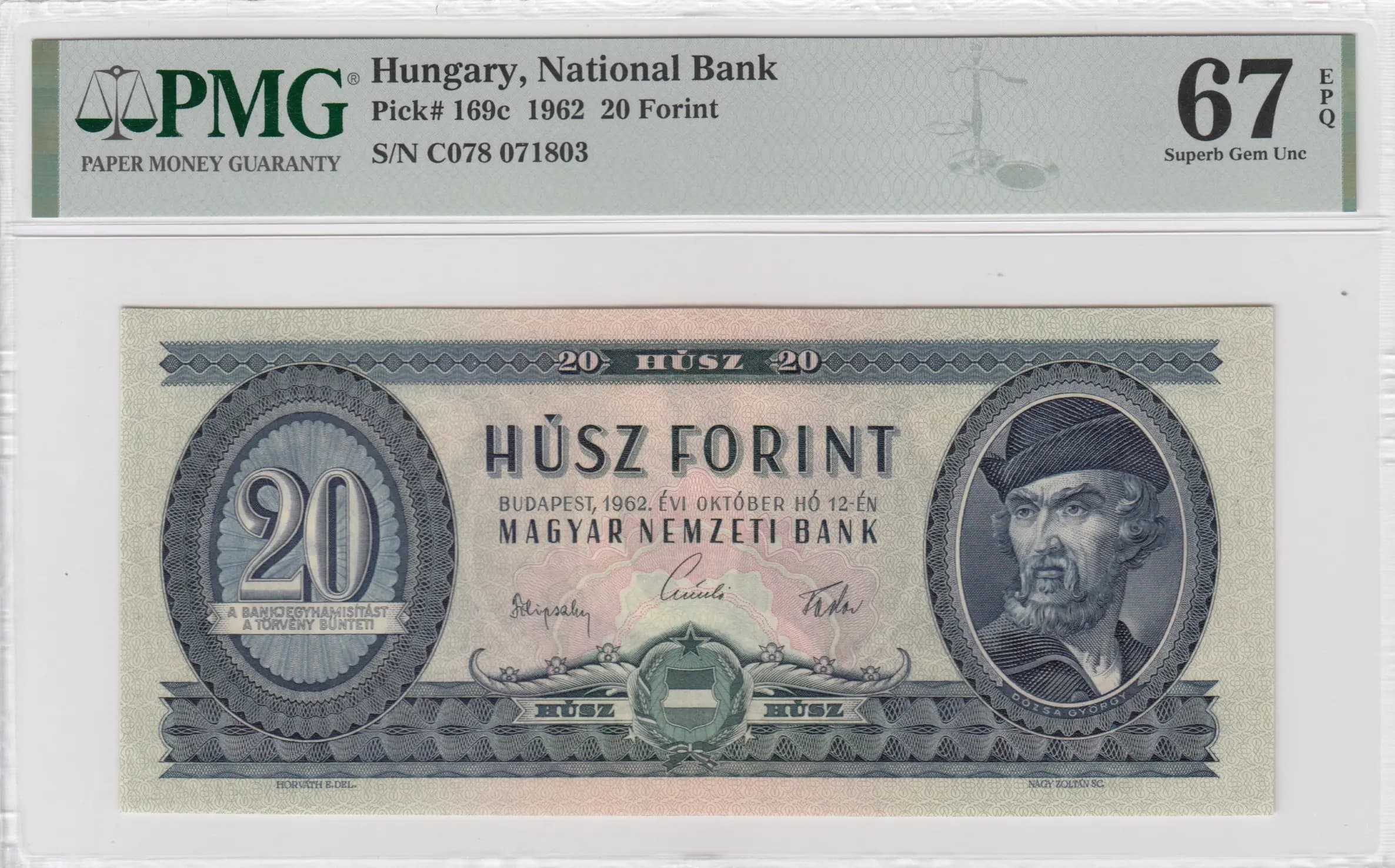
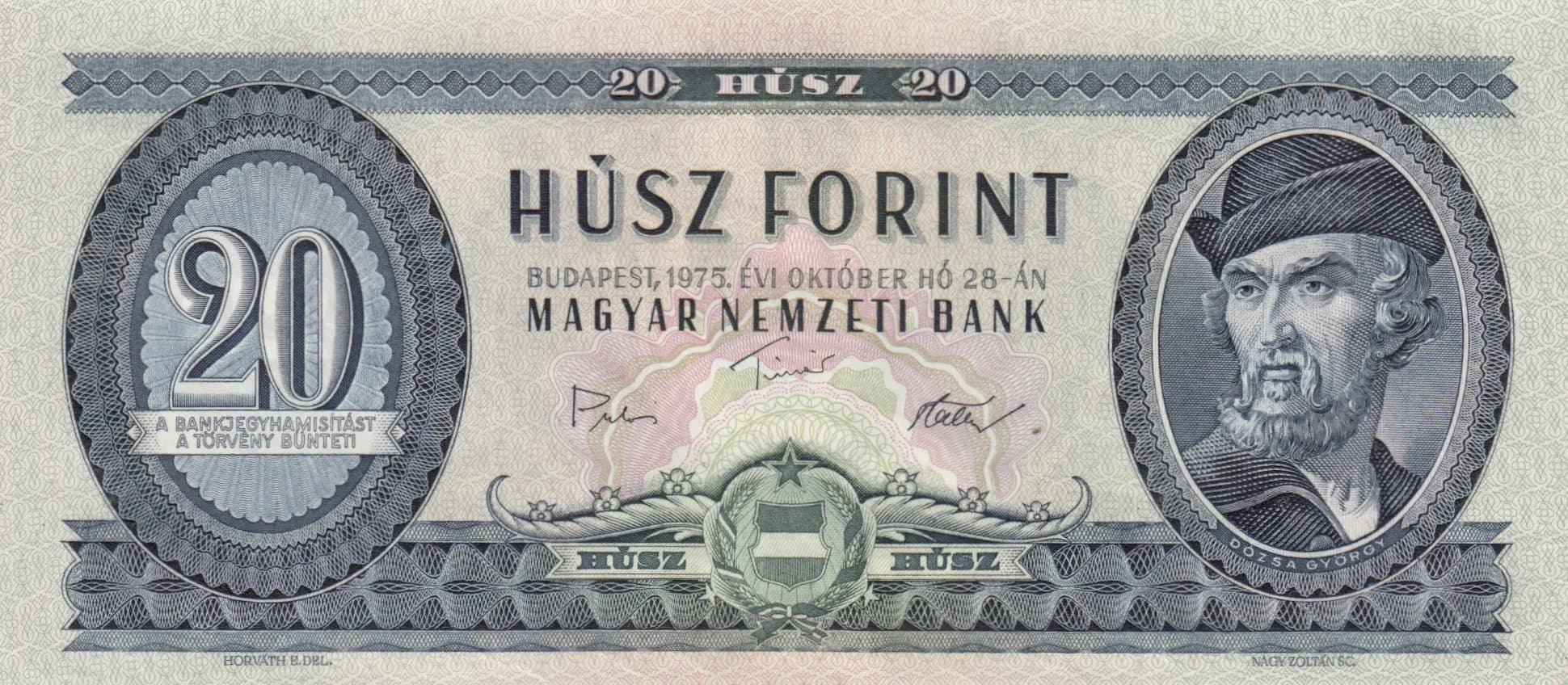
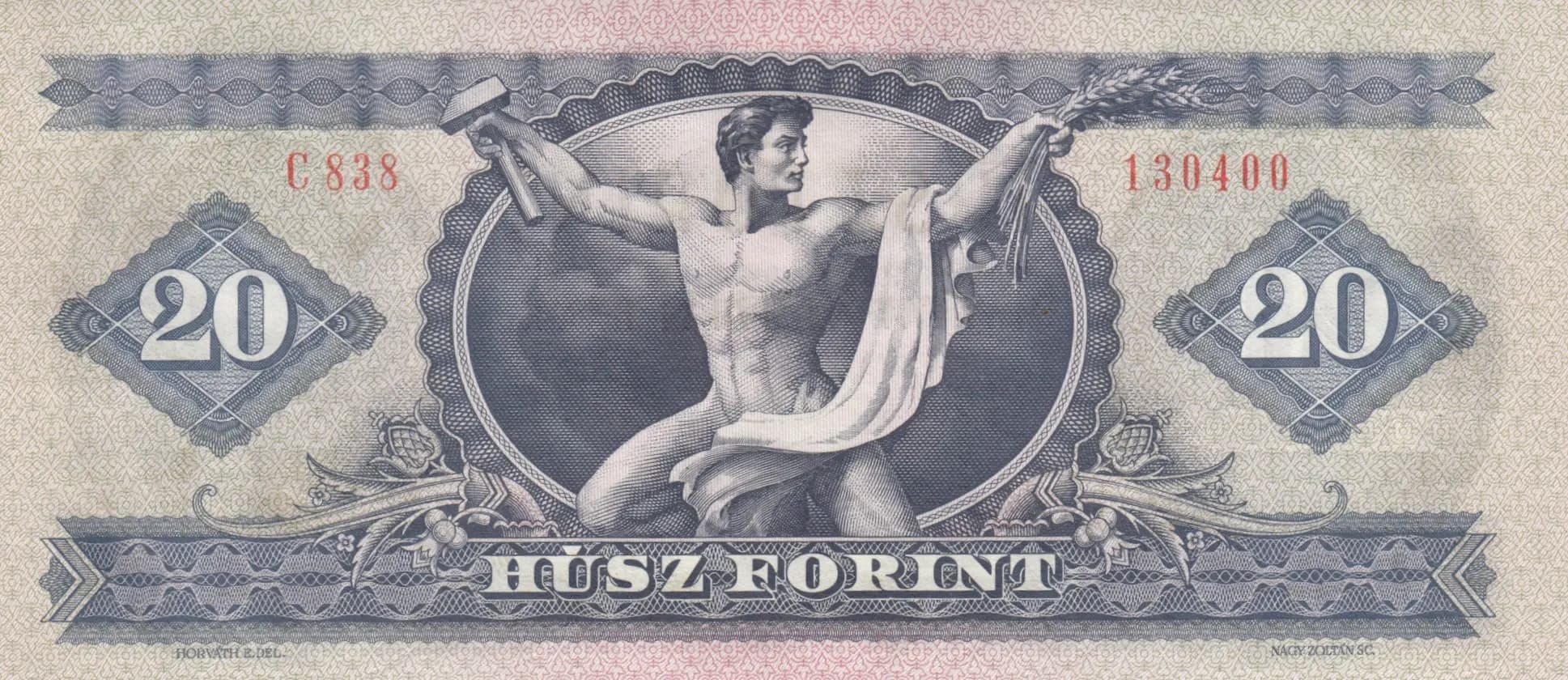
This is a 1975 Hungarian 20 Forint note in uncirculated condition, featuring the portrait of György Dózsa on the obverse and a classical allegorical figure representing labor and agriculture on the reverse. The note displays crisp, original printing with no visible wear, folds, or creases, making it an excellent example of this denomination from the Magyar Nemzeti Bank's mid-1970s series. The combination of historical imagery and fine engraving work makes this a desirable item for collectors of Eastern European currency.
Common. The eBay market data shows consistent sales activity across multiple grade levels over more than a decade (2013-2025), with UNC examples regularly selling in the $5-$15 range and only exceptionally high grades (PMG 67) commanding premium prices above $50. The extensive price history and regular circulation in the secondary market indicate a healthy supply, typical of regular-issue notes from a major European central bank during an extended printing period (1957-1980 per catalog data).
The 20 Forint note issued in 1975 reflects Hungary's post-war communist era, featuring György Dózsa, the 16th-century peasant revolutionary whose uprising symbolized resistance against feudal oppression—a narrative aligned with socialist ideology. The reverse depicts a muscular worker figure holding an axe and wheat sheaves, embodying the state's emphasis on labor, industry, and agricultural production as cornerstones of the socialist system. This design choice illustrates how Hungarian currency served as a medium for propagating state values during the Cold War period.
The obverse features György Dózsa (1475-1514), the historical Hungarian peasant leader of the 1514 Peasant Revolt, depicted in profile within an oval frame on the right side wearing period dress. His portrait is complemented by the Hungarian coat of arms centered in the text area, reflecting state authority. The reverse displays a classical allegorical male figure in reclining pose, representing Labor, musculature emphasized and partially draped, holding an axe (symbolizing industrial work) and wheat sheaves (representing agriculture). This pentathlete-like figure—identified in catalog references as Csaba Hegedús—embodies socialist ideals of strength and productivity. The note employs ornamental borders, circular and diamond-shaped denomination medallions, and intricate fine-line engraving throughout to create visual interest and security.
Front: 'HÚSZ FORINT' (Twenty Forint); '20 HUSZ 20' (Twenty); 'MAGYAR NEMZETI BANK' (Hungarian National Bank); 'BUDAPEST, 1975. ÉVI OKTÓBER HÓ 28-ÁN' (Budapest, October 28, 1975); 'A BANKJEGYHAMISÍTÁST A TÖRVÉNY BÜNTETI' (Counterfeiting banknotes is punished by law). Back: 'HÚSZ FORINT' (Twenty Forint); '20' (denomination); 'HORVÁTH & DEL.' (Horváth & delineated, artist credit); 'NAGY ZOLTAN SC' (Nagy Zoltan sculptor); Serial number: 'C 838 130400'.
Intaglio (engraved) printing on banknote paper. The fine line work, stippling, complex decorative patterns, and sharp detail visible in both the portrait and allegorical figure are characteristic of traditional engraving techniques used by central banks. The security features including repeated text patterns and elaborate borders were produced through the same intaglio process. No overprints or secondary printing methods are evident on this standard issue note.
Pick catalog P-169f represents the 1975 date variety of this design. The visual analysis identifies this as the standard 1975 issue with the serial number prefix 'C 838', dating it to October 28, 1975 as inscribed. The PMG population report indicates P-169f and P-169s3 as cataloged variants of the base Pick number, suggesting signature or security feature variations exist, though the specific distinctions between these variants are not detailed in available references. This note represents the standard circulation variety without special overprints or security modifications.