2 korona 1920
About This Note
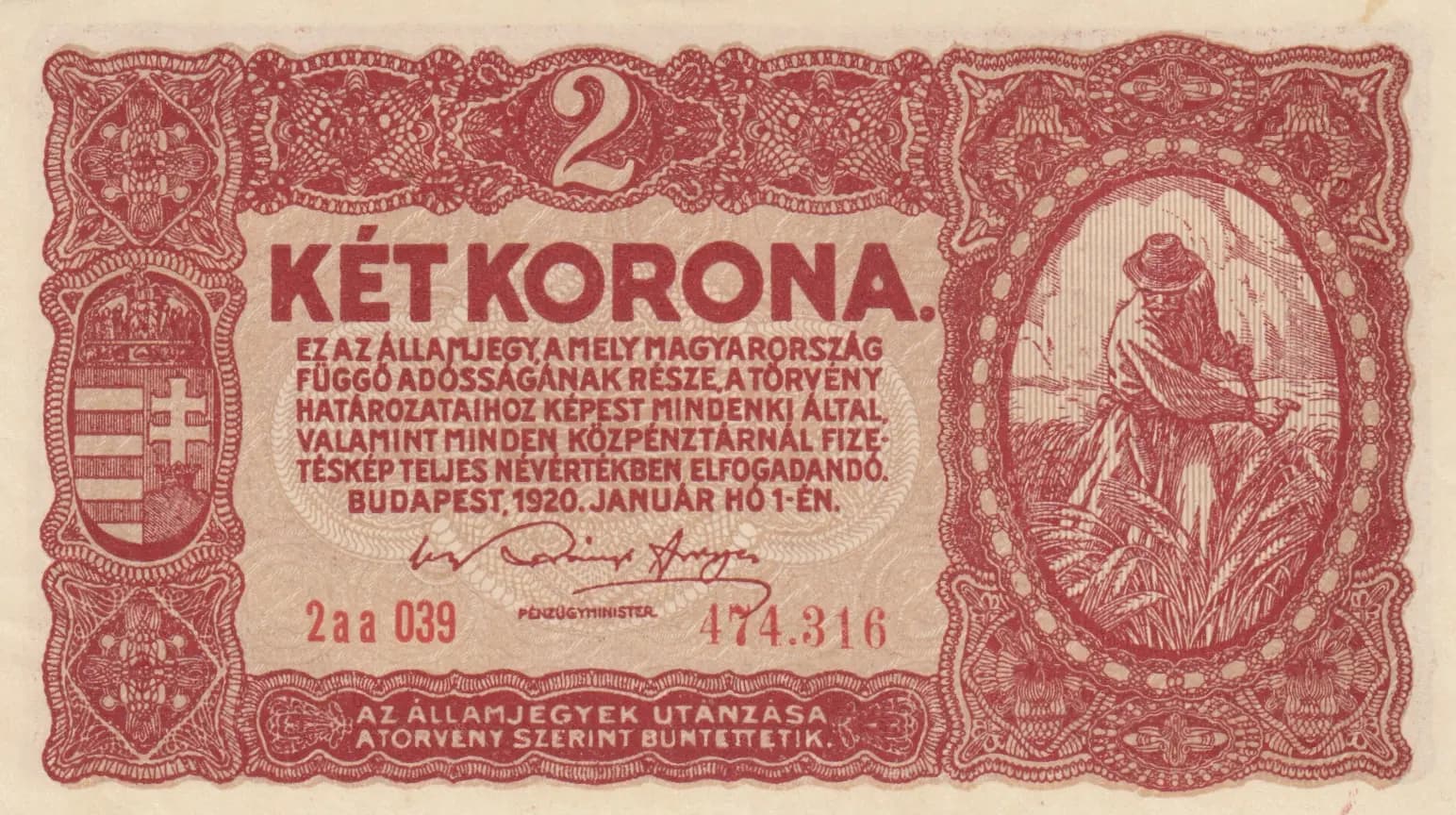
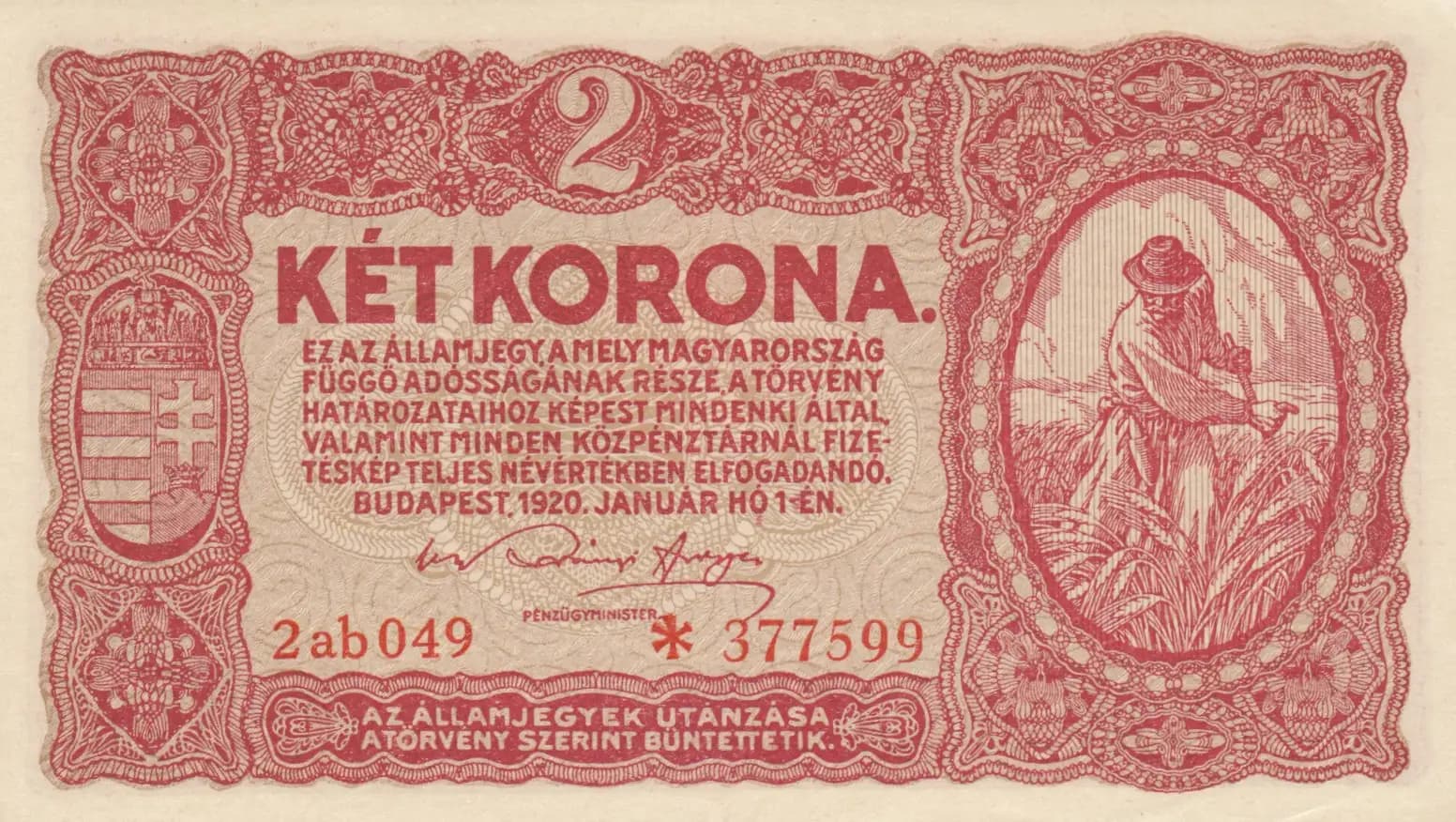
An excellent uncirculated example of Hungary's 2 Korona banknote from January 1, 1920, featuring vibrant red and pink ornamental borders with a cream background. The note displays crisp engraving with the coat of arms on the left and an allegorical seated figure in an oval vignette on the right, presenting the classic design of early post-WWI Hungarian currency with no visible wear, creasing, or fading.
Common. This 2 Korona denomination from the 1920 issue was produced in substantial quantities as part of Hungary's new monetary system following independence. While early 20th-century Hungarian currency is collectible, the 2 Korona 1920 remains widely available in the collector market in various condition grades. The UNC condition grade increases desirability among collectors but does not make this a scarce note; examples regularly appear in numismatic sales and auctions at moderate price points.
Issued on January 1, 1920, this note represents Hungary's transition period following the Austro-Hungarian Empire's dissolution in 1918. The presence of the coat of arms with crown and the formal legal declaration of acceptance as state debt reflects Hungary's establishment of independent monetary authority under the Pénzügyminisztérium (Finance Ministry), while the allegorical imagery represents the nation's sovereignty and stability during reconstruction.
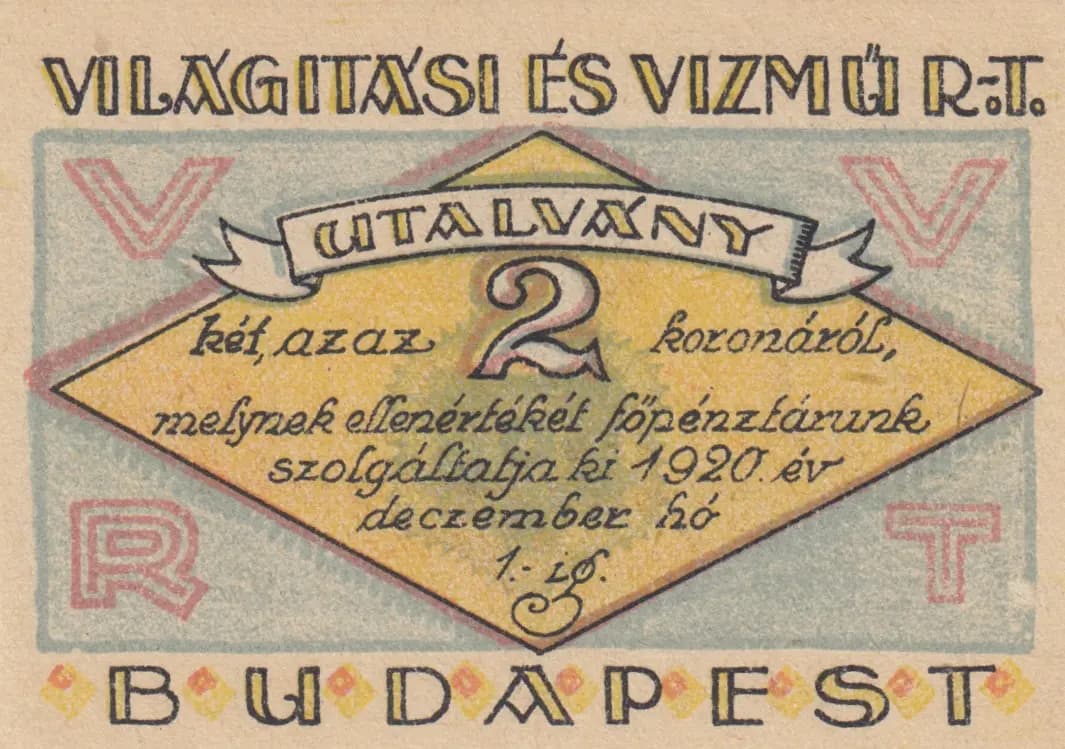
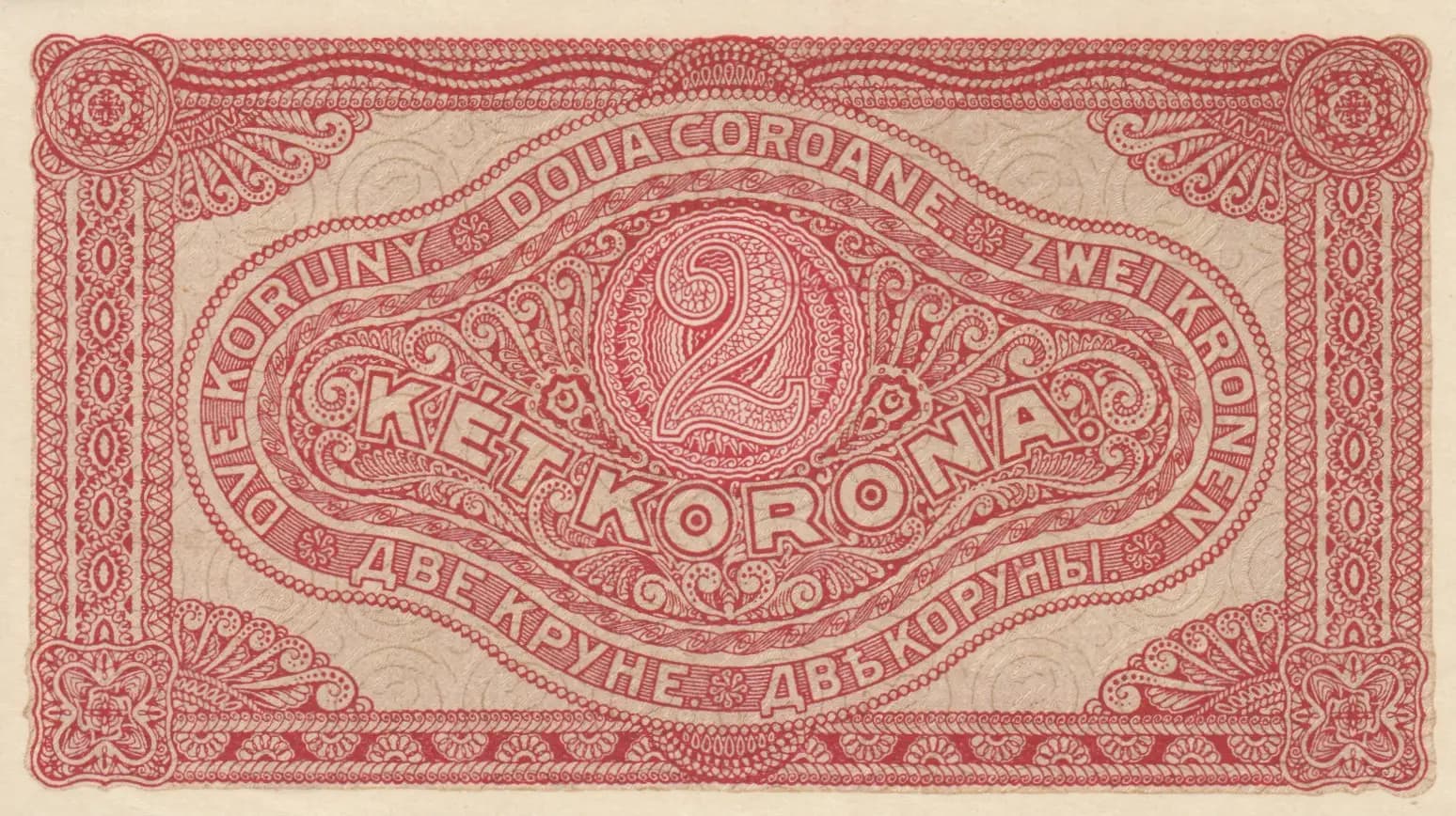
The front features Hungary's state coat of arms (Hungarian shield with crown and heraldic elements) prominently positioned on the left side, symbolizing national sovereignty. The right side displays an oval-framed allegorical figure in classical/historical dress, representing the nation or historical virtue—a common iconographic choice for post-war European currency redesigns. The entire design is bordered with elaborate ornamental patterns including fine-lined geometric elements and heraldic birds, reflecting the Austro-Hungarian imperial aesthetic yet marking Hungary's new independence. The back presents a simplified but equally ornate design centered on the large denomination '2' within a rectangular frame of rosette medallions and geometric borders, emphasizing the denomination while maintaining visual consistency with period security printing standards.
{"front":{"KÉT KORONA":"Two Crowns","denomination_numeral":"2","mainLegalText":"This banknote, which is part of Hungary's national debt, according to the provisions of the law, is accepted by everyone and at all public treasuries as full legal tender.","dateAndPlace":"Budapest, January 1, 1920","ministerialDesignation":"Finance Minister","counterfeiting_warning":"Counterfeiting of banknotes is punished according to law."},"back":{"denomination":"2 / KÉT KORONA (Two Crowns)","note":"Back contains ornamental institutional attributions in decorative banner format; specific text partially obscured by stylized ornamental presentation typical of period engraving."}}
Intaglio engraving (recess printing), evidenced by the fine line work, intricate detail preservation, crisp borders, and complex ornamental patterns visible throughout both sides. The detailed security features—including fine-lined borders, multiple decorative layers, and precise vignette rendering—are characteristic of high-quality steel engraving used by Austro-Hungarian successor state currency printers in 1920. The printer for this issue was likely Austria's or Hungary's designated state printing facility, typical for post-1920 Hungarian denominations.
Pick P-58(2) designation indicates this is a specific cataloged variety within the 1920 2 Korona issue. The serial number visible (2ab049 / 377599) suggests this note can be further identified by its serial number range. Varieties for this issue may exist based on signature differences (ministerial signatures), paper characteristics, or printing variations across batches. The specific serial number prefix '2ab' may indicate a particular printing run or series, though without comprehensive variety documentation for this specific Pick number, further classification would require comparison with known cataloged variants.