100 000 adopengö 1946
Market Prices
19 salesAbout This Note
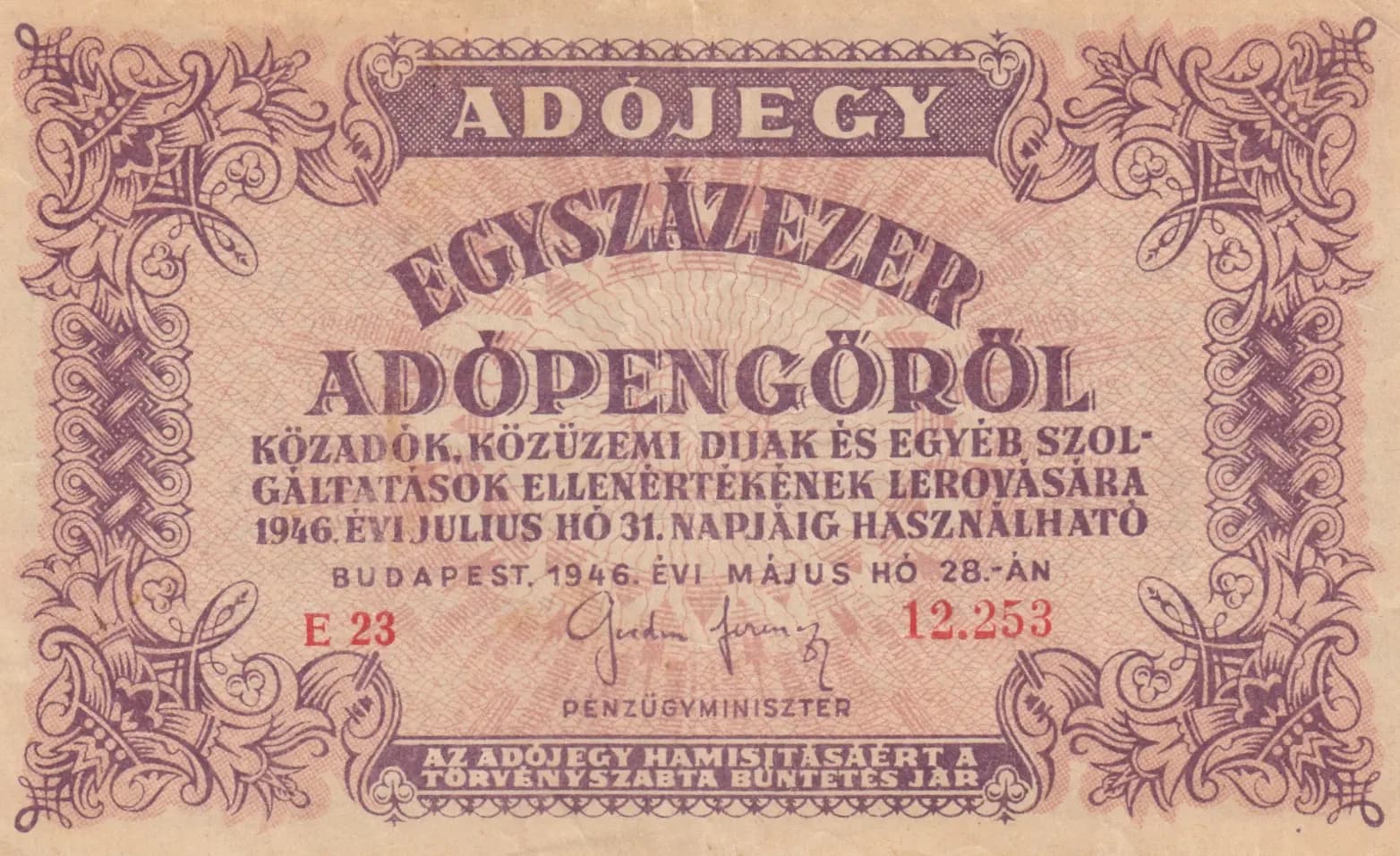
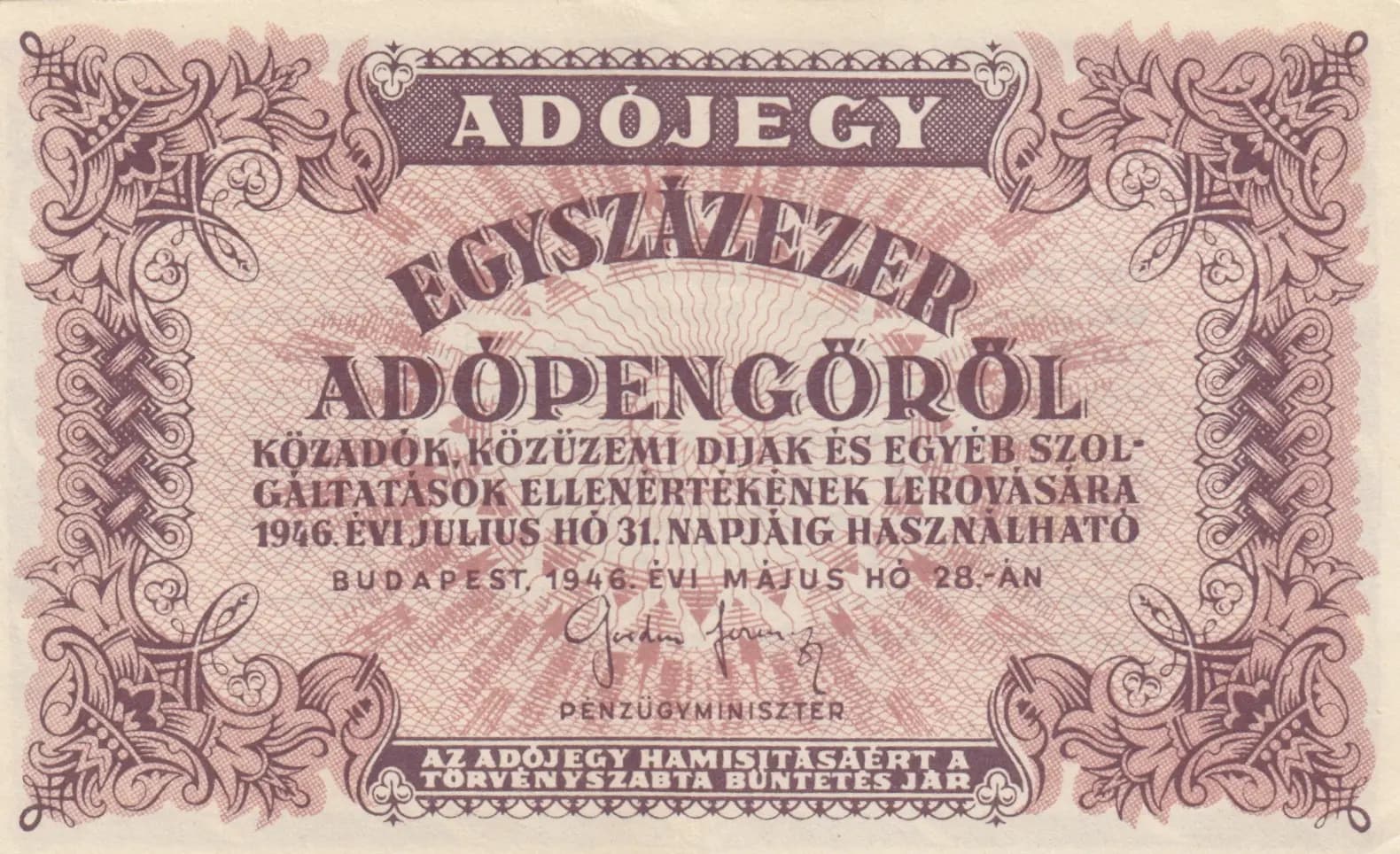
This is a remarkable Hungarian 100,000 Adópengő tax stamp from May 28, 1946, graded AU and representing an exceptional example of Hungary's post-WWII hyperinflation currency. The note features intricate ornamental borders with Celtic-inspired knotwork and radiating line patterns in purple-maroon on cream paper, presenting as uncirculated with crisp print quality throughout. This specific variant (P-144e) is distinguished by its lack of watermark, making it a notable example of Hungary's emergency fiscal instrument during the tumultuous transition period following World War II.
Common. Despite its interesting historical context as a hyperinflation-era fiscal instrument, the eBay market data shows these notes trading regularly in the $1-$6 range across all grades, with even premium condition examples (AUNC/EF) selling for under $40. The 2016 catalog valuation of $20 for UNC specimens indicates modest collector demand. The likely substantial print run of this widely-used tax instrument, combined with its recent and consistent low market performance, clearly establishes this as a common note despite its numismatic curiosity value.
This tax stamp was issued during Hungary's severe postwar hyperinflation crisis, when the government resorted to issuing adopengő (tax pengő) notes as fiscal instruments for tax and utility payment collection. The note's mandatory expiration date of July 31, 1946, reflects the emergency nature of these instruments and the financial chaos of the immediate postwar period. The ornate decorative security features and legal warnings about counterfeiting demonstrate Hungary's attempt to combat fraud during this economically unstable period.
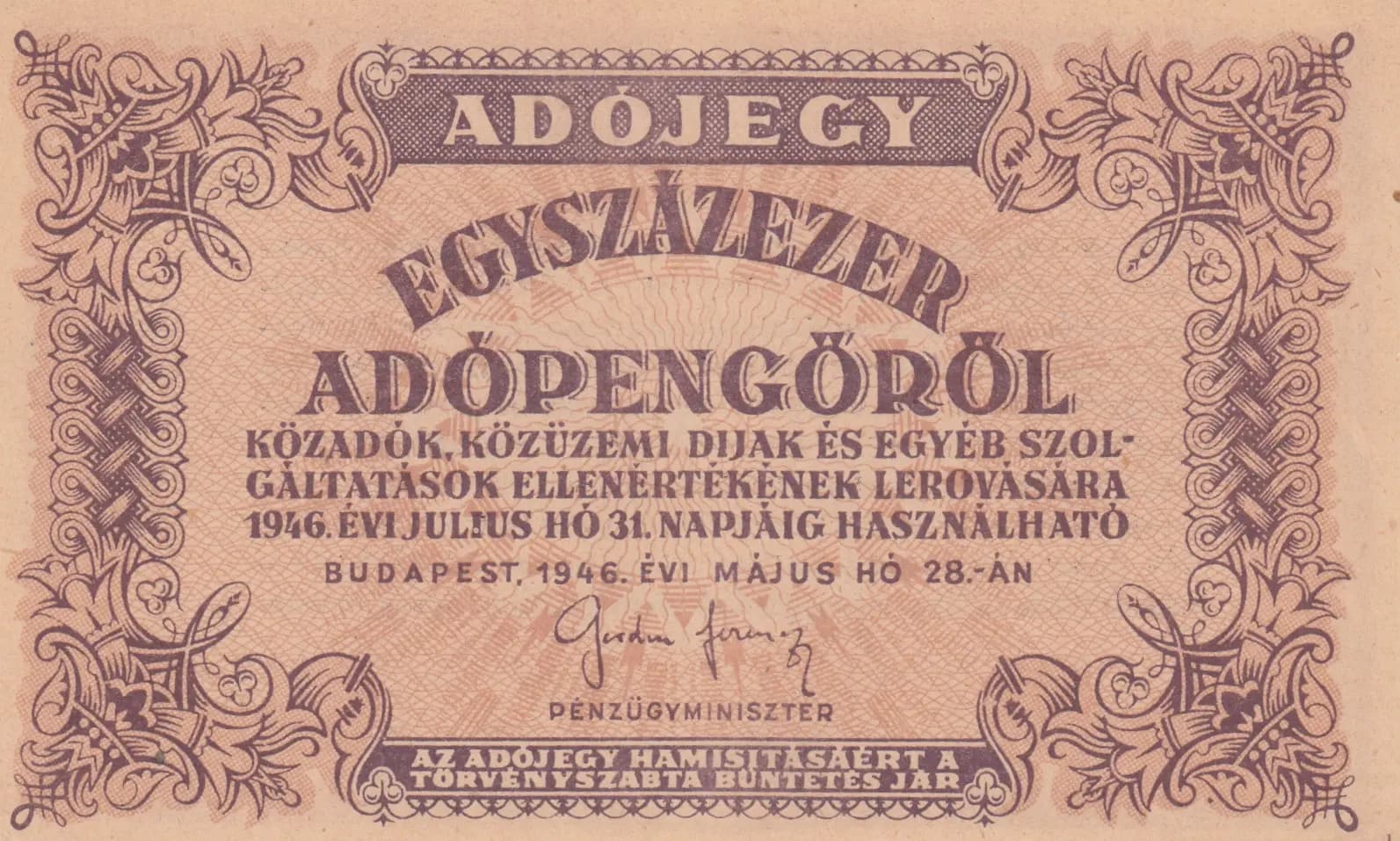
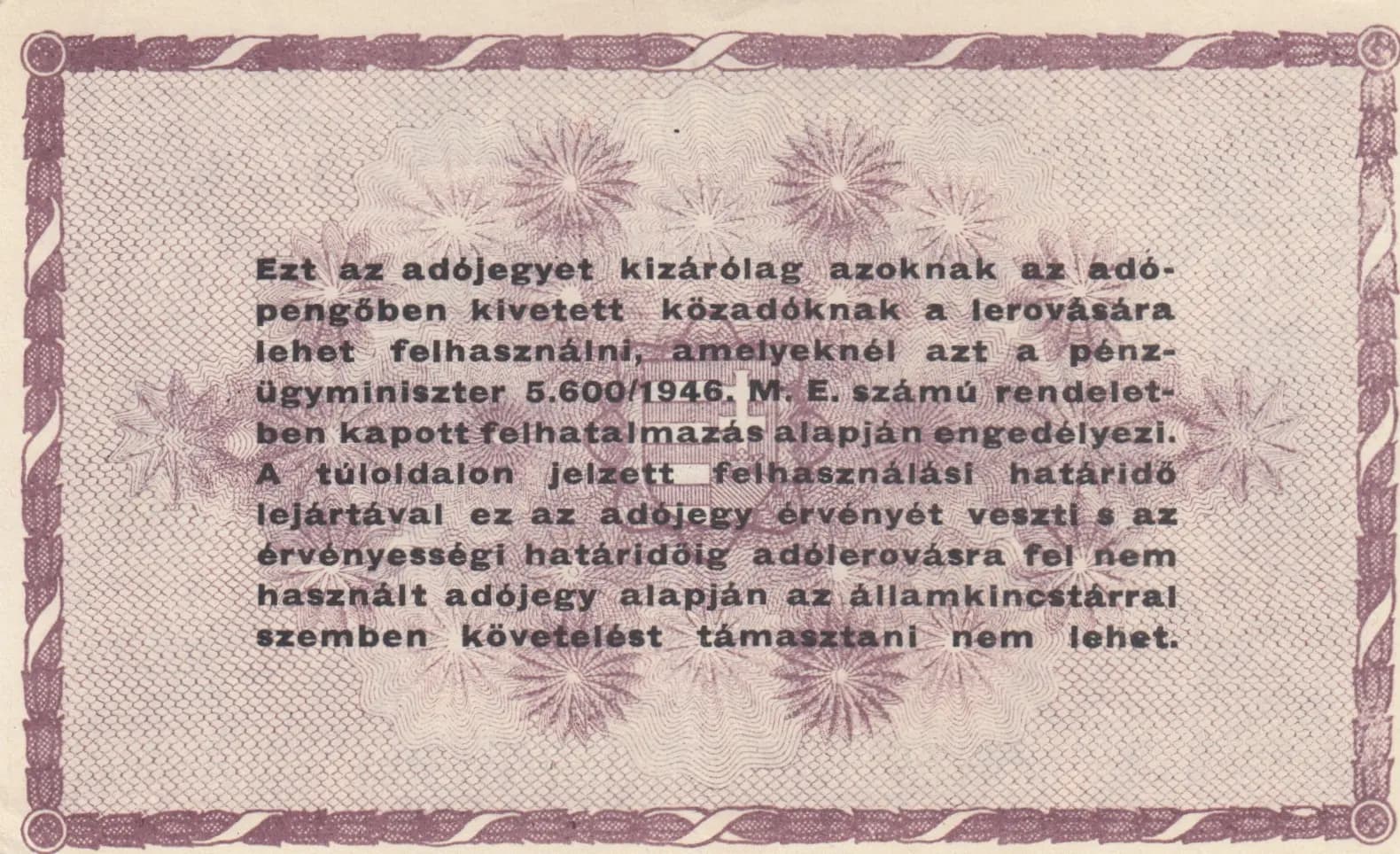
This is a pure fiscal instrument rather than a traditional banknote, featuring a sophisticated security printing design centered on ornamental aesthetics. The obverse displays elaborate decorative borders comprising interlocking Celtic-style knots and geometric flourishes in the corner medallions, with a dominant radiating line pattern background creating a sunburst effect behind the central text area. The color scheme employs purple-maroon primary printing on a cream or off-white paper base, with no watermark on this P-144e variant. The reverse continues the decorative border treatment with matching corner ornaments and introduces a radiating star-motif background pattern, presenting the legal restrictions and validity conditions in clearly legible purple text. The design contains no portraits or representational imagery—instead relying entirely on geometric and floral ornamentation for aesthetic appeal and security purposes. The fine line cross-hatching and radiating patterns serve as anti-counterfeiting measures typical of the period.
FRONT SIDE: 'ADÓJEGY' (Tax Stamp) — The primary denomination designation 'EGYSZÁZEZERED ADOPENGŐRŐL' (One Hundred Thousand Adopengő) — Usage directive: 'KÖZADÓK, KÖZÜZEMI DÍJAK ÉS EGYÉB SZOLGÁLTATÁSOK ELLENÉRTÉKÉNEK LEROVÁSÁRA 1946.ÉVI JÚLIUS HÓ 31.NAPJÁIG HASZNÁLHATÓ' (For payment of public taxes, public utility charges and other services, usable until July 31, 1946) — Issue statement: 'BUDAPEST, 1946 ÉVI MÁJUS HÓ 28-ÁN' (Budapest, May 28, 1946) — Authority: 'PENZUGYMINISTER' (Finance Minister) — Warning: 'AZ ADÓJEGY HAMISITASAERT A TÖRVÉNYSZÉKARTA BÜNTETÉS I.P.' (Counterfeiting this tax stamp is punishable by law) — REVERSE SIDE: Legal conditions text: 'Ezt az adólegyet kizárólag azoknak az adó-pengőben kivetett közadónak a lerovására lehet felhasználni, amelyeknél azt a pénzügyminister 5.600/1946. M. E. számú rendeletben kapott felhatalmazás alapján engedélyezi. A túloldaton jelzett felhasználási határidő lejártával ez az adójegy érvényét veszti és az érvényessegi határidőig adólerovásra fel nem használt adójegy alapján az államkincstárral szemben követelést támasztani nem lehet.' (This tax stamp can be used exclusively for payment of public taxes assessed in adopengő where authorized by the finance minister under decree 5.600/1946. M.E. After the expiration date noted on the obverse, this tax stamp loses validity and no claims can be made against the state treasury for unused stamps after the validity period.)
Intaglio printing (line engraving), evidenced by the crisp, well-defined decorative borders, the precision of the radiating line patterns, and the consistent ink saturation visible throughout both sides. The fine line work in the geometric borders and cross-hatching background patterns are characteristic of intaglio processes. The printer is identified in the decree reference as Hungarian government facilities under the Penzügyminiszterium (Finance Ministry), with the specific decree number 5.600/1946 M.E. indicating official state printing authority.
This is the P-144e variant, specifically identified by the absence of watermark on white paper without serial numbers. The catalog reference notes that variant P-144b exists with watermark. The decree number 5.600/1946 M.E. appears consistently on this issue. No evidence of signature variations, date variations, or overprints is observed on this specimen, suggesting a single unified printing for this particular tax stamp denomination.