10 000 000 B- pengö 1946
Market Prices
24 salesAbout This Note
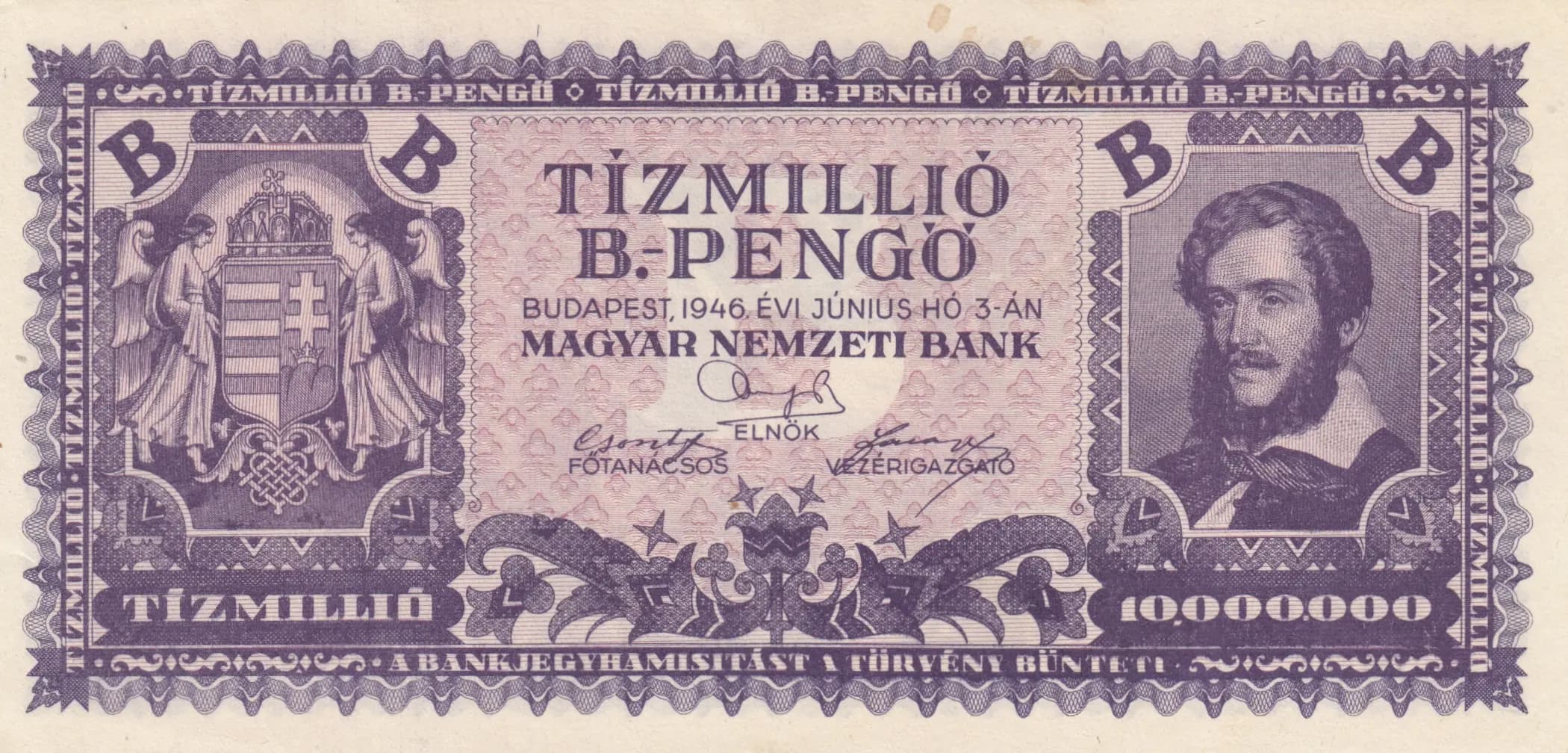
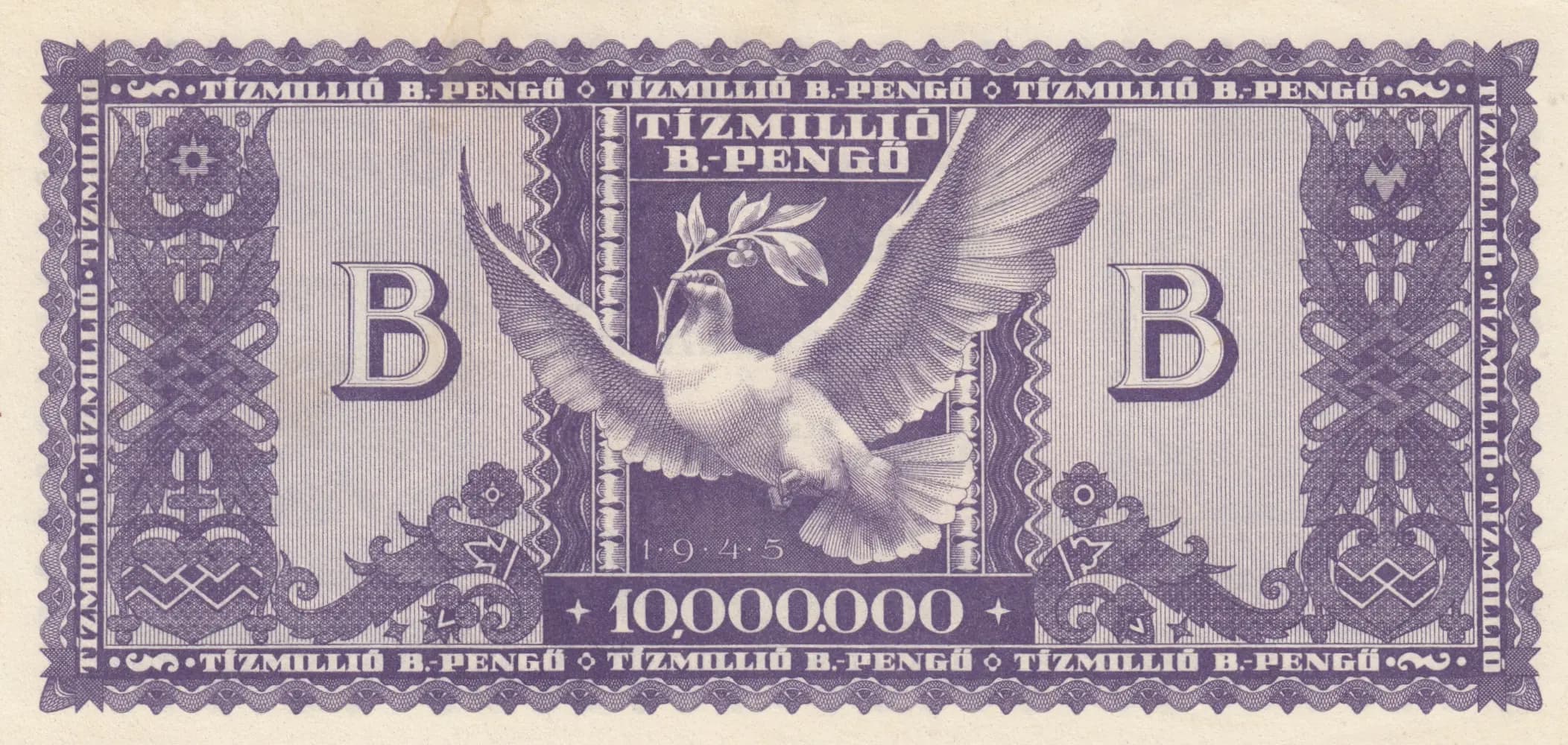
This Hungarian 10,000,000 B-pengö from 1946 is an exceptional example of post-WWII hyperinflation currency, presented in AU condition with crisp printing and no visible circulation wear. The note features a striking purple color scheme with ornate engraving throughout, displaying Lajos Kossuth's portrait on the obverse and a dove with olive branch symbolizing peace on the reverse—particularly poignant given Hungary's post-war recovery period. The denomination itself is remarkable, representing the extreme monetary devaluation of the period, making this a historically significant and visually impressive specimen.
Common. Despite its historical significance and the extreme denomination, this note remains common in the collector market. eBay auction data shows consistent sales across multiple condition grades from $4 to $137, with AU specimens averaging in the $50-70 range. The relatively high print run during the currency reform period, combined with the note's survival (due to its recent date and non-circulation of such high denominations), results in widespread availability. Market price points consistently below $150 even for higher certified grades confirm common status.
This note was issued on June 3, 1946, by the Magyar Nemzeti Bank in the immediate aftermath of World War II, during Hungary's catastrophic hyperinflation period. The iconography reflects the nation's recovery aspirations: Kossuth Lajos was a 19th-century Hungarian revolutionary and freedom fighter, symbolizing national resilience, while the dove with olive branch on the reverse represents the yearning for peace after the devastation of occupation and war. The 'B-pengö' designation itself represents a currency reform attempt, though even this high denomination would soon become obsolete as inflation spiraled further.
The obverse features a distinguished left-facing portrait of Lajos Kossuth (1802-1894), the iconic Hungarian revolutionary and statesman, positioned on the right side of the note. To the left stands the Hungarian coat of arms—a shield displaying the characteristic horizontal stripes of the Hungarian heraldry, flanked by two allegorical female figures representing national virtues or virtues of the state. The entire composition is framed by elaborate Art Deco-influenced geometric and floral border patterns rendered in purple and cream tones. The reverse presents a centered dove in flight carrying an olive branch, symbolizing peace and hope, contained within an ornate rectangular frame with matching decorative borders. The large letter 'B' appears prominently on both sides, indicating the 'B-pengö' currency reform variant. The denomination is clearly displayed in both words and numerals throughout the design.
FRONT SIDE: 'TÍZMILLIÓ B-PENGŐ' (Ten Million B-Pengő) / 'BUDAPEST, 1946. ÉVI JÚNIUS HÓ 3-ÁN' (Budapest, June 3rd, 1946) / 'MAGYAR NEMZETI BANK' (Hungarian National Bank) / 'ELNÖK' (President) / 'FŐTANÁCSOS' (Chief Councillor) / 'VEZÉRIGAZGATÓ' (Director General) / '10000000' (10,000,000 in numerals) / 'A BANKJEGYHAMISÍTÁST A TÖRVÉNY BÜNTETI' (Counterfeiting banknotes is punished by law) / Border text repeated: 'TÍZMILLIÓ B-PENGŐ' BACK SIDE: 'TÍZMILLIÓ B-PENGŐ' (Ten Million B-Pengő) / '10000000' (10,000,000 in numerals) / '1945' (date reference) / Border text repeated: 'TÍZMILLIÓ B-PENGŐ'
Intaglio line engraving was the primary printing method, evidenced by the fine parallel line patterns, intricate geometric details, and crisp portrait rendering visible in the visual analysis. The security features include complex background line work, ornate borders with repeating patterns, and fine engraving of the central vignettes. The printer for this issue was likely the Hungarian state printing works; for P-135 issues, this would have been Állami Nyomda (State Printing House) or a contracted security printer under Magyar Nemzeti Bank oversight.
This specific variety is identified as Pick P-135, issued June 3, 1946. The note is printed without a serial number, which is characteristic of this issue. The designation 'B-pengö' represents the second pengö reform currency. No major varieties are noted for this specific denomination, though collectors should verify signature combinations (elnök, főtanácsos, vezérigazgató positions) as these may vary slightly between printings. The date '1945' appearing on the reverse likely references the design date rather than the issue date of June 3, 1946.