1 000 000 B- pengö 1946
Market Prices
45 salesAbout This Note
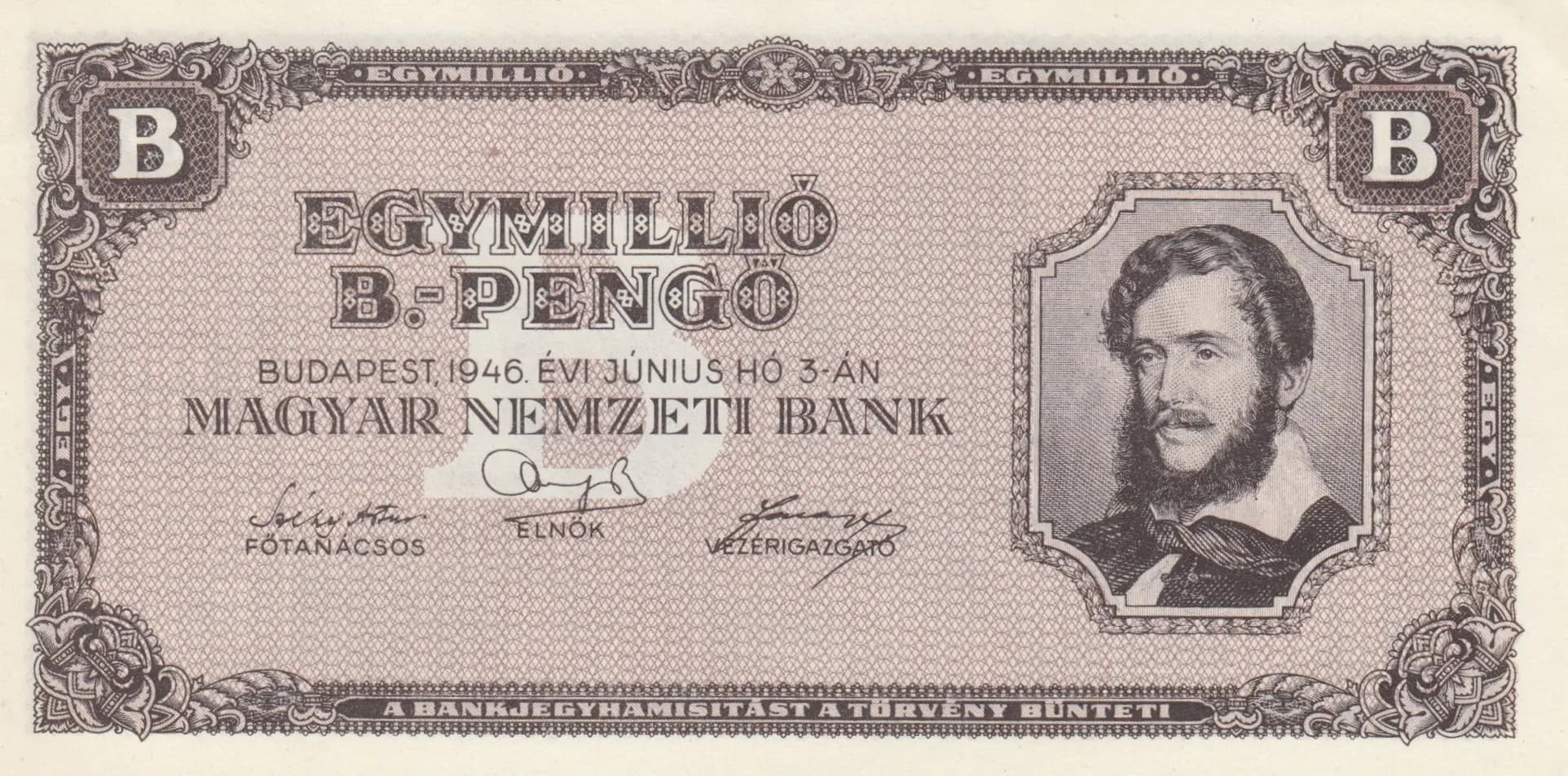
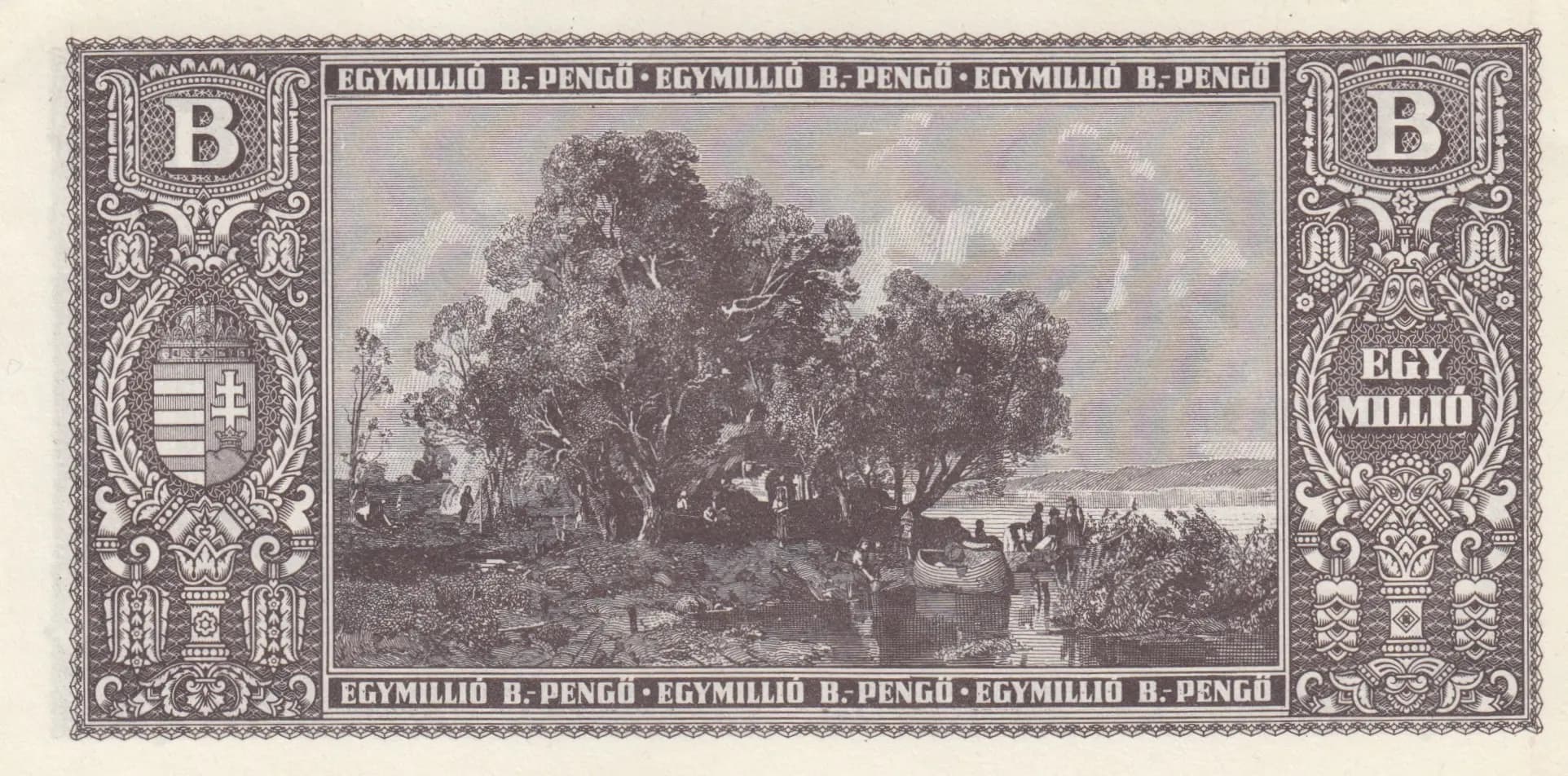
This is an uncirculated example of Hungary's 1,000,000 B-Pengő note from June 3, 1946, issued during the catastrophic hyperinflation of the post-WWII period. The note displays pristine condition with sharp engraving throughout, featuring a portrait of Lajos Kossuth on the obverse and a scenic Lake Balaton landscape on the reverse. This denomination represents one of the final issues before the pengő currency system was abandoned in favor of the forint, making it a significant artifact of Hungarian monetary history.
Common. Despite the historical significance of this hyperinflation-era note, the 1,000,000 B-Pengő was issued in substantial quantities as a regular issue in 1946. eBay price tracking data shows consistent sales activity with specimens regularly selling for $8-$40 depending on condition, with most UNC examples realizing under $30. The 2016 catalogue valuation of $6 for UNC further confirms this is a common issue. The note was not recalled early, there were no short print runs, and survival rates remain high, all factors supporting a 'common' classification despite its numismatic interest.
The 1,000,000 B-Pengő notes were issued by the Magyar Nemzeti Bank in 1946 as Hungary struggled with extreme hyperinflation following World War II. The inclusion of Lajos Kossuth, the 19th-century Hungarian nationalist leader, on the obverse reflects Hungary's attempt to establish national identity and stability through familiar historical figures during a period of economic and political turmoil. The pastoral Lake Balaton scene on the reverse represents Hungary's natural heritage and cultural continuity despite the severe economic crisis that would ultimately necessitate currency reform.
The obverse features a formal portrait of Lajos Kossuth (1802-1894), the prominent Hungarian statesman and national hero, depicted in profile facing left with characteristic long beard and 19th-century formal attire with draped collar. The portrait is positioned on the right side within an ornate decorative frame. The reverse displays an engraved pastoral landscape scene titled 'At the Shore of Lake Balaton' (by artist G. Meszoly), depicting mature trees beside water with figures and boats, representing Hungary's largest and most iconic lake. Both sides are framed with elaborate ornamental borders featuring scrollwork and floral patterns in the corners, each marked with decorative 'B' squares denoting the B-Pengő denomination. The Hungarian national coat of arms—featuring horizontal stripes and cross—appears in an ornamental shield on the left side of the reverse. The color scheme throughout is brown/sepia tones on a cream background, characteristic of 1940s Hungarian currency design.
FRONT SIDE: 'EGYMILLIO B-PENGO' (One Million B-Pengő) — main denomination text; 'BUDAPEST, 1946. ÉVI JÚNIUS HÓ 3-ÁN' (Budapest, 3rd of June 1946) — official issue date; 'MAGYAR NEMZETI BANK' (Hungarian National Bank) — issuing authority; 'FŐTANÁCSOS' (Chief Councilor), 'ELNÖK' (President), 'VEZETŐIGAZGATÓ' (Managing Director) — signature titles; 'A BANKNOTE HAMISÍTÁSA A TÖRVÉNY BÜNTETETT' (Counterfeiting this banknote is punished by law) — legal warning. BACK SIDE: 'EGYMILLIO B-PENGÜ • EGYMILLIO B-PENGÜ • EGYMILLIO B-PENGÜ' (One Million B-Pengő, repeated three times across top border); 'EGY MILLIO' (One Million) — denomination reinforcement.
Intaglio engraving (steel plate engraving), the standard security printing method for banknotes of this era. The fine detailed line work visible throughout both sides, particularly in the ornamental borders, portrait rendering, and landscape engraving, is consistent with high-quality intaglio production. The sharp relief detail and crisp impression observable in the uncirculated example indicates professional security printing by the Magyar Nemzeti Bank's printing facilities or an authorized security printer.
This is the standard Pick-134 variety without serial numbers, as noted in reference catalog data. No varieties are documented for this Pick number. All examples share the same design, date (June 3, 1946), and signature block layout. The note is a regular issue without overprints, color variations, or known printing varieties that would distinguish different states of issue.