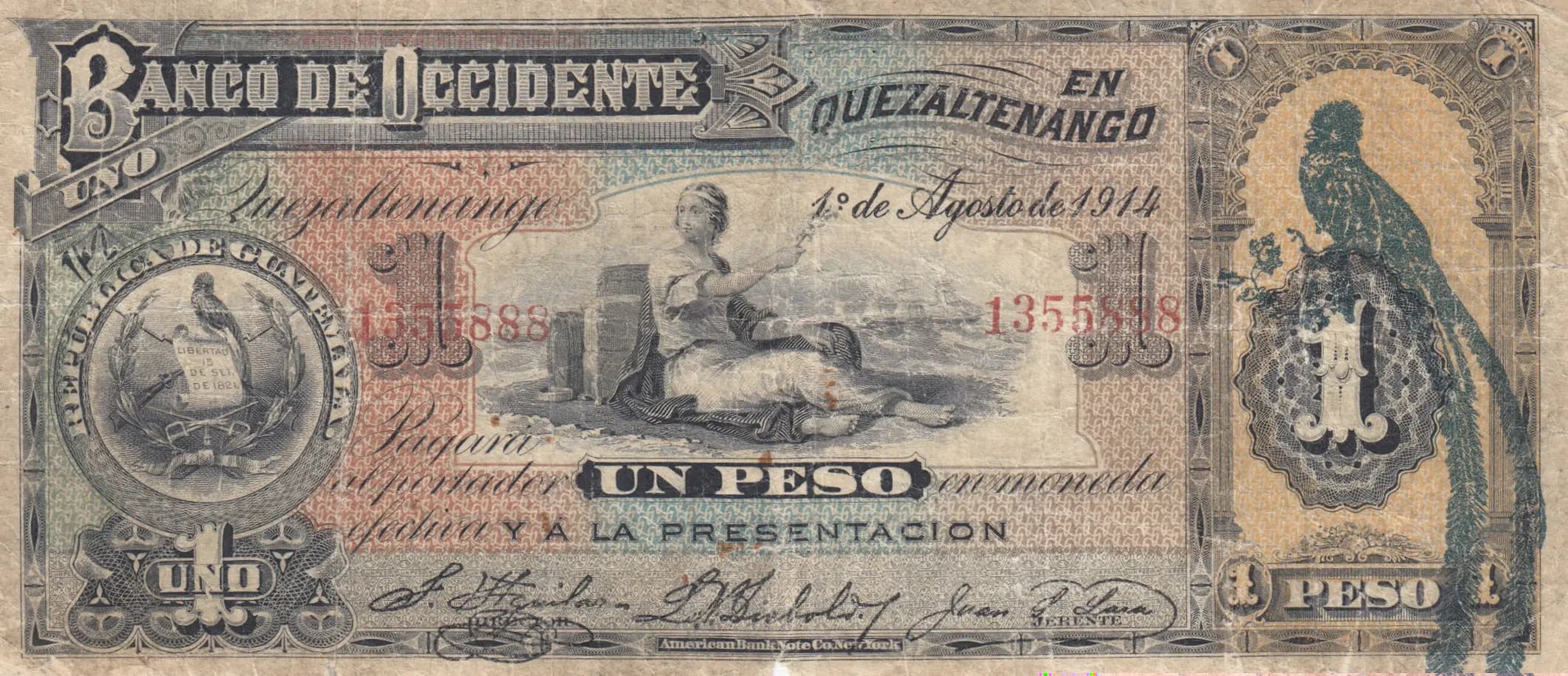
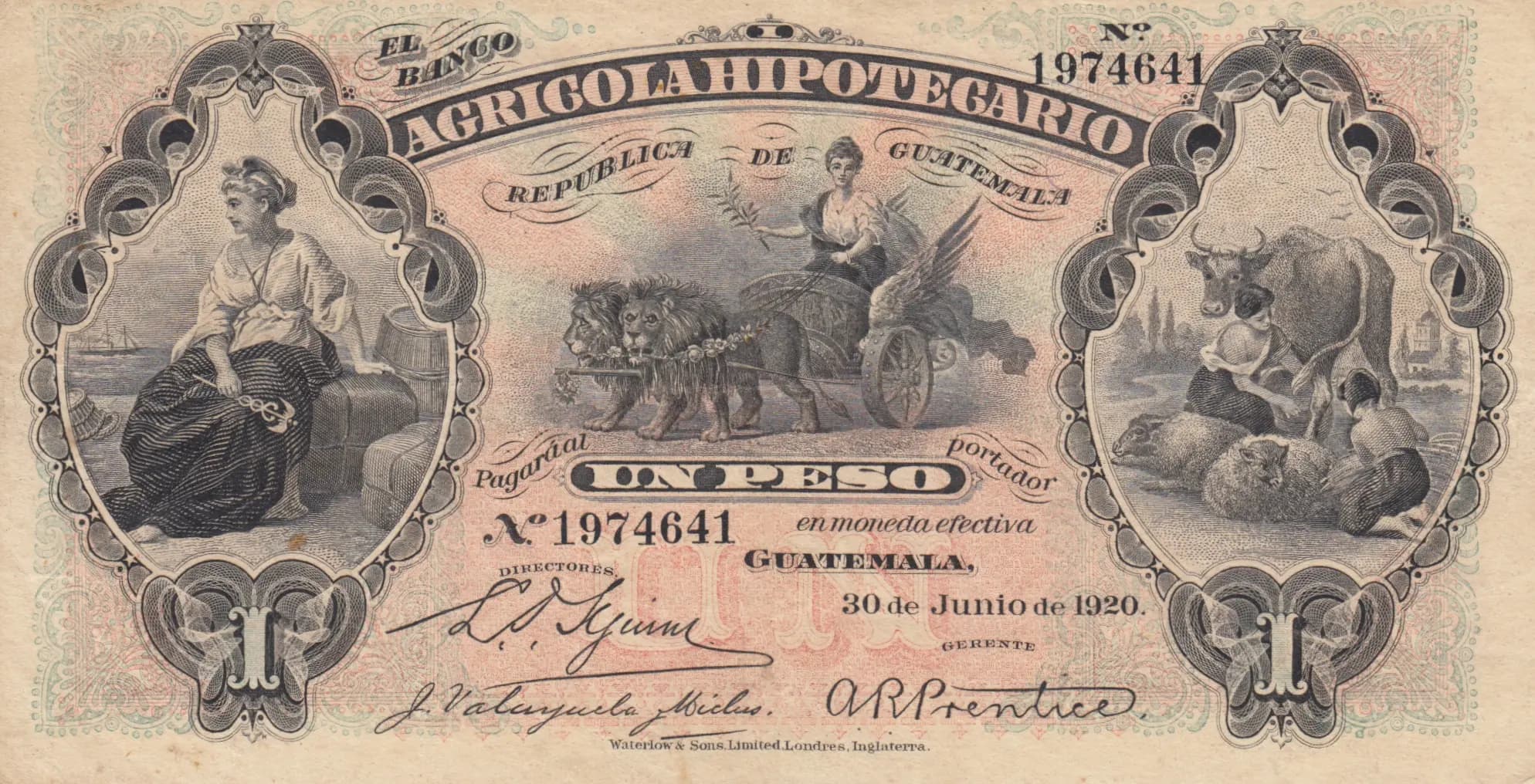
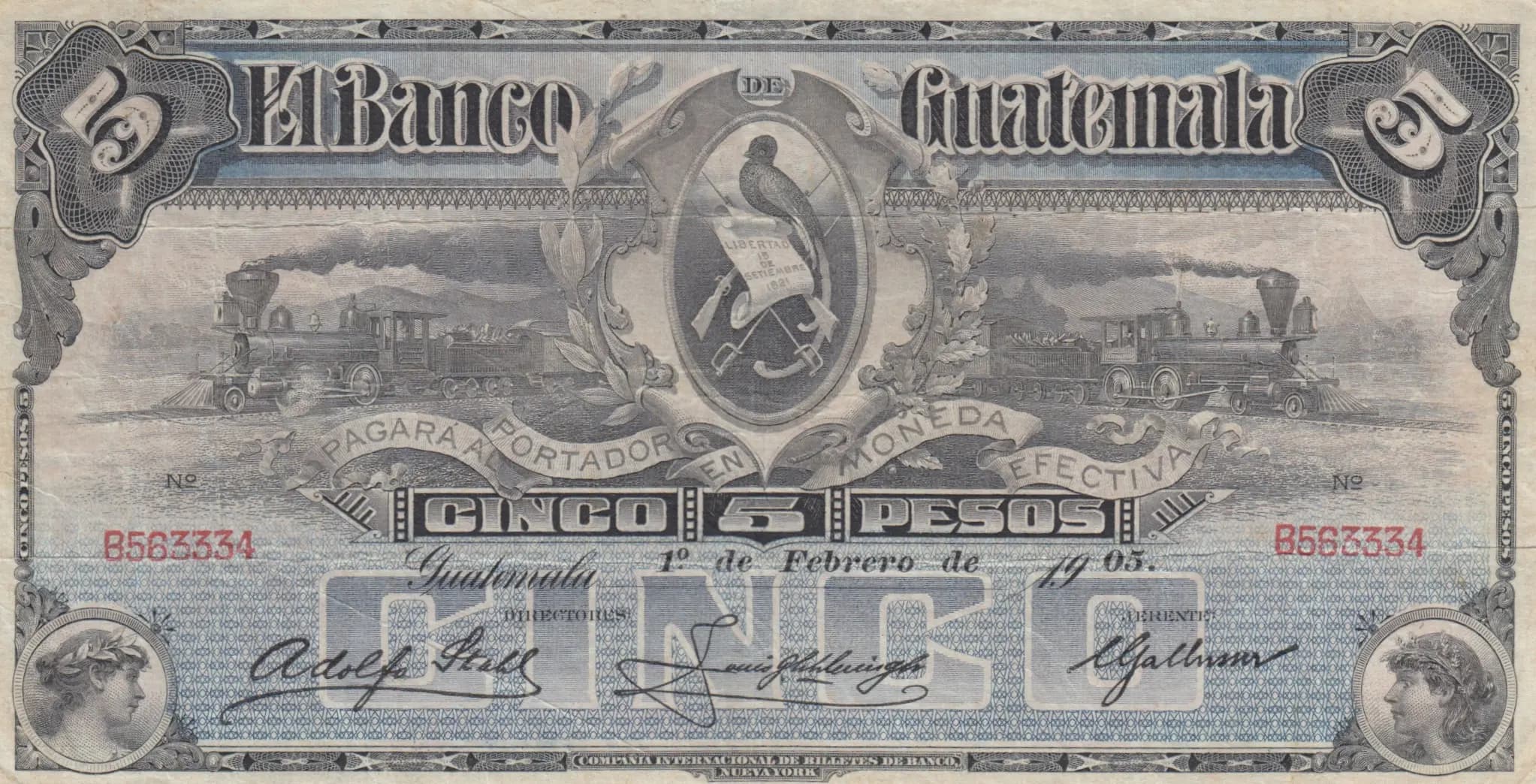
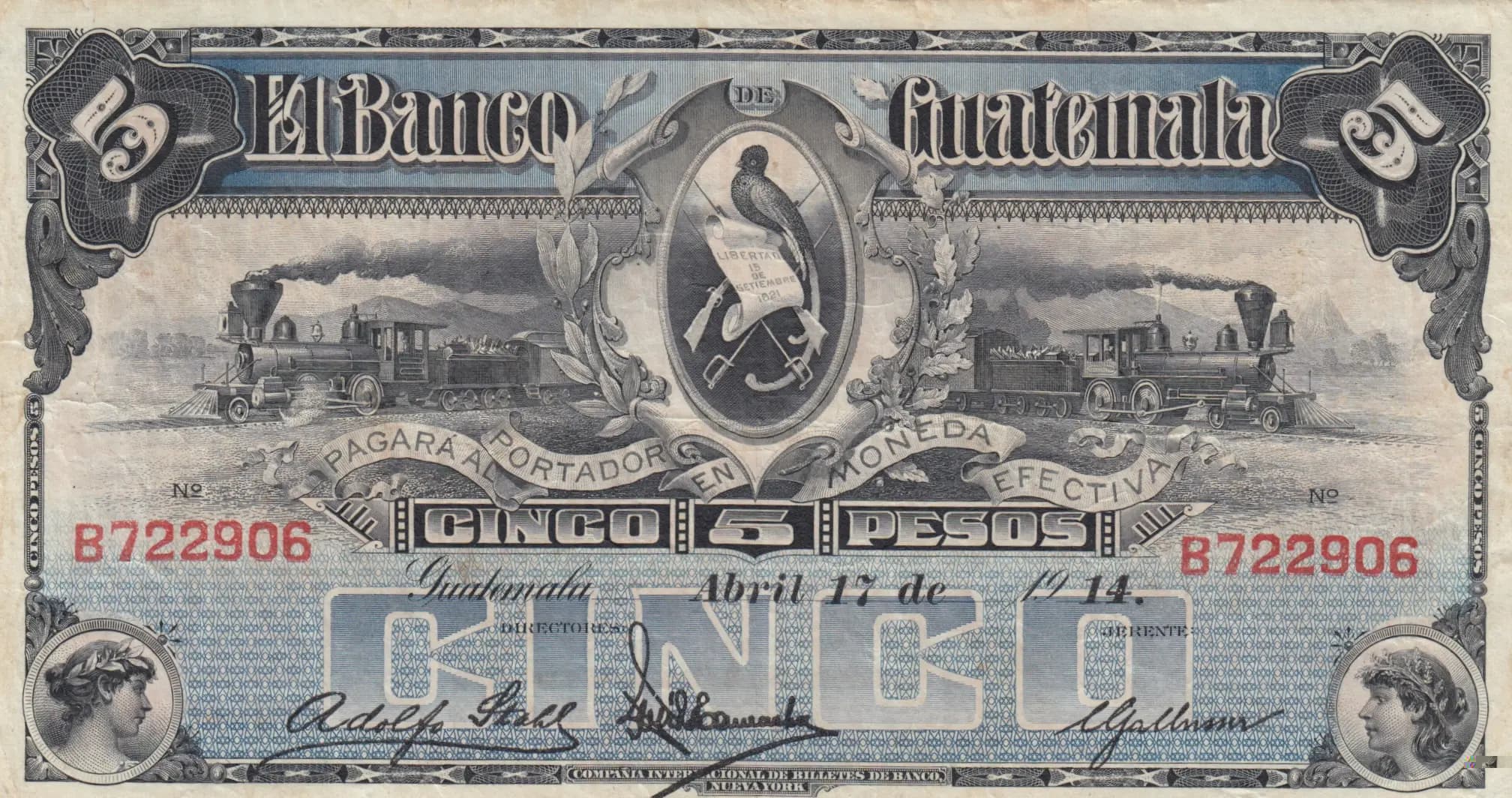
1 peso 1914
Market Prices
1 saleAbout This Note
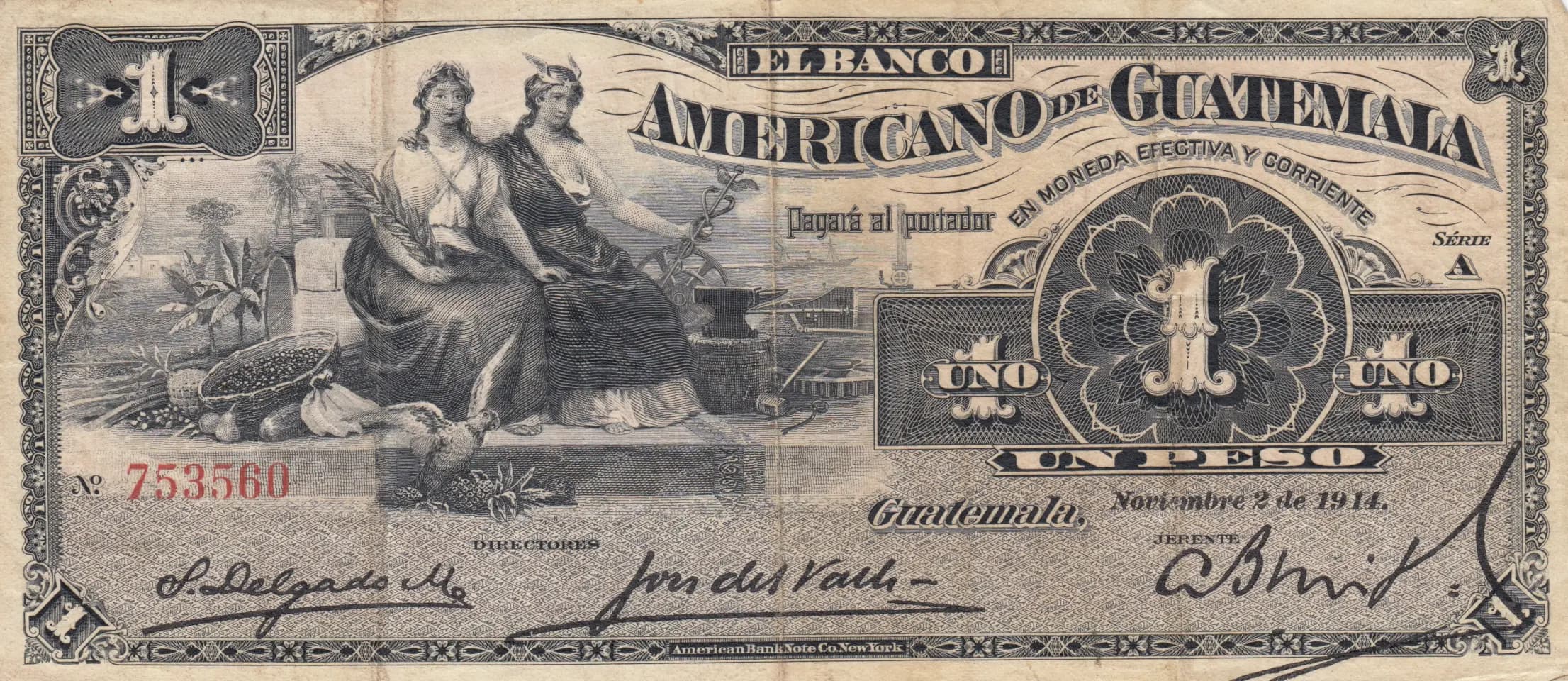
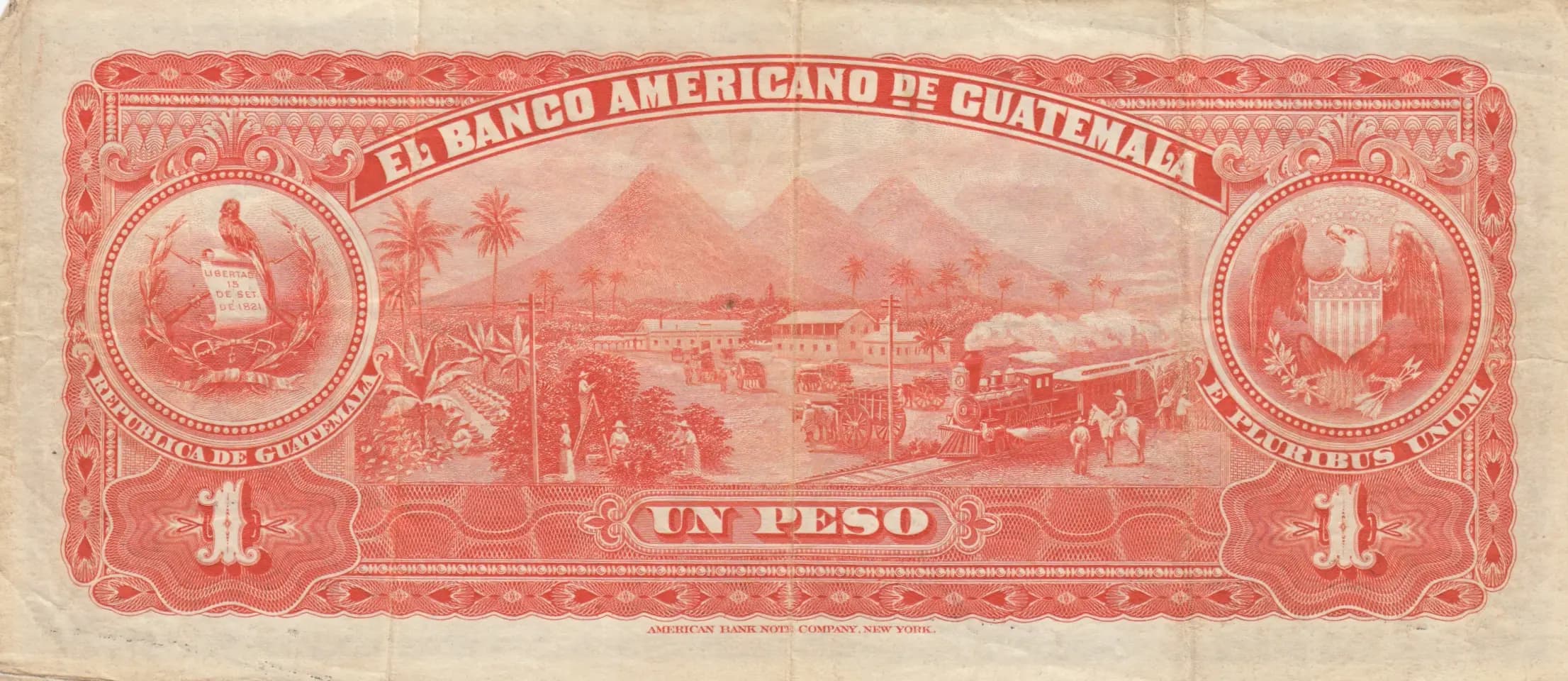
A VF-grade 1 Peso from Banco Americano de Guatemala dated November 9, 1914, featuring classical allegorical female figures representing Agriculture and Commerce on the obverse, with a vibrant red reverse depicting Guatemala's mountainous landscape and national symbols. The note displays the expected aging characteristics of a 110-year-old banknote—moderate creasing, foxing, and patina—while retaining good structural integrity and legible inscriptions, making it a desirable example for collectors of early 20th-century Central American currency.
Common. While early 20th-century Guatemalan banknotes are not everyday finds in the collector market, the 1914 1 Peso from Banco Americano de Guatemala was issued in substantial quantities for regular commercial circulation. The eBay comparable sale cited (PMG 55 at $155.50 in December 2024) indicates moderate collector interest but routine availability at modest price points. The pick catalog lists only one variant (P-S111s) with limited PMG population data, but absence of population scarcity and reasonable eBay pricing confirm this is a common note for its type and period.
Issued during Guatemala's early republican period, this note reflects the nation's aspirations toward modernization and economic development under American banking influence. The Banco Americano de Guatemala, chartered by American capital, issued currency that incorporated both Guatemalan national symbols (the coat of arms with the quetzal bird and 'Liberty September 15' commemoration) and references to United States commerce, symbolizing the close economic ties between the two nations. The scenic vignette on the reverse—depicting mountains, palm trees, and industrial facilities—represents Guatemala's perceived economic potential during the pre-World War I era.
The obverse features two allegorical female figures in classical robes and crowns seated on the left side, representing the virtues of Agriculture and Commerce that the bank sought to promote. A prominent decorative circular floral medallion occupies the center-right, flanked by symmetrical ornamental corner designs with elaborate scrollwork. The reverse presents a panoramic landscape vignette of Guatemala dominated by volcanic peaks, tropical vegetation (palm trees), colonial-era architecture, and industrial facilities with smoke plumes, symbolizing national progress. The Guatemalan coat of arms—featuring the quetzal bird sacred to Maya culture and the nation—appears in circular heraldic medallions on both sides of the reverse, reinforcing national sovereignty. The note employs fine-line engraving throughout with a tan/beige obverse printed in black and a cream reverse in red-orange, creating a visually balanced design typical of American Bank Note Company's high-quality work.
OBVERSE: 'Banco Americano de Guatemala' (American Bank of Guatemala); 'Pagará al portador en moneda efectiva y corriente' (Will pay the bearer in effective and current currency); 'Uno' / 'Uno de Peso' (One / One Peso); 'Guatemala, Noviembre 9 de 1914' (Guatemala, November 9, 1914); 'Serie A' (Series A); Serial number '753560'; 'Directores' (Directors); 'Gerente' (Manager); 'American Bank Note Co. New York'. REVERSE: 'El Banco Americano de Guatemala' (The American Bank of Guatemala); 'República de Guatemala' (Republic of Guatemala); 'Un Peso' (One Peso); 'Pluribus Unum' (Latin: Out of Many, One); 'Libertad 15 de Septiembre' (Liberty September 15 [Guatemala's Independence Day]); 'American Bank Note Company, New York'.
Intaglio engraving (fine-line steel-plate engraving) combined with letterpress elements, executed by the American Bank Note Company (ABNC) of New York. The detailed allegorical figures, ornamental borders, landscape vignette, and security features all bear the hallmarks of ABNC's superior craftsmanship during this period. Multiple color printing was employed—black on tan/beige for the obverse and red-orange on cream for the reverse—suggesting separate engraved plates for each side.
This example represents Pick catalog number P-S111b, Series A, with serial number 753560. The note is dated November 9, 1914 (the official charter date), which is consistent with the initial issue of this series. No significant varieties are noted in standard catalogs for this denomination beyond potential serial number sequences and series designations. The 'SERIE A' marking on the obverse is a standard characteristic of this issue.