5 pesos 1905
Market Prices
About This Note
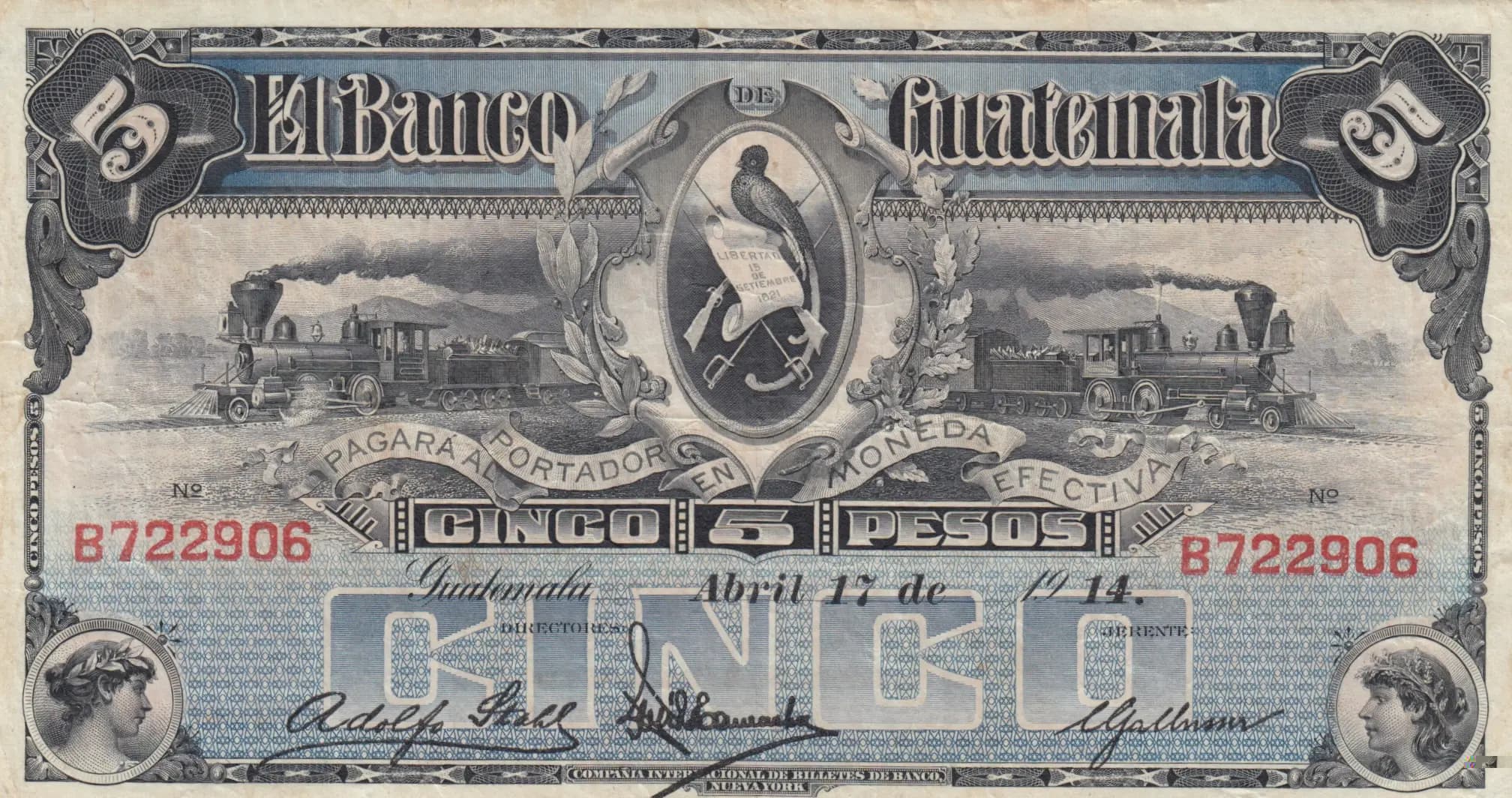
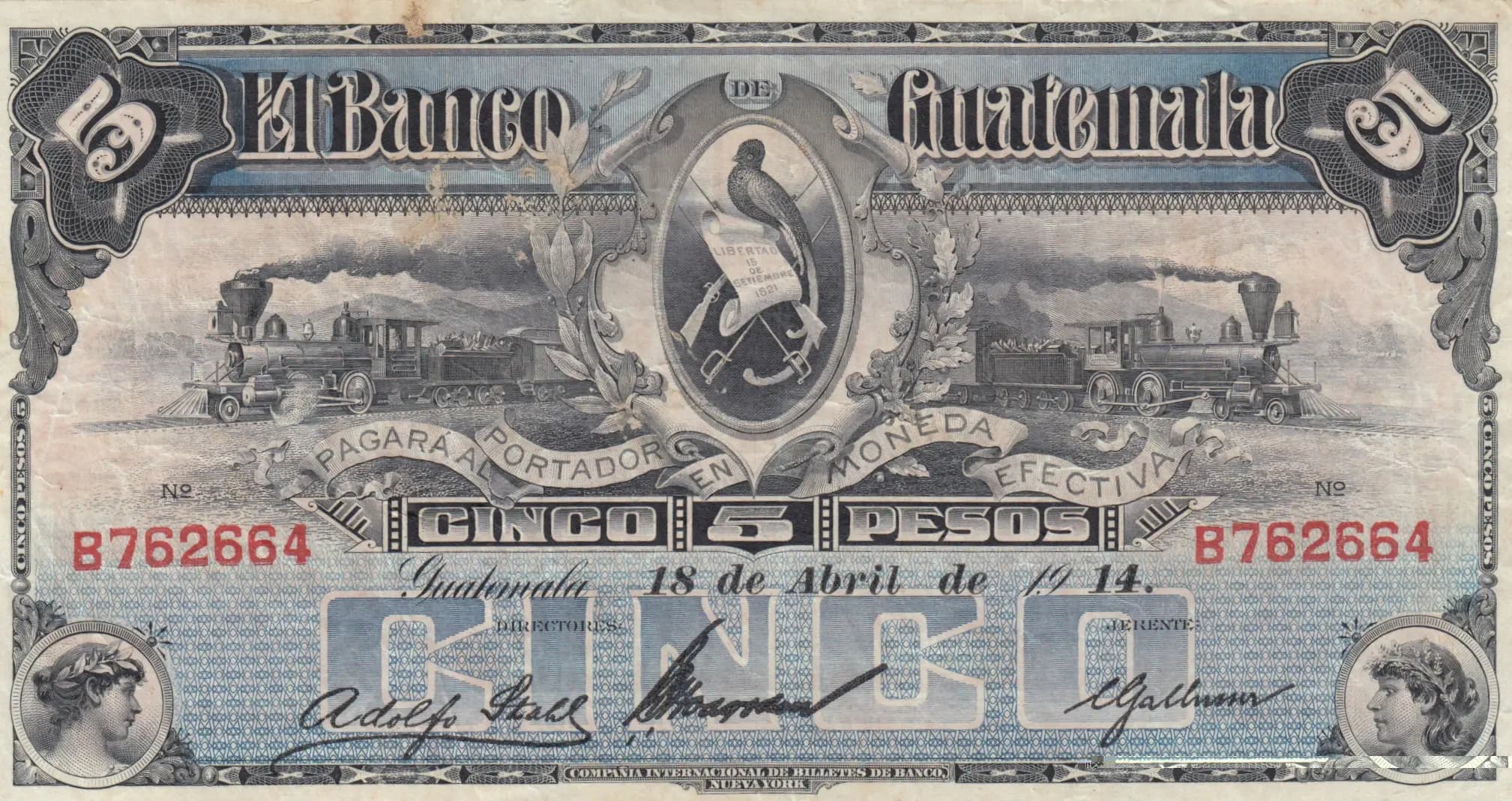
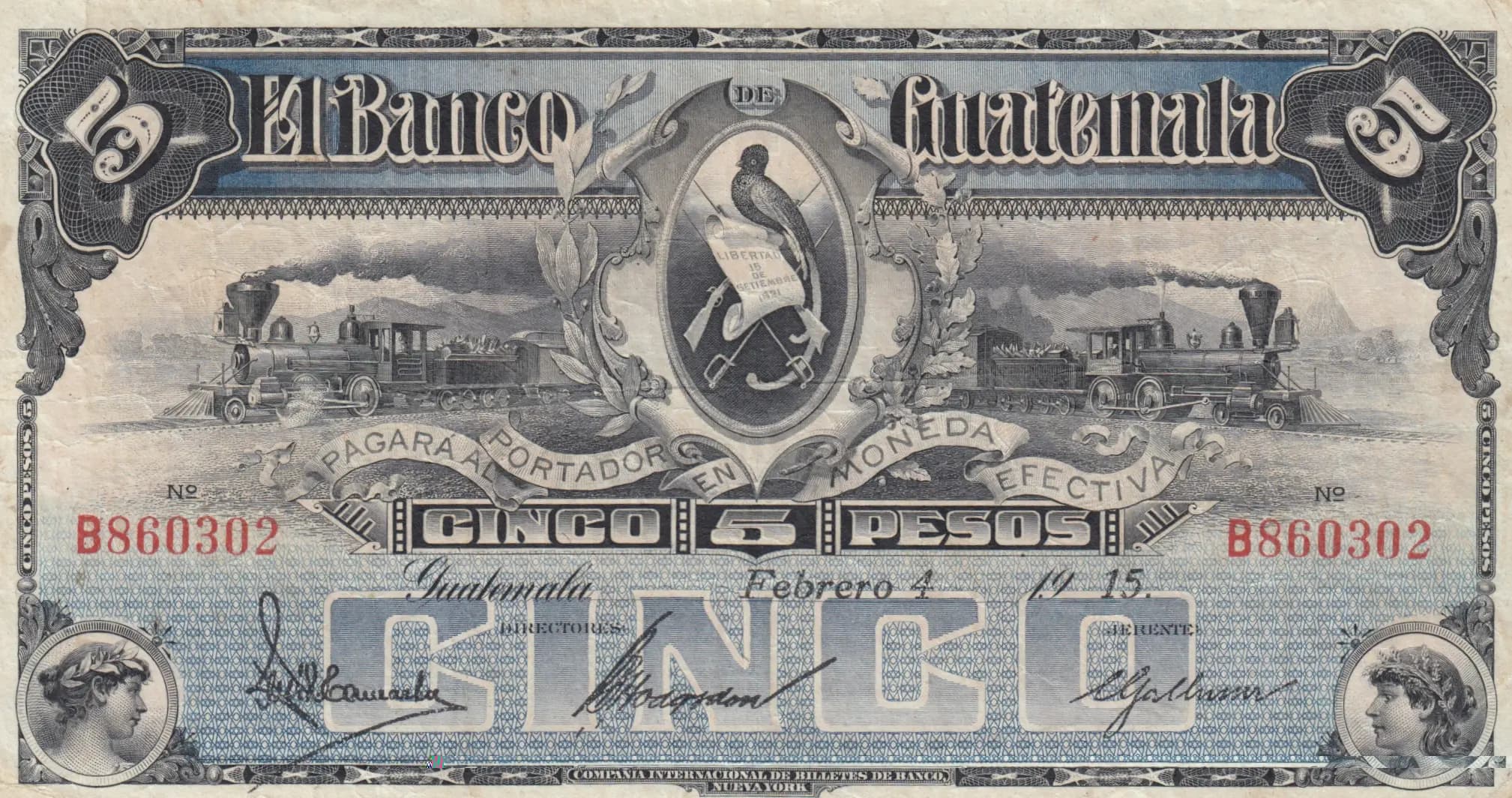
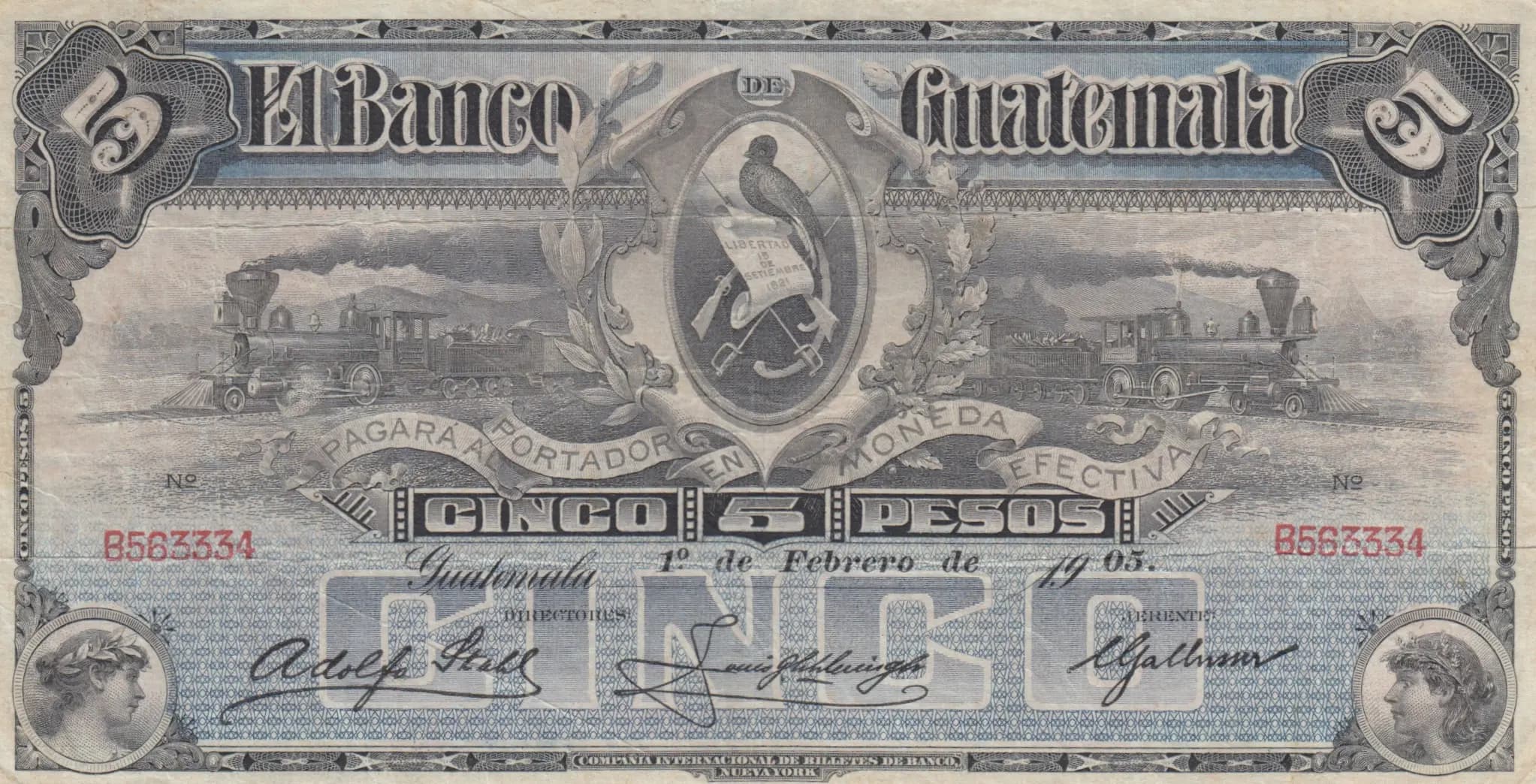
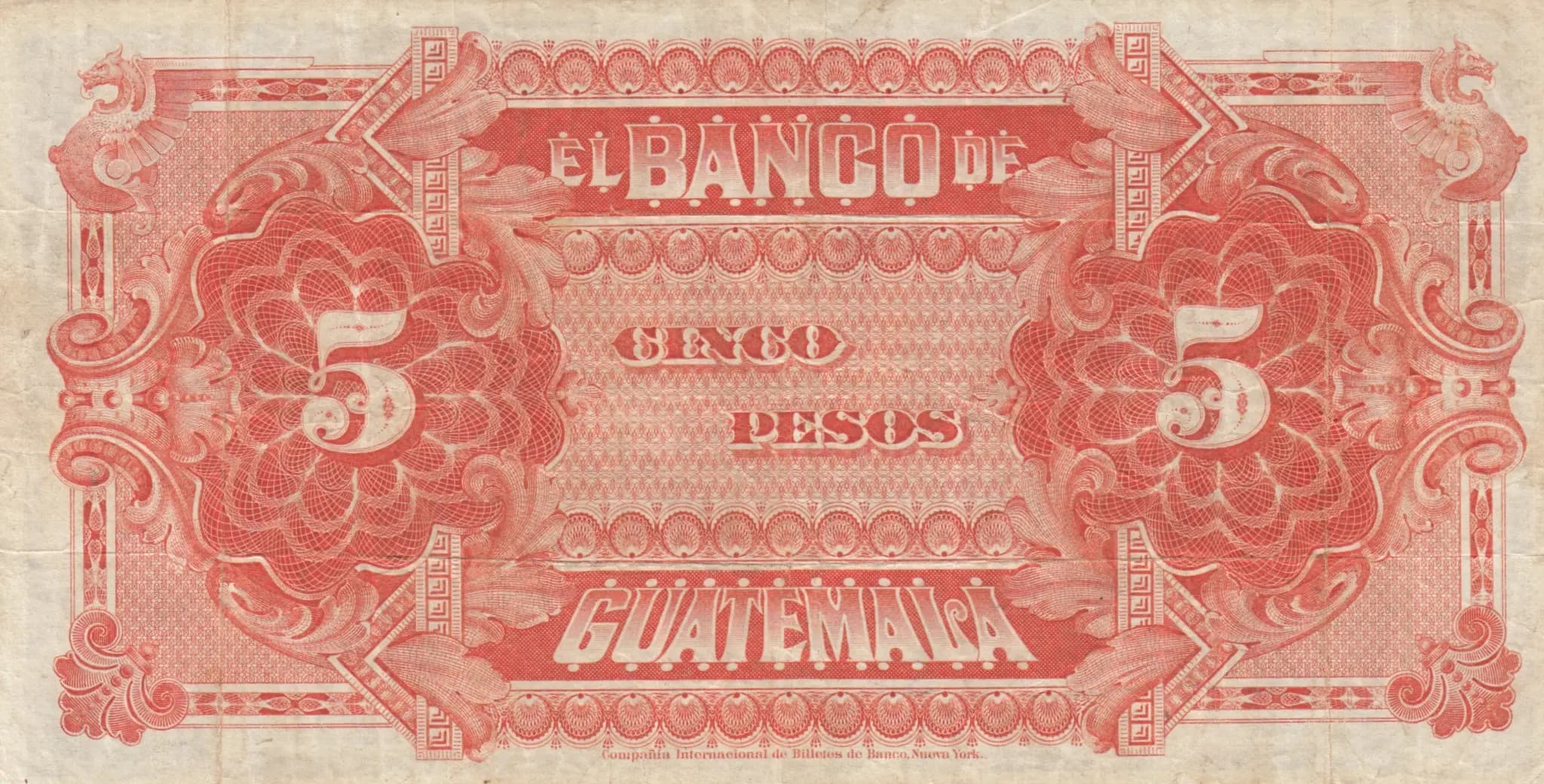
This is a Guatemala 5 Pesos banknote from 1905 (Pick P-S143b), issued by Banco de Guatemala and printed by the International Bank Note Company. The note displays excellent period engraving with striking imagery of two steam locomotives flanking a central quetzal bird holding a 'LIBERTAD' banner, rendered in black ink on blue underprint on the obverse and red-orange on the reverse. In VF condition, this note shows its age through visible creasing and foxing consistent with over 115 years of circulation, yet retains strong visual appeal and clear impressions of the detailed ornamental designs.
Common. While this is a century-old banknote, the eBay market data provided shows VF specimens consistently selling in the $135-$365 range (with VF specifically at $135), indicating active supply in the market and regular collector availability. The note was produced by a major international security printer and circulated in Guatemala's regular banking system. Print runs for such standard issues from this period were substantial, and survival rates, though reduced from original production, remain sufficient to classify this as a commonly encountered example among collectors of early Central American currency.
This 1905 issue represents Guatemala's development during the early 20th century under President Manuel Estrada Cabrera, reflecting the nation's modernization through the prominent depiction of steam locomotives—symbols of industrial progress and expanded transportation infrastructure. The central quetzal bird holding the banner inscribed 'LIBERTAD' (Liberty) served as a patriotic emblem connecting the currency to national identity and democratic ideals. The use of the International Bank Note Company of New York as printer indicates Guatemala's integration into international financial systems and reliance on foreign expertise for secure currency production during this period.
The obverse features an elaborate composition centered on the Guatemala national symbol: the resplendent quetzal bird, depicted holding a banner inscribed 'LIBERTAD,' contained within an ornamental oval medallion. Flanking this central device on either side are two steam locomotives facing inward, representing the nation's railroad development and modernization aspirations. Four corner medallions contain profile busts of male figures (likely national heroes or founding figures), with ornate decorative urns or vessels in the upper corners. The entire design is framed by intricate scrollwork borders with geometric and floral patterns. The reverse abandons figural elements for a symmetrical ornamental design in red and cream tones, featuring dragon or phoenix head motifs in the corners, elaborate scrollwork, and central cartouches displaying the denomination. The handwritten signature lines for Directors and Manager indicate this was part of the authorized circulation series with individual official authentication.
OBVERSE: 'El Banco de Guatemala' (The Bank of Guatemala); 'PAGADOR' (Payer); 'MONEDA EFECTIVA' (Effective Currency); 'CINCO 5 PESOS' (Five 5 Pesos); '1 de Febrero de 190_' (1st of February of 190_); 'LIBERTAD' (Liberty); 'DIRECTORES' (Directors); 'GERENTE' (Manager); 'Compañía Internacional de Billetes de Bancos, Nueva York' (International Bank Note Company, New York); Serial number 'B563334'. REVERSE: 'El Banco de' (The Bank of); 'CINCO 5 PESOS' (Five 5 Pesos); 'GUATEMALA' (Guatemala); 'Compañía Internacional de Billetes de Bancos, Nueva York' (International Bank Note Company, New York).
Steel plate engraving, executed by the International Bank Note Company (IBNC), New York. The printing exhibits the hallmarks of early 20th-century currency production: fine line work with repetitive geometric and floral patterns for security purposes, color separation between obverse (black on blue underprint) and reverse (red-orange), and intricate engraved detail throughout. The red serial number was applied separately, typical of the era's printing methodology.
This specimen is cataloged as Pick P-S143b, representing one of two known variants for this base number (P-S143b and P-S143c, both printed by IBNC). The visual analysis shows this note dated '1 de Febrero de 190_' (the year digit appears incomplete in the description, but catalog confirms 1905), with red serial number B563334. The handwritten signatures and individual serial numbering are consistent with the P-S143b variant as produced during the authorized circulation period. No overprints or unusual security features beyond standard engraving are noted.