50 mark 1971 specimen
About This Note
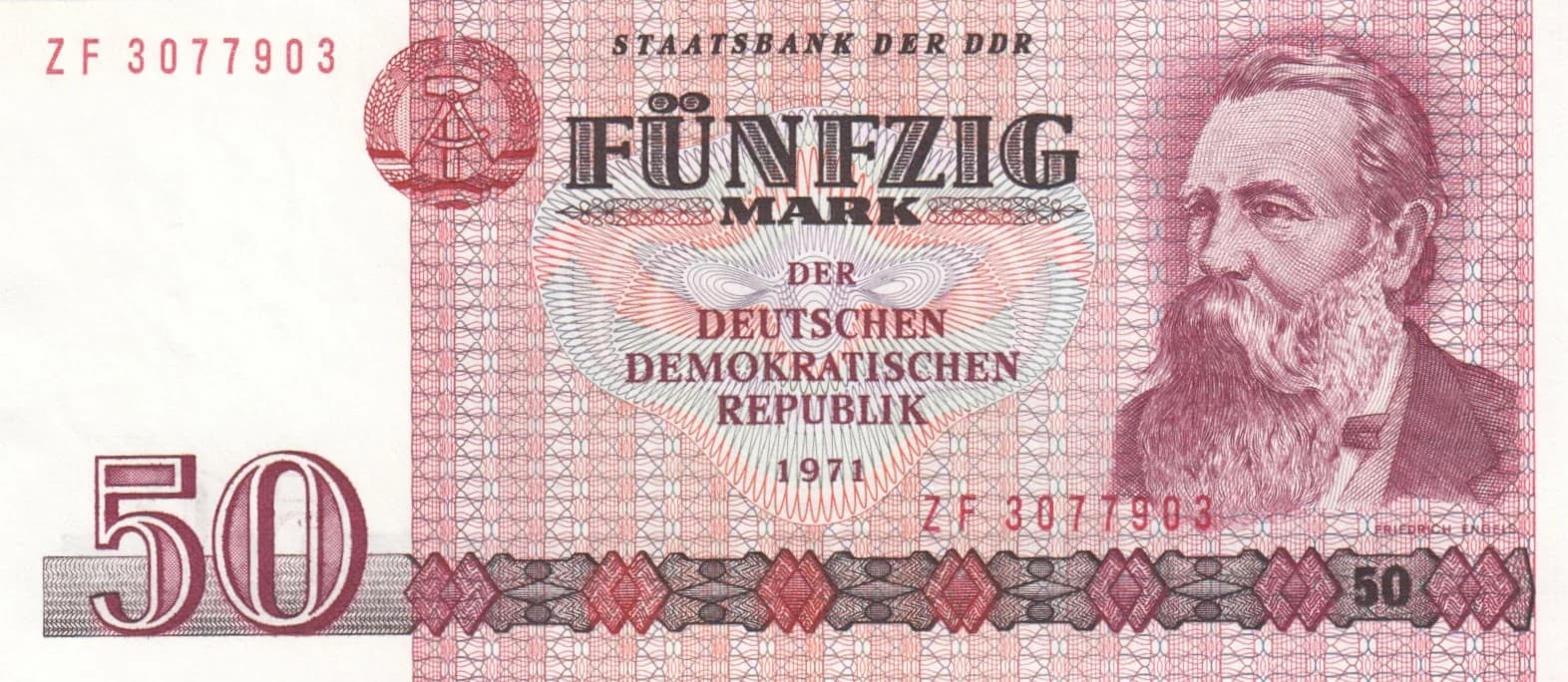
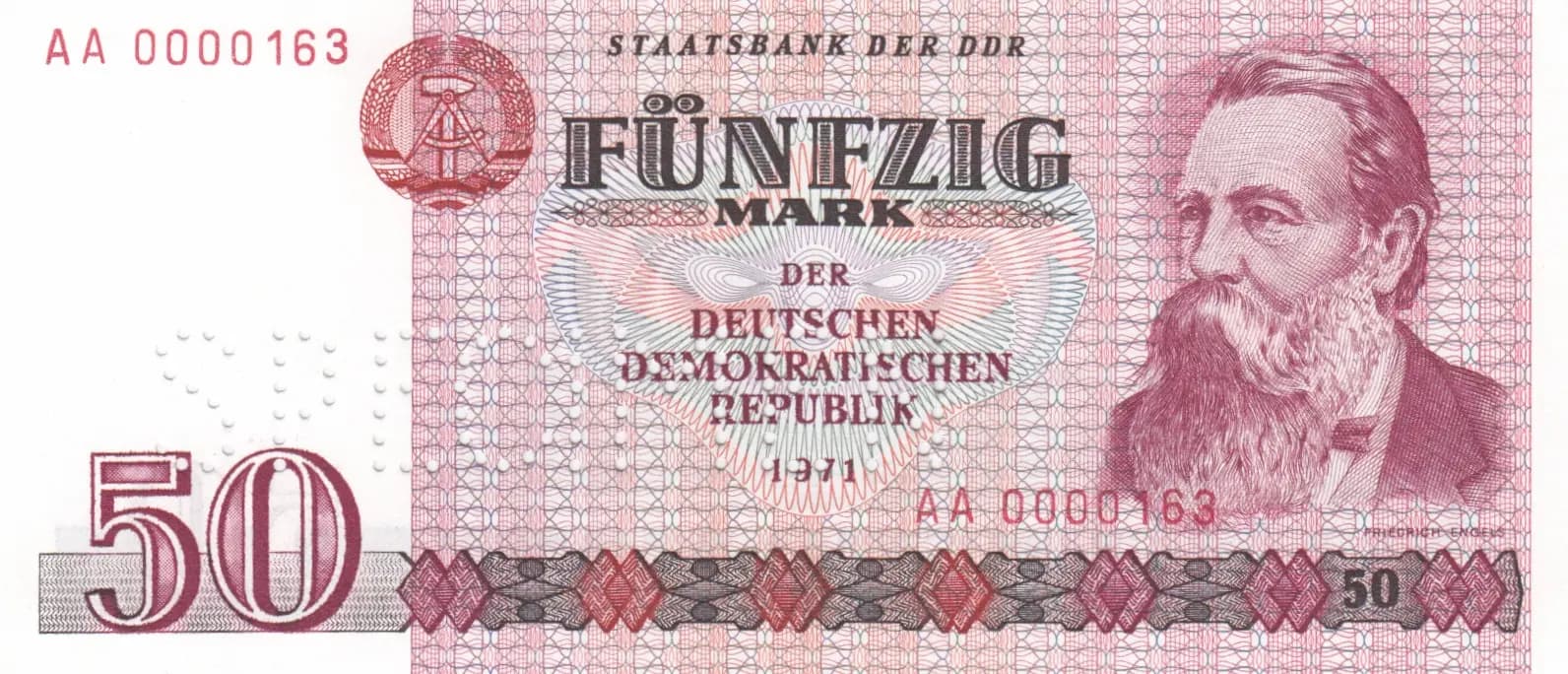
This is a 50 Mark specimen banknote from the German Democratic Republic issued in 1971 by the Staatsbank der DDR. The note exhibits pristine uncirculated condition with no visible wear, displaying intricate security printing throughout including fine guilloche patterns on the front and precise vertical line work on the reverse. The specimen designation (indicated by the 'as' suffix in the Pick catalog number) makes this a bank-issued sample note rather than a circulation piece, adding institutional significance for collectors of GDR currency and Cold War-era East German numismatics.
Common. This is a standard-issue 50 Mark note from 1971, produced by the Staatsbank der DDR in what were likely substantial quantities for general circulation and banking purposes. While the specimen designation ('as' in Pick-30as) indicates this is a bank sample rather than a regular circulation note, GDR banknote specimens are not particularly scarce in the collector market. The denomination, year, and issuer do not indicate limited production, short-lived status, or recall, and uncirculated examples are readily available to collectors.
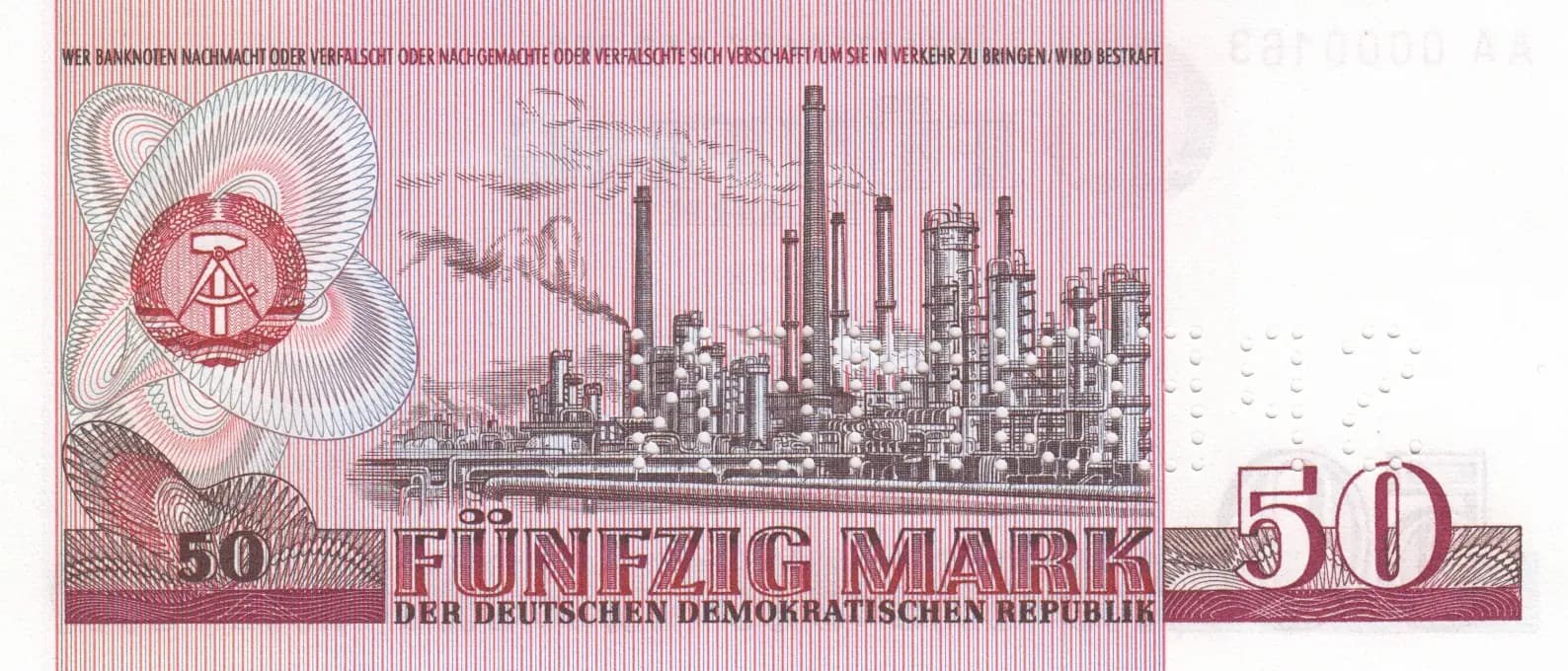
This 1971 issue represents the GDR's monetary identity during the height of the Cold War, when the East German state maintained separate currency from West Germany. The reverse design prominently features an industrial cityscape with factory smokestacks and manufacturing facilities, reflecting the socialist state's emphasis on industrial development and economic self-sufficiency. The coat of arms incorporating the hammer and compass symbolizes the regime's communist ideology and working-class orientation during this period of the German Democratic Republic's existence.
The front features a three-quarter profile portrait of a bearded 19th-century historical figure positioned on the right side, likely representing a significant German or socialist historical personality. The composition includes the GDR coat of arms with hammer and compass symbol in the upper left, large denomination numerals '50' in the lower left, and the entire background filled with intricate geometric guilloche patterns and fine line work typical of high-security currency design. The reverse depicts an industrial landscape symbolizing East German manufacturing prowess, with multiple tall factory smokestacks and industrial buildings dominating the center-right composition. The left side contains the same GDR coat of arms surrounded by decorative circular and spiral patterns, while the background consists of precisely rendered vertical parallel lines. Large denomination numerals appear in all four corners.
Front side: 'STAATSBANK DER DDR' (State Bank of the German Democratic Republic), 'FÜNFZIG MARK' (Fifty Mark), 'DER DEUTSCHEN DEMOKRATISCHEN REPUBLIK' (Of the German Democratic Republic), '1971' (Year of issue), Serial number 'AA 0000163'. Back side: 'FÜNFZIG MARK' (Fifty Mark), 'DER DEUTSCHEN DEMOKRATISCHEN REPUBLIK' (Of the German Democratic Republic), Legal warning: 'WER BANKNOTEN NACHMACHT ODER VERFÄLSCHT ODER NACHGEMACHTE ODER VERFÄLSCHTE SICH VERSCHAFFT UM SIE IN VERKEHR ZU BRINGEN WIRD BESTRAFT' (Whoever counterfeits banknotes or forges or procures counterfeit or forged banknotes in order to put them into circulation will be punished).
Intaglio (gravure) printing, the standard technique for currency production. The fine guilloche patterns, detailed portrait engraving, intricate geometric backgrounds, and security line work are characteristic of high-security intaglio currency printing. The GDR's State Bank notes of this period were typically produced by the VEB Wertpapierdruckerei (GDR state security printing works), though specific printer attribution for this Pick number would require additional documentation.
This note is identified as Pick-30as, where the 'as' designation indicates it is a specimen note issued by the Staatsbank der DDR for banking purposes rather than general circulation. The serial number format 'AA 0000163' with leading zeros is consistent with specimen issuance protocols. Varieties of this note would be distinguished by serial number prefixes (letter combinations), signature variations of bank officials, and different printing dates, though such detailed variety information would require comparison with comprehensive GDR numismatic catalogs.