50 mark 1971
About This Note
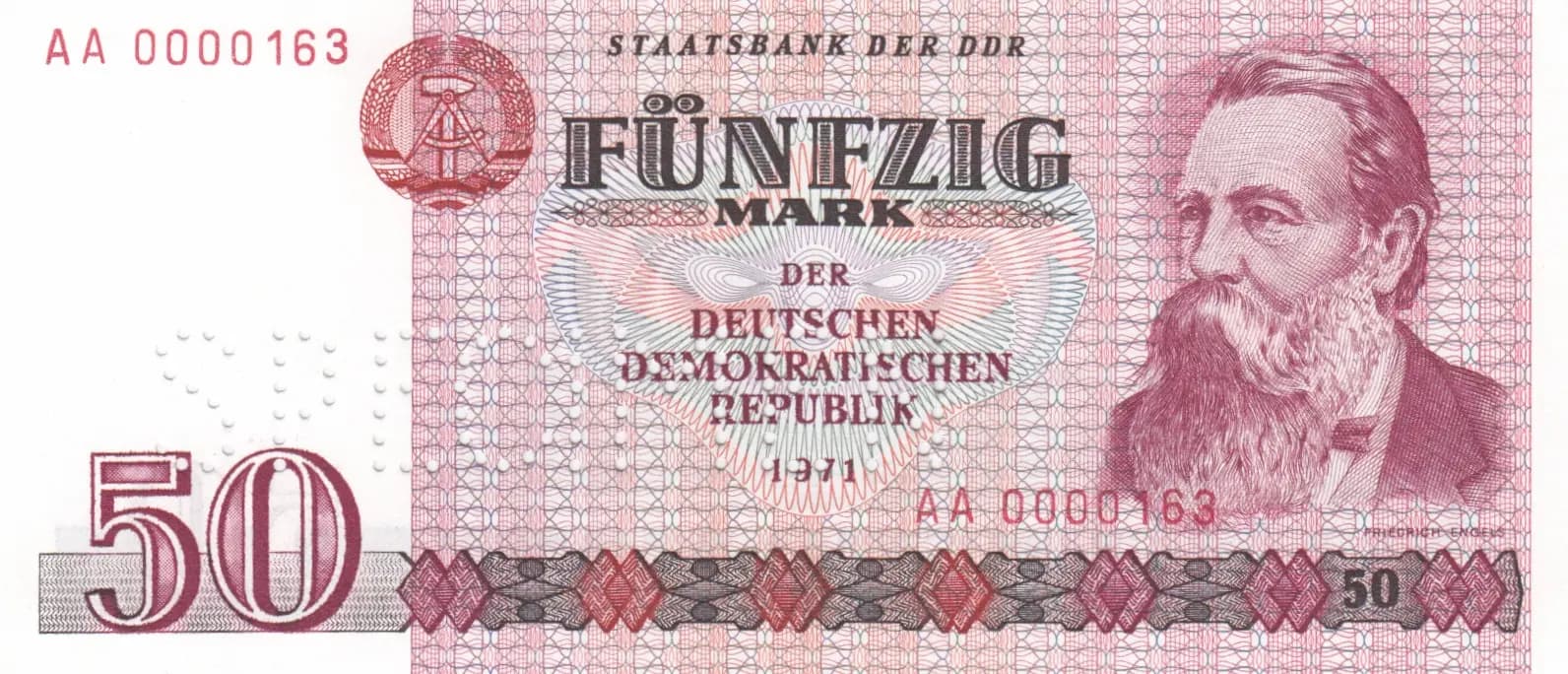
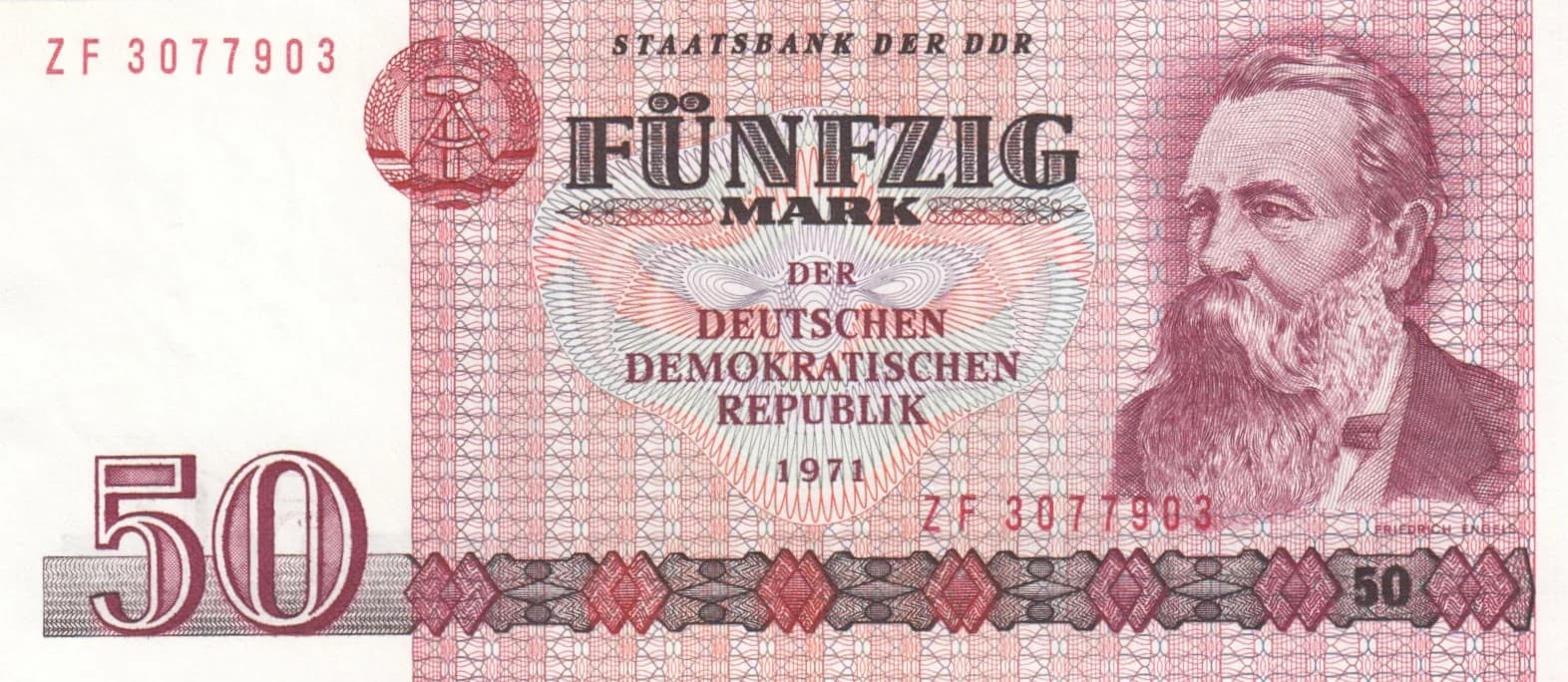
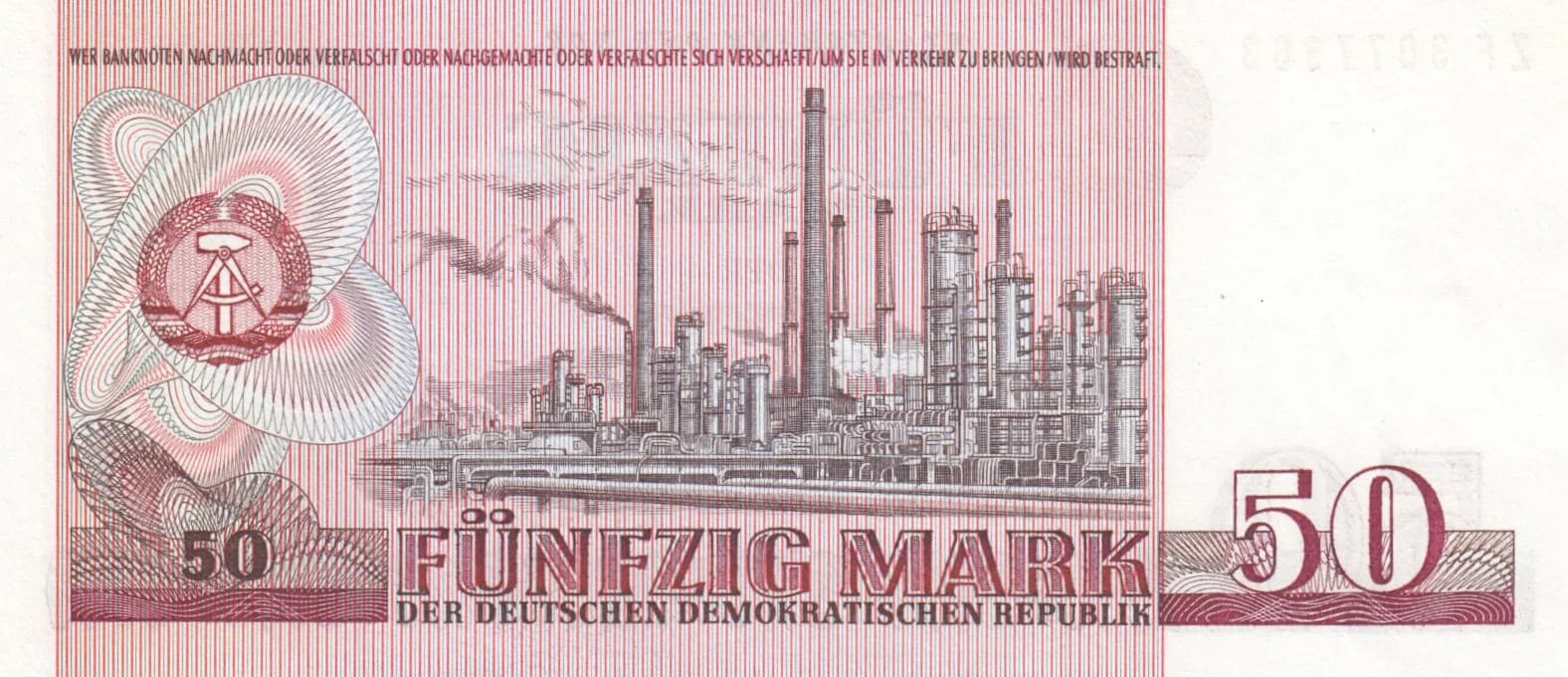
This is an exceptional uncirculated example of the 1971 East German 50 Mark note (Pick P-30b), issued by the Staatsbank der DDR. The note features pristine condition with no visible wear, displaying the characteristic red and pink color scheme with intricate security patterns throughout. The front portrays a bearded historical figure in profile, while the reverse depicts an industrial cityscape symbolic of East Germany's manufacturing economy, making this a visually striking representation of Cold War-era socialist state currency.
Common. The 50 Mark denomination from 1971 (Pick P-30b) was issued in substantial quantities during normal circulation of GDR currency. While all GDR banknotes have become collectible since reunification, this particular denomination and issue year remains readily available on the secondary market in all condition grades. No significant print run restrictions, recall issues, or short-lived circulation period apply to this note. Uncirculated examples, while more desirable than circulated notes, are still commonly encountered in dealer inventories and collector markets.
Issued in 1971 during the height of the German Democratic Republic's existence, this banknote reflects the GDR's emphasis on industrial production and state socialism through its imagery of factories, smokestacks, and manufacturing complexes. The prominent display of the East German state emblem (hammer and compass within a wreath) on both sides reinforces the official authority of the Staatsbank der DDR. The note circulated during a period of relative economic stability in the GDR, before the currency's ultimate obsolescence with German reunification in 1990.
The obverse features a formal portrait of a bearded man in 19th-century attire positioned on the right side, likely representing a significant historical or cultural figure from German history. The left side displays the circular GDR state emblem (hammer and compass within a wreath), with ornate geometric background patterns executed in fine line work providing both aesthetic appeal and security features. The reverse depicts an industrial complex with multiple tall smokestacks, factory buildings, and manufacturing structures, reflecting the GDR's emphasis on industrial production and heavy industry. The entire note background is filled with intricate vertical parallel line work and concentric circular patterns radiating from the emblem, creating a sophisticated security design. Text elements are distributed symmetrically on both sides with denomination and issuing authority clearly marked.
FRONT SIDE: 'STAATSBANK DER DDR' (State Bank of the GDR), 'FÜNFZIG MARK' (Fifty Mark), 'DER DEUTSCHEN DEMOKRATISCHEN REPUBLIK' (Of the German Democratic Republic), '1971' (year of issue), 'ZF 3077903' (serial number, repeated at bottom right), '50' (denomination marker). BACK SIDE: 'WER BANKNOTEN NACHAHMT ODER VERFÄLSCHT ODER NACHGEMACHTE ODER VERFÄLSCHTE SICH VERSCHAFFT/UM SIE IN VERKEHR ZU BRINGEN WIRD BESTRAFT' (Whoever counterfeits banknotes or forges or procures counterfeit or forged ones in order to put them into circulation will be punished), 'FÜNFZIG MARK' (Fifty Mark), 'DER DEUTSCHEN DEMOKRATISCHEN REPUBLIK' (Of the German Democratic Republic), '50' (denomination marker).
This note was produced using intaglio printing (engraved line printing), evidenced by the crisp, fine line work visible throughout both sides and the complex geometric microprint patterns that serve as security features. The parallel vertical lines covering the entire surface and the detailed background patterns are characteristic of high-security intaglio production. The note was printed by the GDR's official security printer, VEB Giesecke & Devrient (Leipzig facility) or similar state-authorized printer, using techniques typical of East German banknote production of the 1970s.
The observed serial number 'ZF 3077903' indicates a printing series from the 1971 production run. The 'ZF' prefix was standard for GDR banknote serial numbering during this period. No significant varieties (such as signature variants, major overprints, or color variants) are known for Pick P-30b. The note represents the standard issue design and production for this denomination and year, with serial number variations being typical but not constituting distinct numismatic varieties.