20 mark 1955
About This Note
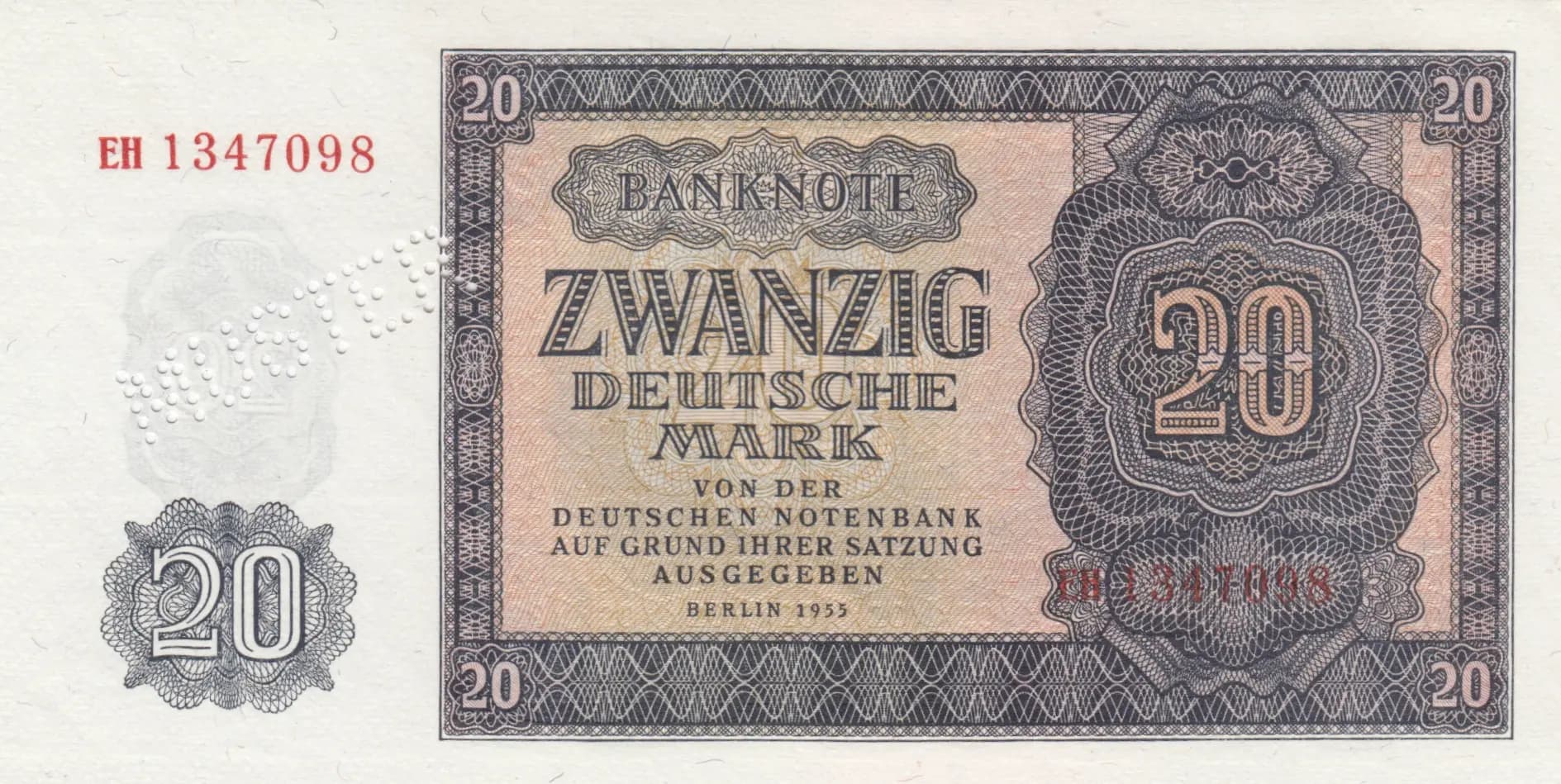
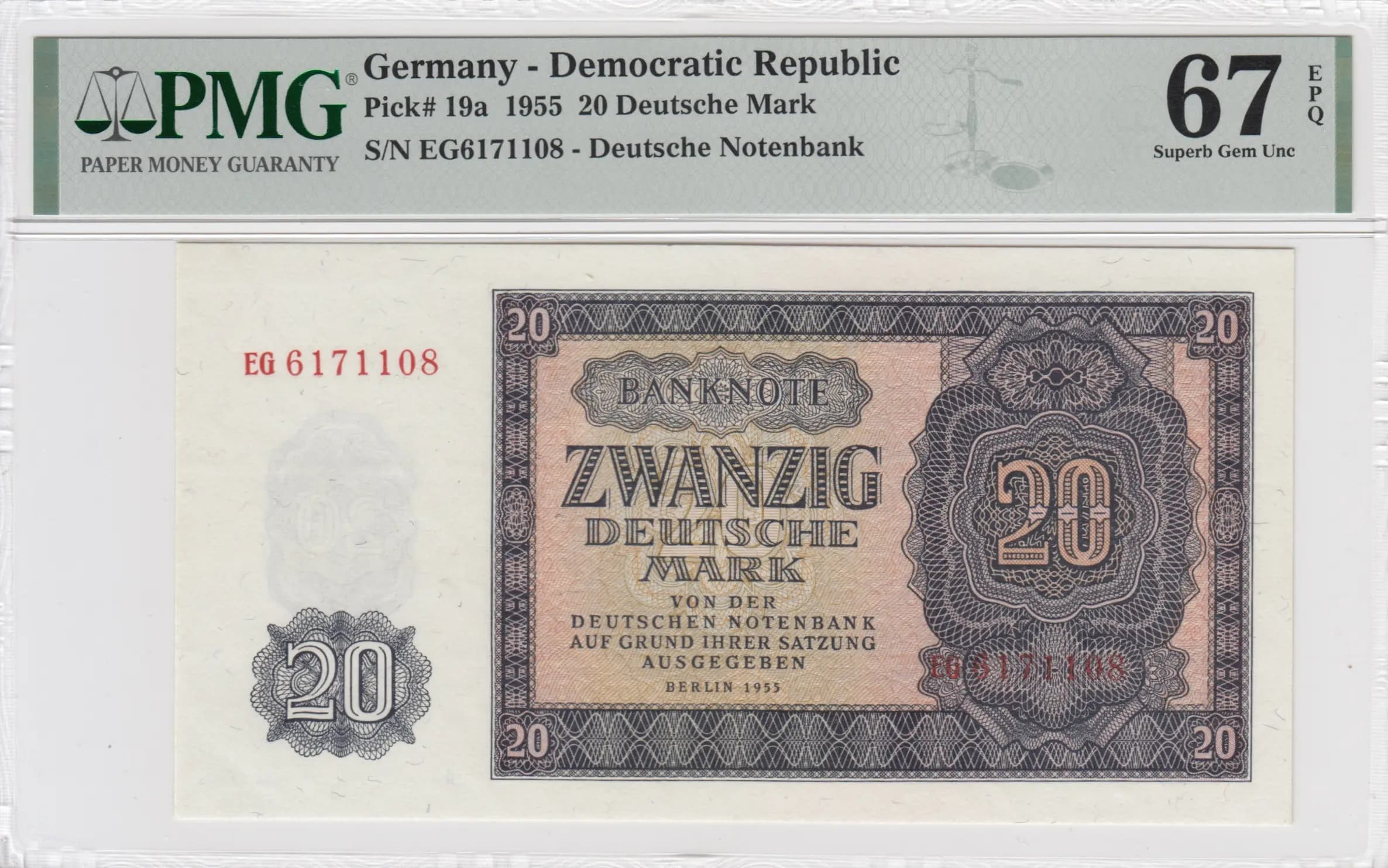
This is a pristine example of the East German Deutsche Notenbank 20 Mark note from 1955, graded PMG 67 Superb Gem Uncirculated. The note features elegant ornamental border designs with interlocking geometric patterns and rosette motifs rendered in purple and dark gray on a cream/beige background. With its sharp printing, vibrant colors, and complete absence of wear or damage, this specimen represents an exceptional example of early DDR currency and demonstrates the high production quality of Deutsche Notenbank notes from this transitional period in German monetary history.
Common. The Deutsche Notenbank 20 Mark 1955 (Pick 19a) remains readily available in the numismatic market, particularly in grades below PMG 67. While this specific high-grade example (Superb Gem Uncirculated) is more desirable than worn or damaged specimens, the note itself was produced in substantial quantities and is not considered scarce. 20 Mark denominations were workhorse circulating currency during the early GDR period, ensuring large surviving populations. No documented print run restrictions, early recalls, or extreme rarity factors apply to this Pick number.
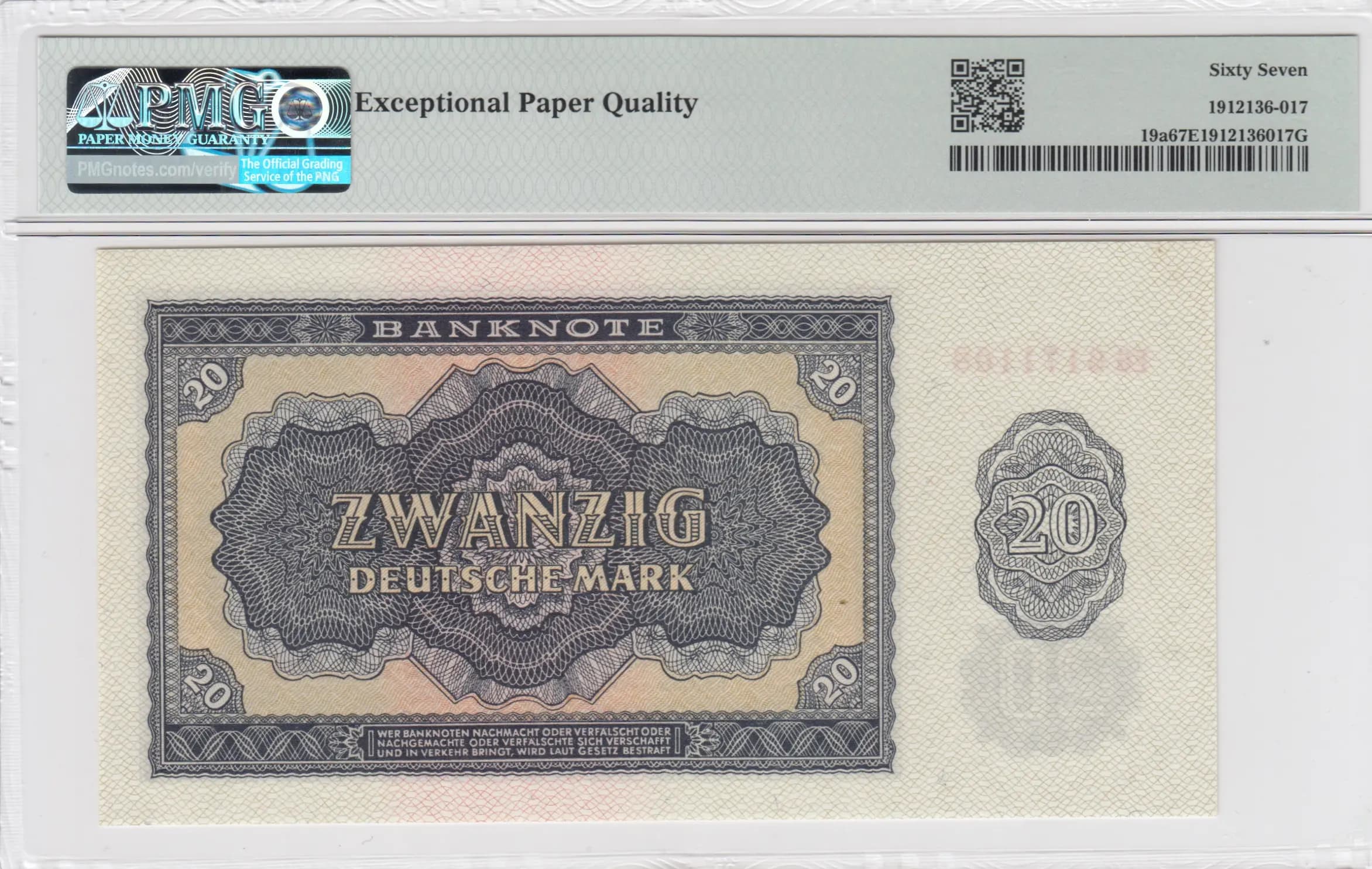
The Deutsche Notenbank 20 Mark note of 1955 was issued during the early phase of the German Democratic Republic's monetary independence, following the establishment of the Deutsche Notenbank in 1954. This note reflects the GDR's commitment to creating a distinct East German currency separate from West German currency, with the Berlin-1955 imprint marking the issuing authority's headquarters. The formal legal warning against counterfeiting printed on the reverse exemplifies the serious approach taken by the communist state toward currency security and state monetary authority.
The 20 Mark note features a symmetrical design dominated by ornate neoclassical border patterns with interlocking geometric elements and ornamental rosette designs positioned in the corners of both obverse and reverse. The denomination '20' and 'ZWANZIG DEUTSCHE MARK' / 'DEUTSCHEMARK' are prominently displayed in ornate numerical markers arranged across the note. No portrait or allegorical figures are depicted; instead, the design relies entirely on geometric ornamentation and typographic elements characteristic of early Deutsche Notenbank currency. The red serial number on the obverse (EG 6171108) uses a prefix system typical of GDR issues. The cream/beige field provides a neutral background that highlights the precise purple and dark gray printing throughout.
FRONT: 'ZWANZIG DEUTSCHE MARK' (Twenty German Marks) / 'VON DER DEUTSCHEN NOTENBANK AUF GRUND IHRER SATZUNG AUSGEGEBEN' (Issued by the German Central Bank pursuant to its charter) / 'BERLIN-1955' (Berlin-1955) / Serial number 'EG 6171108' / BACK: 'ZWANZIG DEUTSCHEMARK' (Twenty German Marks) / 'WER BANKNOTEN NACHMACHT ODER VERFALSCHT ODER VERFÄLSCHTE SICH VERSCHAFFT WIRD MIT FREIHEITSSTRAFE BIS ZU ZWANZIG JAHREN BESTRAFT' (Whoever counterfeits or falsifies banknotes or procures counterfeit or falsified banknotes will be punished with imprisonment of up to twenty years)
Intaglio (engraved) printing on specialized banknote paper, characteristic of Deutsche Notenbank currency production. The fine line engraving visible throughout, the sharp denomination markers, and the intricate geometric borders demonstrate the precision of intaglio work. The GDR's primary currency printer, Giesecke+Devrient (though the specific printer is not marked on the note itself), employed traditional engraving methods for security and aesthetic purposes. The uniform color density and crisp detail suggest professional banknote production standards typical of 1950s East German currency.
The observed variety is Pick 19a, distinguished by the 1955 date and Deutsche Notenbank issuer imprint. The serial number prefix 'EG' is consistent with GDR-era numbering conventions. No overprints, replacement notes, or known major varieties are evident in this specimen. The standard design configuration with geometric ornamentation (without allegorical figures or portraits) remained consistent across printings of this denomination during this period.