100 mark 1964 specimen
About This Note
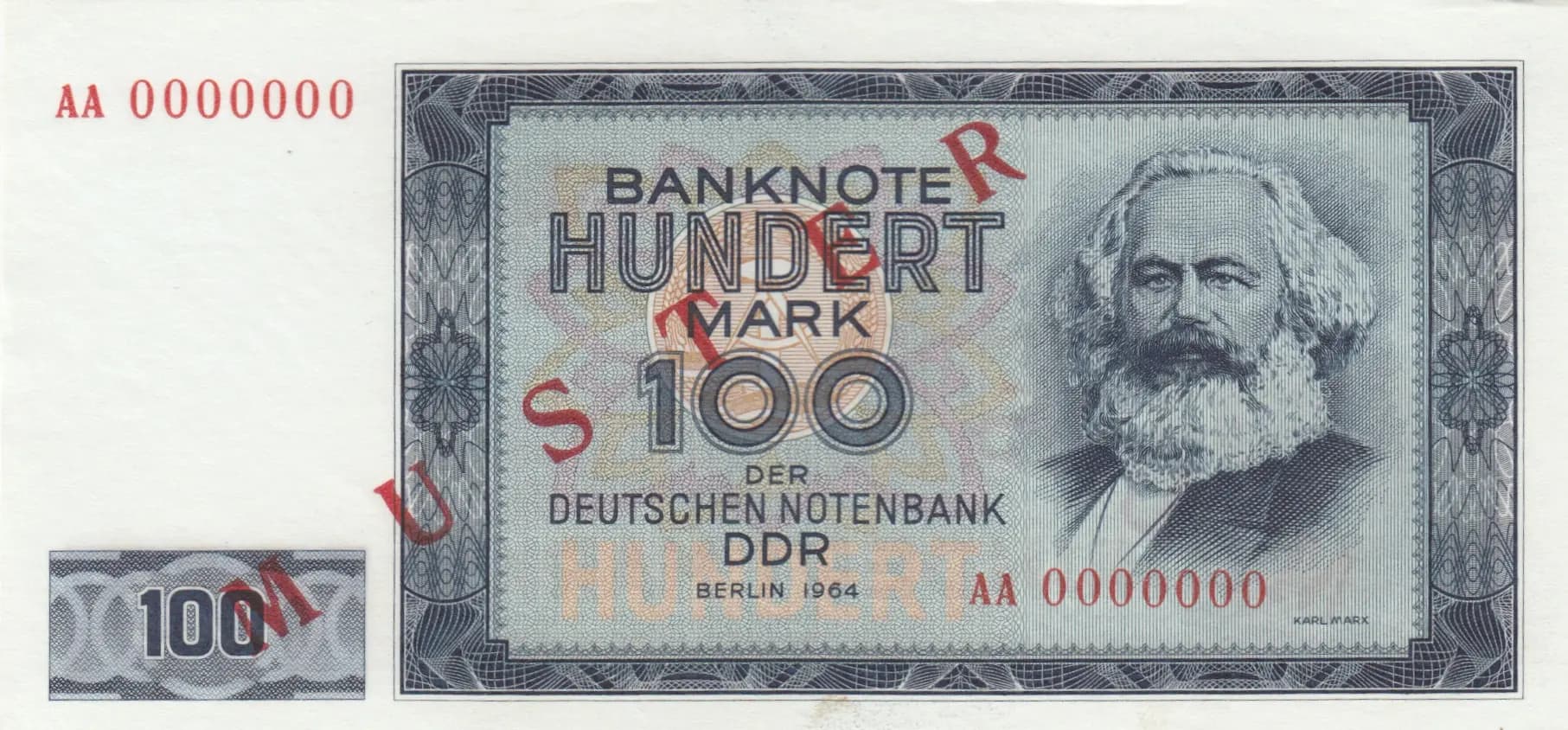
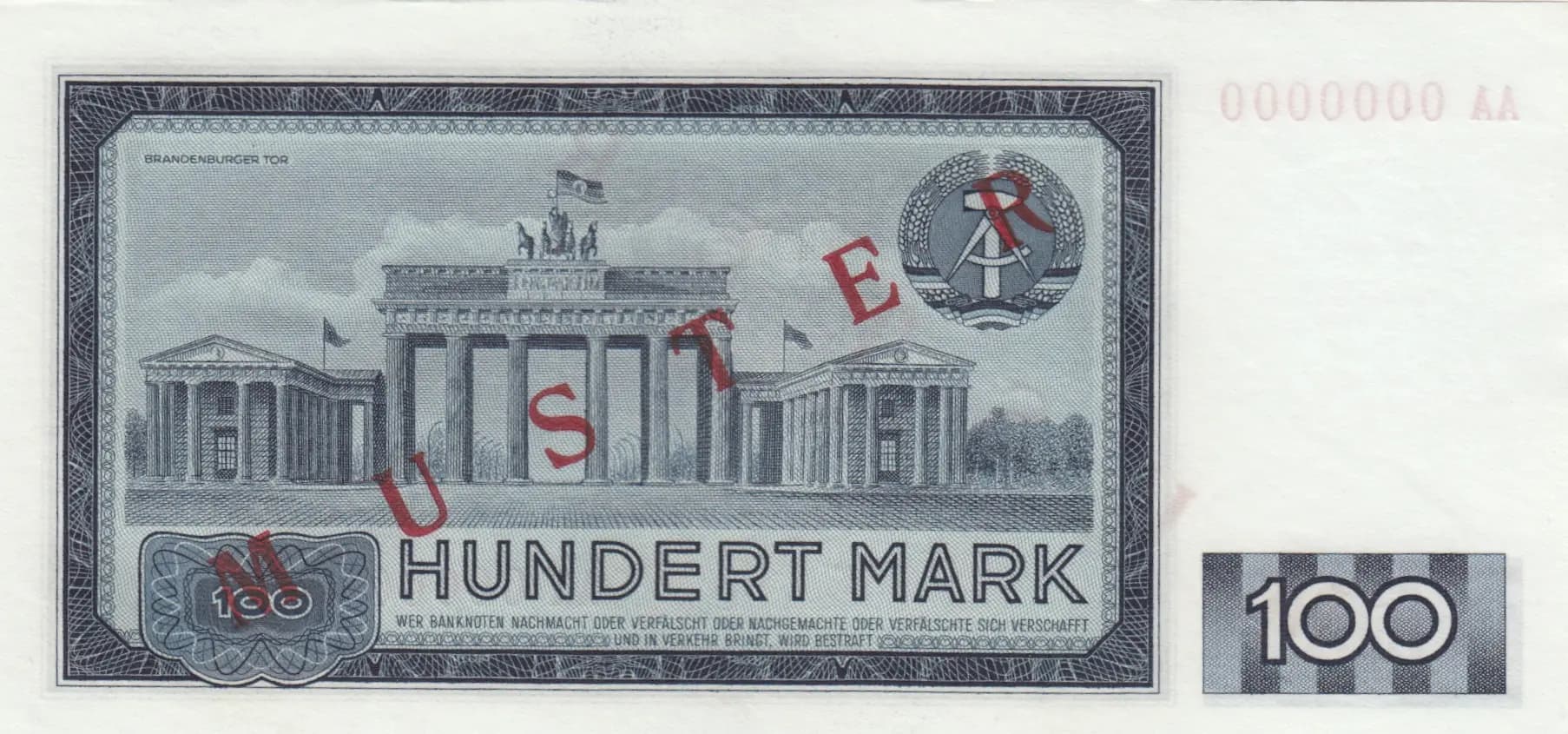
This is an exceptional East German 100 Mark specimen banknote from 1964, issued by the Deutsche Notenbank DDR and graded UNC. The note features striking design elements including a portrait of Karl Marx on the obverse and the iconic Brandenburg Gate on the reverse, both rendered in fine blue-gray and black intaglio work. As a specimen note with red overprinted markings and zero serial numbers (AA 0000000), this represents an important institutional or archival piece from the early East German currency era, displaying crisp, well-preserved detail throughout with no circulation wear.
Common. Specimen notes from the Deutsche Notenbank DDR's standard currency issues are frequently encountered by collectors and in institutional holdings. The 100 Mark denomination was part of a large regular issue throughout the 1960s-1980s, and specimen versions were produced in substantial quantities for banking and archival purposes. While specimen notes command modest premiums over circulated examples, the Pick-26s is not scarce in the secondary market.
This 100 Mark note was issued during the early years of the German Democratic Republic's established currency system, featuring Karl Marx—the philosophical founder of communist ideology—as the primary portrait, reflecting the ideological foundations of the East German state. The Brandenburg Gate depicted on the reverse served as a powerful national symbol, though it stood divided during the Cold War period when this note was in circulation. The Deutsche Notenbank DDR's issuance of specimen notes like this one was standard practice for currency validation, archive preservation, and international banking reference purposes.
The obverse features a formal portrait of Karl Marx, the 19th-century philosopher and communist theorist, positioned on the right side of the note, rendered with fine detail showing his characteristic long beard and hair. The reverse showcases the Brandenburg Gate (Brandenburger Tor), Berlin's most iconic neoclassical monument, depicted with its distinctive Doric columns and quadriga chariot sculpture crowning the structure. The East German state coat of arms—featuring the hammer, compass, and wreath symbols characteristic of GDR heraldry—appears prominently on the reverse right side. Both sides are framed by intricate ornamental borders with geometric patterns and fine decorative corner designs. The color scheme employs blue-gray, black, light blue, and cream tones, typical of the austere aesthetic favored by East German currency design.
FRONT SIDE: 'HUNDERT MARK' (One Hundred Mark); 'DER DEUTSCHEN NOTENBANK DDR' (Of the German Central Bank GDR); 'BERLIN 1964' (Berlin 1964); 'KARL MARX' (Karl Marx - portrait attribution); Serial number 'AA 0000000' (specimen formatting). BACK SIDE: 'BRANDENBURGER TOR' (Brandenburg Gate); 'HUNDERT MARK' (One Hundred Mark); 'WER BANKNOTEN NACHMACHT ODER VERFÄLSCHT ODER NACHGEMACHTE ODER VERFÄLSCHTE SICH VERSCHAFFT WIRD MIT GELDSTRAFE BIS ZU 5000 MARK ODER MIT FREIHEITSSTRAFE BIS ZU 5 JAHREN BESTRAFT' (Whoever counterfeits banknotes or forges them or procures counterfeit or forged ones will be punished with a fine of up to 5000 marks or with imprisonment of up to 5 years - standard anti-counterfeiting warning).
This note was produced using traditional intaglio (steel engraving) printing methods, evidenced by the fine line work, microprint-style text in the warning inscription, and the precise detail visible in the portrait and architectural rendering. The specimen overprints in red were applied as a secondary printing operation. Based on catalog records for East German currency of this period, this note was likely printed by the Deutsche Notenbank DDR's authorized security printer, utilizing multi-color intaglio technology with careful registration of the blue-gray and black color separations.
This is a confirmed specimen variety (Pick-26s designation) identifiable by: (1) red 'SPECIMEN' overprint markings visible across both sides; (2) zero serial number formatting (AA 0000000), standard for specimen/non-circulating institutional notes; (3) crisp, unhandled UNC condition consistent with vault storage. The 1964 date and 'BERLIN' imprint are standard for this series. No variations in signatures, printer marks, or date variants are noted from the visual analysis. This represents the standard specimen issue of Pick-26 for reference and institutional collections.